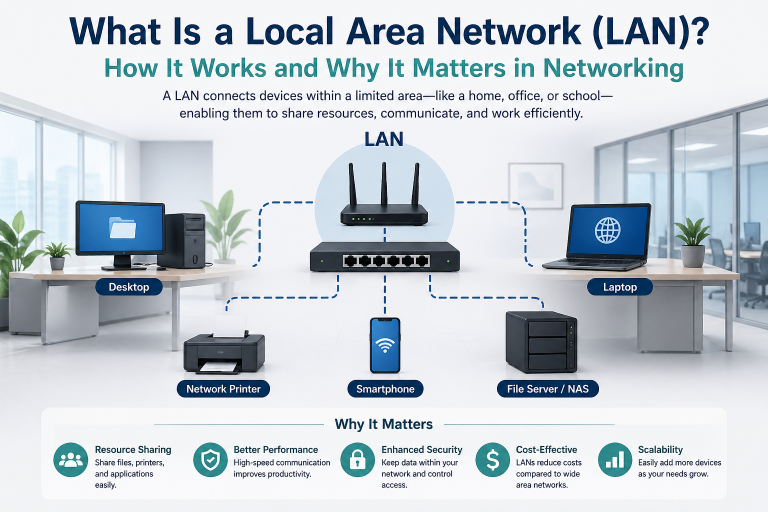
What Is a Local Area Network (LAN)? How It Works and Why It Matters in Networking
Local Area Networks can be created in different forms depending on the environment and the needs of users. The most common type is…
Read articleEDITORIAL TOPIC / EXAMTOPICS EDITORIAL
Routing, switching, wireless networks, network architecture and services.
Local Area Networks can be created in different forms depending on the environment and the needs of users. The most common type is…
Read article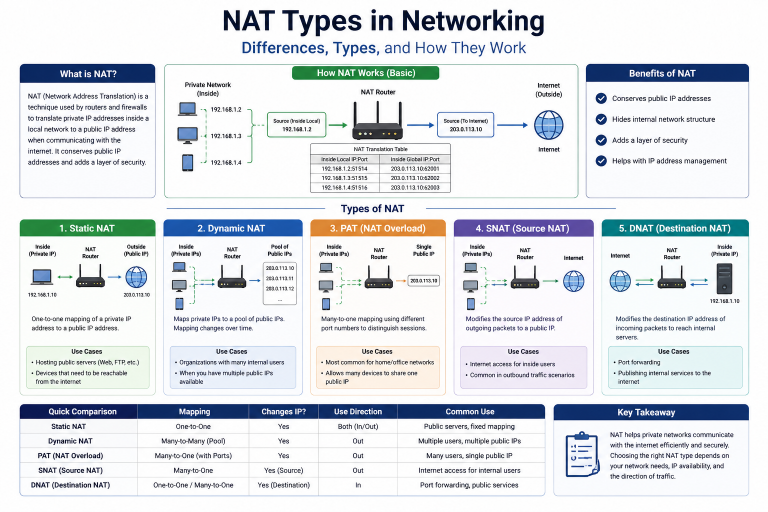
Network Address Translation (NAT) is a fundamental concept in modern networking that plays a crucial role in how devices communicate over the internet.…
Read article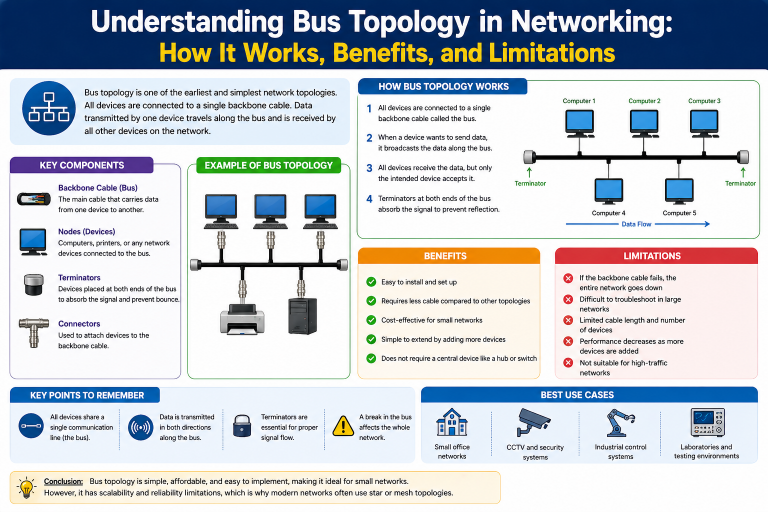
In bus topology, the physical structure revolves around a single communication line known as the backbone cable. All devices, including computers, printers, and…
Read article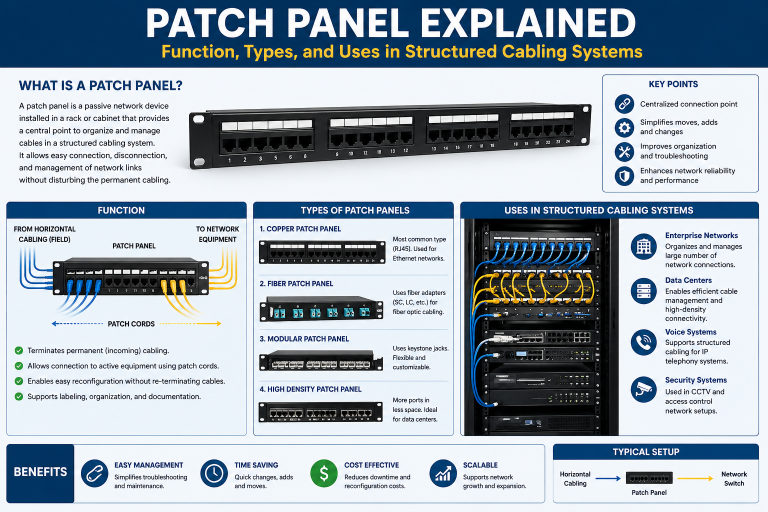
A patch panel is one of the most important passive components used in modern structured cabling environments. It is designed to simplify how…
Read article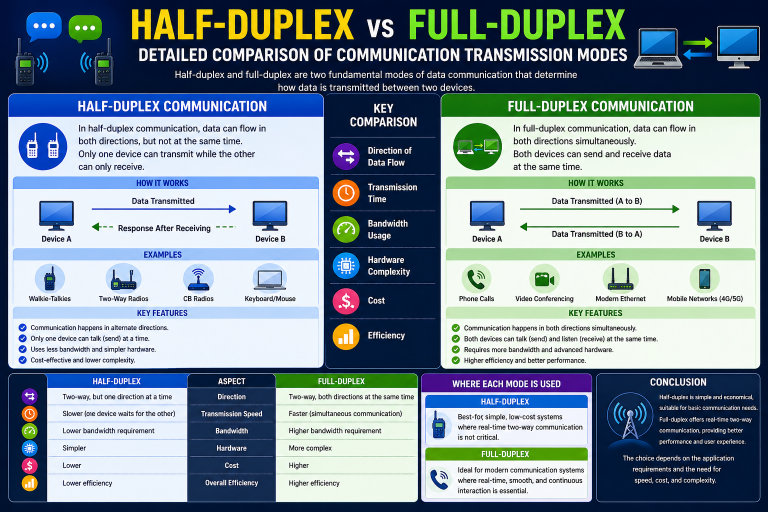
Communication between devices in a network is based on how data is transmitted and received. This transmission behavior is defined by communication modes,…
Read article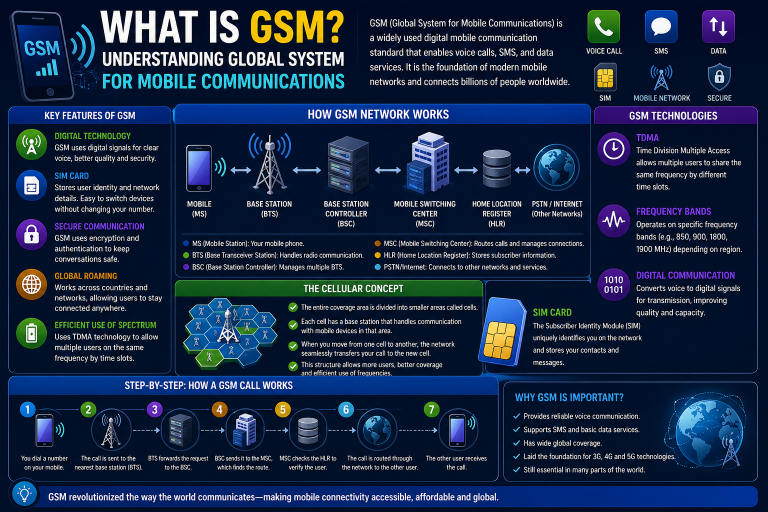
GSM, or Global System for Mobile Communications, is a digital cellular technology designed to provide consistent mobile communication across countries and networks. It…
Read article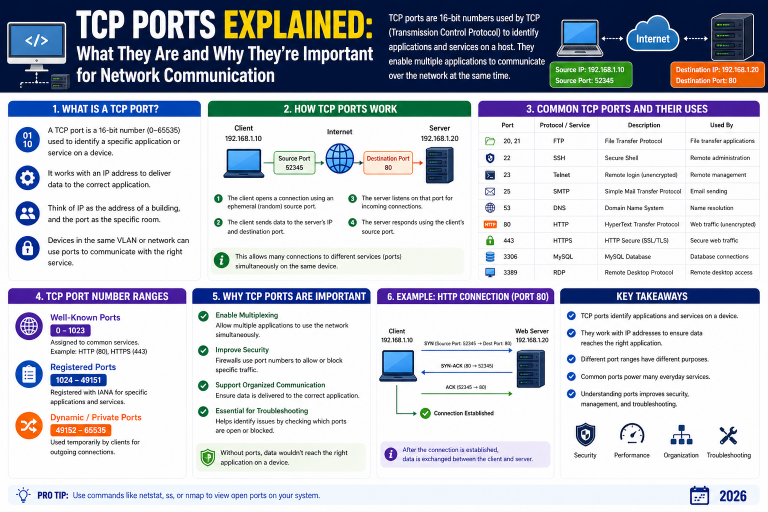
TCP ports are one of the most fundamental building blocks of how devices communicate over networks. While an IP address identifies a device…
Read article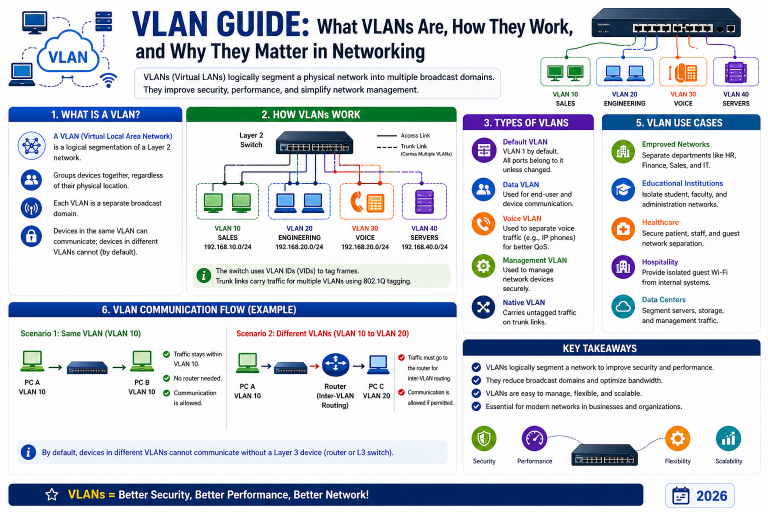
VLAN tagging is the core mechanism that allows multiple virtual networks to coexist on the same physical infrastructure. When data travels across a…
Read article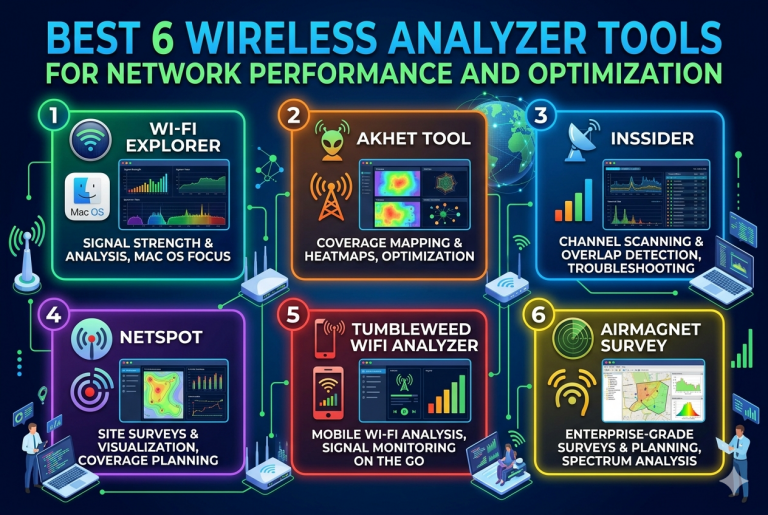
Wireless networks have become the backbone of modern connectivity, supporting everything from personal devices to large-scale enterprise systems. As usage increases and environments…
Read article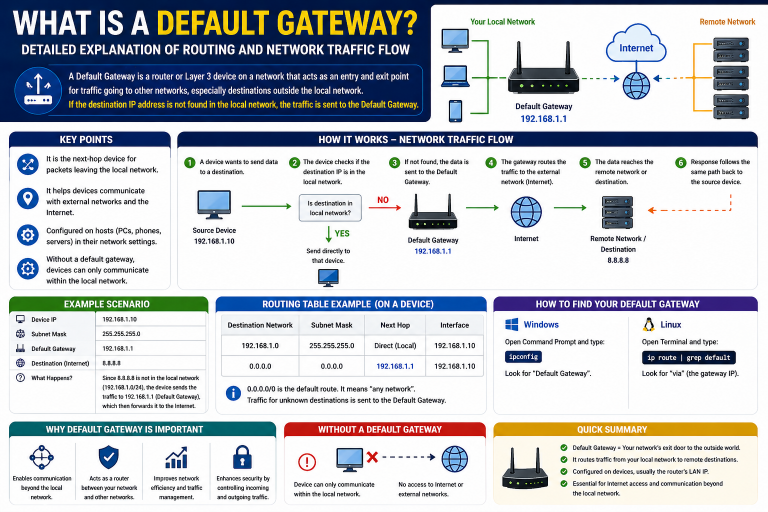
A default gateway plays a central role in how modern computer networks function because it enables communication between different networks. Without it, devices…
Read article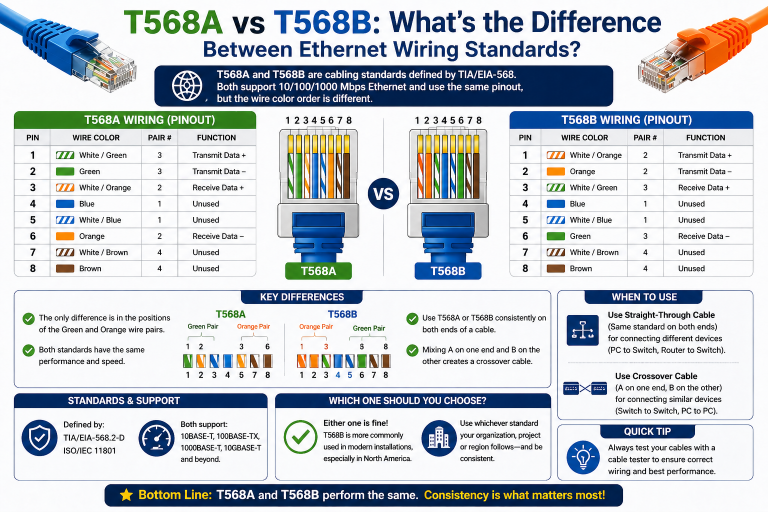
Ethernet cables used in both T568A and T568B standards are built using four twisted pairs of copper wires. These pairs are color-coded to…
Read article
Smart cities represent one of the most impactful expansions of IoT technology, where entire urban environments are enhanced through connected systems. In a…
Read article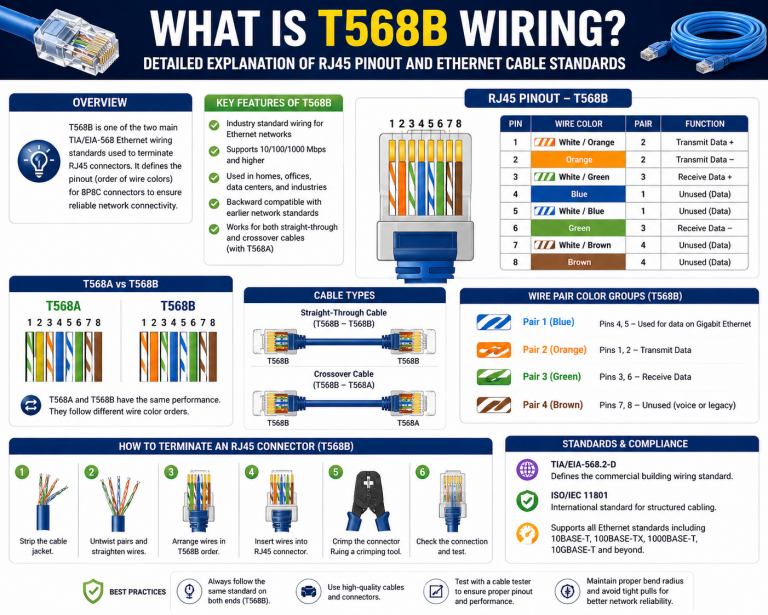
T568B wiring is a structured Ethernet cabling standard that defines how eight individual copper conductors inside a network cable are arranged and terminated.…
Read article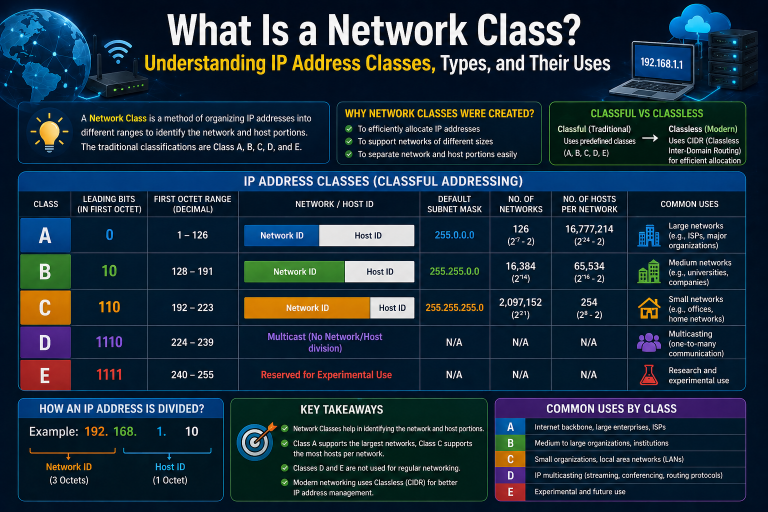
Network classes refer to an early system used in computer networking to organize and divide IP addresses into predefined groups based on network…
Read article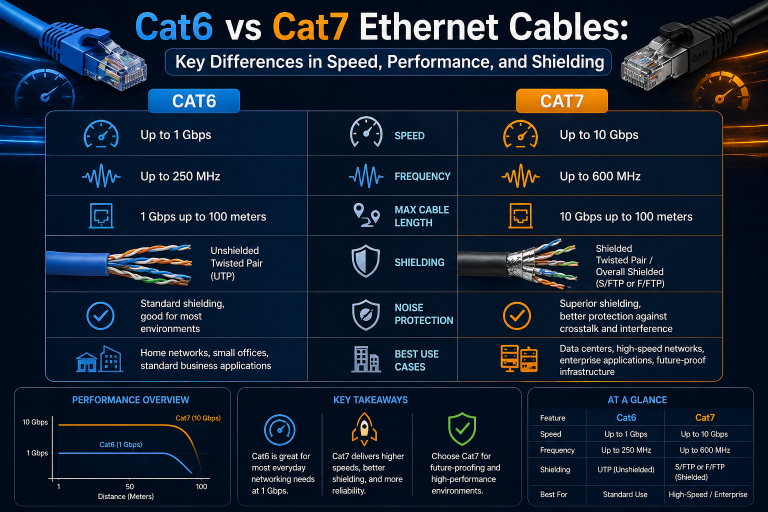
Cat6 cables are designed with a strong focus on improving signal quality while keeping manufacturing simple and cost-effective. Inside every Cat6 cable, there…
Read article