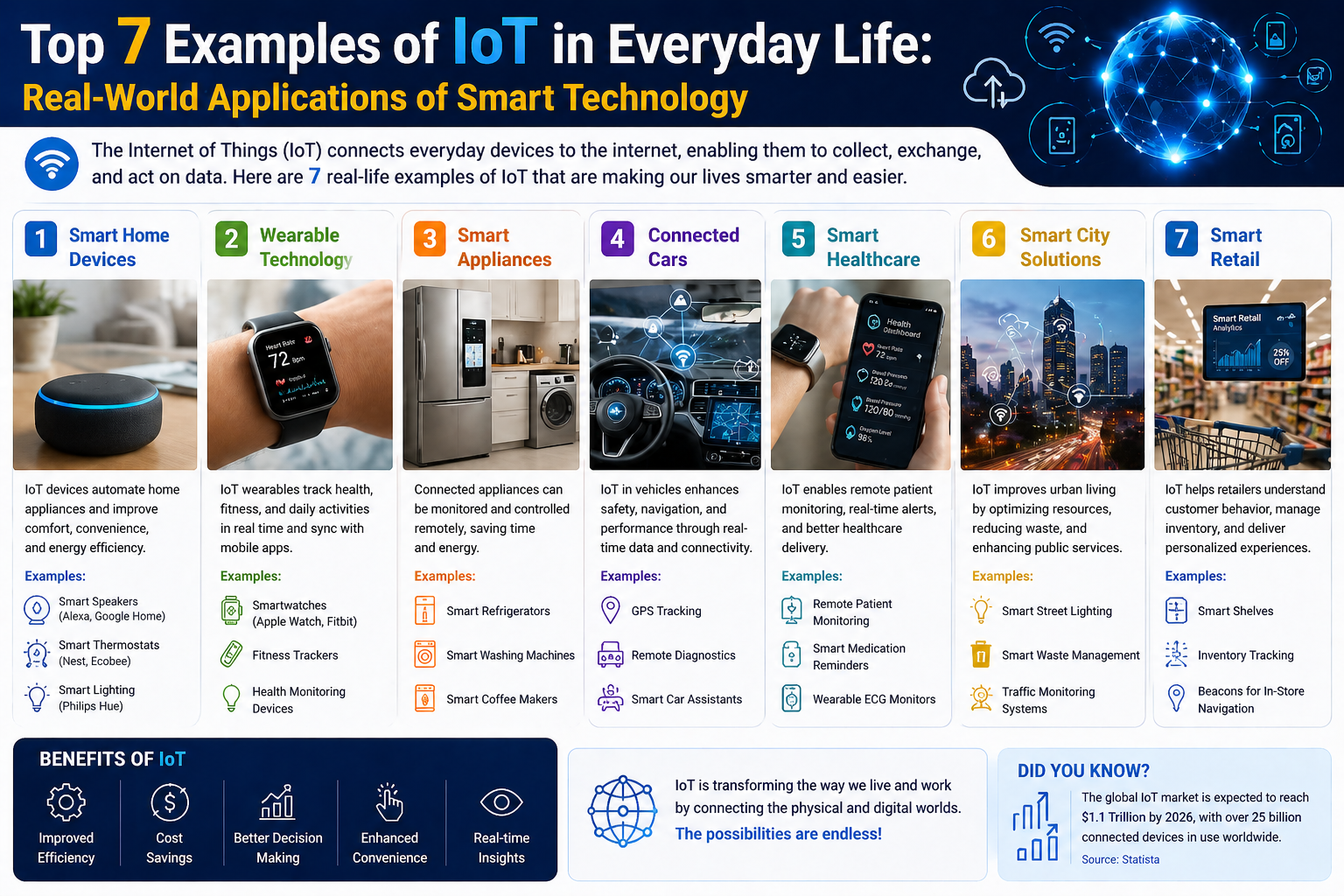
Smart cities represent one of the most impactful expansions of IoT technology, where entire urban environments are enhanced through connected systems. In a smart city, everyday infrastructure such as streetlights, traffic signals, parking systems, waste management units, and public transportation networks are embedded with sensors and communication modules. These devices constantly collect and share data with centralized systems to improve efficiency and urban living conditions.
Traffic management is one of the most visible benefits. Smart traffic lights can adjust their timing based on real-time congestion levels, reducing unnecessary waiting and improving traffic flow. Sensors placed on roads can detect vehicle density and help city systems redirect traffic during peak hours or emergencies. Parking systems also benefit from IoT, allowing drivers to locate available parking spaces through real-time updates, reducing time spent searching and lowering fuel consumption.
Public utilities such as water supply and electricity distribution are also optimized through smart monitoring systems. Leakage detection sensors can identify water pipeline issues early, preventing major waste and infrastructure damage. Similarly, smart street lighting systems adjust brightness based on pedestrian movement or natural light conditions, saving energy while maintaining safety. These interconnected systems create a more responsive and sustainable urban environment.
Smart Agriculture and Farming Systems
Agriculture has undergone a significant transformation with the introduction of IoT-based solutions, often referred to as smart farming. Farmers now use connected sensors placed in soil, crops, and irrigation systems to monitor environmental conditions in real time. These sensors collect data on soil moisture, temperature, humidity, and nutrient levels, allowing farmers to make precise decisions about irrigation and fertilization.
Smart irrigation systems are particularly valuable in water conservation. Instead of relying on fixed schedules, irrigation is automatically activated only when soil conditions require it. This prevents overwatering and improves crop yield while reducing resource waste. Weather-monitoring systems connected to IoT networks also help farmers anticipate climate changes and protect crops from unexpected conditions.
Livestock management has also improved through IoT-enabled tracking devices. Animals fitted with wearable sensors can be monitored for health, movement, and feeding patterns. Farmers can quickly identify signs of illness or stress, improving animal welfare and productivity. Drones equipped with sensors and cameras further assist in monitoring large farmland areas, identifying crop health issues, and supporting efficient field management.
Industrial IoT and Smart Manufacturing
Industrial IoT, often referred to as IIoT, has revolutionized manufacturing and production processes. Factories are now equipped with interconnected machines that continuously communicate and exchange operational data. These systems allow real-time monitoring of production lines, enabling faster detection of inefficiencies or equipment malfunctions.
Predictive maintenance is one of the most important advantages in this sector. Instead of waiting for machines to fail, sensors monitor vibration, temperature, and performance patterns to predict potential breakdowns. This helps industries reduce downtime, lower maintenance costs, and increase productivity. Automated systems also ensure consistent quality control by identifying defects during production rather than after completion.
Supply chain operations within factories are also optimized using IoT. Inventory systems track raw materials and finished goods automatically, ensuring timely restocking and reducing waste. Robotics integrated with IoT systems handle repetitive tasks with precision, improving both speed and safety in industrial environments. This level of automation has reshaped manufacturing into a highly efficient and data-driven ecosystem.
Smart Retail and Customer Experience
Retail environments have also been transformed through IoT technologies, creating more personalized and efficient shopping experiences. Smart shelves equipped with sensors can monitor product availability in real time, automatically alerting store managers when items need restocking. This reduces out-of-stock situations and improves inventory management.
Customer behavior analysis has become a key part of smart retail systems. Connected cameras and sensors can track movement patterns within stores, helping businesses understand which products attract the most attention. This data is used to optimize store layouts and improve product placement strategies.
Personalized marketing is another major advancement. IoT-enabled systems can send customized offers or recommendations to customers based on their preferences and shopping history. Smart checkout systems further improve convenience by reducing waiting times, allowing for faster and smoother transactions. Overall, IoT enhances both operational efficiency and customer satisfaction in retail environments.
Energy Management and Smart Grids
Energy systems have become more efficient and sustainable through IoT integration. Smart grids allow electricity distribution networks to monitor and balance energy usage in real time. Sensors placed throughout the grid collect data on consumption patterns, helping utility providers optimize energy distribution and reduce wastage.
Smart meters installed in homes and businesses provide detailed insights into energy usage. Consumers can track their consumption patterns and adjust usage to reduce costs. These meters also enable dynamic pricing models where electricity rates vary based on demand, encouraging more efficient energy consumption.
Renewable energy systems, such as solar and wind power installations, also benefit from IoT monitoring. Sensors track performance and environmental conditions, ensuring optimal energy production. This integration supports the transition toward cleaner and more sustainable energy systems while maintaining reliability in power supply.
Smart Education and Learning Environments
Education systems have started adopting IoT technologies to create more interactive and efficient learning environments. Smart classrooms are equipped with connected devices such as digital boards, sensors, and interactive tools that enhance teaching and learning experiences.
Attendance systems can automatically track student presence using facial recognition or RFID-based identification, reducing administrative workload. IoT-enabled devices also allow teachers to monitor student engagement levels during lessons, helping them adjust teaching methods accordingly.
Remote learning has also been enhanced through connected platforms that integrate real-time communication and data sharing. Students can access learning materials, submit assignments, and participate in interactive sessions from any location. These technologies have made education more flexible, accessible, and personalized.
Environmental Monitoring and Sustainability
IoT plays a critical role in environmental protection and sustainability efforts. Sensors deployed in forests, rivers, and urban areas continuously monitor air quality, water pollution levels, temperature changes, and noise levels. This real-time data helps authorities respond quickly to environmental hazards.
Early warning systems for natural disasters such as floods, earthquakes, and wildfires are also powered by IoT. These systems detect environmental changes and send alerts to communities, helping reduce risks and save lives. Weather stations connected through IoT networks provide highly accurate forecasting data, improving preparedness for extreme conditions.
Waste management systems have also improved through smart bin technologies. Sensors in waste containers detect fill levels and optimize collection routes for garbage trucks, reducing fuel consumption and improving city cleanliness. These innovations contribute to more sustainable and environmentally friendly urban living.
Logistics and Supply Chain Management
Logistics operations have become more efficient through IoT-enabled tracking and monitoring systems. Goods in transit are equipped with sensors that provide real-time updates on location, temperature, and condition. This is especially important for sensitive goods such as food and pharmaceuticals.
Fleet management systems use IoT to monitor vehicle performance, fuel consumption, and driver behavior. This helps companies optimize routes, reduce costs, and improve delivery times. Predictive analytics also assist in anticipating delays and adjusting logistics plans accordingly.
Warehouse operations have become highly automated, with IoT systems tracking inventory movement and storage conditions. Automated robots and smart shelving systems ensure faster order fulfillment and accurate stock management, improving overall supply chain efficiency.
Smart Home Entertainment Systems
Entertainment systems have evolved significantly with IoT integration, creating more immersive and connected experiences. Smart televisions, speakers, and gaming devices can be controlled through voice commands or mobile applications, offering seamless interaction.
Streaming platforms are integrated with smart devices to personalize content recommendations based on user preferences. Multi-room audio systems allow synchronized music playback across different areas of a home, creating a unified entertainment experience.
Gaming systems also benefit from IoT connectivity, enabling cloud-based gaming, real-time multiplayer experiences, and device synchronization. These advancements have made entertainment more interactive, accessible, and customized for individual users.
Future Expansion and Challenges of IoT
The future of IoT is expected to bring even deeper integration into daily life, with billions of connected devices operating across industries and households. Advances in artificial intelligence, 5G connectivity, and edge computing will further enhance the speed, intelligence, and reliability of IoT systems.
However, the rapid expansion of IoT also brings challenges. Security and privacy remain major concerns, as more connected devices increase the risk of data breaches and cyberattacks. Ensuring strong encryption, secure networks, and proper data management practices will be essential for safe adoption.
Interoperability between different devices and platforms is another challenge, as not all systems are designed to work together seamlessly. Standardization efforts will play a key role in solving this issue and enabling smoother communication between devices.
Despite these challenges, IoT continues to reshape the modern world. Its influence is visible in homes, cities, industries, and global systems, creating a more connected, efficient, and intelligent environment that continues to evolve every day.
IoT in Smart Transportation Systems
Transportation systems are becoming more intelligent and efficient through IoT integration, extending far beyond simple vehicle tracking. Modern public transport networks use connected sensors to monitor bus and train locations in real time, allowing passengers to receive accurate arrival updates. This reduces waiting times and improves overall travel planning. Traffic authorities also use IoT-based systems to analyze congestion patterns and adjust traffic signals dynamically to reduce bottlenecks in busy areas.
Ride-sharing services rely heavily on IoT connectivity as well. GPS-enabled devices continuously track vehicle locations and match passengers with nearby drivers in real time. This not only improves convenience but also reduces fuel consumption by optimizing routes. Fleet operators use IoT dashboards to monitor driver behavior, vehicle health, and route efficiency, ensuring safer and more cost-effective transportation services.
In aviation and maritime transport, IoT plays a critical role in monitoring engine performance, fuel usage, and navigation systems. Aircraft and ships are equipped with sensors that transmit operational data to control centers, allowing for predictive maintenance and improved safety. This constant flow of information ensures that potential issues are identified before they become serious problems.
IoT in Smart Banking and Financial Systems
The financial sector has also embraced IoT to improve security, customer experience, and operational efficiency. Banks use connected systems to monitor transactions in real time, detecting suspicious activities through behavioral analysis. This helps prevent fraud and ensures safer financial operations for customers.
Smart ATMs are equipped with sensors and cameras that monitor usage patterns, detect tampering, and enable remote diagnostics. These machines can alert bank systems immediately if maintenance is required or if any unusual activity is detected. Additionally, IoT-enabled payment systems allow contactless transactions through smartphones, wearables, and smart cards, making financial exchanges faster and more convenient.
Customer experience in banking has improved significantly with IoT-powered personalization. Banks can analyze customer behavior and offer tailored financial services, such as loan recommendations or savings plans based on spending patterns. This level of automation and insight has transformed traditional banking into a more responsive and customer-focused industry.
IoT in Smart Office Environments
Modern workplaces are increasingly adopting IoT technologies to create smarter and more productive environments. Connected office systems allow employees to control lighting, temperature, and workspace settings through mobile devices or automated systems. This improves comfort and reduces energy consumption in office buildings.
Meeting rooms are often equipped with smart scheduling systems that automatically detect availability and manage bookings. Sensors can identify when a room is occupied and adjust environmental settings accordingly. Smart printers and office equipment can also monitor usage levels and send alerts when supplies are low, ensuring smooth daily operations.
Employee productivity is enhanced through IoT-enabled collaboration tools. Devices connected through cloud platforms allow seamless sharing of files, real-time communication, and remote working capabilities. This flexibility has made hybrid work models more efficient and widely adopted across industries.
IoT in Home Automation Beyond Basics
Home automation has expanded far beyond lighting and security systems, becoming a fully integrated ecosystem of connected devices. Smart mirrors, for example, can display weather updates, news, and personal schedules while users prepare for their day. Automated blinds adjust themselves based on sunlight intensity, improving energy efficiency and comfort.
Connected entertainment systems allow users to control multiple devices through a single interface. Smart speakers can synchronize music, manage home devices, and respond to voice commands, creating a fully interactive living environment. Even household cleaning has become automated through robotic vacuum systems that map rooms and clean efficiently without manual intervention.
Water management systems in homes are also becoming smarter. IoT-enabled sensors can detect leaks, monitor water usage, and automatically shut off supply in case of emergencies. This not only prevents damage but also helps conserve water resources in daily life.
IoT in Personal Fitness and Lifestyle Tracking
Fitness and wellness have been significantly improved through IoT-powered devices. Smart fitness equipment, such as treadmills and exercise bikes, can track performance metrics like speed, distance, calories burned, and heart rate in real time. This data is then synced to mobile applications for long-term health tracking.
Wearable devices play a major role in lifestyle monitoring. They continuously track sleep quality, stress levels, and physical activity, helping individuals maintain healthier routines. Many devices also provide personalized recommendations, such as hydration reminders or activity goals based on daily performance.
Smart gym environments are also emerging, where equipment is connected to centralized systems. These systems adjust resistance levels automatically, suggest workout plans, and monitor user progress over time. This creates a more personalized and efficient fitness experience for users of all levels.
IoT in Disaster Management and Emergency Response
IoT technology has become an important tool in disaster prevention and emergency response systems. Sensors placed in high-risk areas can detect earthquakes, floods, landslides, and forest fires at early stages. These systems send real-time alerts to authorities and nearby populations, helping reduce casualties and damage.
Emergency response teams use IoT-enabled communication systems to coordinate rescue operations more efficiently. GPS tracking helps locate affected individuals, while drones equipped with sensors and cameras provide aerial views of disaster zones. This allows responders to assess situations quickly and deploy resources effectively.
Smart warning systems in cities can automatically trigger alarms and evacuation instructions during emergencies. These systems are connected to centralized control centers that analyze data from multiple sensors, ensuring timely and accurate responses to disasters.
IoT in Retail Automation and Smart Shopping
Retail environments continue to evolve with advanced IoT solutions that improve both store operations and customer experiences. Smart shelves automatically detect when products are running low and send alerts to inventory systems. This ensures shelves are always stocked without manual monitoring.
Checkout processes have become faster with automated payment systems. Customers can simply scan items using smart carts or mobile apps, reducing the need for traditional checkout lines. This improves efficiency and enhances customer satisfaction.
Retailers also use IoT data to analyze shopping patterns and preferences. This information helps in designing better store layouts, managing promotions, and offering personalized recommendations to customers. Digital price tags connected to IoT systems allow real-time price updates across stores, improving flexibility in pricing strategies.
IoT in Environmental Conservation Efforts
Environmental conservation has greatly benefited from IoT-based monitoring systems. Sensors placed in forests, oceans, and urban areas continuously track environmental conditions such as temperature, humidity, air quality, and pollution levels. This data helps scientists and governments take preventive actions against environmental degradation.
Wildlife tracking systems use IoT devices to monitor animal movement and behavior. This helps in protecting endangered species and studying migration patterns. Smart conservation systems can also detect illegal activities such as poaching or deforestation, sending alerts to authorities immediately.
Water bodies are monitored using IoT sensors that detect contamination levels and chemical imbalances. This ensures timely intervention to protect aquatic life and maintain safe water resources. These technologies play a crucial role in building a more sustainable and environmentally conscious world.
IoT in Communication and Connectivity
Communication systems have been significantly enhanced through IoT integration. Smart devices are now capable of seamless synchronization across multiple platforms, enabling users to stay connected at all times. Video conferencing systems, messaging platforms, and collaboration tools all rely on IoT infrastructure for real-time communication.
5G networks further strengthen IoT capabilities by providing faster data transfer speeds and lower latency. This enables smoother communication between devices, especially in applications like autonomous vehicles, remote surgery, and industrial automation.
Smart assistants integrated into IoT ecosystems allow users to manage schedules, control devices, and access information through simple voice commands. This has made communication more intuitive and accessible across different devices and environments.
Conclusion on Expanding IoT Influence
The expansion of IoT continues to reshape almost every aspect of modern life. From transportation and healthcare to education, agriculture, and entertainment, connected systems are improving efficiency, safety, and convenience. As technology continues to evolve, IoT will become even more integrated into daily routines, creating smarter environments and more responsive systems.
At the same time, challenges such as data security, privacy protection, and system compatibility must be addressed to ensure safe and sustainable growth. Despite these concerns, the potential of IoT remains vast, and its influence will continue to grow as new innovations emerge in the coming years.
IoT in Smart Water Management Systems
Water management has become significantly more efficient through IoT-enabled monitoring and control systems. Smart water networks use sensors placed in pipelines, reservoirs, and distribution systems to continuously track water flow, pressure, and quality. This real-time monitoring helps detect leaks, contamination, or irregular usage patterns before they become major problems.
In households and industries, smart water meters provide detailed insights into daily consumption. Users can view how much water is being used and identify areas where consumption can be reduced. This not only promotes conservation but also helps lower utility costs. In large cities, centralized IoT systems analyze water distribution across different zones to ensure balanced supply and prevent shortages.
Agricultural water management also benefits from IoT technology. Irrigation systems connected with soil sensors ensure that water is supplied only when needed, based on real-time soil conditions. This prevents overwatering, improves crop efficiency, and reduces unnecessary water waste, making agriculture more sustainable.
IoT in Smart Waste Management
Waste management systems have been transformed through IoT-based solutions that improve efficiency and cleanliness in urban areas. Smart bins equipped with sensors can detect fill levels and send alerts when they need to be emptied. This helps waste collection teams optimize their routes and avoid unnecessary trips to partially filled bins.
Route optimization systems analyze data from multiple waste bins to create the most efficient collection paths. This reduces fuel consumption, lowers operational costs, and minimizes environmental impact. In addition, IoT-enabled waste systems can separate recyclable materials from general waste using smart sorting technologies, improving recycling efficiency.
Industrial waste monitoring systems also track hazardous materials and ensure safe disposal. These systems help organizations comply with environmental regulations and maintain safer working environments. Overall, IoT has made waste management more organized, data-driven, and environmentally friendly.
IoT in Smart Education Systems
Education has become more interactive and efficient with the integration of IoT technologies. Smart classrooms are equipped with connected devices such as interactive boards, projectors, and student tracking systems that enhance the learning experience. Teachers can deliver lessons using digital tools that engage students more effectively than traditional methods.
Attendance systems powered by IoT automatically record student presence using facial recognition, RFID cards, or biometric sensors. This reduces administrative workload and improves accuracy in record-keeping. Additionally, smart learning platforms track student performance and provide personalized learning recommendations based on individual progress.
Remote learning environments also rely heavily on IoT systems. Students can access lectures, submit assignments, and participate in interactive sessions from any location. Connected devices ensure smooth communication between teachers and students, making education more flexible and accessible.
IoT in Smart Hospitality and Tourism
The hospitality industry has embraced IoT to improve guest experiences and operational efficiency. Smart hotels use connected systems to automate room controls such as lighting, temperature, curtains, and entertainment systems. Guests can personalize their room settings using mobile apps or voice commands.
Keyless entry systems have become common in modern hotels, allowing guests to access rooms using smartphones or digital codes instead of traditional keys. This enhances security and convenience. Smart check-in and check-out systems also reduce waiting times and streamline front desk operations.
In tourism, IoT devices help travelers navigate destinations more easily. Smart guides, wearable devices, and location-based services provide real-time information about attractions, transportation, and local services. This creates a more personalized and seamless travel experience.
IoT in Smart Sports and Athletics
Sports and athletics have been enhanced through IoT technologies that improve performance tracking and training efficiency. Wearable fitness devices monitor athletes’ heart rate, speed, distance, and movement patterns during training sessions and competitions. This data helps coaches analyze performance and design better training programs.
Smart sports equipment, such as connected balls, rackets, and training machines, provides detailed feedback on technique and accuracy. This allows athletes to refine their skills with greater precision. Stadiums and sports venues also use IoT systems to manage lighting, crowd control, ticketing, and security more effectively.
Live sports broadcasting has also improved through IoT integration. Sensors and cameras provide real-time data and multiple viewing angles, enhancing the viewer experience. Fans can access live statistics and performance insights during matches, making sports more interactive and engaging.
IoT in Smart Supply Chain Optimization
Supply chain operations have become more transparent and efficient through IoT-based tracking systems. Products are equipped with sensors and RFID tags that allow businesses to monitor their journey from manufacturing to delivery. This ensures better inventory control and reduces the risk of lost or damaged goods.
Real-time tracking systems provide updates on product location, temperature, and condition during transportation. This is especially important for sensitive goods such as pharmaceuticals, food, and electronics. Companies can respond quickly to delays or disruptions, ensuring timely deliveries.
Warehouses also use IoT systems to automate inventory management. Smart shelves track stock levels, while automated robots handle sorting and packaging tasks. This improves efficiency, reduces labor costs, and minimizes human error in supply chain operations.
IoT in Public Safety and Law Enforcement
Public safety systems have been strengthened through IoT-enabled surveillance and monitoring technologies. Smart cameras placed in cities help authorities detect suspicious activities, manage crowds, and respond to emergencies quickly. These systems use real-time data analysis to improve security in public spaces.
Law enforcement agencies use IoT devices such as body cameras and connected communication systems to enhance transparency and coordination. These tools allow officers to share live updates from the field, improving response times and decision-making during critical situations.
Emergency alert systems connected through IoT can notify citizens about potential threats such as natural disasters, accidents, or security risks. These systems ensure faster communication and better preparedness in emergency situations.
IoT in Smart Energy Consumption at Home
Home energy management has become more efficient through IoT-enabled systems that monitor and control electricity usage. Smart plugs and energy meters provide real-time insights into how much power each device consumes. This helps households identify energy-hungry appliances and reduce unnecessary usage.
Automated systems can turn off unused devices or adjust power consumption based on user habits. For example, lights and appliances can be switched off automatically when no one is present in a room. This not only reduces electricity bills but also supports energy conservation efforts.
Solar energy systems integrated with IoT allow homeowners to track energy production and storage levels. Users can monitor how much energy is being generated and used, making renewable energy systems more practical and efficient.
IoT in Personal Assistive Technologies
IoT has significantly improved assistive technologies for individuals with disabilities or special needs. Smart devices such as voice-controlled assistants, wearable health monitors, and automated mobility aids help users perform daily tasks more independently.
Hearing aids, for example, can now connect to smartphones and adjust sound levels automatically based on environment conditions. Smart wheelchairs can be controlled using mobile apps or voice commands, providing greater mobility and freedom.
Home automation systems also support accessibility by allowing users to control lighting, doors, and appliances through voice or gesture-based commands. These technologies greatly improve quality of life and independence for individuals who rely on assistive devices.
IoT in Smart Retail Warehousing
Warehousing in the retail sector has become highly automated through IoT systems that track inventory movement and storage conditions. Smart storage units monitor product placement and automatically update inventory records when items are moved or removed.
Temperature-controlled storage systems ensure that perishable goods are stored under optimal conditions. Sensors continuously monitor environmental factors and trigger alerts if conditions fall outside safe ranges. This helps prevent spoilage and product loss.
Automated picking systems use IoT-enabled robots to locate and retrieve items quickly, reducing manual labor and increasing efficiency. These systems ensure faster order fulfillment and improved accuracy in large-scale retail operations.
IoT in Smart Weather Monitoring Systems
Weather forecasting has become more accurate and reliable through IoT-based monitoring systems. Sensors placed in various locations collect data on temperature, humidity, wind speed, and atmospheric pressure. This information is transmitted to centralized systems for analysis and forecasting.
Real-time weather updates help industries such as agriculture, aviation, and transportation make informed decisions. Early warning systems can detect storms, heavy rainfall, or extreme weather conditions, allowing authorities to take preventive measures.
Personal weather stations connected through IoT also provide localized forecasts for individuals and communities. This helps people plan daily activities more effectively and stay prepared for changing weather conditions.
Final Expansion of IoT Impact
The influence of IoT continues to expand across all aspects of modern life, creating systems that are more intelligent, responsive, and interconnected. From homes and cities to industries and global networks, IoT is shaping how data is collected, processed, and used to improve decision-making.
As technology advances further, IoT will continue to merge with artificial intelligence, machine learning, and advanced communication networks. This will lead to even more automation, efficiency, and personalization in everyday systems.
Despite its rapid growth, careful attention must be given to challenges such as cybersecurity, privacy protection, and system reliability. With proper development and regulation, IoT has the potential to create a more connected, efficient, and sustainable future for all.
IoT in Smart Entertainment and Media Systems
Entertainment has become far more interactive and personalized through IoT-enabled systems. Smart TVs, speakers, gaming consoles, and streaming devices now operate as interconnected ecosystems where content can be controlled seamlessly across multiple devices. Users can start watching a movie on one device and continue on another without interruption, creating a smooth entertainment experience.
Voice-controlled assistants integrated with entertainment systems allow users to search for content, adjust volume, and switch between platforms using simple commands. Smart speakers can also synchronize across rooms, enabling whole-home audio experiences where music plays uniformly throughout different spaces.
Gaming has also evolved with IoT integration. Cloud gaming platforms rely on connected networks to deliver real-time gameplay without requiring high-end hardware. Multiplayer gaming experiences are enhanced through low-latency connections and real-time data exchange, making gameplay more immersive and interactive.
IoT in Smart Personal Finance Management
Personal finance management has become more efficient with IoT-connected systems and devices. Mobile banking applications and smart payment systems allow users to track expenses, monitor account activity, and manage budgets in real time. These systems provide instant notifications for transactions, helping users stay aware of their financial activities.
Smart payment methods, such as contactless cards and mobile wallets, are widely used in daily transactions. These systems rely on secure IoT connectivity to process payments quickly and safely without physical interaction. Wearable devices also enable payments, allowing users to complete transactions using smartwatches or fitness bands.
Financial planning tools connected through IoT analyze spending patterns and provide personalized recommendations for saving money, investing, or managing debts. This creates a more organized and data-driven approach to personal finance.
IoT in Smart Animal and Livestock Monitoring
Animal husbandry and livestock management have greatly improved with IoT-based monitoring systems. Animals are equipped with wearable sensors that track health indicators such as heart rate, body temperature, and movement patterns. This helps farmers and veterinarians detect illnesses early and provide timely treatment.
GPS-enabled tracking devices allow farmers to monitor the location and movement of livestock in real time. This reduces the risk of losing animals and improves herd management efficiency. Feeding systems can also be automated to ensure animals receive proper nutrition at scheduled times.
In wildlife conservation, IoT devices help researchers track endangered species and study their behavior in natural habitats. These systems provide valuable data for protecting biodiversity and supporting conservation efforts.
IoT in Smart Construction and Infrastructure Development
Construction sites have become safer and more efficient through IoT integration. Smart sensors placed on construction equipment and structures monitor stability, vibration, and environmental conditions. This helps ensure safety during building processes and prevents accidents.
Project management systems connected through IoT allow real-time tracking of construction progress. Managers can monitor resource usage, labor activity, and equipment performance from centralized platforms. This improves efficiency and reduces delays in large-scale projects.
Smart infrastructure systems also monitor the health of bridges, roads, and buildings after construction. Sensors detect cracks, stress, or structural weaknesses early, enabling preventive maintenance and extending the lifespan of infrastructure.
IoT in Smart Personal Assistants and Daily Life Automation
Personal digital assistants have become central to IoT ecosystems in modern homes. These assistants can control multiple devices, manage schedules, set reminders, and provide real-time information using voice commands. They act as a central hub for managing connected systems within homes.
Daily routines have become more automated through IoT integration. Morning alarms can trigger coffee machines, adjust lighting, and display weather updates automatically. Similarly, bedtime routines can turn off lights, lock doors, and adjust room temperature without manual input.
Smart calendars and scheduling tools connected through IoT help users organize meetings, appointments, and tasks efficiently. These systems sync across multiple devices, ensuring consistent and up-to-date information at all times.
IoT in Smart Food Supply and Safety Systems
Food supply chains have become more transparent and safe with IoT technology. Sensors monitor food storage conditions such as temperature and humidity during transportation and storage. This ensures that perishable goods remain fresh and safe for consumption.
Traceability systems allow consumers and businesses to track the origin of food products. This improves food safety and helps identify contamination sources quickly in case of issues. Smart packaging can also indicate freshness levels and expiration status.
Restaurants and food delivery services use IoT systems to manage inventory, monitor kitchen equipment, and ensure hygiene standards. This improves efficiency and enhances customer trust in food quality.
IoT in Smart Defense and Security Systems
Defense and security systems have become more advanced with IoT integration. Military operations use connected sensors, drones, and surveillance systems to monitor environments and gather real-time intelligence. These systems improve situational awareness and decision-making in critical operations.
Border security systems use IoT-enabled cameras and sensors to detect unauthorized movements and monitor large areas efficiently. Automated alerts help authorities respond quickly to potential threats.
Cybersecurity systems also rely on IoT to detect unusual network activity and prevent cyberattacks. Real-time monitoring ensures that sensitive data and infrastructure remain protected from unauthorized access.
IoT in Smart Human Behavior Analytics
IoT systems are increasingly used to analyze human behavior patterns in various environments. In retail spaces, sensors track customer movement and engagement to understand shopping habits. In workplaces, data from connected devices helps analyze productivity and workspace usage.
This behavioral data is used to improve services, optimize layouts, and enhance user experiences. However, it also raises concerns about privacy and data protection, making ethical usage and transparency very important.
Healthcare systems also use behavioral analytics to monitor patient habits and predict potential health risks. This allows for early intervention and personalized care strategies.
IoT in Smart Renewable Energy Systems
Renewable energy systems such as solar and wind farms are highly dependent on IoT for monitoring and optimization. Sensors track energy production levels, weather conditions, and equipment performance in real time.
Energy storage systems use IoT to manage battery levels and distribute power efficiently based on demand. This ensures stable energy supply even when production fluctuates due to environmental conditions.
Smart grids integrate renewable sources into national energy systems, balancing supply and demand dynamically. This supports cleaner energy usage and reduces dependence on non-renewable resources.
IoT in Smart Human Health Prediction Systems
Healthcare has moved beyond monitoring into predictive analysis through IoT systems. Advanced devices collect continuous health data and use algorithms to predict potential illnesses before symptoms appear. This allows preventive care rather than reactive treatment.
Smart diagnostic systems analyze patterns in vital signs and alert users or doctors if abnormalities are detected. This is especially useful for chronic disease management, where continuous monitoring is essential.
Hospitals use IoT systems to track medical equipment, manage patient flow, and ensure efficient resource allocation. This improves overall healthcare delivery and reduces operational delays.
Conclusion
The Internet of Things has become deeply embedded in nearly every aspect of modern life, transforming how people live, work, travel, and interact with technology. From homes and healthcare to industries, cities, and global systems, IoT continues to connect devices into intelligent networks that improve efficiency and decision-making.
Its growth is driven by advancements in connectivity, artificial intelligence, and cloud computing, making systems smarter and more responsive than ever before. While challenges such as privacy, security, and data management still exist, ongoing innovation continues to address these concerns.
As IoT evolves further, it will continue to reshape the world into a more connected and automated environment. Everyday life will become increasingly seamless, where devices anticipate needs, communicate with each other, and work together to create safer, smarter, and more efficient living experiences.