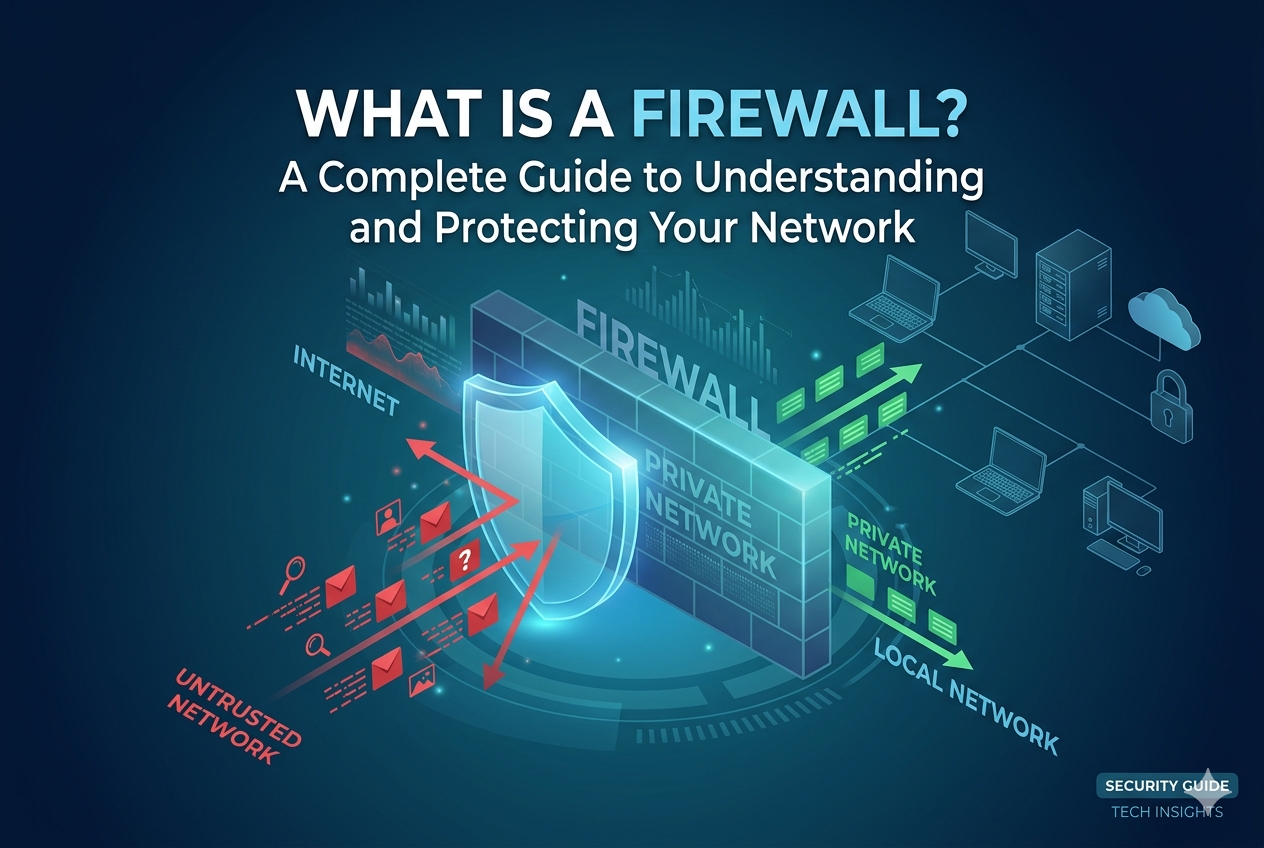
A firewall is one of the most essential security systems in modern computing and networking. In simple terms, it acts as a protective barrier between a trusted internal network and untrusted external networks such as the internet. Its primary purpose is to monitor, filter, and control incoming and outgoing network traffic based on predefined security rules. Without a firewall, computers and networks would be exposed to a wide range of cyber threats including hacking attempts, malware infections, unauthorized access, and data breaches.
Firewalls are widely used in homes, businesses, and large-scale organizations because they provide a first line of defense against cyberattacks. As digital systems become more connected and complex, the importance of firewalls continues to grow, making them a fundamental component of cybersecurity strategies worldwide.
How a Firewall Works
A firewall works by analyzing data packets that attempt to enter or leave a network. Every piece of data sent over the internet is broken into smaller units called packets. These packets contain information such as the source address, destination address, and type of data being transmitted.
The firewall examines each packet and compares it against a set of security rules. If the packet meets the defined criteria, it is allowed to pass through. If it does not meet the criteria or appears suspicious, it is blocked. This decision-making process happens in real time, allowing legitimate traffic to flow while preventing harmful activity.
Firewalls can operate at different layers of a network, depending on their design. Some focus on basic filtering based on IP addresses, while more advanced systems analyze application-level data to detect complex threats.
Types of Firewalls
There are several types of firewalls, each designed to provide different levels of protection and functionality.
Packet-filtering firewalls are the most basic type. They inspect packets individually and allow or block them based on predefined rules such as IP address, port number, or protocol. While they are fast and efficient, they do not analyze the full context of the data.
Stateful inspection firewalls are more advanced. They keep track of active connections and make decisions based on the state of the traffic. This allows them to understand whether a packet is part of an established connection or an attempt to start a new one.
Proxy firewalls act as intermediaries between users and the internet. Instead of allowing direct communication, they retrieve data on behalf of the user and then pass it along. This helps hide internal network details and provides an additional layer of security.
Next-generation firewalls combine traditional firewall features with advanced security tools such as intrusion prevention systems, deep packet inspection, and application awareness. These firewalls are designed to handle modern cyber threats that are more sophisticated and harder to detect.
Why Firewalls Are Important
Firewalls play a crucial role in protecting digital environments from unauthorized access and cyber threats. One of their main functions is to prevent hackers from entering private networks and accessing sensitive data. This is especially important for organizations that store confidential information such as financial records, customer data, and intellectual property.
Another important function of firewalls is controlling network traffic. They allow administrators to define which applications, services, or users can access specific resources. This helps improve security and also enhances network performance by reducing unnecessary traffic.
Firewalls also help protect against malware and ransomware attacks. By blocking suspicious traffic and preventing unauthorized downloads, they reduce the risk of malicious software spreading across a network.
In addition, firewalls provide monitoring and logging capabilities. This allows administrators to track network activity, identify potential threats, and respond quickly to security incidents.
Firewall Rules and Policies
Firewall rules are the foundation of how a firewall operates. These rules define what type of traffic is allowed or denied. They can be based on various factors such as IP addresses, ports, protocols, or application types.
For example, a rule may allow web traffic on port 80 and 443 while blocking all other incoming connections. Another rule may restrict access to certain websites or limit traffic from specific geographic regions.
Firewall policies are a collection of these rules that determine the overall security posture of a network. These policies are carefully designed to balance security and usability. If rules are too strict, they may block legitimate traffic. If they are too relaxed, they may expose the network to threats.
Hardware vs Software Firewalls
Firewalls can be implemented as hardware devices or software applications. Each type has its own advantages and use cases.
Hardware firewalls are physical devices placed between a network and its gateway. They are commonly used in enterprise environments because they can handle large volumes of traffic and provide centralized protection for multiple devices.
Software firewalls are installed directly on individual computers or servers. They offer more detailed control over specific applications and are often used in personal computers and small businesses.
In many modern systems, both hardware and software firewalls are used together to provide layered security. This approach is known as defense in depth, where multiple security measures work together to reduce risk.
Common Threats Firewalls Help Prevent
Firewalls are designed to protect against a wide range of cyber threats. One of the most common threats is unauthorized access attempts, where attackers try to gain entry into a network without permission.
Another major threat is malware, which includes viruses, worms, and trojans. Firewalls help block malicious files and prevent them from being downloaded or executed.
Distributed denial-of-service attacks are also a serious concern. In these attacks, multiple systems flood a network with traffic, causing it to become slow or completely unavailable. Firewalls can help detect and mitigate such traffic spikes.
Phishing attempts and suspicious communication attempts can also be filtered by advanced firewall systems, especially when combined with other security tools.
Limitations of Firewalls
While firewalls are highly effective, they are not perfect and cannot provide complete security on their own. One of their main limitations is that they primarily focus on network traffic and may not detect threats hidden within encrypted data unless advanced inspection is enabled.
Firewalls also cannot protect against insider threats, where authorized users misuse their access privileges. Additionally, if a system is already compromised by malware, a firewall may not be able to stop data theft occurring from within.
Because of these limitations, firewalls are usually used alongside other cybersecurity tools such as antivirus software, intrusion detection systems, and endpoint protection solutions.
Best Practices for Using Firewalls
To maximize the effectiveness of a firewall, it is important to follow best practices. One key practice is regularly updating firewall rules to adapt to new threats and changes in network structure.
Another important practice is minimizing open ports and services. Only necessary ports should be allowed to reduce potential attack surfaces.
Monitoring firewall logs is also essential. Logs provide valuable insights into network activity and can help identify unusual patterns or potential attacks early.
Finally, combining firewalls with other security measures creates a more robust defense system. Relying on a single layer of protection is not sufficient in today’s complex threat landscape.
Conclusion
Firewalls are a fundamental component of cybersecurity that help protect networks from unauthorized access, cyberattacks, and malicious activity. By monitoring and controlling data traffic, they create a secure boundary between trusted and untrusted environments.
Although they have limitations, firewalls remain one of the most effective and widely used security tools in both personal and professional environments. When properly configured and combined with other security technologies, they significantly reduce the risk of cyber threats and help maintain the integrity, confidentiality, and availability of digital systems.
As technology continues to evolve, firewalls will also continue to advance, offering smarter, more adaptive protection against increasingly sophisticated cyber threats.