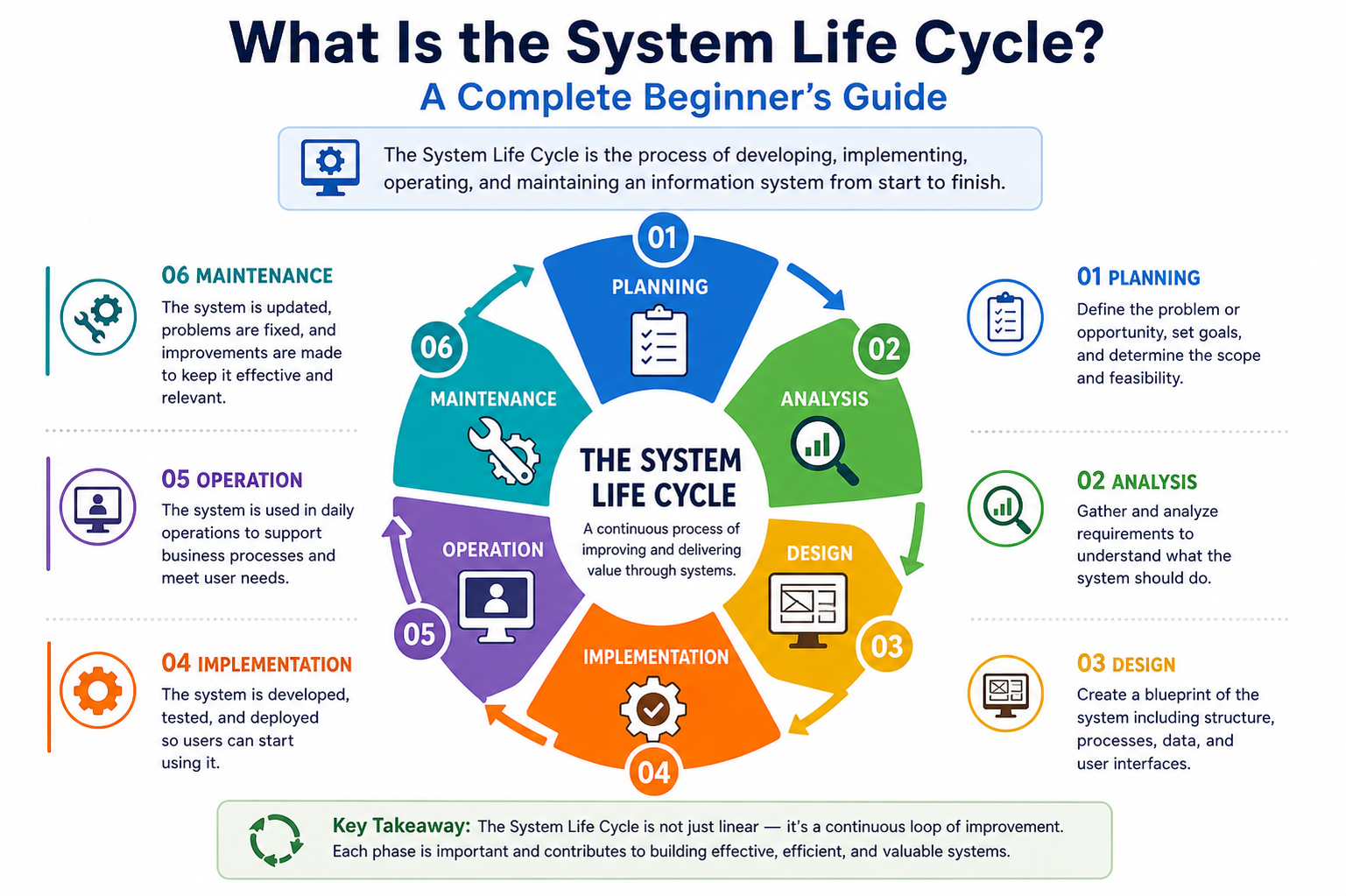
The system life cycle is a structured and methodical approach used to develop, manage, and maintain systems from their initial concept to their final phase of retirement. It serves as a roadmap that guides individuals, teams, and organizations through each stage of a system’s existence, ensuring that all critical aspects are carefully considered and properly executed. By following a well-defined life cycle, developers and stakeholders can reduce risks, improve efficiency, and deliver systems that meet both functional and non-functional requirements.
The Concept Behind the System Life Cycle
At its foundation, the system life cycle represents the complete journey of a system. This journey begins when a need or problem is identified and continues through planning, development, and operation. Eventually, the system reaches a point where it is no longer effective or relevant, leading to its replacement or retirement. This concept ensures that systems are not created randomly but are instead built through a disciplined and organized process that prioritizes quality, usability, and long-term sustainability.
Historical Evolution of System Life Cycle Practices
The idea of managing systems through structured phases did not emerge overnight. It evolved over time as industries recognized the need for more organized approaches to system development. In the early days of computing, systems were often built without clear planning, leading to inefficiencies and frequent failures. As technology advanced, experts began to formalize development processes, giving rise to models that emphasized step-by-step progression. These early models laid the foundation for modern system life cycle practices, which continue to evolve with advancements in technology and methodology.
Core Principles That Define the System Life Cycle
Several key principles underpin the system life cycle and make it an effective framework for system development. One of the most important principles is structure, which ensures that each stage is completed in a logical order. Another principle is clarity, where requirements and objectives are clearly defined before development begins. Flexibility is also essential, allowing teams to adapt to changing requirements without disrupting the entire process. Additionally, continuous evaluation ensures that systems are regularly assessed and improved throughout their lifespan.
Planning as the Starting Point
The planning phase marks the beginning of the system life cycle. During this stage, stakeholders identify the purpose of the system and define the goals it is expected to achieve. This involves understanding the problem, determining feasibility, and outlining the resources required for development. Proper planning sets the foundation for the entire project, as it helps prevent misunderstandings and ensures that everyone involved has a clear understanding of the objectives.
Importance of Requirement Analysis
Following planning, requirement analysis plays a crucial role in shaping the system. This phase focuses on gathering detailed information about user needs and expectations. Analysts work closely with stakeholders to identify functional requirements, such as what the system should do, and non-functional requirements, such as performance and security standards. Accurate analysis is vital because it directly influences the design and development of the system.
Designing the System Structure
Once requirements are clearly defined, the design phase begins. This stage involves creating a blueprint that outlines how the system will function. Designers focus on aspects such as architecture, data flow, user interfaces, and integration with other systems. A well-thought-out design ensures that the system is both efficient and scalable, allowing it to handle future growth and changes.
Development and Implementation Process
The development phase is where the actual system is built based on the design specifications. Developers write code, create databases, and integrate various components to bring the system to life. This stage requires careful attention to detail, as even small errors can lead to significant issues later on. Collaboration among team members is essential to ensure that all components work together seamlessly.
Testing for Quality and Reliability
Testing is a critical part of the system life cycle, as it ensures that the system functions as intended. During this phase, the system is evaluated under different conditions to identify and fix errors. Testing includes various approaches, such as unit testing, integration testing, and user acceptance testing. The goal is to deliver a system that is reliable, secure, and capable of meeting user expectations.
Deployment and User Adoption
After successful testing, the system is deployed and made available to users. This stage involves installing the system, configuring it for operation, and providing necessary training to users. Deployment is a significant milestone, as it marks the transition from development to real-world use. Ensuring a smooth deployment process is essential for user satisfaction and system effectiveness.
Maintenance and Continuous Improvement
The system life cycle does not end with deployment. Maintenance is an ongoing phase that focuses on keeping the system functional and up to date. This includes fixing bugs, improving performance, and adding new features as needed. Continuous improvement ensures that the system remains relevant and continues to meet changing user requirements.
Challenges in Managing the System Life Cycle
Despite its structured approach, managing the system life cycle comes with its own set of challenges. These may include changing requirements, limited resources, and communication gaps among team members. Addressing these challenges requires careful planning, effective communication, and a willingness to adapt to new circumstances.
Benefits of Following a Structured Life Cycle
Adopting a structured system life cycle offers numerous benefits. It improves project organization, enhances communication, and reduces the likelihood of errors. By following a clear process, teams can deliver high-quality systems that meet user needs and are completed within budget and time constraints.
Role of Documentation Throughout the Process
Documentation plays a vital role in the system life cycle. It provides a detailed record of each stage, including requirements, design decisions, and testing results. Proper documentation ensures that knowledge is preserved and can be used for future reference, making it easier to maintain and update the system.
Adaptability in Modern System Development
Modern system development requires adaptability, as technology and user expectations continue to evolve. The system life cycle framework allows for flexibility, enabling teams to incorporate new ideas and technologies without disrupting the entire process. This adaptability is essential for staying competitive in a rapidly changing environment.
The Human Element in the System Life Cycle
While technology is at the heart of system development, the human element plays an equally important role. Collaboration, communication, and teamwork are essential for success. Each member of the team contributes their expertise, ensuring that the system is developed efficiently and effectively.
Future Trends in System Life Cycle Management
As technology continues to advance, the system life cycle is expected to evolve further. Emerging trends such as automation, artificial intelligence, and cloud computing are influencing how systems are developed and managed. These advancements are likely to make the process more efficient and enable the creation of more sophisticated systems.
The system life cycle is a comprehensive framework that guides the development and management of systems from start to finish. By following a structured approach, organizations can ensure that their systems are reliable, efficient, and capable of meeting user needs. Understanding the various phases and principles of the system life cycle is essential for anyone involved in system development, as it provides the foundation for creating successful and sustainable solutions.
Deep Dive into System Life Cycle Phases
The system life cycle is not just a sequence of steps but a detailed and interconnected process where each phase influences the next. A deeper understanding of these phases helps in recognizing how decisions made early in the process can impact the overall success of the system. Each phase carries its own responsibilities, deliverables, and outcomes, all of which contribute to building a reliable and efficient system.
Feasibility Study and Its Importance
Before moving forward with full-scale development, a feasibility study is often conducted to determine whether the proposed system is practical and worth implementing. This evaluation considers various factors such as technical feasibility, economic viability, legal considerations, and operational effectiveness. By assessing these elements, organizations can avoid investing time and resources into projects that may not succeed or deliver expected value.
Types of Feasibility in System Development
Feasibility is not limited to a single dimension. Technical feasibility examines whether the required technology and expertise are available. Economic feasibility evaluates costs versus expected benefits, ensuring that the project is financially justified. Operational feasibility focuses on how well the system will fit into existing workflows and whether users will accept it. Legal feasibility ensures compliance with regulations and standards. Together, these aspects provide a comprehensive understanding of the project’s viability.
Role of Stakeholders in the Life Cycle
Stakeholders play a crucial role throughout the system life cycle. They include anyone who has an interest in the system, such as users, developers, managers, and clients. Their input is essential in defining requirements, reviewing progress, and ensuring that the final system meets expectations. Effective communication with stakeholders helps prevent misunderstandings and ensures alignment with project goals.
System Requirements Specification
The system requirements specification is a detailed document that outlines all the functional and non-functional requirements of the system. It serves as a reference point for designers and developers, ensuring that everyone is working toward the same objectives. A well-prepared specification reduces ambiguity and provides a clear understanding of what the system is supposed to achieve.
Architectural Design and Its Role
Architectural design focuses on defining the overall structure of the system. It determines how different components interact with each other and how data flows within the system. A strong architecture ensures scalability, reliability, and performance. It also makes it easier to maintain and update the system in the future.
User Interface Design Considerations
User interface design is a critical aspect of system development, as it directly affects how users interact with the system. A well-designed interface should be intuitive, user-friendly, and visually appealing. It should also accommodate different types of users, ensuring accessibility and ease of use. Good interface design enhances user satisfaction and reduces the learning curve.
Coding Standards and Best Practices
During the development phase, following coding standards and best practices is essential for maintaining consistency and quality. Clean and well-documented code makes it easier for developers to understand and modify the system. It also reduces the likelihood of errors and improves overall system performance. Adhering to best practices ensures that the system is robust and maintainable.
Integration of System Components
As development progresses, different components of the system are integrated to work as a unified whole. Integration involves combining modules, ensuring compatibility, and resolving any conflicts that may arise. This phase requires careful coordination to ensure that all parts of the system function together seamlessly.
Advanced Testing Techniques
Testing goes beyond basic error detection. Advanced testing techniques such as performance testing, security testing, and usability testing provide a deeper evaluation of the system. Performance testing ensures that the system can handle expected workloads, while security testing identifies vulnerabilities. Usability testing focuses on the user experience, ensuring that the system is easy to use and meets user expectations.
Deployment Strategies and Approaches
Deployment is not a one-size-fits-all process. Different strategies can be used depending on the nature of the system and organizational requirements. Some systems are deployed all at once, while others are introduced gradually. Phased deployment allows for testing in real-world conditions and reduces the risk of large-scale failures. Choosing the right deployment strategy is crucial for a smooth transition.
Training and Support for Users
Successful system implementation depends on how well users can adapt to the new system. Training programs are often conducted to help users understand how to operate the system effectively. Ongoing support is also essential to address any issues or questions that may arise. Providing adequate training and support ensures that users can fully utilize the system’s capabilities.
System Maintenance Categories
Maintenance is a continuous process that can be categorized into different types. Corrective maintenance involves fixing errors and bugs. Adaptive maintenance focuses on updating the system to accommodate changes in the environment. Perfective maintenance aims to improve performance and add new features. Preventive maintenance is carried out to reduce the likelihood of future issues. Each type of maintenance plays a role in extending the system’s lifespan.
Evaluating System Performance
Regular evaluation of system performance is essential to ensure that it continues to meet user needs. This involves monitoring key metrics such as response time, reliability, and user satisfaction. Performance evaluation helps identify areas for improvement and ensures that the system remains effective over time.
Security Considerations in the Life Cycle
Security is a critical aspect of the system life cycle. From the initial design to ongoing maintenance, measures must be taken to protect the system from threats and vulnerabilities. This includes implementing access controls, encryption, and regular security audits. Ensuring system security helps protect sensitive data and maintain user trust.
Handling System Upgrades and Enhancements
As technology evolves, systems often require upgrades and enhancements to remain relevant. This may involve adding new features, improving performance, or integrating with other systems. Managing upgrades effectively ensures that the system continues to deliver value without disrupting existing operations.
End-of-Life and System Replacement
Every system eventually reaches the end of its life cycle. This may occur due to technological advancements, changing requirements, or declining performance. At this stage, organizations must decide whether to upgrade the existing system or replace it with a new one. Proper planning ensures a smooth transition and minimizes disruptions.
Impact of Emerging Technologies
Emerging technologies are reshaping the system life cycle in significant ways. Innovations such as artificial intelligence, automation, and cloud computing are enabling faster development and more efficient management. These technologies are also introducing new challenges, such as increased complexity and the need for specialized skills.
Continuous Improvement and Feedback Loops
The system life cycle is not a static process. Continuous improvement and feedback loops play a vital role in ensuring that systems evolve over time. By collecting feedback from users and analyzing system performance, organizations can make informed decisions about updates and enhancements. This iterative approach helps maintain system relevance and effectiveness.
A deeper exploration of the system life cycle reveals its complexity and importance in modern system development. Each phase contributes to the overall success of the system, from initial planning to final retirement. By understanding and effectively managing these phases, organizations can create systems that are reliable, secure, and capable of adapting to changing needs. The system life cycle remains a fundamental concept for anyone involved in designing, developing, or managing systems in today’s dynamic environment.
Advanced Perspectives on the System Life Cycle
The system life cycle continues to evolve as organizations adopt more advanced strategies to manage complexity and improve efficiency. Beyond the traditional phases, modern approaches emphasize adaptability, collaboration, and continuous delivery. These perspectives focus on refining processes, reducing delays, and ensuring that systems can quickly respond to changing user needs and technological advancements.
Different Models of the System Life Cycle
Over time, several models have been developed to represent how the system life cycle can be implemented. One of the earliest approaches is the linear model, where each phase is completed before moving to the next. This method is simple and easy to manage but may lack flexibility when requirements change. Another approach focuses on iterative development, where systems are built in smaller parts and refined through repeated cycles. This allows for continuous feedback and improvement, making it more suitable for dynamic environments.
Comparison of Traditional and Modern Approaches
Traditional system life cycle approaches emphasize thorough planning and documentation before development begins. While this ensures clarity, it can also slow down progress in fast-paced environments. Modern approaches prioritize flexibility and rapid delivery, allowing teams to adapt quickly. Both methods have their advantages, and the choice depends on the nature of the project, available resources, and organizational goals.
Risk Management in the System Life Cycle
Risk management is an essential component of the system life cycle. Risks can arise from various sources, including technical challenges, budget constraints, and changing requirements. Identifying potential risks early allows teams to develop strategies to mitigate them. Effective risk management ensures that projects stay on track and reduces the likelihood of failure.
Quality Assurance Throughout the Process
Quality assurance is not limited to the testing phase; it is integrated throughout the entire system life cycle. From requirement analysis to maintenance, quality checks are performed to ensure that the system meets established standards. This proactive approach helps detect issues early, reducing the cost and effort required to fix them later.
Role of Project Management
Project management plays a central role in coordinating all activities within the system life cycle. Project managers are responsible for planning, scheduling, and monitoring progress. They ensure that resources are used efficiently and that deadlines are met. Strong project management contributes to the successful completion of system development projects.
Importance of Time and Cost Management
Managing time and cost is critical in any system development project. Delays and budget overruns can significantly impact the success of a project. By carefully estimating timelines and costs, and continuously monitoring progress, organizations can ensure that projects remain within their constraints while delivering high-quality results.
Communication and Collaboration Strategies
Effective communication is vital for the success of the system life cycle. Team members must share information clearly and consistently to avoid misunderstandings. Collaboration tools and regular meetings help ensure that everyone is aligned with project goals. Strong communication fosters teamwork and improves overall efficiency.
Documentation and Knowledge Management
Documentation serves as a valuable resource throughout the system life cycle. It captures important details about requirements, design decisions, and implementation processes. Knowledge management ensures that this information is accessible and can be used for future projects. Proper documentation also supports maintenance and troubleshooting efforts.
Scalability and System Growth
Scalability is an important consideration in system design. As user demands increase, the system must be able to handle additional workload without compromising performance. Planning for scalability during the early stages of the life cycle helps prevent future limitations and ensures that the system can grow alongside organizational needs.
Performance Optimization Techniques
Optimizing system performance is an ongoing process that begins during development and continues through maintenance. Techniques such as efficient coding, resource management, and system tuning help improve speed and reliability. Regular performance assessments ensure that the system continues to operate at an optimal level.
User-Centered Design Approach
A user-centered design approach places the needs and preferences of users at the forefront of system development. This involves gathering user feedback, conducting usability tests, and continuously refining the system to enhance the user experience. By focusing on users, organizations can create systems that are both functional and easy to use.
Change Management in the Life Cycle
Change is inevitable in any system development project. Managing change effectively is crucial to maintaining stability and progress. Change management processes ensure that modifications are carefully evaluated, approved, and implemented without disrupting the system. This structured approach helps maintain consistency and reduces risks.
Ethical Considerations in System Development
Ethics play an important role in the system life cycle. Developers and organizations must consider issues such as data privacy, security, and user rights. Ensuring ethical practices helps build trust and ensures compliance with regulations. Ethical considerations are becoming increasingly important as systems handle more sensitive information.
Global and Cultural Factors
In today’s interconnected world, systems are often used by people from different regions and cultural backgrounds. Considering global and cultural factors during the system life cycle ensures that the system is accessible and relevant to a diverse audience. This includes language support, cultural preferences, and regional regulations.
Sustainability and Environmental Impact
Sustainability is gaining importance in system development. Organizations are increasingly focusing on reducing energy consumption and minimizing environmental impact. Designing efficient systems and using sustainable practices contribute to long-term environmental goals while also reducing operational costs.
Innovation and Continuous Evolution
Innovation drives the evolution of the system life cycle. New tools, methodologies, and technologies are constantly being introduced, offering opportunities to improve efficiency and effectiveness. Embracing innovation allows organizations to stay competitive and deliver advanced solutions that meet modern demands.
Measuring Success in the System Life Cycle
Success in the system life cycle is measured through various factors, including system performance, user satisfaction, and return on investment. Regular evaluations help determine whether the system is meeting its objectives and identify areas for improvement. Clear success metrics provide valuable insights for future projects.
Long-Term Value of the System Life Cycle
The true value of the system life cycle lies in its ability to deliver consistent and reliable results over time. By following a structured approach, organizations can create systems that are not only functional but also adaptable to future changes. This long-term perspective ensures that systems continue to provide value throughout their lifespan.
Integration of Modern Methodologies in the System Life Cycle
As system development continues to advance, modern methodologies are increasingly being integrated into the system life cycle to improve efficiency and adaptability. Approaches that focus on continuous delivery and rapid iteration allow teams to release updates more frequently and respond quickly to user feedback. This integration helps reduce development time while maintaining high standards of quality and performance.
Automation and Its Growing Role
Automation has become a key factor in enhancing the system life cycle. Tasks such as testing, deployment, and monitoring can now be automated, reducing manual effort and minimizing the risk of human error. Automated processes also speed up development cycles and ensure consistency across different stages. As automation tools continue to evolve, they are expected to play an even greater role in shaping future system development practices.
Cloud-Based System Development
Cloud technology has transformed how systems are built, deployed, and maintained. Instead of relying on traditional infrastructure, organizations can use cloud platforms to develop scalable and flexible systems. Cloud-based development allows for easier collaboration, faster deployment, and improved resource management. It also supports remote access, making it ideal for globally distributed teams.
Data-Driven Decision Making
Data plays a crucial role in the modern system life cycle. By collecting and analyzing data at various stages, organizations can make informed decisions that improve system performance and user satisfaction. Data-driven insights help identify trends, detect issues early, and optimize system functionality. This approach ensures that decisions are based on evidence rather than assumptions.
Security Integration Across All Phases
In today’s digital environment, security is no longer confined to a single phase of the system life cycle. Instead, it is integrated throughout the entire process. From initial design to ongoing maintenance, security measures are implemented to protect systems from threats and vulnerabilities. This proactive approach ensures that systems remain secure and resilient against potential risks.
The Importance of User Feedback
User feedback is a valuable resource for improving systems. By actively seeking input from users, organizations can identify areas that need enhancement and implement changes accordingly. Feedback loops allow for continuous refinement, ensuring that the system evolves in line with user expectations and requirements.
Cross-Functional Team Collaboration
Modern system development relies heavily on collaboration between different teams, including developers, designers, analysts, and business stakeholders. Cross-functional collaboration ensures that all perspectives are considered during the development process. This leads to more balanced decisions and a system that meets both technical and business objectives.
Lifecycle Monitoring and Analytics
Monitoring and analytics are essential for maintaining system performance over time. By tracking key metrics, organizations can detect issues, measure efficiency, and identify opportunities for improvement. Continuous monitoring ensures that the system remains reliable and performs optimally under varying conditions.
Handling Complex System Environments
As systems become more complex, managing them requires advanced strategies and tools. Complex environments often involve multiple integrations, large datasets, and diverse user requirements. Successfully handling such complexity requires careful planning, robust architecture, and effective coordination among teams.
Balancing Innovation with Stability
While innovation is important for growth, maintaining system stability is equally critical. Introducing new features or technologies must be done carefully to avoid disrupting existing functionality. A balanced approach ensures that systems remain reliable while still benefiting from advancements and improvements.
Training and Skill Development
The effectiveness of the system life cycle depends largely on the skills of the people involved. Continuous training and skill development are essential for keeping up with evolving technologies and methodologies. By investing in education and professional growth, organizations can ensure that their teams are well-equipped to handle modern system challenges.
Governance and Compliance
Governance and compliance play a significant role in the system life cycle, especially in industries with strict regulations. Organizations must ensure that their systems adhere to legal and regulatory requirements. Proper governance frameworks help maintain accountability, transparency, and consistency throughout the development process.
Lifecycle Cost Management
Managing costs throughout the system life cycle is crucial for long-term success. This involves not only the initial development cost but also ongoing expenses related to maintenance, upgrades, and operation. Effective cost management ensures that resources are used efficiently and that the system remains financially sustainable.
Adapting to Future Technological Changes
Technology is constantly evolving, and systems must be designed to adapt to these changes. Building flexibility into the system life cycle allows organizations to incorporate new technologies without major disruptions. This forward-thinking approach ensures that systems remain relevant and competitive in the long run.
The Strategic Value of the System Life Cycle
The system life cycle is more than just a technical process; it is a strategic tool that helps organizations achieve their goals. By aligning system development with business objectives, organizations can create solutions that drive growth, improve efficiency, and enhance decision-making. This strategic perspective highlights the importance of the system life cycle in achieving long-term success.
Future Outlook of the System Life Cycle
The future of the system life cycle is closely tied to rapid technological advancements and changing user expectations. As digital transformation continues to reshape industries, the system life cycle is becoming more dynamic and intelligent. Organizations are moving toward faster development cycles, real-time updates, and systems that can evolve automatically based on data and usage patterns. This shift highlights the need for a more responsive and adaptive life cycle model.
Artificial Intelligence in System Development
Artificial intelligence is playing an increasingly important role in the system life cycle. It is being used to automate complex tasks, improve decision-making, and enhance system performance. From intelligent testing tools to predictive maintenance, artificial intelligence helps reduce errors and optimize efficiency. Systems can now learn from user behavior and adjust their functionality to provide better experiences.
DevOps and Continuous Delivery Culture
The adoption of DevOps practices has transformed how the system life cycle is managed. By combining development and operations, teams can work more collaboratively and deliver updates more frequently. Continuous integration and continuous delivery ensure that systems are always improving and adapting to user needs. This culture promotes faster feedback, higher quality, and more reliable systems.
Microservices Architecture and Flexibility
Modern systems are increasingly being built using microservices architecture, where applications are divided into smaller, independent components. This approach enhances flexibility, scalability, and maintainability. Each component can be developed, tested, and deployed separately, making it easier to update systems without affecting the entire structure.
Edge Computing and Real-Time Processing
Edge computing is another emerging trend influencing the system life cycle. By processing data closer to its source, systems can deliver faster responses and reduce latency. This is particularly important for applications that require real-time processing, such as smart devices and automated systems. Integrating edge computing into the life cycle ensures that systems can handle modern performance demands.
Internet of Things and System Integration
The growth of interconnected devices has added a new dimension to the system life cycle. Systems now need to communicate with multiple devices and platforms, creating complex ecosystems. Managing these integrations requires careful planning, robust design, and continuous monitoring. The system life cycle provides a structured approach to handling these complexities effectively.
Cybersecurity Challenges and Solutions
As systems become more interconnected, cybersecurity challenges continue to grow. Protecting systems from cyber threats requires a proactive approach that spans the entire life cycle. Advanced security measures, regular updates, and continuous monitoring are essential to safeguard sensitive information and maintain system integrity.
User Experience as a Central Focus
User experience is becoming a central focus in system development. Modern systems are expected to be intuitive, responsive, and tailored to individual preferences. Incorporating user feedback and usability testing throughout the life cycle ensures that systems meet these expectations. A strong focus on user experience leads to higher satisfaction and greater adoption rates.
Sustainability in Future Systems
Sustainability is gaining importance in the design and operation of systems. Organizations are looking for ways to reduce energy consumption, minimize waste, and create environmentally friendly solutions. The system life cycle supports these goals by encouraging efficient design, resource optimization, and long-term planning.
Global Collaboration and Remote Development
Advancements in communication technology have enabled global collaboration in system development. Teams can now work together from different parts of the world, sharing knowledge and expertise. The system life cycle provides a common framework that ensures consistency and coordination, regardless of geographical location.
Adoption of Low-Code and No-Code Platforms
Low-code and no-code platforms are simplifying system development by allowing users to create applications with minimal programming knowledge. These platforms accelerate the development process and make it accessible to a broader audience. Integrating such tools into the system life cycle enhances productivity and reduces development time.
Blockchain and Data Integrity
Blockchain technology is being explored as a way to improve data integrity and transparency within systems. By providing secure and tamper-proof records, blockchain can enhance trust and reliability. Its integration into the system life cycle can be particularly beneficial for systems that handle sensitive or critical data.
Continuous Learning and Adaptation
The future system life cycle emphasizes continuous learning and adaptation. Systems are no longer static; they evolve based on feedback, data analysis, and technological advancements. This ongoing process ensures that systems remain relevant and capable of meeting changing demands.
The Expanding Role of Automation
Automation will continue to expand across all phases of the system life cycle. From automated code generation to self-healing systems, automation reduces manual effort and increases efficiency. This allows teams to focus on innovation and strategic decision-making rather than routine tasks.
Ethical and Responsible Development
As systems become more powerful, ethical considerations are becoming increasingly important. Responsible development practices ensure that systems are designed with fairness, transparency, and accountability in mind. Addressing ethical concerns throughout the life cycle helps build trust and ensures compliance with societal expectations.
Long-Term Vision for System Development
The long-term vision of the system life cycle is centered on creating intelligent, adaptive, and sustainable systems. Organizations are striving to build solutions that not only meet current needs but also anticipate future challenges. This forward-looking approach ensures that systems remain valuable and effective over time.
Conclusion
The system life cycle provides a comprehensive framework for developing, managing, and maintaining systems in a structured and effective manner. From initial planning to final retirement, each phase plays a vital role in ensuring that the system meets user needs and performs reliably. Modern advancements such as automation, cloud computing, and data-driven decision-making have further enhanced the effectiveness of this approach, making it more adaptable to today’s fast-changing technological landscape.
By understanding and applying the principles of the system life cycle, individuals and organizations can create systems that are not only functional but also scalable, secure, and sustainable. The continuous focus on improvement, collaboration, and innovation ensures that systems remain relevant and valuable over time. Ultimately, the system life cycle serves as a guiding framework that transforms ideas into successful, real-world solutions while maintaining quality and efficiency at every stage.