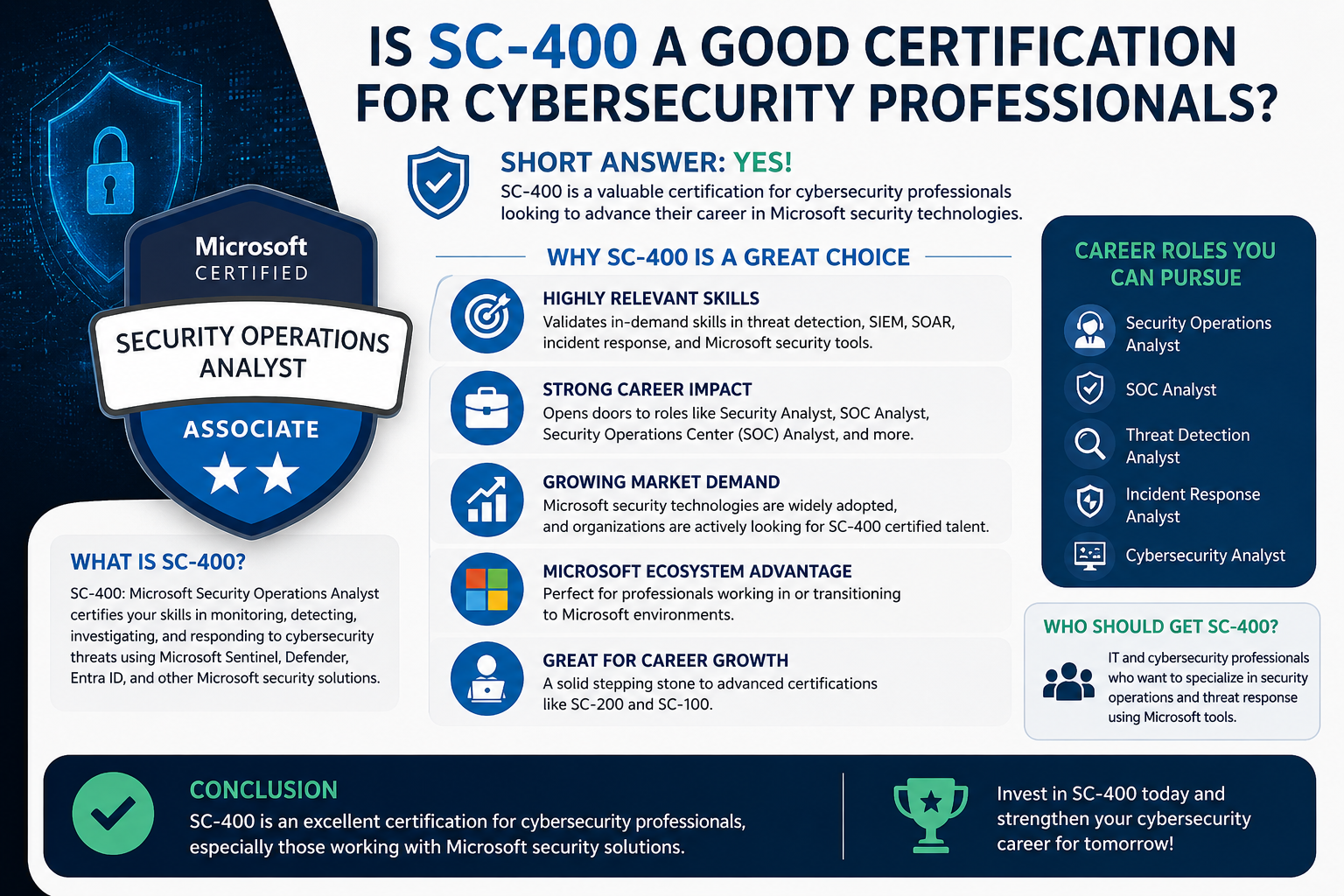
Cybersecurity has evolved far beyond traditional antivirus software and firewall management. Modern organizations are now responsible for protecting enormous amounts of digital information spread across cloud platforms, collaboration tools, email systems, file-sharing services, and remote devices. As businesses continue shifting their operations to cloud-based environments, the need for professionals who understand information governance and data protection has increased dramatically.
One certification that has become increasingly important in this space is the Microsoft Certified: Information Protection Administrator Associate certification, better known as the SC-400. This certification focuses on information security and compliance management within Microsoft 365 environments. It teaches professionals how to secure sensitive information, implement governance controls, manage compliance requirements, and reduce organizational risk.
For many IT professionals, the SC-400 represents a specialized path into Microsoft security technologies. Instead of focusing entirely on infrastructure administration or identity management, the certification concentrates specifically on data protection and compliance operations. This distinction matters because organizations today care just as much about protecting sensitive information as they do about securing networks and devices.
Businesses are dealing with growing concerns related to insider threats, accidental data exposure, ransomware attacks, privacy regulations, and unauthorized file sharing. These concerns create demand for professionals who can implement intelligent policies that monitor and protect organizational data across Microsoft services.
The SC-400 certification addresses these needs directly. It validates that an individual understands how to use Microsoft tools to classify data, apply protection policies, configure retention controls, monitor sensitive activities, and enforce compliance standards.
Microsoft designed this certification for professionals working with Microsoft 365 environments that contain confidential or regulated information. This includes financial records, healthcare documents, customer information, legal communications, internal business plans, and other forms of sensitive data.
The certification also reflects how cybersecurity roles are changing. In the past, organizations focused primarily on network defense and endpoint protection. While those responsibilities remain important, companies now realize that protecting the data itself is equally critical. Information governance has become a central pillar of cybersecurity strategy.
Because Microsoft 365 is used by organizations around the world, professionals with expertise in Microsoft compliance and protection technologies are increasingly valuable. Companies rely heavily on Outlook, Teams, SharePoint, OneDrive, and Exchange Online every day. Each of these services stores and processes information that must be protected appropriately.
The SC-400 certification teaches professionals how to manage these protections using Microsoft technologies. Candidates learn how to create security controls that help prevent accidental leaks, restrict unauthorized access, and support regulatory compliance requirements.
Unlike general security certifications that focus broadly on cybersecurity concepts, the SC-400 emphasizes practical implementation within Microsoft environments. This makes the certification particularly attractive for administrators and security professionals already working with Microsoft technologies.
Another important aspect of the certification is its alignment with real business challenges. Organizations today face strict regulatory requirements related to privacy, retention, and information security. Failure to meet these requirements can result in legal penalties, financial losses, and reputational damage.
The SC-400 helps professionals understand how to use Microsoft compliance solutions to reduce these risks. Candidates learn how to configure automated protection mechanisms that support both operational security and regulatory compliance objectives.
For individuals considering the certification, one of the most important questions is whether the SC-400 provides enough value to justify the time and effort required for preparation. The answer depends largely on career goals and professional interests, but for many Microsoft-focused security professionals, the certification offers significant advantages.
The SC-400 is particularly useful for professionals interested in governance, compliance, cloud security, and information protection. These areas continue growing rapidly because organizations increasingly recognize the importance of managing sensitive data responsibly.
The certification can also help professionals specialize within cybersecurity. Many people entering cybersecurity begin with broad concepts like network security or security operations. Over time, they often choose specialized areas such as cloud security, governance, identity management, penetration testing, or digital forensics.
The SC-400 provides a pathway into the governance and compliance side of cybersecurity. This specialization can lead to opportunities involving compliance administration, information governance management, risk analysis, and enterprise security consulting.
Another reason the certification attracts attention is Microsoft’s dominant position in enterprise computing. Microsoft 365 is deeply integrated into the operations of businesses worldwide. Professionals who understand how to secure and govern these environments possess skills that many employers actively seek.
Because of this, the SC-400 is often viewed as a strategic certification for long-term career growth within Microsoft-focused environments.
Why Microsoft 365 Security Matters More Than Ever
The rise of cloud computing transformed the way organizations handle information. Instead of storing data exclusively on local servers, businesses now use cloud platforms that allow employees to access files, applications, and communication tools from virtually anywhere.
This flexibility provides enormous operational benefits, but it also introduces new security challenges. Information now moves constantly between devices, users, applications, and cloud services. Organizations must ensure this information remains protected throughout its entire lifecycle.
Microsoft 365 plays a central role in this transformation. Millions of organizations depend on Microsoft applications for communication, collaboration, and productivity. Employees use Outlook for email, Teams for messaging and meetings, SharePoint for document management, and OneDrive for cloud storage.
Each of these services contains sensitive business information. Without proper protections, organizations risk exposing confidential data through accidental sharing, insider misuse, compromised accounts, or weak governance policies.
This is where the SC-400 becomes highly relevant. The certification focuses on securing information inside Microsoft 365 environments rather than only protecting the infrastructure surrounding those environments.
Modern cybersecurity strategies increasingly revolve around data-centric security models. Instead of assuming networks are always secure, organizations now focus on identifying and protecting sensitive information wherever it exists.
This shift happened partly because traditional security boundaries disappeared. Remote work, mobile devices, cloud services, and hybrid environments changed how employees interact with data. Information is no longer confined to office networks protected by perimeter defenses.
As a result, businesses require advanced information protection strategies. They need systems that can classify data automatically, monitor sharing activities, apply encryption controls, restrict access permissions, and enforce retention policies.
The SC-400 teaches professionals how to implement these protections using Microsoft technologies. Candidates learn how to configure policies that help organizations maintain control over sensitive information even in highly distributed environments.
Another major reason Microsoft 365 security matters involves regulatory compliance. Governments and industry regulators continue introducing stricter privacy and data protection requirements. Organizations must demonstrate that they can manage sensitive information responsibly.
Regulations often require businesses to retain records for specific periods, monitor sensitive communications, protect customer information, and respond appropriately to legal investigations. Failure to meet these requirements can lead to significant penalties.
Microsoft provides compliance tools designed to support these obligations, and the SC-400 teaches professionals how to use them effectively.
The certification also reflects the growing importance of insider risk management. Not all security incidents originate from external attackers. Employees, contractors, and partners can accidentally or intentionally expose sensitive information.
Organizations therefore need visibility into how users interact with data. They need systems capable of detecting unusual behavior, restricting unauthorized sharing, and preventing risky actions before damage occurs.
The SC-400 introduces candidates to Microsoft technologies that support these capabilities. Professionals learn how to monitor activities, configure alerts, and implement protective controls that reduce organizational risk.
Another important factor is automation. Modern organizations manage enormous amounts of data across multiple services and devices. Manual governance processes are often impractical at scale.
Microsoft compliance technologies allow businesses to automate many protection and governance tasks. For example, organizations can automatically apply sensitivity labels when certain types of information are detected. They can enforce retention policies based on document classifications or user activities.
The SC-400 teaches candidates how to configure and manage these automated systems effectively. This knowledge becomes increasingly valuable as organizations continue expanding their cloud operations.
The certification also highlights the importance of collaboration security. Microsoft Teams and SharePoint enable employees to share information quickly and efficiently, but these capabilities can create risks if not managed properly.
Businesses must ensure employees do not accidentally share confidential files externally or expose sensitive conversations to unauthorized individuals. The SC-400 teaches professionals how to apply policies that reduce these risks while maintaining productivity.
Another reason Microsoft 365 security has become so important is the rise of hybrid work environments. Employees now regularly access organizational resources from home networks, personal devices, and public locations.
This flexibility increases exposure to security threats because organizations have less direct control over user environments. Information protection therefore becomes essential. Even if devices or accounts become compromised, organizations still need mechanisms that protect sensitive data itself.
The SC-400 supports this approach by teaching professionals how to implement classification, encryption, and access control policies that remain effective regardless of where data travels.
Cloud adoption also increased the importance of visibility and auditing. Organizations need detailed insights into how information is accessed, modified, and shared. Auditing capabilities help businesses investigate incidents, demonstrate compliance, and identify suspicious activities.
The SC-400 includes topics related to monitoring and governance reporting, helping professionals understand how to maintain visibility across Microsoft environments.
Another major trend influencing the value of the certification is zero trust security architecture. Zero trust models assume that no user or device should automatically receive unrestricted access to sensitive resources.
Instead, organizations continuously verify identities, evaluate risks, and apply least-privilege access controls. Information protection technologies play a major role in these strategies because they help enforce security controls directly on the data itself.
The SC-400 aligns closely with zero trust principles by focusing on data classification, access restrictions, and policy enforcement.
Many organizations also struggle with data sprawl. Over time, businesses accumulate enormous amounts of files, emails, records, and communications spread across multiple platforms. Managing this information manually becomes extremely difficult.
Governance technologies help organizations organize, classify, retain, and delete information according to business and regulatory requirements. Professionals who understand these systems are increasingly valuable because effective governance reduces both operational and legal risks.
The SC-400 provides practical knowledge in this area by teaching candidates how to implement lifecycle management policies and compliance controls.
Another reason the certification matters is the growing connection between cybersecurity and business operations. Security decisions no longer exist separately from organizational strategy. Businesses want security professionals who understand operational needs alongside technical protections.
The SC-400 supports this broader perspective by focusing heavily on compliance, governance, and collaboration security rather than only technical defense mechanisms.
Professionals pursuing the certification often gain a deeper understanding of how security policies affect productivity, legal obligations, and organizational workflows. This understanding can help them contribute more effectively to business decision-making processes.
The certification also helps bridge the gap between technical teams and compliance departments. Many organizations struggle to translate legal or regulatory requirements into technical implementations.
SC-400-certified professionals can help connect these areas by understanding both compliance objectives and Microsoft protection technologies. This ability can make them valuable contributors during audits, policy development, and governance planning.
As organizations continue relying heavily on Microsoft 365 services, the importance of securing and governing these environments will likely keep increasing. Businesses need professionals capable of implementing intelligent protections that support collaboration while reducing risk.
The SC-400 certification exists specifically to validate those capabilities. It demonstrates that an individual understands how to manage information protection and compliance technologies within one of the world’s most widely used enterprise ecosystems.
For professionals interested in Microsoft security, cloud governance, and data protection, the certification offers a focused and highly relevant learning path that aligns closely with modern cybersecurity priorities.
Understanding What the SC-400 Exam Covers
One of the biggest reasons professionals hesitate before pursuing a certification is uncertainty about the actual material covered on the exam. Some certifications focus heavily on theory, while others emphasize practical administration and configuration skills. The SC-400 sits somewhere in the middle, combining technical implementation with governance and compliance concepts that organizations use every day.
Microsoft designed the SC-400 certification for professionals responsible for protecting information inside Microsoft 365 environments. The exam measures whether candidates understand how to implement compliance solutions, secure sensitive data, configure governance controls, and manage information lifecycle policies.
The exam primarily revolves around three major domains. These include implementing information protection, implementing data loss prevention, and implementing information governance. Each domain focuses on different aspects of data security and compliance management.
These areas may sound highly specialized at first, but they directly connect to the real-world responsibilities many organizations face daily. Businesses must decide how to classify confidential information, who can access sensitive files, how long records should be retained, and what happens when data is shared improperly.
The SC-400 teaches professionals how to solve these problems using Microsoft technologies.
The first major domain involves information protection. This section focuses heavily on identifying and securing sensitive information throughout Microsoft 365 services. Candidates learn how to configure sensitivity labels, apply encryption settings, and classify data automatically.
Sensitivity labels are one of the most important features within Microsoft compliance solutions. Organizations use these labels to categorize documents and emails based on confidentiality levels. Labels can apply restrictions automatically, such as encryption, watermarking, or access limitations.
For example, a company may create labels like Public, Internal, Confidential, or Highly Confidential. Files classified under stricter categories may only be accessible to approved employees or departments.
The SC-400 teaches professionals how to create, configure, publish, and manage these labels effectively.
Another important concept within information protection is automatic classification. Manually labeling every document is unrealistic for large organizations. Instead, businesses use automated policies that identify sensitive information based on keywords, patterns, or data types.
Candidates preparing for the SC-400 learn how to configure these automated systems. They study how Microsoft detects sensitive content like credit card numbers, healthcare information, financial records, or legal documentation.
This automation helps organizations reduce human error while improving consistency across compliance operations.
Document fingerprinting is another feature covered extensively in the certification. Document fingerprinting allows organizations to identify specific forms or templates automatically. For example, a company may want to detect tax documents, employee records, or legal contracts whenever they appear in emails or storage locations.
The SC-400 teaches professionals how to configure these protections and integrate them into broader compliance strategies.
Another major area involves encryption and rights management. Organizations often need to control what users can do with sensitive information after they access it. This may include preventing printing, restricting forwarding, or blocking downloads.
Candidates learn how Microsoft Information Protection technologies enforce these controls across documents and communications.
The second domain focuses on data loss prevention, commonly called DLP. Data loss prevention is one of the fastest-growing areas within cybersecurity because organizations constantly struggle to prevent sensitive information from leaking accidentally or intentionally.
DLP policies help businesses monitor and restrict risky data-sharing activities. These policies can inspect emails, cloud storage, chat messages, endpoints, and collaborative platforms for sensitive information.
The SC-400 teaches candidates how to create DLP policies across Microsoft services like Exchange Online, SharePoint, Teams, and OneDrive.
Email protection remains especially important because email continues to be one of the most common ways sensitive information leaves organizations. Businesses need systems capable of detecting confidential data before messages are transmitted externally.
Candidates learn how to configure Exchange Online DLP policies that identify sensitive information and take actions such as blocking messages, generating alerts, or notifying administrators.
Endpoint data loss prevention is another critical area covered by the certification. Modern organizations support remote work and mobile devices, which creates additional challenges for data protection.
Employees may attempt to copy sensitive files to USB drives, upload confidential documents to unauthorized cloud platforms, or transfer data outside approved environments.
The SC-400 teaches professionals how to monitor and control these activities using Microsoft endpoint protection tools.
Another important topic involves Microsoft Defender for Cloud Apps, formerly known as Microsoft Cloud App Security. This platform provides visibility into cloud application usage and helps organizations manage security risks associated with cloud services.
Many organizations face challenges related to shadow IT, where employees use unauthorized cloud applications without approval from IT departments. These applications may expose sensitive information to unnecessary risks.
Candidates preparing for the SC-400 learn how to configure policies that detect risky behaviors, monitor cloud activities, and enforce security controls across cloud services.
The final major domain focuses on information governance. Governance policies determine how organizations manage data throughout its lifecycle, including retention, archiving, deletion, and legal preservation.
Information governance has become increasingly important because organizations must comply with regulatory requirements while managing massive amounts of digital information.
The SC-400 teaches professionals how to implement retention labels and retention policies that automatically manage organizational records.
Retention policies help businesses ensure information remains available for required periods while also reducing unnecessary data accumulation. Different industries often have specific retention requirements based on legal or regulatory obligations.
For example, healthcare providers may need to retain patient records for several years, while financial institutions may need to preserve transaction histories for auditing purposes.
Candidates learn how Microsoft compliance tools automate these processes within Microsoft 365 environments.
Exchange Online archiving is another major governance topic. Many organizations require long-term email preservation for compliance, auditing, or legal discovery purposes.
The SC-400 teaches professionals how to configure mailbox archiving policies and manage email retention settings effectively.
Litigation holds also receive significant attention within the exam. A litigation hold preserves information that may be needed during legal investigations or compliance reviews.
Organizations facing lawsuits or regulatory inquiries often need to ensure relevant communications and records cannot be altered or deleted. The SC-400 teaches candidates how to implement and manage these protections within Microsoft environments.
Overall, the certification covers a wide range of practical compliance and information protection technologies. Instead of focusing entirely on theoretical concepts, the SC-400 emphasizes administrative responsibilities organizations encounter regularly.
This practical focus makes the certification particularly valuable for professionals already working in Microsoft environments.
Who Benefits Most from the SC-400 Certification
Not every certification fits every career path. Some certifications target network engineers, while others focus on cloud architecture, software development, or penetration testing. The SC-400 serves a more specialized audience centered around governance, compliance, and information protection.
One of the most obvious beneficiaries of the certification is the Information Protection Administrator role itself. Microsoft designed the certification specifically for professionals responsible for securing organizational data and implementing compliance controls.
These professionals often manage sensitivity labels, retention policies, insider risk monitoring, and data loss prevention systems. The certification validates skills directly related to these responsibilities.
Security engineers can also benefit significantly from the SC-400. Many security engineers focus primarily on infrastructure protection, endpoint defense, and access control systems. However, organizations increasingly expect security teams to understand data governance as well.
A security engineer who understands Microsoft compliance technologies can contribute more effectively to enterprise security strategies. They can help implement protections that secure sensitive information across cloud platforms and collaborative environments.
The certification also helps security engineers broaden their expertise beyond traditional infrastructure-focused responsibilities.
Compliance administrators represent another important audience for the SC-400. These professionals often work closely with legal teams, auditors, and regulatory departments to ensure organizational policies meet industry requirements.
Understanding Microsoft compliance technologies allows administrators to automate many governance tasks and improve policy enforcement across Microsoft 365 environments.
The certification can also help bridge communication gaps between compliance departments and technical teams. Professionals who understand both governance requirements and Microsoft technologies often become valuable contributors during audits and policy development processes.
Security consultants frequently pursue the SC-400 as well. Consultants advising organizations on cloud security and governance strategies benefit from understanding Microsoft compliance capabilities in depth.
Because Microsoft 365 is widely used across industries, clients often need guidance regarding information protection policies, retention requirements, and compliance controls.
An SC-400-certified consultant can provide more informed recommendations regarding Microsoft governance technologies and best practices.
Cloud administrators may also find value in the certification. Many administrators already manage Microsoft 365 services such as Exchange Online, SharePoint, and Teams. Learning how to secure and govern data within these platforms adds another layer of expertise.
This broader understanding can help administrators transition into more security-focused roles over time.
The certification can also support professionals pursuing cybersecurity careers for the first time. Cybersecurity contains many different specialties, and newcomers often struggle to determine where to focus their efforts.
The SC-400 provides a practical introduction to governance and compliance operations within enterprise environments. Instead of focusing exclusively on offensive security or infrastructure defense, the certification introduces data-centric protection concepts increasingly important in modern organizations.
Another advantage is that governance and compliance roles often involve collaboration across multiple departments. Professionals working in these areas may interact with legal teams, human resources departments, executives, auditors, and security operations personnel.
The SC-400 therefore helps candidates develop skills relevant to both technical and business environments.
Another group that benefits includes professionals working in heavily regulated industries. Healthcare organizations, financial institutions, government agencies, and legal firms all face strict compliance obligations regarding data management.
Professionals responsible for securing sensitive information within these industries can use the SC-400 to strengthen their understanding of Microsoft governance technologies.
The certification also appeals to individuals pursuing long-term careers within the Microsoft ecosystem. Microsoft continues expanding its compliance and governance platforms through Microsoft Purview and related services.
Professionals who develop expertise in these technologies may find increasing opportunities as organizations adopt more advanced compliance solutions.
Another important consideration is career differentiation. Many IT professionals hold certifications related to networking, cloud administration, or security operations. The SC-400 offers specialization in an area that remains less saturated but highly valuable.
Employers increasingly need professionals who understand how to manage information responsibly across cloud environments. The certification demonstrates expertise in this growing area.
Another benefit involves transferable knowledge. Although the SC-400 focuses specifically on Microsoft technologies, many underlying concepts apply broadly across cybersecurity and governance disciplines.
Data classification, retention management, insider risk monitoring, and compliance automation are relevant beyond Microsoft environments alone. Professionals who understand these principles can adapt more easily to other platforms and governance frameworks.
The certification also aligns well with modern security trends such as zero trust architecture and data-centric protection models. Organizations increasingly prioritize securing sensitive information itself rather than relying solely on perimeter defenses.
The SC-400 teaches professionals how to implement protections that travel with the data regardless of device or location. This approach supports evolving security strategies focused on identity, context, and continuous verification.
Another major reason professionals pursue the certification involves career advancement opportunities. Employers often view Microsoft certifications as evidence of technical dedication and validated expertise.
While certifications alone rarely guarantee promotions or higher salaries, they can strengthen resumes and improve credibility during hiring or advancement discussions.
Professionals already working with Microsoft 365 environments may find the certification especially useful because it formalizes existing experience while expanding knowledge in governance and compliance areas.
The SC-400 can also complement other Microsoft certifications effectively. For example, professionals holding Azure security, identity management, or security operations certifications may use the SC-400 to broaden their Microsoft security expertise.
This combination can create well-rounded security professionals capable of managing infrastructure, identity systems, and information governance simultaneously.
Another advantage is the certification’s practical relevance. Many technical certifications focus heavily on abstract concepts or narrow technologies. The SC-400 centers on business problems organizations actively face every day.
Companies must protect customer information, enforce retention policies, detect insider risks, and comply with privacy regulations. The certification teaches professionals how to address these concerns using Microsoft tools widely deployed in enterprise environments.
As organizations continue migrating operations to cloud platforms, governance and information protection will likely become even more important. Businesses need professionals capable of implementing intelligent security controls without disrupting collaboration and productivity.
The SC-400 certification positions professionals to contribute directly to these efforts.
For individuals interested in Microsoft security, governance, compliance management, or cloud protection strategies, the certification offers specialized knowledge aligned closely with current enterprise priorities.
Its focus on real-world governance challenges, practical implementation skills, and modern data protection strategies makes it one of the more relevant Microsoft certifications for professionals pursuing careers in enterprise cybersecurity and compliance management.
The Growing Demand for Information Protection Professionals
Over the last several years, organizations have dramatically increased their focus on information security and compliance management. Businesses no longer view cybersecurity as something limited to antivirus software or firewall configurations. Modern security strategies now include governance policies, data classification systems, compliance monitoring, insider risk management, and information lifecycle controls.
This shift created strong demand for professionals who understand how to protect sensitive data across cloud environments. Organizations increasingly rely on Microsoft 365 platforms for communication, collaboration, document management, and remote productivity. As a result, professionals with expertise in Microsoft information protection technologies are becoming increasingly valuable.
The SC-400 certification aligns directly with these market demands. It focuses on information protection and compliance management within Microsoft ecosystems, which are used by companies around the world. Because Microsoft products remain deeply integrated into enterprise operations, organizations require skilled professionals who can implement governance policies and secure sensitive information effectively.
The growth of remote work also increased the importance of information governance. Employees now access organizational data from homes, personal devices, mobile phones, and public networks. This flexibility creates additional security risks because information travels through many environments outside traditional office infrastructure.
Organizations therefore need advanced protection mechanisms capable of monitoring and securing data regardless of location. Professionals who understand these systems can help businesses reduce risks associated with cloud collaboration and distributed workforces.
Another factor driving demand involves regulatory pressure. Governments and industry regulators continue introducing stricter requirements related to privacy and data management. Businesses must demonstrate they can protect customer information and maintain proper governance procedures.
Failure to meet these obligations can result in legal penalties, financial losses, operational disruptions, and reputational damage. Because of this, organizations increasingly invest in compliance technologies and governance specialists.
The SC-400 certification validates expertise in exactly these areas. Candidates learn how to configure retention policies, classify sensitive data, monitor insider risks, and implement data loss prevention controls using Microsoft tools.
Employers often seek professionals who can help bridge technical operations and compliance objectives. Individuals with SC-400 knowledge can contribute to both areas by understanding how governance requirements translate into technical implementations.
The demand for these skills will likely continue increasing as organizations generate and store larger volumes of digital information. Businesses cannot manage modern data environments effectively without automation, classification systems, and governance controls.
Because Microsoft continues expanding its compliance and governance platforms, professionals who understand these technologies may find growing opportunities across multiple industries.
How the SC-400 Can Support Career Growth
One reason many professionals pursue certifications is the potential for career advancement. Certifications alone rarely guarantee promotions or new jobs, but they can strengthen professional credibility and demonstrate specialized expertise.
The SC-400 certification can support career growth in several important ways.
First, it helps professionals develop specialized skills in governance and information protection. Many IT professionals possess general administration or support experience but lack focused expertise in compliance technologies.
The SC-400 provides a structured learning path that introduces candidates to advanced governance concepts and Microsoft compliance tools. This specialization can help professionals stand out in competitive job markets.
Another advantage involves career diversification. Many individuals working in systems administration or cloud administration eventually want to transition into cybersecurity roles. The SC-400 offers a pathway into governance-focused cybersecurity responsibilities.
Instead of moving toward offensive security or penetration testing, professionals can pursue careers related to compliance administration, insider risk management, information governance, or cloud security operations.
This flexibility matters because cybersecurity contains many specialized fields. Not everyone wants to become an ethical hacker or security analyst. Some professionals prefer policy-focused or governance-oriented roles involving long-term strategic planning and organizational compliance.
The SC-400 supports these interests effectively.
Another benefit is increased visibility within organizations. Professionals who understand compliance technologies often become involved in broader business discussions related to governance, privacy, and risk management.
This exposure can create opportunities for leadership responsibilities and cross-department collaboration. Employees capable of explaining technical governance solutions to nontechnical stakeholders are often highly valued.
The certification can also complement existing technical experience. Many professionals already manage Microsoft services such as Exchange Online, SharePoint, Teams, or OneDrive. Adding governance expertise strengthens their overall skill sets.
An administrator who understands both infrastructure management and information protection becomes more versatile than someone focused only on operational tasks.
The SC-400 may also support long-term career stability. Governance and compliance responsibilities continue growing in importance because organizations face increasing regulatory obligations and cybersecurity pressures.
Businesses cannot simply ignore data governance anymore. They require professionals capable of implementing policies that reduce risks while supporting operational efficiency.
Because of this, governance-focused roles may remain highly relevant even as technology evolves.
Another important factor is professional confidence. Preparing for a certification often forces individuals to study areas they previously understood only partially. Candidates frequently gain deeper understanding of Microsoft technologies during preparation.
This improved knowledge can increase workplace effectiveness and make professionals more comfortable handling complex governance tasks.
The certification also demonstrates commitment to professional development. Employers often appreciate candidates who invest time in expanding their expertise, especially in rapidly evolving areas like cloud security and compliance management.
While certifications should never replace practical experience, they can reinforce existing knowledge and validate technical capabilities.
Another important aspect of career growth involves adaptability. Technology environments change rapidly, and professionals who continuously expand their knowledge tend to remain competitive longer.
The SC-400 introduces candidates to modern governance concepts aligned with current industry trends such as zero trust architecture, cloud compliance management, and automated information protection.
Understanding these areas can help professionals adapt more effectively as organizations continue modernizing their security strategies.
The certification can also improve collaboration opportunities. Governance projects often involve legal teams, compliance departments, executives, auditors, and security operations personnel.
Professionals who understand Microsoft compliance technologies may become valuable contributors during policy development, auditing processes, and security planning initiatives.
This broader involvement can strengthen professional networks and create additional career opportunities over time.
Another major advantage involves alignment with Microsoft’s expanding security ecosystem. Microsoft continues investing heavily in cloud security, governance, compliance automation, and risk management solutions.
Professionals familiar with these technologies may benefit as organizations adopt more advanced Microsoft protection services.
The SC-400 therefore supports not only current skills but also future learning paths within the Microsoft ecosystem.
Potential Salary Impact of the SC-400
Salary discussions are often one of the biggest motivations behind certification decisions. While no certification guarantees a specific income level, specialized skills can influence earning potential significantly.
The SC-400 certification may contribute positively to salary growth because it validates expertise in a highly relevant area of enterprise security.
Professionals working in governance, compliance, and cloud security roles often earn competitive salaries due to the specialized nature of their responsibilities. Organizations value employees who can help reduce legal, regulatory, and operational risks.
The certification itself is unlikely to produce immediate salary increases without practical experience. However, combined with real-world Microsoft administration or security expertise, it can strengthen qualifications for higher-level positions.
Several roles associated with SC-400 knowledge typically offer strong earning potential.
Information Protection Administrators manage governance systems, retention policies, classification solutions, and compliance controls. These professionals help organizations maintain regulatory compliance and secure sensitive data.
Security Engineers with governance expertise may also command higher salaries because they contribute to both infrastructure security and compliance operations.
Cloud Security Specialists who understand Microsoft Purview, DLP systems, and insider risk management may become especially valuable as organizations expand cloud adoption.
Compliance Analysts and Governance Specialists frequently work on high-priority organizational initiatives involving privacy laws, auditing requirements, and information management policies.
Security Consultants with Microsoft governance expertise may also benefit financially because organizations increasingly seek external guidance regarding compliance implementation and risk management strategies.
Another important factor influencing salary potential is industry demand. Highly regulated industries such as healthcare, finance, legal services, and government agencies often prioritize governance and compliance expertise heavily.
Professionals working in these industries may find stronger compensation opportunities due to stricter security and regulatory requirements.
Geographic location also affects salary outcomes significantly. Professionals working in major technology markets or regions with high cloud adoption rates may see greater demand for Microsoft governance expertise.
Experience level remains one of the most important salary factors as well. Entry-level professionals pursuing the SC-400 should view the certification primarily as a career-building investment rather than a direct salary guarantee.
However, experienced administrators and security professionals may use the certification to strengthen advancement opportunities into higher-paying governance or cloud security positions.
Another important consideration is the broader market trend toward cloud governance and compliance management. Organizations increasingly recognize that security involves more than perimeter defense alone.
Businesses need professionals capable of managing data responsibly throughout its lifecycle. This includes classification, retention, auditing, risk monitoring, and policy enforcement.
Because these responsibilities directly impact legal and operational risk, organizations often prioritize hiring qualified professionals in these areas.
The SC-400 certification helps validate expertise connected to these priorities.
Another salary-related benefit involves professional differentiation. Many IT professionals hold common certifications related to networking or cloud administration. Specialized governance certifications may help candidates stand out during hiring processes.
Employers often seek professionals with focused expertise capable of solving specific organizational challenges. Governance and compliance skills fit this requirement well because they address increasingly critical business concerns.
Although salaries vary widely depending on role, location, industry, and experience, the SC-400 can contribute positively to long-term earning potential when combined with practical expertise and broader Microsoft security knowledge.
Challenges and Limitations of the SC-400
While the SC-400 offers many advantages, it is important to understand its limitations as well. No certification fits every professional equally, and the SC-400 works best for specific career paths.
One limitation is specialization. The certification focuses heavily on Microsoft compliance and governance technologies. Professionals working outside Microsoft ecosystems may find limited direct relevance.
For example, individuals focused entirely on networking, software development, or hardware engineering may not benefit significantly unless their roles involve Microsoft governance responsibilities.
Another challenge involves the complexity of compliance concepts themselves. Governance and retention policies can sometimes feel abstract compared to hands-on technical administration.
Candidates expecting purely technical material may initially find legal or compliance-oriented topics less engaging.
The certification also assumes some familiarity with Microsoft 365 environments. Absolute beginners with no Microsoft administration experience may struggle more during preparation.
Practical experience greatly improves understanding because many exam topics involve real-world administrative workflows and organizational scenarios.
Another limitation is that certifications alone rarely replace experience. Employers generally value hands-on expertise alongside certifications.
Someone with extensive Microsoft governance experience but no certification may still outperform a newly certified candidate lacking practical exposure.
Because of this, candidates should view the SC-400 as a supplement to real-world experience rather than a complete substitute.
The certification also requires ongoing learning. Microsoft cloud technologies evolve continuously, and compliance features frequently change or expand.
Professionals pursuing long-term careers in this area must remain committed to continuous education and platform updates.
Another consideration is role alignment. Some cybersecurity professionals prefer highly technical security operations, penetration testing, malware analysis, or incident response work.
The SC-400 focuses more on governance and policy enforcement than offensive security or advanced threat hunting.
Individuals pursuing those paths may find other certifications more aligned with their interests.
However, for professionals interested in cloud governance, compliance management, information protection, and Microsoft security operations, the SC-400 remains highly relevant.
Conclusion
The SC-400 certification represents far more than a simple Microsoft exam focused on compliance terminology. It reflects a major shift in how organizations approach cybersecurity and information management.
Modern businesses no longer focus only on protecting networks and devices. They also prioritize protecting the information itself. Sensitive data moves constantly across cloud platforms, collaboration tools, mobile devices, and remote environments. Organizations therefore need professionals capable of implementing intelligent governance and protection strategies.
The SC-400 addresses this need directly.
The certification teaches practical skills involving sensitivity labels, data loss prevention, retention policies, insider risk management, and compliance automation within Microsoft 365 environments. These technologies play increasingly important roles in enterprise security operations.
For professionals interested in Microsoft security, governance, cloud compliance, or information protection, the certification can provide meaningful value. It helps validate expertise, supports career specialization, and aligns closely with current industry priorities.
The SC-400 is especially valuable for security engineers, compliance administrators, cloud security professionals, governance specialists, and consultants working within Microsoft ecosystems.
While the certification may not suit every IT career path, it offers strong benefits for individuals pursuing governance and compliance-focused roles. It also complements broader Microsoft security knowledge effectively.
Ultimately, the SC-400 is worth pursuing for professionals who want to strengthen their expertise in Microsoft information protection and modern compliance management. As organizations continue investing in cloud security and governance technologies, the knowledge validated by the SC-400 will likely remain highly relevant for years to come.