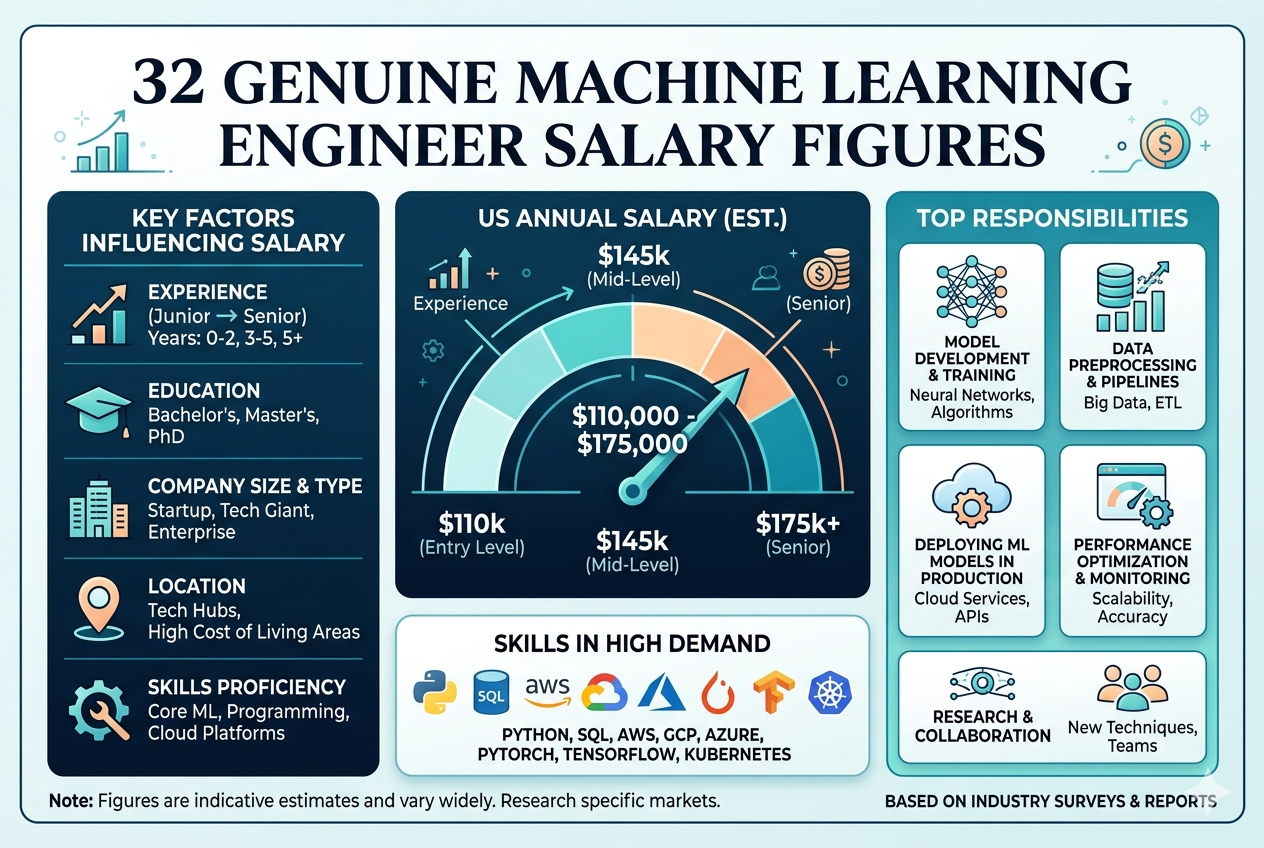
Machine learning engineering has become one of the most sought-after careers in the modern tech industry. As companies continue to invest in artificial intelligence, data-driven decision-making, and automation, the demand for skilled machine learning engineers has grown rapidly. However, salary expectations in this field are often misunderstood, exaggerated, or based on incomplete information. This discussion aims to provide a realistic, honest, and detailed overview of what machine learning engineers actually earn across different levels, industries, and regions.
Understanding the Role Behind the Salary
Before discussing numbers, it is important to understand what a machine learning engineer actually does. This role combines software engineering, data science, and applied mathematics. A machine learning engineer builds, trains, and deploys models that allow machines to learn patterns from data and make predictions or decisions without explicit programming for each task.
Their responsibilities often include data preprocessing, model selection, algorithm optimization, feature engineering, and deployment into production systems. Because of this wide scope, salaries vary significantly depending on technical depth, experience, and the complexity of the systems being built.
Entry-Level Salary Reality
At the entry level, machine learning engineer salaries are often lower than public perception suggests. Many beginners assume that simply learning Python and basic machine learning libraries guarantees a high-paying job, but reality is more nuanced.
Fresh graduates or career switchers entering the field typically earn moderate salaries compared to senior professionals. Entry-level roles often require strong foundations in programming, statistics, and data handling, along with some project experience.
At this stage, compensation is influenced heavily by internship experience, academic background, and portfolio strength. Engineers who have worked on real-world projects or contributed to research or open-source work tend to earn on the higher side of entry-level ranges.
Mid-Level Experience and Salary Growth
Once a machine learning engineer gains a few years of experience, salary growth becomes more noticeable. At this stage, engineers are expected to handle end-to-end machine learning pipelines independently. They are also more involved in system design, optimization, and collaboration with product teams.
Mid-level engineers often experience a significant jump in compensation due to their ability to deliver production-ready models and improve business outcomes. Companies value engineers who can move beyond experimentation and build scalable systems that generate real impact.
Salary increases at this stage are also influenced by specialization. Engineers focusing on natural language processing, computer vision, or large-scale distributed systems often earn more than generalists due to the complexity of their work.
Senior Machine Learning Engineer Compensation
Senior machine learning engineers are among the highest earners in the field. At this level, professionals are expected not only to build models but also to lead technical decisions, mentor junior engineers, and design machine learning infrastructure at scale.
Their work often involves solving complex business problems using advanced machine learning techniques. They may also contribute to architectural decisions, research implementation, and cross-functional leadership.
Senior salaries reflect both technical expertise and leadership responsibility. Engineers who demonstrate strong impact on revenue, product performance, or cost optimization tend to command significantly higher compensation packages.
Impact of Location on Salary
Geographic location plays a major role in determining machine learning engineer salaries. In regions with a high concentration of technology companies, salaries tend to be significantly higher due to competition for talent and cost of living differences.
In major tech hubs, engineers often receive higher base pay along with additional benefits such as stock options and performance bonuses. In contrast, regions with smaller tech ecosystems may offer lower base salaries but sometimes compensate with remote work flexibility or lower living costs.
Remote work has also started reshaping salary structures. Some companies adjust pay based on location, while others offer standardized compensation regardless of geography, especially in highly competitive firms.
Industry Differences in Pay
Not all machine learning roles pay the same, even at similar experience levels. The industry in which an engineer works has a major impact on compensation.
Technology companies, especially those focused on artificial intelligence products, tend to offer some of the highest salaries. Financial services firms also pay competitively due to their reliance on predictive modeling, fraud detection, and algorithmic trading systems.
Healthcare, automotive, and e-commerce industries also hire machine learning engineers, but compensation varies depending on how central AI is to their core business. Companies where machine learning is a primary driver of revenue usually offer higher pay compared to organizations where it is a supporting function.
Skills That Influence Salary Levels
Technical skills play a crucial role in determining how much a machine learning engineer earns. Strong proficiency in programming languages, especially Python, is essential. Knowledge of frameworks for deep learning and experience with large-scale data processing systems also significantly increase earning potential.
Beyond technical skills, problem-solving ability and system design expertise are highly valued. Engineers who can translate business problems into machine learning solutions are often rewarded with higher compensation.
Soft skills also matter. Communication, teamwork, and the ability to explain complex concepts to non-technical stakeholders can influence career growth and salary progression over time.
Education and Background Influence
While formal education is not always required, it still has an impact on salary, especially at the entry level. Candidates with degrees in computer science, data science, mathematics, or related fields often have an advantage in securing higher-paying roles early in their careers.
Advanced degrees such as master’s or PhDs can lead to higher starting salaries, particularly in research-focused roles or specialized AI teams. However, practical experience and demonstrated project success often outweigh formal education in the long term.
Negotiation and Salary Growth Strategy
One of the most overlooked aspects of machine learning engineer compensation is negotiation. Many engineers accept initial offers without fully understanding market rates or their own value. Effective negotiation can significantly increase total compensation, especially when stock options and bonuses are involved.
Career growth in this field is not purely linear. Engineers who continuously update their skills, work on impactful projects, and move into high-demand specialties often experience faster salary growth.
Switching companies is also a common strategy for increasing compensation, as external offers frequently exceed internal raises in many organizations.
Beyond Base Salary: Total Compensation
Machine learning engineer earnings are not limited to base salary alone. Total compensation often includes bonuses, stock options, health benefits, retirement contributions, and other perks.
In many top-tier companies, stock-based compensation can form a significant portion of total income. This means that long-term financial outcomes can vary depending on company performance and market conditions.
Understanding total compensation is essential when evaluating job offers, as focusing only on base salary can lead to an incomplete picture of actual earnings.
Future Salary Trends in Machine Learning Engineering
The demand for machine learning engineers is expected to continue growing as artificial intelligence becomes more deeply integrated into everyday products and services. This sustained demand is likely to keep salaries competitive, especially for engineers with strong practical experience.
However, as more professionals enter the field, competition at the entry level may increase. This could lead to more emphasis on specialization, advanced skills, and domain expertise in determining salary differences.
Emerging areas such as generative AI, reinforcement learning, and large-scale model deployment are expected to create new high-paying opportunities for skilled engineers.
Conclusion
Machine learning engineer salaries are influenced by a combination of experience, skills, location, industry, and negotiation ability. While entry-level roles may not always match public expectations, compensation grows significantly with experience and specialization.
The most successful engineers in this field are those who continuously develop both technical and practical skills, understand business impact, and adapt to evolving technologies. Rather than focusing solely on salary figures, long-term career growth in machine learning engineering depends on building expertise that creates measurable value in real-world applications.