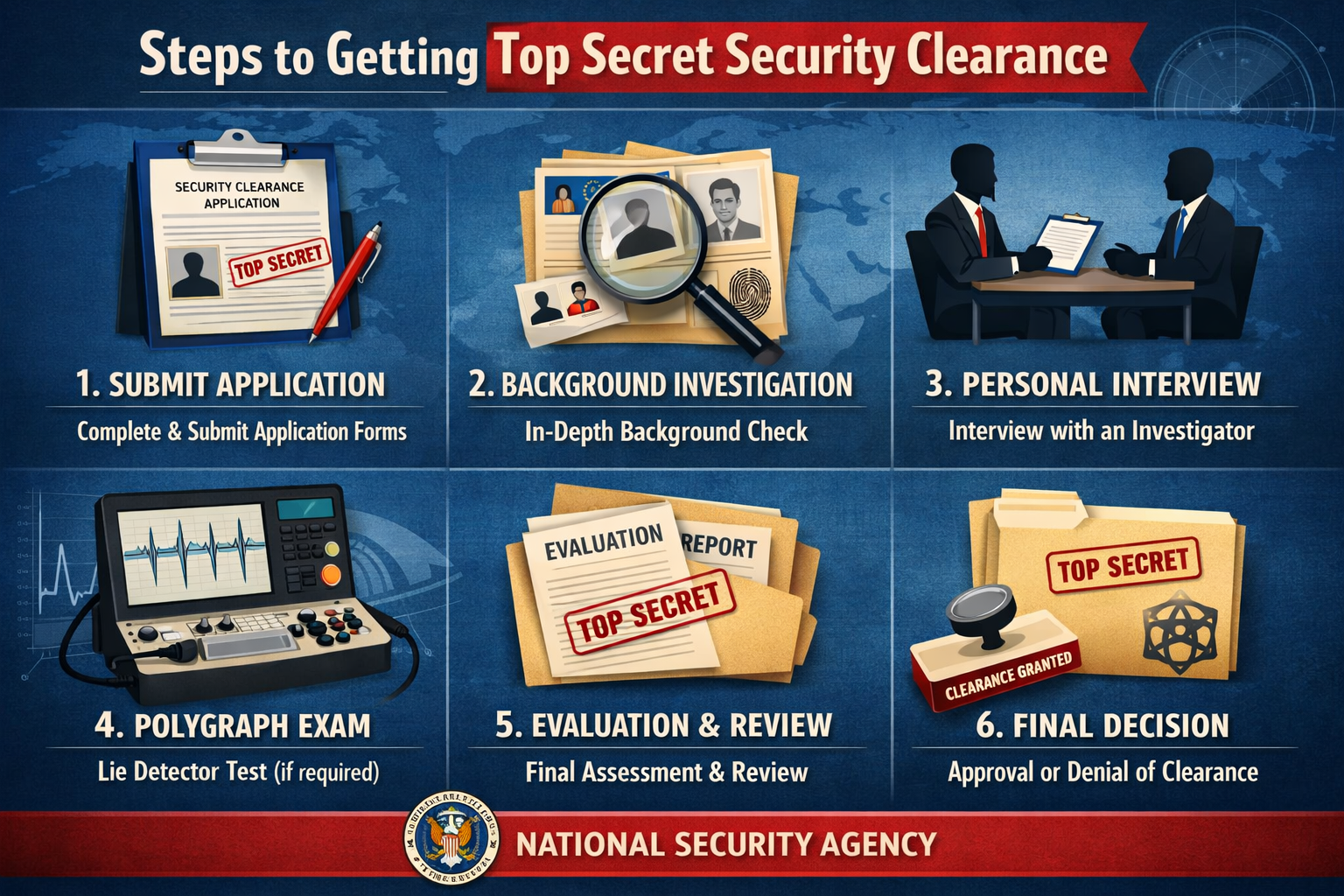
Getting Top Secret Security Clearance is one of the most thorough and sensitive vetting processes used to evaluate individuals who need access to classified government information. The entire procedure is designed to protect national security by ensuring that only individuals with the highest level of trustworthiness, reliability, and integrity are granted access. The process is not quick, and it requires careful review of multiple aspects of a person’s life, both past and present.
Initial Eligibility and Sponsorship
The first stage in obtaining Top Secret Security Clearance begins with eligibility determination. An individual cannot apply independently; they must first be sponsored by a government agency or an authorized contractor who requires access to classified information for job-related duties. Without this sponsorship, the clearance process cannot begin.
Once sponsorship is confirmed, the individual is notified and required to begin the formal application process. At this stage, applicants are expected to understand that the process will involve deep scrutiny of their personal and professional background. This awareness is important because transparency and honesty are critical throughout every step of the clearance process.
Completion of Security Questionnaire
After sponsorship, the applicant is required to complete a detailed security questionnaire. This document is extensive and covers multiple areas of a person’s life, including residence history, employment history, education, family background, financial records, foreign contacts, and any previous legal issues.
Accuracy is extremely important when completing this form. Even small errors or omissions can raise concerns during the investigation stage. The information provided becomes the foundation of the entire background check, so applicants are expected to be fully transparent and thorough.
Comprehensive Background Investigation
Once the application is submitted, a full background investigation begins. This is one of the most critical stages of the process. Investigators carefully review the applicant’s history to determine whether they meet the standards required for access to classified material.
The investigation includes verification of employment history, education credentials, and residential records. Investigators also examine financial behavior, such as credit history, outstanding debts, and overall financial responsibility. A pattern of financial instability may raise concerns about susceptibility to pressure or influence.
Additionally, investigators review any criminal records or past legal issues. Even minor infractions may be considered in the overall assessment, depending on their nature and frequency. The goal is to build a complete picture of the applicant’s character and reliability.
Personal Interviews and Reference Checks
As part of the investigation, applicants may be required to participate in personal interviews conducted by trained security officers. These interviews are designed to clarify information provided in the application and to assess the applicant’s honesty, judgment, and consistency in their responses.
In addition to interviewing the applicant, investigators also contact references, including employers, coworkers, neighbors, teachers, and other individuals who can provide insight into the applicant’s character. These interviews help verify the accuracy of the information provided and allow investigators to identify any potential concerns that may not have been disclosed.
The interview process is typically detailed and may include questions about personal behavior, lifestyle choices, foreign relationships, and financial habits. The purpose is not to intimidate the applicant but to ensure a complete and accurate understanding of their background.
Financial Responsibility Assessment
Financial stability is a major factor in determining eligibility for Top Secret Security Clearance. Investigators carefully evaluate the applicant’s financial history to identify any signs of excessive debt, unpaid obligations, or patterns of financial irresponsibility.
The concern behind this evaluation is that individuals with significant financial stress may be more vulnerable to coercion or bribery. As a result, applicants are expected to demonstrate responsible financial behavior over time. Occasional financial challenges may not automatically disqualify a candidate, but unresolved or severe issues may require additional explanation.
Applicants may also be asked to provide clarification for large financial transactions, unexplained income sources, or inconsistent financial records. Transparency in financial matters plays an important role in the overall assessment.
Foreign Contacts and Security Concerns
Another important part of the clearance process involves evaluating foreign contacts and relationships. Applicants must disclose any significant connections with individuals or organizations outside the country. This includes family members, friends, business associates, or frequent travel to foreign countries.
The purpose of this evaluation is to assess whether any foreign influence could potentially compromise the applicant’s ability to safeguard classified information. Not all foreign contacts are considered a risk, but they are carefully reviewed to determine the nature and level of association.
In some cases, investigators may conduct additional checks or interviews related to these foreign connections. The focus is always on ensuring that the applicant can remain impartial and free from external pressure.
Behavioral and Character Evaluation
Beyond factual records and documentation, investigators also evaluate the applicant’s personal behavior and character. This includes assessing traits such as honesty, responsibility, emotional stability, and decision-making ability.
Any history of substance abuse, repeated misconduct, or questionable behavior may be taken into account. However, each case is reviewed individually, and context is important. The goal is not to penalize past mistakes alone but to determine whether the individual demonstrates consistent reliability and sound judgment over time.
Character references play a significant role in this evaluation. Feedback from people who have worked closely with the applicant helps provide insight into their day-to-day behavior and ethical standards.
Security Interview Clarifications
During the investigation, applicants may be called in for additional interviews if discrepancies or unclear information arise. These follow-up discussions are intended to clarify details rather than challenge the applicant unfairly.
Applicants are encouraged to respond honestly and provide as much detail as possible. Attempting to conceal or misrepresent information can seriously impact the outcome of the investigation. Consistency and transparency are essential throughout this stage.
Investigators may revisit certain topics multiple times to ensure accuracy and completeness. This thorough approach helps eliminate uncertainty and strengthens the reliability of the final decision.
Evaluation of Overall Risk
After all information is collected, investigators conduct a comprehensive risk assessment. This evaluation considers all aspects of the applicant’s background, including financial history, personal behavior, foreign contacts, legal records, and interview responses.
Rather than focusing on a single issue, the assessment looks at the overall pattern of behavior. A minor concern in one area may not be disqualifying if balanced by strong positive factors elsewhere. However, multiple issues combined may increase the level of concern.
The purpose of this stage is to determine whether granting clearance would pose any risk to national security. The decision is based on a careful balance of trustworthiness, reliability, and loyalty.
Final Review and Decision Process
Once the investigation is complete, the entire case is forwarded to an adjudication authority. This body is responsible for making the final decision regarding clearance eligibility. Adjudicators review all collected information in detail, including reports, interviews, and supporting documentation.
They apply established guidelines to evaluate whether the applicant meets the required standards. The decision is not arbitrary but based on structured criteria designed to ensure consistency and fairness.
If concerns are identified, additional clarification may be requested before a final decision is made. In some cases, conditional approval or further monitoring may be considered depending on the nature of the findings.
Importance of Honesty Throughout the Process
One of the most important aspects of obtaining Top Secret Security Clearance is maintaining honesty at every stage. Attempting to hide information, provide false statements, or mislead investigators can result in immediate disqualification.
Even issues that might seem minor are better disclosed openly, as transparency is often viewed more favorably than concealment. The clearance process is designed to assess trustworthiness, and honesty is one of the strongest indicators of reliability.
Ongoing Responsibility After Approval
Even after clearance is granted, the responsibility does not end. Individuals are expected to maintain high standards of conduct and report any significant changes in their personal or professional lives. This includes financial changes, legal issues, or foreign contacts that develop after clearance is granted.
Clearance holders may also undergo periodic reinvestigations to ensure continued eligibility. This ongoing monitoring helps maintain the integrity of the security system and ensures continued protection of sensitive information.
Periodic Reinvestigation and Continuous Evaluation
After an individual is granted Top Secret Security Clearance, their status is not permanent without further review. Periodic reinvestigations are conducted to ensure that the individual continues to meet the required standards of trustworthiness and reliability. These reviews typically occur at scheduled intervals and may include a full or partial reassessment of personal, financial, and professional circumstances.
In addition to scheduled reviews, many agencies now use continuous evaluation systems. This means that certain aspects of an individual’s background may be monitored in real time, such as criminal records, financial indicators, or other risk-related updates. If something significant changes, it may trigger an additional review even before the next scheduled reinvestigation.
The purpose of this ongoing process is to ensure that individuals in sensitive positions remain suitable for access to classified information throughout the duration of their employment or assignment.
Reporting Requirements and Personal Responsibility
Once clearance is granted, individuals are expected to actively maintain compliance with reporting requirements. This includes notifying the appropriate security office of any significant life changes that could potentially affect their eligibility.
Such changes may include financial difficulties, arrest or legal issues, changes in foreign contacts, or major personal developments such as marriage to a foreign national. Even changes in behavior or circumstances that may appear minor can sometimes be relevant to security evaluation.
Failure to report required information can lead to serious consequences, including suspension or revocation of clearance. Therefore, individuals are expected to understand that maintaining clearance is not passive but requires continuous responsibility and awareness.
Financial Monitoring and Stability Expectations
Financial responsibility continues to be an important factor even after clearance has been granted. Individuals are expected to maintain stable financial behavior and avoid situations that could create vulnerability.
Large debts, unpaid obligations, or sudden unexplained financial changes may raise concerns during ongoing monitoring. While financial difficulties do not automatically result in loss of clearance, the expectation is that individuals will take appropriate steps to manage and resolve financial challenges responsibly.
In some cases, individuals may be asked to provide additional explanations or documentation regarding their financial situation. The goal is to ensure that no financial pressure could compromise their ability to protect sensitive information.
Foreign Influence and Continued Monitoring
Foreign contacts and associations remain an important consideration throughout the entire duration of holding Top Secret Security Clearance. Individuals are expected to continue disclosing any new or developing foreign relationships that could be relevant to security assessments.
This includes business relationships, personal friendships, travel, or financial connections involving foreign entities. The focus is on identifying any potential risk of undue influence or conflict of interest.
Even long-standing relationships are periodically reviewed to ensure they remain appropriate under current security standards. Transparency in reporting foreign interactions is essential for maintaining clearance status.
Behavioral Conduct and Professional Integrity
Ongoing eligibility for clearance also depends heavily on continued professional and personal conduct. Individuals are expected to demonstrate consistent integrity, responsibility, and adherence to laws and regulations.
Behavioral issues such as substance abuse, repeated misconduct, or workplace violations may be evaluated as part of continuous monitoring. Even actions outside the workplace can be considered if they reflect on an individual’s judgment or reliability.
Maintaining a clean and responsible record is essential, as security clearance is ultimately based on trust. Any behavior that suggests a lack of judgment or reliability can trigger additional review or corrective action.
Security Awareness and Compliance Training
Individuals with Top Secret Security Clearance are often required to complete regular security awareness training. This training reinforces the importance of protecting classified information and provides updates on security policies, procedures, and threats.
The training helps ensure that clearance holders remain aware of their responsibilities and understand how to properly handle sensitive information. It also serves as a reminder of the potential consequences of security violations.
Compliance with these training requirements is mandatory, and failure to complete them can impact clearance status or job eligibility.
Handling of Classified Information
A critical part of maintaining clearance involves the proper handling of classified information. Individuals must follow strict protocols regarding storage, transmission, and discussion of sensitive material.
Unauthorized disclosure, even if accidental, can result in serious disciplinary action. Clearance holders are expected to exercise caution at all times and ensure that classified information is only accessed and shared through approved channels.
This responsibility extends beyond the workplace, as individuals must also avoid discussing sensitive matters in unsecured environments or with unauthorized persons.
Workplace Monitoring and Supervisory Oversight
In many cases, individuals with Top Secret Security Clearance are subject to workplace monitoring and supervisory oversight. Supervisors play an important role in observing behavior, performance, and compliance with security procedures.
If concerns arise, supervisors may report them to security officials for further review. This system of oversight helps ensure that potential issues are identified early and addressed appropriately.
Performance evaluations may also include consideration of security-related behavior, not just job performance alone. This reinforces the importance of maintaining consistent professionalism.
Psychological and Behavioral Stability Considerations
In some cases, psychological stability may also be considered as part of ongoing evaluation. While not all individuals undergo formal psychological testing after clearance is granted, observable behavior patterns may be assessed if concerns arise.
The focus is on ensuring that individuals can handle the stress and responsibility associated with access to highly sensitive information. Emotional instability, impulsive behavior, or poor decision-making may trigger additional review.
However, the system is designed to be fair and context-driven, taking into account the full range of circumstances before making any determination.
Revocation and Suspension of Clearance
Top Secret Security Clearance can be suspended or revoked if an individual no longer meets eligibility requirements. This may occur due to new information uncovered during reinvestigation, failure to report required changes, or serious violations of security protocols.
When concerns arise, individuals are often given an opportunity to respond or provide clarification. In some cases, corrective actions or additional monitoring may be implemented instead of immediate revocation.
However, if risks are deemed significant, clearance may be removed to protect national security interests. Losing clearance can also affect employment, particularly in roles that require access to classified information.
Appeal and Review Process
If clearance is denied or revoked, individuals may have the opportunity to appeal the decision. The appeal process allows for additional information to be presented and for the case to be reviewed again by appropriate authorities.
This process ensures fairness and allows for reconsideration of mitigating circumstances. However, the outcome of appeals depends on the strength of evidence and whether concerns can be adequately addressed.
Not all decisions are reversible, but the system is designed to ensure that individuals are not judged without proper review and consideration.
Long-Term Importance of Maintaining Clearance
Holding Top Secret Security Clearance is both an opportunity and a responsibility. It allows individuals to work in highly sensitive and important roles, but it also requires ongoing commitment to ethical behavior, legal compliance, and professional integrity.
The clearance process does not end with approval; it continues throughout the entire period of access. Individuals must remain aware that their actions, both on and off duty, can impact their eligibility.
Ultimately, maintaining clearance is about sustaining trust over time. It reflects not only past behavior but also current judgment and future reliability in protecting critical national security information.
Common Reasons for Delay in Clearance Processing
The process of obtaining Top Secret Security Clearance can sometimes take longer than expected due to a variety of factors. One of the most common reasons for delay is incomplete or inaccurate information provided in the initial application. Even small inconsistencies can require additional verification, which extends the overall timeline.
Another frequent cause of delay is the need for expanded background checks. If an applicant has lived in multiple locations, worked in several jobs, or traveled extensively, investigators may need more time to verify records across different jurisdictions and organizations.
Foreign contacts, financial complexity, or prior legal issues can also increase the time required for review. These factors do not necessarily prevent approval, but they often require deeper investigation to ensure a complete and accurate assessment.
Impact of Personal History Complexity
The complexity of an individual’s personal history plays a significant role in how long the clearance process takes. Applicants with straightforward backgrounds, such as stable employment history and limited travel, may experience faster processing times.
In contrast, individuals with diverse experiences, such as international work assignments or frequent relocation, may require more extensive verification. Each additional element in a person’s history must be confirmed for accuracy, which naturally extends the investigation period.
The goal is not to disadvantage individuals with complex backgrounds, but to ensure that all relevant information is fully reviewed before a decision is made.
Role of Investigative Agencies
Multiple investigative agencies may be involved in the clearance process, depending on the nature of the assignment and the level of access required. These agencies work together to gather, verify, and analyze information related to the applicant’s background.
Investigators may conduct field interviews, review official records, and coordinate with local or international sources when necessary. This collaborative approach ensures that all available information is considered in the evaluation process.
Because different agencies may handle different parts of the investigation, coordination between them is essential for maintaining accuracy and consistency.
Use of Digital Records and Modern Screening Methods
Modern security clearance processes increasingly rely on digital records and advanced screening systems. These tools help investigators quickly access financial data, employment records, and legal documentation.
Automated systems may also flag potential issues for further review, allowing investigators to focus on areas that require deeper analysis. This combination of technology and human review helps improve both efficiency and accuracy.
However, despite technological support, human judgment remains a critical part of the process, especially when evaluating context, intent, and behavioral patterns.
Importance of Consistency in Information
Consistency across all submitted information is a key factor in the evaluation process. Discrepancies between application forms, interviews, and external records can raise questions that must be resolved before clearance can be granted.
Applicants are expected to provide consistent and truthful information at every stage. If differences are identified, investigators will typically seek clarification to determine whether the issue is an honest mistake or a more serious concern.
Maintaining consistency helps build credibility and strengthens the overall assessment of trustworthiness.
Risk Factors Considered During Evaluation
During the clearance process, investigators assess a range of potential risk factors that could affect eligibility. These may include financial instability, criminal history, substance use, foreign influence, or questionable personal behavior.
Each factor is evaluated in context rather than in isolation. For example, a past issue may be considered less significant if it occurred long ago and has not repeated, while ongoing patterns of concern may carry more weight.
The goal is to determine whether there is any reasonable risk that could compromise national security responsibilities.
Mitigating Factors and Positive Indicators
In addition to identifying risks, investigators also consider mitigating factors that support an applicant’s eligibility. These may include stable employment history, strong professional references, responsible financial recovery, or evidence of rehabilitation after past issues.
Positive indicators play an important role in the final decision, as they demonstrate growth, responsibility, and reliability over time. A balanced evaluation considers both strengths and concerns before reaching a conclusion.
This approach ensures that applicants are assessed fairly based on their overall profile rather than isolated incidents.
Importance of Professional Conduct in the Workplace
Workplace behavior is closely observed throughout the clearance process and after approval. Professional conduct, teamwork, reliability, and adherence to security procedures all contribute to maintaining eligibility.
Supervisors and security officers may report behavioral concerns if they arise. These reports are taken seriously, as they may indicate potential risks or policy violations.
Consistent professionalism helps reinforce trust and supports continued access to sensitive information.
Handling of Sensitive Discussions and Communication
Individuals with Top Secret Security Clearance are expected to exercise caution in all forms of communication. This includes verbal conversations, written correspondence, and electronic communication.
Discussions involving classified information must only occur in approved environments and with authorized personnel. Even casual or indirect references to sensitive topics in unsecured settings can pose a security risk.
Clearance holders are trained to remain vigilant about what they say, where they say it, and who may be listening.
Social Media and Digital Presence Considerations
In today’s digital environment, online activity is also considered during clearance evaluation and ongoing monitoring. Publicly available social media content may be reviewed for behavior patterns, associations, or disclosures that could raise security concerns.
Individuals are expected to exercise discretion in their online presence and avoid sharing sensitive or inappropriate information. Even personal posts can sometimes be evaluated if they reflect on judgment or reliability.
Responsible digital behavior is increasingly important in maintaining clearance status.
Ethical Responsibility and Trustworthiness
At the core of Top Secret Security Clearance is the concept of trust. Individuals granted access to classified information are expected to act with the highest level of ethical responsibility at all times.
This includes honesty in reporting, integrity in decision-making, and respect for security protocols. Any breach of trust, whether intentional or accidental, can have serious consequences.
Trustworthiness is not only assessed during the initial investigation but is continuously evaluated throughout the duration of clearance.
Long-Term Career Implications
Holding Top Secret Security Clearance can significantly impact an individual’s career opportunities. It often allows access to specialized roles in government and defense-related fields that are not available to the general public.
However, it also comes with long-term obligations. Individuals must maintain strict compliance with security standards and remain aware that their actions can influence future employment eligibility.
Clearance can be a valuable professional asset, but it must be carefully maintained through consistent responsible behavior.
Understanding of the Clearance Process
The process of obtaining Top Secret Security Clearance is designed to be thorough, structured, and highly detailed. It examines every aspect of an individual’s background to ensure that only those who demonstrate the highest level of reliability and integrity are granted access.
From initial application and background investigation to ongoing monitoring and reinvestigation, the system is built around continuous evaluation. It is not a one-time approval but an ongoing responsibility.
Ultimately, the process reflects the importance of protecting sensitive national security information and ensuring that access is granted only to individuals who consistently demonstrate trust, stability, and sound judgment over time.
Challenges Applicants Commonly Face During the Process
One of the most difficult aspects of obtaining Top Secret Security Clearance is managing the uncertainty of the timeline. The process does not follow a fixed duration because each case depends on the complexity of the applicant’s background. Some individuals may experience smooth progression, while others may encounter repeated requests for additional information.
Delays often occur when investigators need clarification on specific details such as past employment gaps, inconsistent records, or unresolved financial entries. These delays are not necessarily negative, but they do require patience and cooperation from the applicant.
Another common challenge is the emotional pressure associated with the depth of the investigation. Because nearly every aspect of a person’s life is reviewed, applicants may feel a lack of privacy. However, this level of scrutiny is a standard requirement for access to highly sensitive information.
Importance of Full Disclosure from the Beginning
Full disclosure at the beginning of the process is essential for avoiding complications later. Applicants are expected to provide complete and accurate information on all forms, even if certain details feel minor or irrelevant.
Withholding information, even unintentionally, can create serious issues if discovered during verification. Investigators are trained to cross-check records, and inconsistencies often lead to additional questioning or delays.
Being upfront from the start helps establish credibility and reduces the likelihood of misunderstandings during the evaluation process.
How Investigators Verify Information
Verification of information is one of the most detailed aspects of the clearance process. Investigators do not rely solely on the application provided by the candidate. Instead, they confirm details through independent sources such as employment records, educational institutions, financial institutions, and public records.
In some cases, investigators may conduct field visits or contact individuals who have worked or interacted with the applicant in the past. These steps help ensure that all information is accurate and consistent across multiple sources.
The verification process is designed to detect both intentional misrepresentation and unintentional errors.
Role of Interviews in Building a Full Profile
Interviews play a critical role in shaping the overall understanding of an applicant’s background. These interviews are often conducted in multiple stages and may involve both structured questions and follow-up discussions.
During these conversations, investigators focus on clarifying timelines, understanding motivations, and assessing behavioral consistency. The applicant’s ability to provide clear, honest, and consistent answers is an important part of the evaluation.
In addition to formal interviews, informal conversations with references also contribute to building a complete picture of the individual’s character.
Evaluation of Stability in Personal Life
Stability in personal life is another important factor considered during the clearance process. This includes long-term residential history, consistency in employment, and overall lifestyle patterns.
Frequent instability in these areas may not automatically disqualify an applicant, but it may prompt additional review to understand the underlying reasons. Stability is often seen as an indicator of reliability and predictability, which are important qualities for handling sensitive information.
Investigators look for patterns over time rather than isolated events when assessing stability.
Financial Behavior Over Time
Financial behavior is not evaluated as a single snapshot but rather as a long-term pattern. Investigators review how an individual has managed financial responsibilities over several years.
This includes credit history, debt repayment patterns, and overall financial decision-making. Sudden improvements or declines in financial behavior may be examined more closely to understand the context behind the changes.
Responsible financial management is viewed as an indicator of good judgment and reduced vulnerability to external pressure.
Foreign Travel and International Exposure
Foreign travel history is carefully reviewed as part of the clearance process. The frequency, purpose, and destinations of travel are all considered when evaluating potential security risks.
Extended stays abroad or frequent travel to certain regions may require additional explanation. However, travel alone is not viewed negatively; instead, investigators focus on understanding the context and purpose of each trip.
International exposure is assessed in relation to the overall risk profile of the applicant.
Behavioral Patterns and Decision-Making Ability
Decision-making ability is an important factor in determining suitability for Top Secret Security Clearance. Investigators assess how individuals have handled challenges, responsibilities, and conflicts in the past.
Patterns of impulsive behavior, poor judgment, or repeated mistakes may raise concerns. On the other hand, evidence of thoughtful decision-making and responsible behavior strengthens the overall evaluation.
Behavioral patterns are considered over time to identify consistency in actions and attitudes.
Security Awareness in Daily Life
Maintaining clearance requires ongoing awareness of security responsibilities in everyday life. This includes being cautious about conversations, protecting sensitive information, and following established procedures at all times.
Even outside the workplace, individuals are expected to remain mindful of their obligations. This level of awareness becomes part of daily behavior and professional identity.
Security awareness is reinforced through training and continuous reminders throughout the clearance period.
The Psychological Demands of Clearance Responsibility
Holding Top Secret Security Clearance can also involve psychological responsibility. The awareness that one is trusted with highly sensitive information can create a strong sense of duty.
Individuals must consistently demonstrate self-control, ethical judgment, and emotional stability. The ability to handle pressure without compromising responsibilities is an important part of maintaining clearance.
This psychological aspect is often overlooked but plays a significant role in long-term eligibility.
Consequences of Security Violations
Security violations are taken very seriously and can have immediate consequences. Depending on the severity of the violation, outcomes may range from additional training to suspension or complete revocation of clearance.
Even unintentional mistakes can lead to formal investigations. Therefore, individuals are expected to exercise caution at all times and follow established guidelines without exception.
The consequences emphasize the importance of discipline and attention to detail in handling classified information.
Reevaluation After Major Life Events
Certain life events can trigger reevaluation of clearance eligibility. These may include marriage, divorce, significant financial changes, legal issues, or changes in foreign relationships.
When such events occur, individuals are typically required to report them promptly. The information is then reviewed to determine whether any adjustments to clearance status are necessary.
This ensures that eligibility remains aligned with current circumstances rather than outdated information.
Importance of Trust as a Core Requirement
Trust is the foundation of the entire clearance system. Every stage of the process is designed to assess whether an individual can be trusted with highly sensitive information that could impact national security.
This trust is not based on a single factor but on a combination of history, behavior, judgment, and reliability. Maintaining this trust over time is essential for continued access.
Once trust is compromised, it becomes very difficult to restore within the security framework.
Long-Term Nature of Security Clearance Responsibility
Top Secret Security Clearance is not a one-time achievement but a long-term responsibility. Individuals must continuously demonstrate that they meet the required standards throughout their careers.
This ongoing obligation ensures that access to classified information remains limited to those who consistently prove their reliability.
The process reflects the seriousness of protecting sensitive national interests and maintaining a secure environment for critical operations.
Conclusion
The process of obtaining Top Secret Security Clearance is a highly structured and detailed system designed to protect national security by carefully evaluating an individual’s trustworthiness, reliability, and overall suitability. It involves far more than a simple application, requiring extensive background checks, personal interviews, financial reviews, and ongoing assessments of behavior and conduct.
From the initial eligibility stage to the final adjudication decision, every step is focused on building a complete and accurate understanding of an applicant’s life history. Investigators examine not only factual records but also patterns of behavior, personal judgment, and potential risks that could affect access to sensitive information.
Even after clearance is granted, the responsibility continues. Individuals must maintain high standards of integrity, report significant life changes, and remain compliant with security requirements at all times. Continuous monitoring and periodic reinvestigations ensure that eligibility is preserved only for those who consistently meet strict standards.
Ultimately, Top Secret Security Clearance represents a long-term commitment rather than a one-time achievement. It is built on trust, accountability, and discipline, and it requires individuals to uphold those values throughout their careers in order to safeguard critical information and national interests.