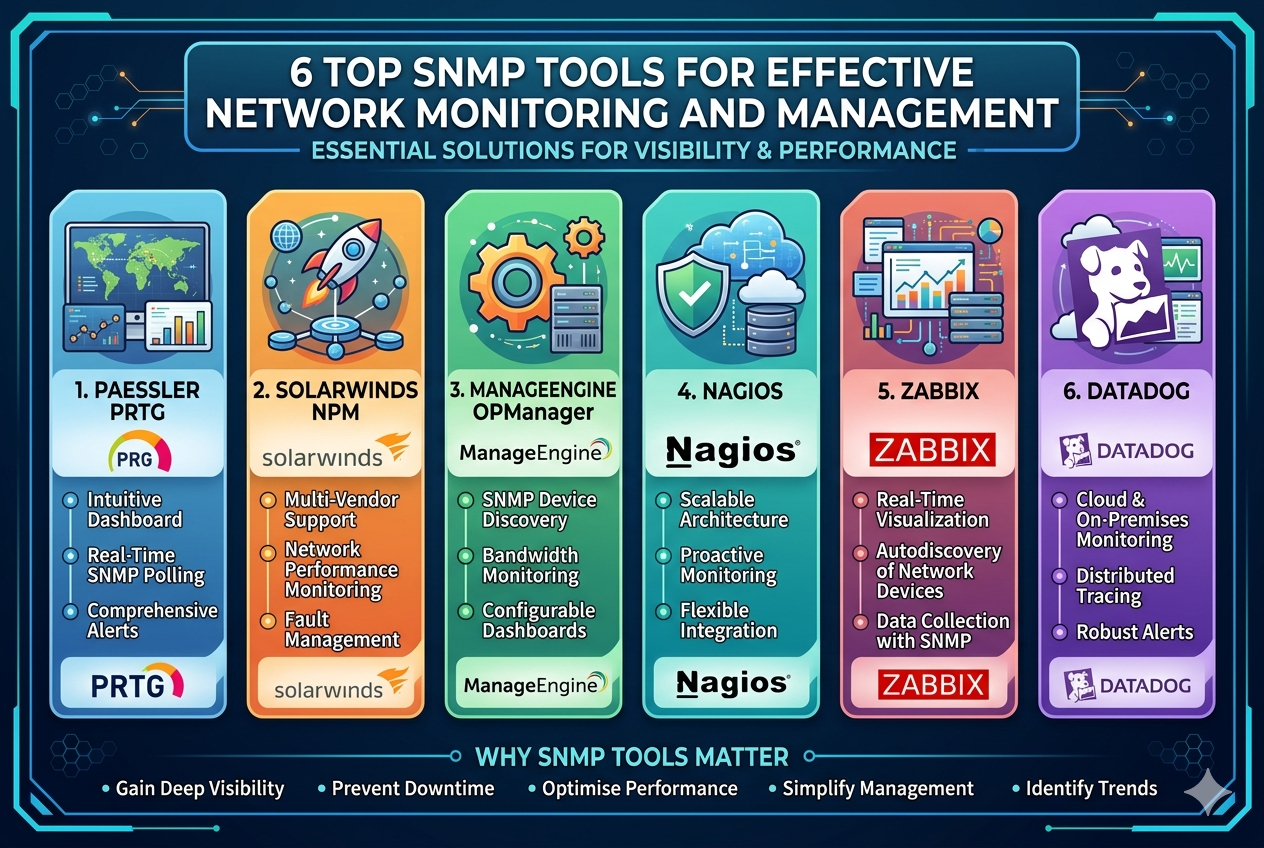
PRTG Network Monitor stands out for its flexibility, scalability, and ease of deployment, making it a popular choice for both small businesses and large enterprises. It uses a sensor-based approach, where each SNMP-enabled device or metric is monitored through dedicated sensors. This allows administrators to gain highly detailed insights into bandwidth usage, CPU load, memory consumption, and device availability. The intuitive interface simplifies navigation, while customizable dashboards make it easy to visualize network performance in real time. Additionally, PRTG offers automated alerts and notifications, ensuring that potential issues are detected and addressed before they impact operations. Its ability to integrate with other monitoring protocols alongside SNMP further enhances its overall effectiveness.
Zabbix
Zabbix is a powerful open-source SNMP monitoring tool designed for organizations seeking a highly customizable and cost-effective solution. It supports a wide range of network devices and provides deep visibility into network performance metrics. One of its key strengths lies in its ability to handle large-scale environments without compromising performance. Zabbix offers advanced data collection, trend analysis, and visualization features that help administrators make informed decisions. Its alerting system is highly configurable, allowing users to set precise thresholds and triggers based on their specific requirements. The platform also supports automation, enabling efficient management of complex networks with minimal manual intervention.
Nagios XI
Nagios XI is a robust network monitoring solution that builds on the capabilities of the widely known Nagios Core. It provides comprehensive SNMP monitoring features along with an intuitive web-based interface. This tool is particularly valued for its extensive plugin ecosystem, which allows users to extend functionality based on their needs. With Nagios XI, administrators can monitor network devices, track performance metrics, and receive alerts for potential issues in real time. The reporting and visualization features help in analyzing historical data and identifying trends, making it easier to optimize network performance. Its scalability ensures that it can adapt to growing network infrastructures without losing efficiency.
Observium
Observium is designed to provide a clean and straightforward approach to SNMP-based network monitoring. It automatically discovers network devices and begins collecting data without requiring complex configuration. This makes it especially appealing for administrators who prefer a solution that works efficiently out of the box. Observium focuses heavily on visual representation, offering detailed graphs and charts that make it easier to interpret network performance data. It supports a wide range of hardware vendors and device types, ensuring compatibility across diverse network environments. By delivering continuous monitoring and detailed insights, it helps maintain network stability and performance over time.
LibreNMS
LibreNMS is another open-source SNMP monitoring tool that emphasizes automation and ease of use. It features automatic network discovery, which simplifies the process of adding and managing devices. The platform supports a broad range of devices and vendors, making it a versatile option for organizations with heterogeneous network environments. LibreNMS provides real-time monitoring, customizable alerting, and detailed performance metrics. Its web-based interface is modern and responsive, allowing administrators to access network data from various devices. With active community support and regular updates, LibreNMS continues to evolve, offering new features and improvements that enhance its functionality.
Advanced Features to Look for in SNMP Tools
When selecting an SNMP tool for network monitoring and management, understanding the advanced features available can make a significant difference in long-term performance and usability. Modern SNMP tools go beyond basic monitoring and provide intelligent capabilities that help administrators manage complex infrastructures with greater precision. Features such as automated discovery, predictive analytics, and customizable dashboards are no longer optional but essential for maintaining efficiency in dynamic network environments. Automated discovery allows the system to identify and map devices without manual input, saving time and reducing configuration errors. This is particularly valuable in large organizations where networks are constantly evolving with new devices being added or removed.
Another critical feature is real-time monitoring combined with intelligent alerting. Instead of overwhelming administrators with excessive notifications, advanced SNMP tools prioritize alerts based on severity and relevance. This ensures that critical issues are addressed promptly while minimizing distractions caused by minor fluctuations. Additionally, the inclusion of predictive analytics enables network teams to identify potential problems before they occur. By analyzing historical data and trends, these tools can forecast capacity issues, hardware failures, or unusual traffic patterns, allowing proactive intervention.
Customization is also a key factor. Every network has unique requirements, and a one-size-fits-all approach rarely works effectively. SNMP tools that allow tailored dashboards, reports, and alert configurations provide greater control and adaptability. Administrators can focus on the metrics that matter most to their operations, improving both efficiency and decision-making. Integration capabilities further enhance the value of these tools, enabling them to work seamlessly with other systems such as ticketing platforms, security tools, and cloud services.
Benefits of Using SNMP Tools in Modern Networks
SNMP tools play a vital role in ensuring network reliability and performance. One of the most significant benefits is enhanced visibility. With SNMP monitoring, administrators gain a comprehensive view of all connected devices, including routers, switches, servers, and even IoT devices. This visibility is essential for identifying bottlenecks, tracking resource usage, and maintaining overall network health. Without such insights, troubleshooting becomes reactive and time-consuming, often leading to prolonged downtime.
Another major advantage is improved efficiency. SNMP tools automate many routine tasks, such as data collection, device monitoring, and alert generation. This reduces the need for manual intervention and allows IT teams to focus on more strategic initiatives. Automation also minimizes human error, which can be a common cause of network issues. By streamlining operations, organizations can achieve better performance with fewer resources.
Cost-effectiveness is another important consideration. While some SNMP tools require an initial investment, they often lead to significant cost savings in the long run. By preventing downtime, optimizing resource utilization, and reducing the need for manual troubleshooting, these tools help organizations avoid costly disruptions. Open-source options further provide a budget-friendly alternative without compromising on functionality.
Security is also enhanced through SNMP monitoring. Many tools include features that detect unusual activity or unauthorized access attempts. By continuously monitoring network traffic and device behavior, administrators can quickly identify potential security threats and take appropriate action. This proactive approach helps protect sensitive data and maintain compliance with industry standards.
Challenges and Considerations When Using SNMP Tools
Despite their many advantages, SNMP tools are not without challenges. One common issue is the complexity of configuration, especially for organizations with limited technical expertise. Setting up SNMP monitoring requires proper configuration of devices, including enabling SNMP protocols and defining community strings or credentials. If not done correctly, this can lead to incomplete data collection or security vulnerabilities.
Scalability is another important consideration. As networks grow, the volume of data generated by SNMP monitoring can increase significantly. Tools must be capable of handling this data efficiently without compromising performance. Choosing a solution that supports scalability ensures that it remains effective as the organization expands.
Compatibility can also pose challenges. Networks often consist of devices from multiple vendors, each with its own specifications and requirements. Ensuring that the SNMP tool supports a wide range of devices is crucial for comprehensive monitoring. Lack of compatibility can result in gaps in visibility, making it difficult to manage the network effectively.
Security concerns related to SNMP itself should not be overlooked. Older versions of SNMP, such as SNMPv1 and SNMPv2c, rely on community strings for authentication, which can be vulnerable to interception. Modern SNMP tools support SNMPv3, which includes enhanced security features such as encryption and authentication. Organizations should prioritize tools that support secure protocols to protect their networks from potential threats.
Best Practices for Implementing SNMP Monitoring
To maximize the benefits of SNMP tools, it is important to follow best practices during implementation. One of the first steps is to clearly define monitoring objectives. Understanding what needs to be monitored and why helps in selecting the right tool and configuring it effectively. This includes identifying critical devices, key performance metrics, and acceptable thresholds.
Proper configuration of SNMP settings is essential for accurate data collection. This involves enabling SNMP on all relevant devices, setting appropriate access controls, and choosing the correct SNMP version. Using SNMPv3 is highly recommended for its enhanced security features. Additionally, regularly updating community strings or credentials helps maintain security.
Organizing devices into logical groups can improve monitoring efficiency. By categorizing devices based on location, function, or priority, administrators can create more targeted alerts and reports. This makes it easier to manage large networks and quickly identify issues within specific segments.
Regular maintenance and updates are also important. SNMP tools should be kept up to date with the latest patches and features to ensure optimal performance and security. Monitoring configurations should be reviewed periodically to ensure they remain aligned with changing network requirements.
Training and documentation play a crucial role in successful implementation. Ensuring that network administrators are familiar with the tool and its features helps maximize its potential. Comprehensive documentation provides a reference for troubleshooting and future upgrades.
Future Trends in SNMP-Based Network Monitoring
As technology continues to evolve, SNMP tools are also adapting to meet new challenges and requirements. One of the emerging trends is the integration of artificial intelligence and machine learning. These technologies enable more advanced analytics, allowing tools to detect anomalies and predict issues with greater accuracy. This shift from reactive to proactive monitoring is transforming how networks are managed.
Cloud integration is another significant trend. With the increasing adoption of cloud services, SNMP tools are being designed to monitor both on-premises and cloud-based infrastructure. This hybrid approach provides a unified view of the entire network, regardless of where resources are located. It also allows for greater flexibility and scalability.
The rise of the Internet of Things (IoT) is further driving the need for advanced SNMP monitoring. As more devices become connected, the complexity of networks increases. SNMP tools must be capable of handling a diverse range of devices and protocols while maintaining performance and security. Enhanced automation and intelligent analytics are becoming essential in managing these environments.
User experience is also improving, with modern SNMP tools offering more intuitive interfaces and better visualization capabilities. Dashboards are becoming more interactive, allowing administrators to quickly access and interpret data. Mobile accessibility is another growing trend, enabling network monitoring on the go.
Comparing Open-Source and Commercial SNMP Tools
When evaluating SNMP tools for network monitoring and management, one of the most important decisions is choosing between open-source and commercial solutions. Both categories offer strong capabilities, but they differ significantly in terms of cost, support, customization, and ease of use. Understanding these differences helps organizations select a tool that aligns with their technical requirements and long-term operational goals.
Open-source SNMP tools are widely appreciated for their flexibility and cost-effectiveness. They are typically free to use and can be modified according to specific organizational needs. This makes them highly attractive for businesses that have strong in-house technical expertise. Tools in this category often provide full access to source code, allowing administrators to customize features, integrate additional modules, or build entirely new functionalities. This level of control is particularly beneficial in complex or highly specialized network environments where standard solutions may not be sufficient.
However, open-source tools also come with certain limitations. One of the most notable challenges is the lack of official support. While many open-source projects have active communities, assistance is usually provided through forums or user groups rather than dedicated support teams. This can lead to longer resolution times when issues arise. Additionally, the initial setup and configuration of open-source SNMP tools can be more complex, requiring advanced technical knowledge. Despite these challenges, many organizations prefer open-source solutions due to their adaptability and zero licensing costs.
On the other hand, commercial SNMP tools offer a more polished and user-friendly experience. These solutions are developed by professional software companies and typically include dedicated customer support, regular updates, and comprehensive documentation. Commercial tools are designed with ease of use in mind, making them suitable for organizations that may not have extensive technical resources. They often come with advanced features such as automated reporting, predictive analytics, and integrated security mechanisms that enhance overall network management.
The primary drawback of commercial SNMP tools is their cost. Licensing fees, subscription models, and additional charges for advanced features can make them expensive, especially for large-scale deployments. However, many organizations view this cost as an investment in reliability, support, and reduced operational complexity. In many cases, the time saved through automation and professional support outweighs the financial expense.
Ultimately, the choice between open-source and commercial SNMP tools depends on factors such as budget, technical expertise, scalability requirements, and long-term maintenance considerations. Some organizations even adopt a hybrid approach, using open-source tools for certain tasks while relying on commercial solutions for mission-critical monitoring.
Role of SNMP in Modern IT Infrastructure
SNMP remains a foundational protocol in modern IT infrastructure, enabling seamless communication between network devices and monitoring systems. Despite the emergence of newer technologies, SNMP continues to be widely used due to its simplicity, efficiency, and broad device support. It plays a crucial role in ensuring that network administrators have real-time visibility into system performance and health.
In enterprise environments, SNMP is essential for managing large and distributed networks. It allows administrators to collect data from a wide range of devices, including routers, switches, firewalls, servers, and storage systems. This centralized approach simplifies network management and reduces the complexity associated with monitoring multiple devices individually. By aggregating data into a single platform, SNMP tools provide a unified view of the entire infrastructure.
Another important role of SNMP is in performance optimization. By continuously monitoring key metrics such as bandwidth usage, CPU load, and memory consumption, administrators can identify inefficiencies and optimize resource allocation. This helps improve overall system performance and ensures that critical applications receive the necessary resources. SNMP data also supports capacity planning, enabling organizations to anticipate future growth and scale their infrastructure accordingly.
Security monitoring is another area where SNMP contributes significantly. By tracking device behavior and network traffic patterns, SNMP tools can help detect anomalies that may indicate security threats. This includes unauthorized access attempts, unusual data transfers, or unexpected device behavior. Early detection of such issues allows administrators to respond quickly and minimize potential damage.
Integration of SNMP with Other Monitoring Technologies
Modern network environments often require a combination of monitoring technologies to achieve comprehensive visibility. SNMP is frequently integrated with other protocols and tools to enhance its capabilities and provide deeper insights into network performance. One common integration is with flow-based monitoring technologies, which analyze traffic patterns and provide detailed information about data flows within the network.
Log management systems are another important integration point. By combining SNMP data with system and application logs, administrators can gain a more complete understanding of network behavior. This helps in troubleshooting complex issues that may not be visible through SNMP data alone. For example, a sudden drop in network performance may be better understood when correlated with system logs indicating a hardware failure or software error.
Cloud monitoring platforms also integrate with SNMP tools to provide visibility into hybrid and multi-cloud environments. As organizations increasingly adopt cloud services, the ability to monitor both on-premises and cloud-based infrastructure becomes essential. SNMP helps bridge this gap by providing consistent monitoring across different environments.
In addition, SNMP is often combined with artificial intelligence and machine learning systems. These technologies analyze large volumes of SNMP data to identify patterns, detect anomalies, and generate predictive insights. This integration enhances the overall effectiveness of network monitoring by enabling proactive decision-making and reducing the need for manual intervention.
Common Use Cases of SNMP Tools
SNMP tools are used across a wide range of industries and applications, reflecting their versatility and importance in network management. One of the most common use cases is infrastructure monitoring in enterprise IT environments. Organizations rely on SNMP tools to ensure that their networks remain operational, efficient, and secure at all times.
Another key use case is data center management. In data centers, where thousands of devices operate simultaneously, SNMP provides essential visibility into system performance and resource utilization. It helps administrators maintain uptime, optimize cooling and power usage, and prevent hardware failures.
Telecommunications is another industry where SNMP plays a critical role. Service providers use SNMP tools to monitor network equipment, manage traffic loads, and ensure consistent service delivery to customers. Given the scale and complexity of telecom networks, SNMP provides a reliable and standardized method for monitoring infrastructure.
In educational institutions, SNMP tools are used to manage campus networks that support thousands of users and devices. These tools help IT departments maintain network stability, control bandwidth usage, and ensure secure access to online resources.
Even in small and medium-sized businesses, SNMP tools are valuable for maintaining basic network health. They help ensure that essential services such as internet connectivity, email systems, and internal applications remain operational without interruptions.
Challenges in SNMP-Based Network Monitoring
While SNMP is a powerful protocol, it is not without limitations. One of the main challenges is its reliance on polling-based data collection. SNMP typically gathers information at regular intervals, which means there can be delays in detecting real-time issues. Although this approach is efficient, it may not always provide instant visibility into rapidly changing network conditions.
Another challenge is scalability in extremely large networks. As the number of devices increases, the volume of SNMP data can become overwhelming. This requires careful configuration and optimization to ensure that monitoring systems remain responsive and efficient. Without proper tuning, performance issues may arise in the monitoring tool itself.
Security is also a concern, particularly with older versions of SNMP. Earlier implementations lack strong encryption and authentication mechanisms, making them vulnerable to interception and misuse. While SNMPv3 addresses many of these issues, not all devices support it, which can create inconsistencies in security levels across the network.
Device compatibility can also present challenges. Not all network devices fully support SNMP or implement it in the same way. This can lead to incomplete or inconsistent data collection, making it difficult to achieve full visibility across the infrastructure.
Future of SNMP in Network Monitoring
Despite its long history, SNMP continues to evolve and remain relevant in modern network environments. The future of SNMP is closely tied to advancements in automation, artificial intelligence, and cloud computing. These technologies are enhancing the capabilities of SNMP tools and enabling more intelligent and proactive network management.
One major direction is the shift toward predictive monitoring. Instead of simply reporting current network conditions, future SNMP systems will increasingly focus on predicting potential issues before they occur. This will allow organizations to take preventive action and reduce downtime significantly.
Another important trend is deeper integration with cloud-native architectures. As more organizations move their infrastructure to the cloud, SNMP tools are adapting to monitor virtualized environments and distributed systems. This ensures that administrators maintain visibility regardless of where their resources are located.
The rise of edge computing is also influencing the development of SNMP tools. With more processing happening closer to data sources, monitoring systems must be capable of handling distributed and decentralized networks. SNMP will continue to play a key role in providing consistent monitoring across these environments.
Best Practices for Optimizing SNMP Performance in Large Networks
In large and complex network environments, SNMP monitoring can generate a significant amount of data. Without proper optimization, this can lead to performance issues, delayed alerts, or even system overloads. Implementing best practices ensures that SNMP tools operate efficiently while maintaining accurate and timely monitoring across all devices.
One of the most important practices is optimizing polling intervals. SNMP works by collecting data at regular intervals, but setting these intervals too frequently can place unnecessary strain on both network devices and the monitoring system. On the other hand, overly long intervals may delay the detection of critical issues. Striking the right balance based on network size and importance of monitored metrics is essential for maintaining efficiency.
Another key practice is reducing unnecessary data collection. Not every metric available through SNMP needs to be monitored at all times. Focusing on critical performance indicators such as CPU usage, memory consumption, bandwidth utilization, and device uptime helps streamline monitoring processes. By filtering out irrelevant data, organizations can improve system responsiveness and reduce storage requirements.
Segmenting the network into smaller monitoring groups also improves performance. Instead of treating the entire infrastructure as a single entity, dividing it into logical sections based on geography, function, or department allows for more targeted monitoring. This approach reduces data congestion and makes it easier to isolate and troubleshoot issues when they arise.
Using distributed monitoring architecture is another effective strategy for large-scale environments. Instead of relying on a single central server, multiple monitoring nodes can be deployed across different locations. These nodes collect and process SNMP data locally before sending summarized information to a central system. This reduces network load and improves scalability.
Proper device configuration is equally important. Ensuring that all devices are correctly configured for SNMP communication, including secure authentication settings and appropriate access controls, helps maintain both performance and security. Misconfigured devices can lead to data inconsistencies or unnecessary traffic.
Security Considerations in SNMP Monitoring
Security is a critical aspect of SNMP-based network monitoring. Since SNMP involves communication between multiple devices, it can become a potential target for unauthorized access or data interception if not properly secured. Understanding and implementing strong security practices is essential for protecting network infrastructure.
One of the most important security measures is using SNMPv3 instead of older versions. Unlike SNMPv1 and SNMPv2c, SNMPv3 includes authentication, encryption, and access control features. These enhancements significantly reduce the risk of unauthorized access and ensure that data transmitted across the network remains secure.
Configuring strong authentication credentials is another essential step. Weak or default community strings can easily be exploited by attackers. Using complex and unique credentials helps protect SNMP-enabled devices from unauthorized access attempts. Regularly updating these credentials further enhances security.
Restricting SNMP access to trusted devices and IP addresses is also highly recommended. By implementing access control lists, administrators can ensure that only authorized systems are allowed to communicate with SNMP-enabled devices. This reduces the attack surface and limits potential vulnerabilities.
Encrypting SNMP traffic adds another layer of protection. Encryption ensures that even if data is intercepted, it cannot be easily read or modified. This is especially important in environments where sensitive information is transmitted across shared or public networks.
Regular security audits and monitoring of SNMP activity help identify unusual behavior or potential threats. By continuously reviewing logs and access patterns, administrators can detect and respond to suspicious activity before it escalates into a serious security incident.
Automation in SNMP-Based Network Management
Automation has become a key component of modern network management, and SNMP tools are increasingly incorporating automated features to improve efficiency and reduce manual workload. Automation allows organizations to respond to network events more quickly and consistently.
One of the most common applications of automation in SNMP is alert response. When a specific threshold is reached, such as high CPU usage or low disk space, automated actions can be triggered. These actions may include sending notifications, restarting services, or executing predefined scripts. This reduces response time and minimizes the impact of network issues.
Automated reporting is another valuable feature. Instead of manually generating performance reports, SNMP tools can automatically compile and distribute reports at scheduled intervals. These reports provide insights into network performance trends, helping administrators make informed decisions.
Configuration management can also be automated using SNMP tools. In large networks, manually configuring each device can be time-consuming and error-prone. Automation ensures that configurations are applied consistently across all devices, improving reliability and reducing administrative effort.
Some advanced SNMP systems also support self-healing capabilities. In these systems, the monitoring tool can automatically detect issues and take corrective actions without human intervention. For example, if a service fails, the system may automatically restart it or reroute traffic to maintain availability.
Performance Monitoring and Analysis Using SNMP
Performance monitoring is one of the core functions of SNMP tools. By continuously collecting data from network devices, SNMP provides valuable insights into system behavior and performance trends. This information is essential for maintaining optimal network operation.
Bandwidth monitoring is one of the most widely used SNMP functions. It allows administrators to track data usage across network interfaces and identify congestion points. By analyzing bandwidth trends, organizations can optimize traffic flow and prevent network bottlenecks.
CPU and memory monitoring provide insights into device health and resource utilization. High CPU or memory usage can indicate potential performance issues or misconfigured applications. Early detection of these conditions allows administrators to take corrective action before they impact users.
Device uptime and availability monitoring help ensure that critical systems remain operational. SNMP tools track how long devices have been running and alert administrators when unexpected downtime occurs. This is especially important for mission-critical systems that require high availability.
Historical data analysis is another powerful feature of SNMP tools. By storing and analyzing long-term performance data, organizations can identify patterns and trends that may not be immediately visible. This supports capacity planning and helps predict future resource requirements.
Troubleshooting Network Issues with SNMP Tools
SNMP tools play a vital role in troubleshooting network problems. When issues arise, having access to real-time and historical data significantly speeds up the diagnostic process. Administrators can quickly identify the root cause of problems and implement solutions.
One of the first steps in troubleshooting is identifying the affected devices. SNMP tools provide detailed information about device status, making it easy to determine which components are experiencing issues. This helps narrow down the scope of investigation.
Analyzing performance metrics is another key step. Sudden spikes in CPU usage, memory consumption, or network traffic can indicate underlying problems. By examining these metrics, administrators can pinpoint the source of the issue and take appropriate action.
SNMP traps are particularly useful in troubleshooting. These are alerts sent by devices when specific events occur, such as hardware failures or configuration changes. Traps provide immediate notification of issues, allowing for faster response times.
Correlation of data from multiple sources also enhances troubleshooting efficiency. By combining SNMP data with logs and other monitoring information, administrators can gain a more complete understanding of the problem. This holistic approach improves accuracy in diagnosing complex issues.
Future Enhancements in SNMP Technology
As network environments continue to evolve, SNMP technology is also undergoing significant advancements. Future enhancements are focused on improving intelligence, scalability, and integration with emerging technologies.
Artificial intelligence and machine learning integration are expected to play a major role in the future of SNMP. These technologies will enable more advanced anomaly detection, predictive maintenance, and automated decision-making. This will significantly reduce the need for manual monitoring.
Improved support for hybrid and multi-cloud environments is another key development area. As organizations adopt more complex infrastructures, SNMP tools will need to provide seamless monitoring across on-premises, cloud, and edge environments.
Enhanced data visualization is also becoming increasingly important. Future SNMP tools will offer more interactive and intuitive dashboards, making it easier for administrators to interpret complex data sets quickly.
Greater emphasis on security will continue to shape SNMP development. Stronger encryption methods, improved authentication protocols, and better access control mechanisms will help protect network data from evolving threats.
Conclusion
SNMP tools have become an essential part of modern network monitoring and management, providing organizations with the visibility and control needed to maintain stable and efficient IT infrastructures. Across all sizes of networks, from small business setups to large enterprise systems, SNMP plays a crucial role in collecting real-time data, detecting performance issues, and ensuring continuous availability of critical services.
The wide variety of available SNMP tools allows organizations to choose solutions that best match their technical requirements, budget, and operational complexity. Open-source tools offer flexibility, customization, and cost advantages, while commercial tools provide advanced features, dedicated support, and simplified management experiences. Regardless of the choice, both categories contribute significantly to improving network reliability and performance.
One of the most valuable aspects of SNMP tools is their ability to provide centralized monitoring across diverse devices and environments. This unified visibility helps administrators quickly identify issues, analyze trends, and make informed decisions that enhance overall system efficiency. With features such as automated alerts, performance analytics, and historical reporting, SNMP tools reduce downtime and improve proactive network management.
However, successful implementation requires careful planning, proper configuration, and adherence to best practices. Security considerations, scalability planning, and performance optimization all play an important role in ensuring that SNMP systems function effectively. As networks continue to grow in complexity, these factors become even more critical.
Looking ahead, SNMP technology will continue to evolve alongside emerging trends such as cloud computing, artificial intelligence, and automation. These advancements will further enhance the capabilities of SNMP tools, making them more intelligent, predictive, and efficient. Organizations that adopt modern SNMP solutions and continuously refine their monitoring strategies will be better positioned to maintain secure, high-performing, and resilient networks in the future.