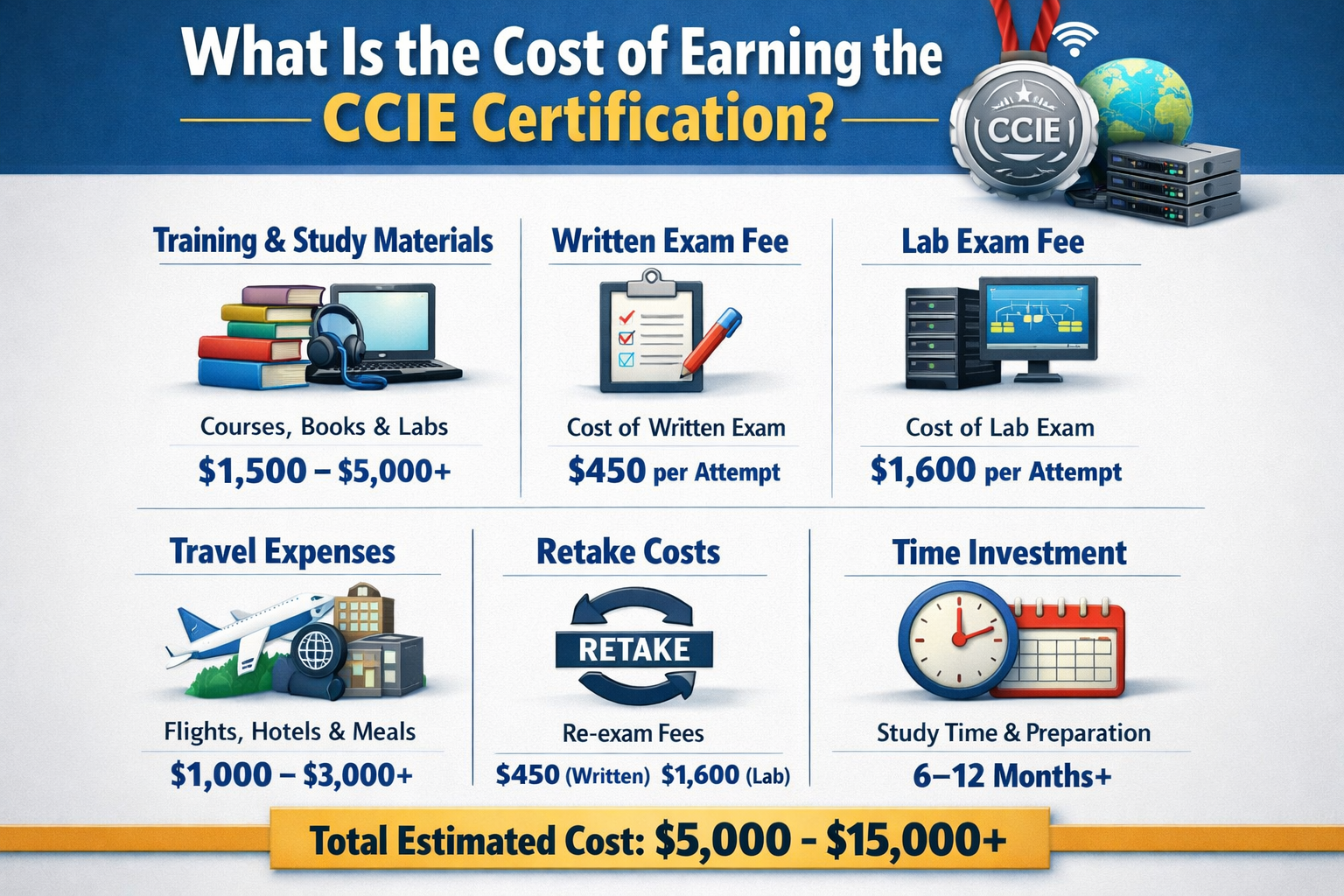
The CCIE (Cisco Certified Internetwork Expert) certification is one of the most respected credentials in the networking industry, often seen as the pinnacle of technical expertise in Cisco technologies. It is designed for professionals who already have strong experience in networking and want to validate their ability to handle complex enterprise-level infrastructure. While the certification is highly valuable in terms of career growth, salary increase, and global recognition, it comes with a significant financial investment that many candidates underestimate at the beginning of their journey.
Earning the CCIE is not simply about passing an exam; it is a long-term commitment involving structured learning, practical experience, repeated practice, and sometimes multiple exam attempts. Because of this, the total cost extends far beyond the official exam fees. It includes preparation materials, training programs, lab environments, travel expenses, and opportunity costs. Understanding these elements in detail helps candidates plan realistically and avoid financial surprises during their certification journey.
Overview of the CCIE Certification Journey
The CCIE certification process is divided into two major stages: a qualifying written exam and a hands-on lab exam. The written exam assesses theoretical knowledge and understanding of advanced networking concepts, while the lab exam evaluates real-world skills under strict time constraints in a complex simulated environment. Both stages are designed to be challenging, ensuring that only highly skilled professionals earn the certification.
The journey usually takes months or even years depending on the candidate’s experience level. Many professionals begin preparation while working full-time jobs, which extends the timeline further. Since both exams require deep understanding and practical expertise, candidates often invest heavily in structured training and repeated practice before attempting them. This extended preparation period significantly contributes to the overall cost of certification.
Cost of the Written Exam
The written exam is the first financial step in the CCIE journey. It is generally less expensive compared to the lab exam, but it is still a necessary investment. Candidates must pay a fixed fee for each attempt, and while the cost may appear moderate, it becomes important when considering possible retakes.
Preparation for the written exam often involves additional expenses. Candidates usually rely on study guides, video courses, practice tests, and online learning platforms. Although some resources are self-study based, most professionals prefer structured learning materials to ensure they cover all exam topics thoroughly. These preparation resources can add a noticeable cost depending on the depth and quality of content.
Even though the written exam is considered the easier part of the CCIE process, it should not be underestimated. Failing the exam delays the entire certification timeline and increases total expenses due to additional attempts and extended preparation. Many candidates choose to invest heavily upfront in preparation to avoid repeated exam fees.
Cost of the CCIE Lab Exam
The CCIE lab exam is the most expensive and critical component of the certification process. It is widely recognized as one of the most challenging technical exams in the IT industry. The exam typically costs over a thousand dollars per attempt, and in many regions, additional taxes or administrative fees may apply.
Unlike the written exam, the lab exam requires candidates to travel to designated testing centers. These centers are limited in number and located in specific cities worldwide. As a result, candidates must often travel long distances, adding transportation and accommodation expenses to the already high exam fee.
One of the most important financial considerations is the possibility of multiple attempts. The lab exam is extremely difficult, and many candidates do not pass on their first try. Each attempt requires paying the full fee again, which can quickly multiply the total cost. In some cases, candidates spend several thousand dollars only on lab attempts before achieving success.
The lab exam also demands intense preparation. Candidates must be able to configure complex networks, troubleshoot under pressure, and complete tasks within strict time limits. This level of difficulty often requires months of dedicated practice using simulation environments or lab equipment.
Training and Preparation Costs
Training is one of the largest contributors to the overall cost of CCIE certification. While some experienced professionals choose self-study, many candidates rely on structured training programs to improve their chances of success. These training programs vary widely in price depending on the provider, format, and duration.
Instructor-led courses, bootcamps, and advanced networking classes can be quite expensive. These programs often provide detailed explanations, real-world scenarios, and guided practice sessions that help candidates build confidence. Although costly, they significantly improve the chances of passing both written and lab exams.
In addition to formal training, many candidates purchase online courses and video tutorials. These resources are more affordable but still add to the overall financial burden. Since CCIE preparation covers a wide range of topics, candidates often need multiple resources to fully understand all exam areas.
Practice labs are another essential part of preparation. These virtual environments simulate real networking scenarios and allow candidates to practice configuration and troubleshooting. Many platforms charge subscription fees, which can accumulate over several months or years of preparation. This recurring cost is often one of the most underestimated expenses in the CCIE journey.
Home Lab and Equipment Expenses
Although virtual labs are widely used today, some candidates still invest in physical networking equipment. A home lab can include routers, switches, firewalls, and other networking devices used to replicate real-world environments. While this approach provides valuable hands-on experience, it can be very expensive.
Even second-hand networking equipment can cost a significant amount, and building a complete lab setup may require thousands of dollars. Additionally, maintaining and upgrading the equipment adds further costs over time. However, not all candidates choose this route, as virtual lab environments have become more advanced and cost-effective.
For virtual labs, candidates still need a reliable computer system with sufficient processing power and memory to run simulations. In some cases, hardware upgrades are necessary, especially for complex lab scenarios. High-speed internet is also essential, as many practice platforms operate online.
Travel and Accommodation Costs
One of the most overlooked expenses in the CCIE journey is travel. Since lab exams are conducted at specific locations, candidates often need to travel internationally or to distant cities. This includes airfare, hotel stays, meals, and local transportation.
Depending on the candidate’s location, travel costs can sometimes exceed the exam fee itself. Candidates usually arrive a day or two early to avoid delays and reduce stress before the exam. This adds extra hotel nights and living expenses to the total cost.
If a candidate needs to retake the lab exam, these travel expenses must be repeated. This makes location a significant factor in the overall financial planning for CCIE certification.
Retakes and Extended Preparation Costs
Retakes are one of the biggest contributors to increased CCIE certification costs. Both written and lab exams may require multiple attempts. Each attempt not only involves exam fees but also extends the preparation timeline.
Extended preparation means continued spending on training materials, lab subscriptions, and practice environments. Over time, these costs accumulate significantly. Some candidates spend years preparing for CCIE, which increases both direct and indirect expenses.
There is also an opportunity cost associated with extended preparation. Many professionals reduce working hours or delay career advancements while focusing on certification. This lost income potential is an important but often ignored part of the total cost.
Hidden and Indirect Costs
Beyond direct expenses, there are several hidden costs associated with earning the CCIE certification. These include electricity usage for lab environments, software subscriptions, updated study materials, and additional coaching sessions when needed.
Stress and time investment also play an indirect role. Preparing for CCIE requires long hours of study and practice, which can impact work-life balance. While not a financial cost, it still represents a significant personal investment.
Another hidden cost is the need to stay updated with evolving technologies. Networking technologies change frequently, and candidates may need to purchase updated materials or retake training modules to stay current.
Conclusion
The cost of earning the CCIE certification is significantly higher than most other IT certifications due to its advanced level, rigorous requirements, and global recognition. It includes written and lab exam fees, extensive training programs, practice labs, travel expenses, and potential retake costs. On average, candidates may spend several thousand dollars, and in some cases, the total investment can exceed expectations depending on preparation strategy and exam attempts.
However, despite the high cost, the CCIE certification is often considered a valuable long-term investment. It opens doors to senior-level networking roles, higher salaries, and global career opportunities. Many professionals view it not just as an expense but as a career transformation milestone.
Careful planning, structured preparation, and efficient use of resources can help reduce unnecessary costs and improve the chances of passing on the first attempt. Ultimately, while the financial investment is significant, the professional rewards often justify the effort and expense involved in achieving CCIE certification.