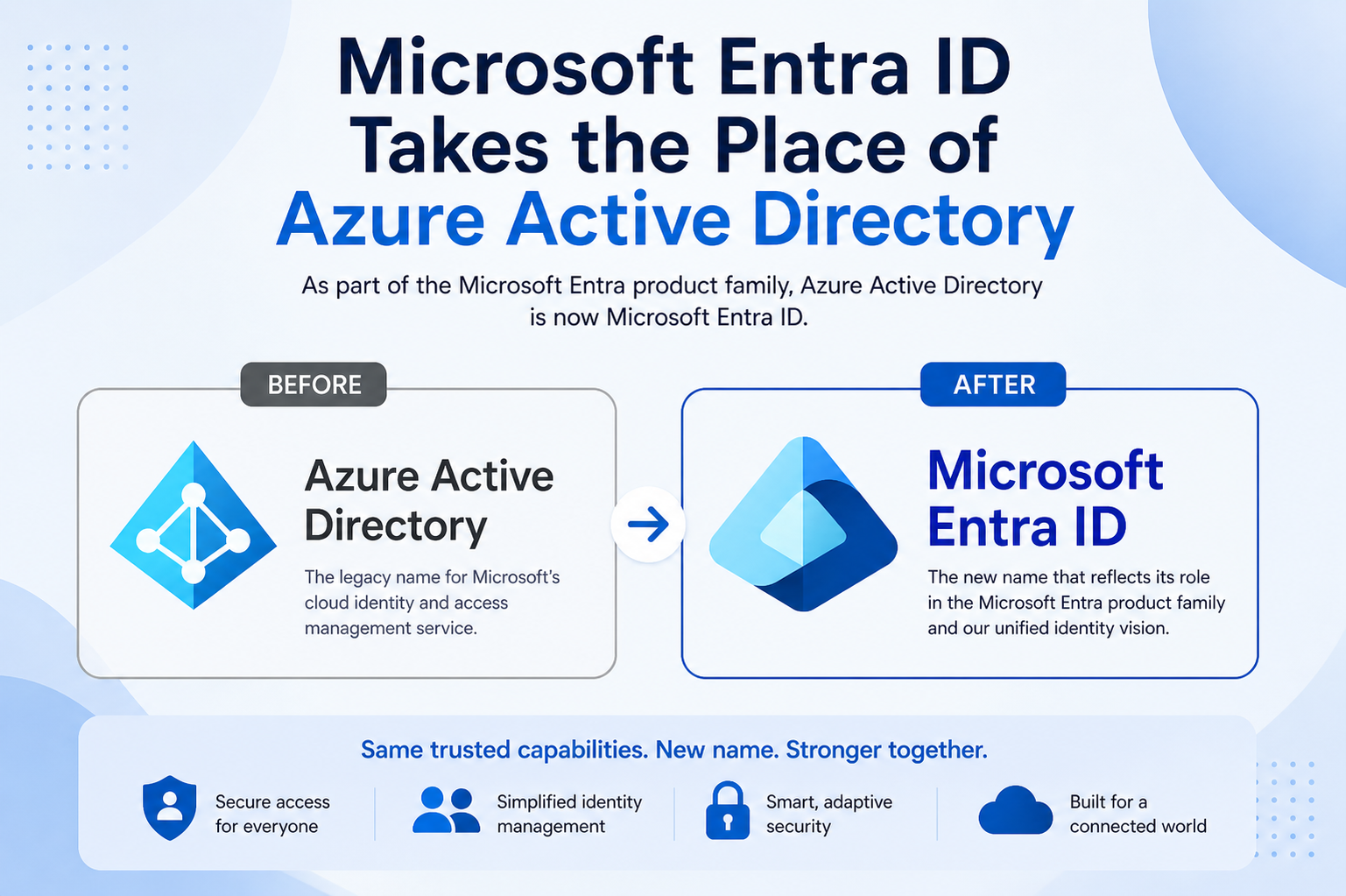
Microsoft Entra ID represents the modern evolution of Microsoft’s identity and access management system, replacing Azure Active Directory with a more comprehensive and unified identity platform. This change is not just a rebranding exercise but a structural enhancement aimed at improving how organizations manage digital identities across cloud, hybrid, and multi-platform environments. The shift reflects the growing complexity of enterprise security needs and the demand for more intelligent, adaptive identity solutions.
Evolution of Identity Management in Microsoft Ecosystem
Identity management has become one of the most critical components of modern cybersecurity and enterprise IT infrastructure. As organizations moved from traditional on-premises systems to cloud-based environments, the need for a centralized identity solution became essential. Azure Active Directory initially addressed this requirement by enabling secure authentication and access control for cloud applications and services.
However, with the rapid expansion of digital ecosystems, identity management has grown beyond simple directory services. Businesses now require integrated solutions that can handle multiple identity types, decentralized access, external users, and cross-platform authentication. Microsoft Entra ID emerges as a response to these evolving demands, offering a more flexible and scalable identity framework designed for the future of digital operations.
Core Purpose of Microsoft Entra ID
At its core, Microsoft Entra ID is designed to manage identities and control access to applications, data, and resources in a secure and efficient manner. It enables organizations to verify users, enforce security policies, and ensure that only authorized individuals can access sensitive systems.
The platform supports a wide range of identity scenarios, including employees, partners, customers, and automated system identities. This broad scope allows businesses to centralize identity governance while maintaining granular control over access permissions.
Modern Authentication and Access Control
One of the key strengths of Microsoft Entra ID lies in its advanced authentication mechanisms. It supports multiple authentication methods, including passwordless authentication, biometrics, and multi-factor authentication. These methods significantly reduce the risks associated with compromised credentials and phishing attacks.
Access control within the platform is highly dynamic and context-aware. Instead of relying on static rules, Microsoft Entra ID evaluates multiple factors such as user location, device health, risk level, and application sensitivity before granting access. This adaptive approach ensures that security decisions are continuously aligned with real-time risk assessments.
Zero Trust Security Framework
Microsoft Entra ID is built around the Zero Trust security model, which assumes that no user or device should be trusted by default, even if they are inside the network perimeter. Every access request is verified, authenticated, and continuously monitored.
This model significantly enhances protection against modern cyber threats, including insider threats and credential-based attacks. By enforcing strict verification at every access point, organizations can reduce their attack surface and improve overall security resilience.
Identity Types and Management Capabilities
The platform is designed to handle multiple identity types within a single unified system. These include workforce identities such as employees and contractors, external identities such as customers and partners, and workload identities used by applications and services.
Each identity type is managed with specific policies and controls, allowing organizations to tailor access rules based on the nature of the user or system. This flexibility is essential in modern enterprises where interactions extend beyond internal users to a wide ecosystem of external participants.
Lifecycle Management of Identities
Efficient identity lifecycle management is a critical feature of Microsoft Entra ID. It ensures that identities are created, maintained, and deactivated in a controlled and automated manner. When an employee joins an organization, their identity is provisioned with the appropriate access rights. When they change roles, permissions are updated automatically. When they leave, access is revoked to prevent unauthorized entry.
This automation reduces administrative overhead and minimizes security risks associated with orphaned or outdated accounts. It also ensures compliance with organizational policies and regulatory requirements.
Conditional Access and Policy Enforcement
Conditional access is one of the most powerful capabilities within Microsoft Entra ID. It allows organizations to define policies that determine how and when users can access resources based on specific conditions. These conditions may include device compliance status, user location, application sensitivity, or risk signals.
By enforcing conditional access policies, organizations can ensure that access is granted only under secure and verified circumstances. This helps prevent unauthorized access while maintaining a seamless user experience for legitimate users.
Identity Protection and Risk Detection
Microsoft Entra ID includes advanced identity protection features that use machine learning and behavioral analytics to detect suspicious activities. It can identify unusual sign-in attempts, compromised credentials, and anomalous behavior patterns.
When a potential risk is detected, the system can automatically trigger protective actions such as requiring additional authentication, blocking access, or alerting administrators. This proactive approach helps organizations respond to threats before they escalate into security incidents.
Integration Across Digital Ecosystems
A key advantage of Microsoft Entra ID is its ability to integrate seamlessly with a wide range of applications, services, and platforms. It supports integration with cloud applications, on-premises systems, and third-party services, making it a central identity hub for enterprise environments.
This integration capability ensures that users can access multiple systems with a single identity, reducing password fatigue and improving productivity. It also simplifies identity management for IT teams by centralizing authentication and authorization processes.
Governance and Compliance Capabilities
Identity governance is an essential aspect of Microsoft Entra ID. It provides tools for managing access reviews, entitlement management, and audit logging. These features help organizations maintain control over who has access to what resources and ensure that access rights remain appropriate over time.
Governance capabilities also support compliance with industry regulations and internal security policies. By maintaining detailed logs and access histories, organizations can demonstrate accountability and meet regulatory requirements more effectively.
External Identity Collaboration
Modern organizations frequently collaborate with external partners, vendors, and customers. Microsoft Entra ID supports secure external identity collaboration, allowing organizations to extend access to trusted external users without compromising security.
External users can be invited into the system with controlled permissions, ensuring that they only access the resources necessary for their role. This enables secure collaboration while maintaining strict identity boundaries.
Workload Identities and Application Security
In addition to human identities, Microsoft Entra ID also manages workload identities used by applications, services, and automated systems. These identities are critical for secure machine-to-machine communication and application authentication.
By securing workload identities, organizations can ensure that automated processes and applications operate within controlled security parameters, reducing the risk of unauthorized system access or exploitation.
Developer and API Integration
Microsoft Entra ID provides extensive support for developers building secure applications. It enables secure authentication and authorization for APIs and services, allowing developers to implement identity-based security directly into their applications.
This integration ensures that applications can verify user identities securely and enforce access policies consistently across different environments. It also simplifies the development process by providing standardized identity services.
Scalability and Enterprise Readiness
The platform is designed to scale with the needs of large enterprises as well as small organizations. It can handle millions of identities and authentication requests while maintaining high performance and reliability.
This scalability ensures that organizations can expand their digital operations without worrying about identity infrastructure limitations. It also supports global deployments, making it suitable for multinational enterprises with distributed workforces.
Hybrid Identity Support
Many organizations operate in hybrid environments that combine on-premises infrastructure with cloud services. Microsoft Entra ID supports hybrid identity models, allowing seamless synchronization between local directories and cloud-based identity systems.
This ensures consistent identity management across environments and enables organizations to transition to the cloud at their own pace without disrupting existing systems.
Security Intelligence and Continuous Monitoring
Continuous monitoring is a key feature of Microsoft Entra ID’s security framework. The system analyzes identity activity in real time to detect anomalies and potential threats. This includes monitoring sign-in patterns, device behavior, and access requests.
Security intelligence gathered from these activities helps organizations make informed decisions and respond quickly to emerging threats.
Business Benefits of Microsoft Entra ID
The adoption of Microsoft Entra ID provides several business advantages, including improved security posture, reduced operational complexity, and enhanced user experience. By centralizing identity management, organizations can streamline access control and reduce administrative overhead.
It also improves productivity by enabling seamless access to applications and resources without repeated authentication prompts. At the same time, it strengthens security through advanced protection mechanisms and adaptive policies.
Future of Identity Management with Microsoft Entra ID
The future of identity management is increasingly focused on intelligence, automation, and zero trust principles. Microsoft Entra ID is positioned to lead this transformation by continuously evolving its capabilities to address emerging security challenges and digital requirements.
As organizations continue to adopt cloud-first and hybrid strategies, identity will remain at the center of digital security. Microsoft Entra ID is designed to adapt to these changes, ensuring that organizations can maintain secure and efficient identity management in an increasingly complex digital landscape.
Architectural Foundation and Cloud-Native Design
Microsoft Entra ID is built on a highly distributed, cloud-native architecture designed to support global identity operations at scale. Unlike traditional directory services that were primarily localized or server-bound, this system operates across multiple regions and data centers, ensuring high availability and resilience. The architecture is optimized for low-latency authentication and continuous service uptime, which is critical for modern enterprises that rely heavily on real-time access to cloud applications.
At its foundation, the system uses a highly replicated identity store that ensures consistency across regions while maintaining strong security boundaries. This allows identity requests to be processed efficiently regardless of user location. The architecture is also designed to handle sudden spikes in authentication traffic, such as during large-scale remote work scenarios or global application launches, without degradation in performance.
Identity Synchronization and Hybrid Connectivity
A significant strength of Microsoft Entra ID lies in its ability to support hybrid identity environments. Many organizations still maintain on-premises identity systems, and the platform enables seamless synchronization between local directories and cloud-based identity services.
This synchronization ensures that user identities remain consistent across both environments. Changes made in one system are reflected in the other, reducing duplication and administrative overhead. Hybrid connectivity also allows organizations to gradually transition to cloud-first identity management without disrupting existing business operations.
Advanced synchronization mechanisms ensure that attributes such as group membership, roles, and permissions remain aligned across systems. This unified identity model is essential for maintaining operational consistency in complex IT environments.
Microsoft Entra Suite Integration
Microsoft Entra ID is part of a broader identity ecosystem known as the Microsoft Entra suite, which includes several complementary services designed to enhance identity security and governance. These services work together to provide a comprehensive identity fabric across organizations.
One key component is identity governance, which helps organizations manage access lifecycles, enforce policy compliance, and conduct access reviews. Another important component is permissions management, which provides visibility into access rights across cloud resources and helps reduce excessive permissions that could lead to security risks.
There is also support for decentralized identity through verified identity solutions, allowing users to prove their identity without relying solely on centralized credentials. This represents a shift toward more privacy-focused and user-controlled identity models.
Advanced Identity Governance and Lifecycle Controls
Identity governance within Microsoft Entra ID is designed to ensure that access rights remain appropriate throughout the entire identity lifecycle. It automates processes such as onboarding, role changes, and offboarding, ensuring that users receive the correct level of access at all times.
Access reviews play a critical role in governance by allowing administrators to periodically evaluate whether users still require access to specific resources. These reviews help eliminate unnecessary permissions, reducing the risk of privilege accumulation over time.
Entitlement management further enhances governance by allowing organizations to define packages of access rights that can be assigned to users based on roles or projects. This simplifies access provisioning and ensures consistency in how permissions are assigned across the organization.
Security Intelligence and Risk-Based Decision Making
Security intelligence is deeply embedded within Microsoft Entra ID, enabling the system to make dynamic, risk-based decisions during authentication and access processes. Instead of relying solely on static rules, the platform evaluates multiple signals in real time.
These signals may include user behavior patterns, device compliance status, geographic location, and historical login activity. By analyzing these factors together, the system can determine whether an access request is legitimate or potentially risky.
When unusual behavior is detected, adaptive responses are triggered automatically. These responses may include requiring additional authentication steps, restricting access, or blocking the request entirely. This intelligent approach significantly enhances security without unnecessarily disrupting user experience.
Privileged Identity Management and Access Control
Privileged access is one of the most sensitive areas in identity management, and Microsoft Entra ID provides specialized controls to manage it securely. Privileged Identity Management ensures that administrative access is granted only when needed and for a limited duration.
Instead of providing permanent administrative privileges, users can request temporary elevated access that must be approved or justified. This reduces the attack surface associated with long-term privileged accounts and helps prevent misuse of administrative credentials.
Just-in-time access mechanisms ensure that elevated permissions are activated only when required and automatically revoked after use. This approach aligns with zero trust principles and strengthens overall security posture.
Decentralized Identity and Digital Credentials
A forward-looking aspect of Microsoft Entra ID is its support for decentralized identity models. These models allow individuals to control their own identity credentials rather than relying entirely on centralized identity providers.
Digital credentials can be issued, verified, and stored in a secure and privacy-preserving manner. Users can selectively share identity information without exposing unnecessary personal data. This is particularly useful in scenarios such as employment verification, education credentials, and secure online transactions.
Decentralized identity represents a shift toward user-centric identity management, where individuals have greater control over how their identity information is used and shared.
Application Security and API Protection
Modern enterprises rely heavily on APIs and interconnected applications, making application-level security a critical component of identity management. Microsoft Entra ID provides robust mechanisms for securing application access and protecting APIs from unauthorized usage.
Applications can be registered within the identity system and assigned specific permissions based on their role and function. Authentication tokens are used to validate application identity and ensure secure communication between services.
This model supports both internal enterprise applications and external third-party integrations, ensuring consistent security enforcement across all application types.
DevOps and Identity Automation
In modern development environments, identity management is increasingly integrated into DevOps pipelines. Microsoft Entra ID supports automation of identity-related tasks, enabling developers to integrate authentication and authorization directly into their deployment workflows.
This includes automated provisioning of application identities, role assignments, and environment-specific access configurations. By embedding identity into DevOps processes, organizations can ensure that security is consistently applied throughout the software development lifecycle.
Automation also reduces manual intervention, improving efficiency and reducing the likelihood of configuration errors that could lead to security vulnerabilities.
Threat Detection and Incident Response Integration
Microsoft Entra ID plays a key role in broader security operations by integrating with threat detection and incident response systems. Identity-related signals are often among the earliest indicators of a security breach, making them critical for detection and response strategies.
When suspicious activity is identified, alerts can be generated and shared with security operations teams for further investigation. Automated response actions can also be triggered to contain potential threats before they escalate.
This integration enables a more proactive approach to cybersecurity, where identity data is used not only for authentication but also for continuous threat monitoring.
User Experience and Seamless Access
Despite its strong security focus, Microsoft Entra ID is designed to deliver a seamless user experience. Single sign-on capabilities allow users to access multiple applications without repeatedly entering credentials.
This reduces friction in daily workflows and improves productivity across organizations. Passwordless authentication options further enhance usability by eliminating the need for traditional password-based logins.
The system is optimized to balance security and convenience, ensuring that users can work efficiently without compromising protection.
Migration from Azure Active Directory
Transitioning from Azure Active Directory to Microsoft Entra ID is designed to be smooth and non-disruptive. Existing identity configurations, policies, and user data are preserved during the transition process.
Organizations do not need to rebuild their identity infrastructure from scratch. Instead, they can gradually adopt new features and capabilities as part of the updated platform. This ensures continuity of operations while enabling access to enhanced identity services.
The migration process also introduces opportunities to modernize identity strategies, particularly in areas such as governance, conditional access, and risk-based authentication.
Enterprise Use Cases and Real-World Applications
Microsoft Entra ID supports a wide range of enterprise use cases across different industries. In financial services, it is used to secure sensitive customer data and enforce strict access controls. In healthcare, it helps protect patient information while enabling secure collaboration among medical professionals.
In manufacturing and logistics, it supports identity management for distributed workforces and automated systems. In education, it enables secure access to learning platforms for students and faculty members.
These diverse use cases demonstrate the flexibility and scalability of the platform across different operational environments.
Continuous Innovation and Future Direction
The future direction of Microsoft Entra ID is centered on continuous innovation in identity security, automation, and intelligence. As cyber threats become more sophisticated, identity systems must evolve to provide stronger protection and more adaptive responses.
Artificial intelligence and machine learning will continue to play a growing role in detecting anomalies and predicting potential security risks. Identity systems will become more proactive, anticipating threats before they occur rather than reacting after the fact.
The platform is also expected to expand further into decentralized identity, enabling more user-controlled and privacy-focused identity models. This reflects a broader industry trend toward distributed trust and digital sovereignty.
Evolving Identity Landscape
Microsoft Entra ID represents a significant step forward in the evolution of identity and access management. It goes beyond traditional directory services by integrating security, governance, automation, and intelligence into a unified platform.
Its design reflects the realities of modern digital ecosystems, where identity is the foundation of security and access control. By combining advanced protection mechanisms with seamless user experiences, it enables organizations to operate securely in an increasingly complex digital world.
Advanced Compliance and Regulatory Alignment
Microsoft Entra ID is designed with a strong emphasis on regulatory compliance, making it suitable for organizations operating in highly regulated industries. It supports adherence to global standards related to data protection, privacy, and identity governance. Compliance capabilities are built into the platform rather than being added as external layers, which ensures that security and governance controls are consistently enforced across all identity operations.
Organizations can implement policies that align with internal governance requirements as well as external regulations. Detailed audit logs and access records provide transparency into identity activities, allowing enterprises to demonstrate accountability during audits or compliance reviews. This visibility is essential for industries such as finance, healthcare, government services, and education, where identity security is closely monitored.
The platform also enables retention and lifecycle policies for identity data, ensuring that information is stored, accessed, and deleted according to defined compliance rules. This reduces regulatory risk while maintaining operational efficiency.
Identity Security Analytics and Behavioral Intelligence
A key advancement within Microsoft Entra ID is the use of behavioral intelligence to enhance identity security. The system continuously analyzes patterns of user activity to build a behavioral baseline for each identity. This baseline includes typical login times, geographic locations, device usage patterns, and application access behaviors.
When deviations from these patterns occur, the system identifies them as potential risks. This does not automatically imply malicious activity, but it triggers further evaluation through adaptive security measures. For example, a login attempt from an unusual location or unfamiliar device may require additional authentication steps.
This behavioral approach allows the system to move beyond static security rules and adopt a more dynamic and context-aware security model. Over time, this improves accuracy in distinguishing between legitimate and suspicious activity, reducing both false positives and security gaps.
Cross-Cloud Identity Management Capabilities
Modern enterprises increasingly operate across multiple cloud environments, making cross-cloud identity management essential. Microsoft Entra ID supports identity integration across different cloud platforms, enabling centralized identity control regardless of where applications or services are hosted.
This ensures that users can access resources consistently across multiple environments without needing separate credentials or identity systems. It also simplifies administrative overhead by centralizing identity policies in a single control plane.
Cross-cloud capabilities also help organizations maintain consistent security standards across different infrastructures, reducing fragmentation and minimizing security inconsistencies that can arise in multi-cloud deployments.
Scalability for Global Enterprises
Scalability is a fundamental requirement for modern identity systems, and Microsoft Entra ID is built to support massive global deployments. It can handle millions of users, devices, and applications while maintaining high performance and reliability.
The system is engineered to distribute authentication workloads efficiently across global infrastructure, ensuring that users experience fast and consistent access regardless of their geographic location. This distributed model also enhances fault tolerance, allowing identity services to remain available even during localized disruptions.
As organizations grow, the platform automatically adapts to increased demand without requiring significant architectural changes. This makes it suitable for both rapidly scaling startups and large multinational corporations with complex identity requirements.
Identity Observability and Continuous Monitoring
Continuous observability is a critical aspect of modern identity management. Microsoft Entra ID provides deep monitoring capabilities that allow organizations to track identity activity in real time. This includes sign-in events, access attempts, policy evaluations, and risk assessments.
By maintaining continuous visibility into identity operations, organizations can quickly detect anomalies and respond to potential security incidents. This real-time insight is essential for maintaining a strong security posture in environments where threats can emerge rapidly.
Monitoring data can also be used for long-term analysis, helping organizations identify trends, optimize access policies, and improve overall identity governance strategies.
Artificial Intelligence in Identity Decision Making
Artificial intelligence plays a growing role in enhancing the capabilities of Microsoft Entra ID. AI models are used to analyze vast amounts of identity-related data and identify patterns that would be difficult to detect manually.
These models help improve risk detection accuracy, reduce false positives, and enhance decision-making during authentication processes. AI-driven insights also support adaptive access policies, where the system continuously adjusts security requirements based on evolving risk levels.
Over time, this leads to a more intelligent and self-improving identity system that becomes increasingly effective at balancing security and usability.
Identity Fabric and Unified Access Layer
Microsoft Entra ID acts as part of a broader identity fabric that connects users, applications, devices, and services into a unified access layer. This identity fabric ensures that all access decisions are made consistently based on centralized identity policies.
Instead of managing identities in isolated systems, organizations can rely on a unified structure that governs all access interactions. This reduces complexity and improves security by eliminating fragmented identity controls.
The identity fabric model also supports future expansion, allowing new applications and services to be integrated without redesigning existing identity structures.
Partner and External Ecosystem Integration
Modern organizations rely heavily on external partners, vendors, and third-party services. Microsoft Entra ID provides secure mechanisms for integrating external identities into enterprise environments without compromising internal security controls.
External users can be granted controlled access based on predefined policies, ensuring that collaboration does not introduce unnecessary risk. This capability is especially important in supply chain ecosystems, joint ventures, and cross-organizational projects.
By enabling secure external collaboration, the platform supports business agility while maintaining strong identity governance boundaries.
Resilience and Fault Tolerance Architecture
Resilience is a core design principle of Microsoft Entra ID. The system is built to remain operational even in the event of infrastructure failures or regional outages. Redundant systems and distributed identity processing ensure that authentication services remain available under adverse conditions.
This fault-tolerant architecture minimizes downtime and ensures that identity services remain reliable for mission-critical operations. It also supports disaster recovery scenarios, where identity continuity is essential for restoring business operations quickly.
Such resilience is particularly important for organizations that operate globally and require uninterrupted access to identity services across time zones and regions.
Operational Efficiency and Cost Optimization
Microsoft Entra ID contributes to operational efficiency by reducing the need for manual identity management tasks. Automation of provisioning, deprovisioning, and policy enforcement reduces administrative workload and allows IT teams to focus on higher-value activities.
By centralizing identity management, organizations also reduce infrastructure complexity and associated operational costs. The platform eliminates the need for multiple disconnected identity systems, streamlining both management and maintenance efforts.
In addition, improved security and reduced risk exposure can lead to lower costs associated with security incidents, compliance violations, and access-related inefficiencies.
Challenges in Identity Modernization
While Microsoft Entra ID offers significant advantages, organizations may face challenges during adoption and modernization. One common challenge is integrating legacy systems that were not designed for modern identity frameworks. These systems may require additional configuration or adaptation to work seamlessly with cloud-based identity services.
Another challenge is organizational change management. Transitioning to a modern identity system often requires updates to security policies, user training, and administrative processes. Without proper planning, this transition can lead to temporary disruptions or confusion among users.
Security policy alignment is also critical. Organizations must carefully evaluate existing access controls and ensure they are compatible with modern identity principles such as zero trust and conditional access.
Best Practices for Effective Implementation
Successful implementation of Microsoft Entra ID requires a strategic approach to identity governance and security design. Organizations are encouraged to adopt a zero trust mindset from the beginning, ensuring that all access decisions are based on continuous verification.
It is also important to define clear identity lifecycle policies to ensure that access rights are properly managed throughout user onboarding, role changes, and offboarding processes. Regular access reviews help maintain security hygiene and prevent privilege accumulation.
Organizations should also prioritize automation wherever possible to reduce manual intervention and improve consistency in identity operations. This includes automating provisioning workflows, policy enforcement, and monitoring processes.
Strategic Importance of Identity in Modern Enterprises
Identity has become the foundation of modern cybersecurity strategies, and Microsoft Entra ID reflects this shift by placing identity at the center of security architecture. As organizations continue to expand their digital presence, identity will play an even more critical role in controlling access, protecting data, and enabling secure collaboration.
The evolution from traditional directory services to intelligent identity platforms represents a broader transformation in how security is conceptualized and implemented. Identity is no longer just an authentication mechanism; it is a dynamic security control layer that influences every aspect of digital interaction.
Future Outlook and Continuous Evolution
The future of Microsoft Entra ID is expected to focus on deeper integration of artificial intelligence, expanded decentralized identity capabilities, and more advanced automation features. As cyber threats continue to evolve, identity systems will need to become more predictive, adaptive, and autonomous.
We can also expect increased emphasis on user privacy and self-sovereign identity models, where individuals have greater control over their personal identity data. This shift will reshape how organizations think about identity trust and verification.
Ultimately, Microsoft Entra ID is positioned as a long-term identity platform that will continue evolving alongside digital transformation trends, ensuring that organizations remain secure, agile, and future-ready in an increasingly complex technological landscape.
Advanced Identity Automation and Self-Service Capabilities
Microsoft Entra ID places strong emphasis on automation and self-service functionality to reduce dependency on manual administrative processes. Identity-related tasks such as password resets, access requests, and group memberships can be handled by users themselves through controlled workflows. This significantly reduces the workload on IT support teams while improving response times for end users.
Automation also extends to identity provisioning, where new users are automatically assigned appropriate roles, permissions, and application access based on predefined policies. This ensures consistency across the organization and minimizes human error in access assignment. Self-service capabilities are carefully governed to maintain security while still empowering users with flexibility.
Over time, this combination of automation and self-service leads to a more efficient identity ecosystem where routine tasks are handled intelligently without compromising control or compliance.
Advanced Authentication Evolution and Passwordless Future
A major direction in Microsoft Entra ID is the gradual shift away from traditional password-based authentication toward passwordless identity verification methods. Passwords are often considered a weak link in security due to reuse, phishing risks, and user management challenges.
To address this, the platform supports authentication methods such as biometrics, security keys, and device-based authentication. These methods provide stronger security while improving user experience by reducing dependency on memorized credentials.
This evolution represents a fundamental change in how identity is verified, moving toward a model where possession, inherence, and device trust replace static passwords. The long-term vision is to eliminate passwords entirely, creating a more secure and frictionless authentication environment.
Identity Insights and Organizational Visibility
Microsoft Entra ID provides organizations with deep insights into identity usage patterns, access behaviors, and security posture. These insights help IT administrators understand how identities are being used across systems and where potential risks may exist.
Visibility into identity activity allows organizations to identify inactive accounts, excessive permissions, and unusual access trends. This information is critical for maintaining a clean and secure identity environment, especially in large organizations where identity sprawl can become a challenge.
These insights also support strategic decision-making by providing data-driven understanding of how users interact with systems and applications across the enterprise.
Digital Transformation and Identity Centralization
As organizations undergo digital transformation, identity becomes a central pillar of their IT strategy. Microsoft Entra ID supports this transformation by providing a unified identity layer that connects all digital assets, applications, and users.
Centralization of identity reduces fragmentation across systems and ensures consistent security policies are applied everywhere. It also simplifies integration of new technologies, allowing organizations to adopt modern tools without rebuilding their identity infrastructure.
This centralized approach is particularly valuable in environments where rapid innovation and frequent technology changes are required.
Identity Resilience in Cybersecurity Strategy
Identity resilience refers to the ability of an organization to maintain secure and reliable identity operations even in the face of cyber threats or system disruptions. Microsoft Entra ID enhances resilience through layered security controls, continuous monitoring, and adaptive response mechanisms.
In the event of a security incident, the system can isolate affected identities, enforce stricter authentication requirements, or temporarily block access to sensitive resources. These protective actions help contain potential breaches and limit their impact.
Resilience is not only about reacting to threats but also about maintaining continuous trust in identity systems under all operating conditions.
Integration with Modern Security Ecosystems
Microsoft Entra ID is designed to integrate seamlessly with broader security ecosystems, including threat intelligence platforms, endpoint protection systems, and security information and event management tools. This integration ensures that identity data is part of a larger security context.
By combining identity signals with other security data sources, organizations can achieve a more comprehensive understanding of threats and vulnerabilities. This holistic approach improves detection accuracy and strengthens incident response capabilities.
Identity becomes a central intelligence layer within the broader cybersecurity architecture, contributing to a more unified defense strategy.
Identity Governance Maturity and Strategic Control
As organizations mature in their identity management practices, governance becomes increasingly strategic rather than purely operational. Microsoft Entra ID supports this maturity by providing tools that enable long-term control over identity structures and access policies.
Governance maturity includes establishing clear ownership of identity policies, implementing structured access review cycles, and continuously optimizing permissions. It also involves aligning identity strategies with business objectives and risk tolerance levels.
At higher levels of maturity, identity governance becomes a key enabler of business agility, allowing organizations to innovate securely without compromising control.
Human-Centric Identity Experience
While Microsoft Entra ID is highly technical in its architecture, it is also designed with a strong focus on user experience. The system aims to reduce friction in authentication and access processes, allowing users to focus on their work rather than security barriers.
Features such as single sign-on, adaptive authentication, and seamless device recognition contribute to a smoother digital experience. At the same time, security remains consistently enforced in the background without disrupting productivity.
This balance between usability and protection is essential in modern digital workplaces where user expectations for speed and simplicity are high.
Long-Term Role in Enterprise Architecture
Microsoft Entra ID is increasingly becoming a foundational component of enterprise architecture. It serves as the identity backbone that connects all applications, services, and users within an organization.
As digital ecosystems continue to expand, identity will remain the primary control point for access and security decisions. This makes platforms like Microsoft Entra ID essential for maintaining coherence across complex IT environments.
Its role is expected to grow further as organizations adopt more distributed, cloud-native, and hybrid architectures.
Conclusion
Microsoft Entra ID represents a significant evolution in identity and access management, moving far beyond the capabilities of traditional directory services. It introduces a unified, intelligent, and highly secure identity platform designed for modern digital environments.
By combining advanced authentication, zero trust principles, identity governance, automation, and artificial intelligence, it provides organizations with a comprehensive approach to managing digital identities. This ensures that access to systems and data is not only secure but also efficient and adaptable to changing business needs.
The transition from Azure Active Directory to Microsoft Entra ID reflects a broader shift in cybersecurity thinking, where identity is no longer a supporting function but a central pillar of enterprise security architecture. As organizations continue to evolve, identity will remain at the core of digital trust, and Microsoft Entra ID is positioned to play a leading role in shaping that future.