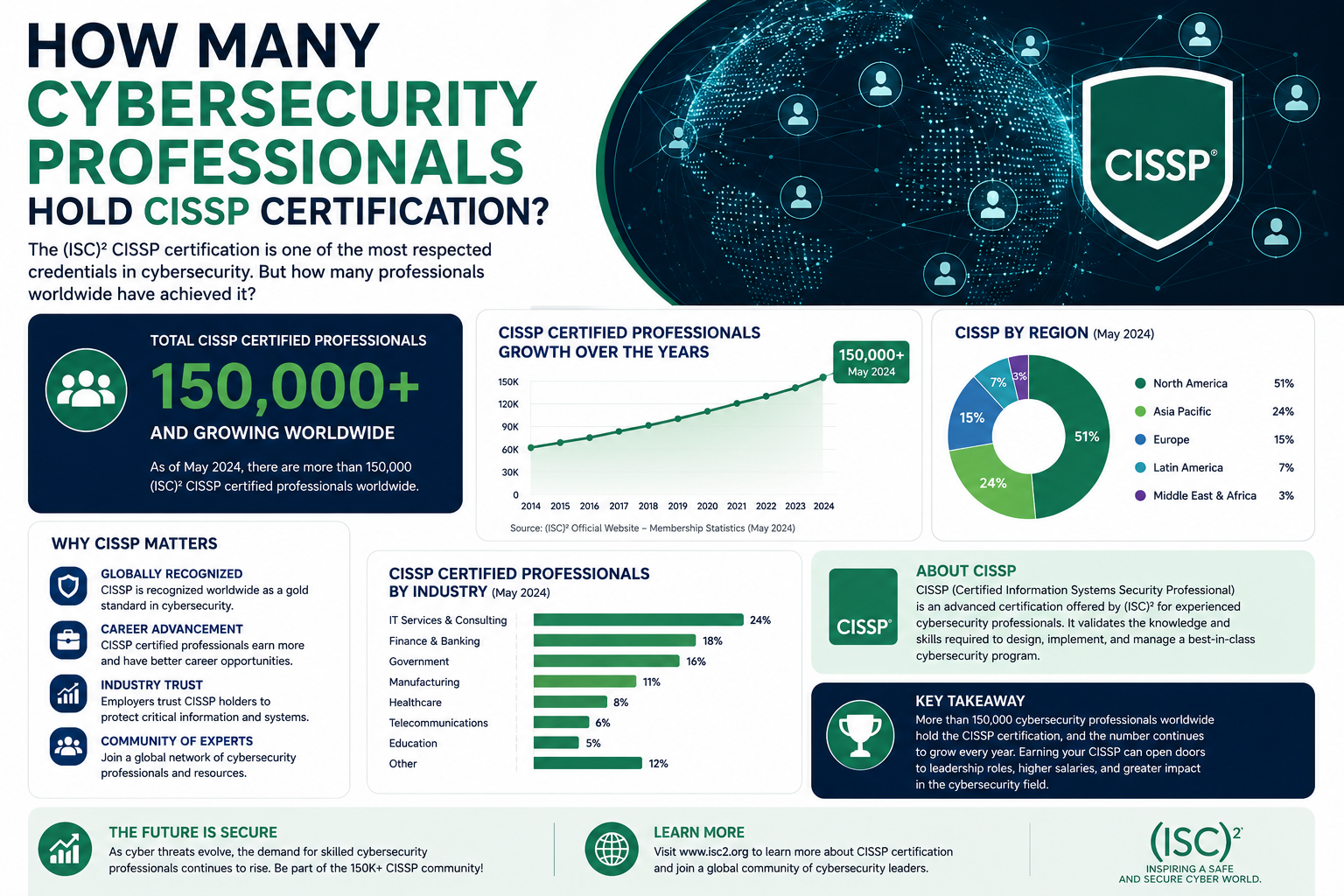
The Certified Information Systems Security Professional certification, commonly known as CISSP, has become one of the most respected and recognized cybersecurity certifications in the world. As organizations continue to face sophisticated cyber threats, ransomware attacks, data breaches, and digital espionage, the demand for highly skilled cybersecurity professionals has expanded dramatically. Among the many certifications available in the cybersecurity industry, CISSP stands out because it represents advanced expertise in information security management, governance, architecture, risk assessment, and operational security.
For many professionals, earning the CISSP is more than simply obtaining another certification. It represents a transition into senior-level cybersecurity responsibilities. Employers often associate the certification with leadership, strategic thinking, and comprehensive security knowledge. Professionals who hold CISSP certifications are frequently trusted with protecting sensitive systems, developing enterprise security policies, leading incident response programs, and guiding organizations through regulatory compliance requirements.
The global cybersecurity landscape has changed significantly over the last decade. Digital transformation initiatives have accelerated across industries, cloud computing has become mainstream, and remote work environments have expanded rapidly. These changes have increased the attack surface for organizations worldwide, making cybersecurity a business-critical priority. As a result, the number of professionals pursuing CISSP certification has continued to grow steadily in nearly every region of the world.
One particularly interesting way to understand the spread of cybersecurity expertise globally is by examining the number of CISSP holders in different countries. Some nations dominate in total numbers due to their population size and economic influence, while others stand out because they have an unusually high concentration of certified professionals relative to their population. These patterns provide insight into which countries prioritize cybersecurity investment, workforce development, and digital resilience.
What Makes CISSP Different From Other Security Certifications
The cybersecurity industry includes dozens of certifications that focus on various specialties such as penetration testing, network security, cloud security, governance, incident response, and ethical hacking. However, CISSP occupies a unique position because of its broad scope and senior-level focus.
Unlike entry-level certifications that concentrate primarily on technical skills, CISSP evaluates a candidate’s understanding of multiple domains within information security. These domains include security operations, software development security, identity and access management, communication and network security, security engineering, and asset protection. The certification also emphasizes governance, risk management, and legal considerations.
This broad coverage makes the CISSP particularly valuable for professionals who want to move into management or leadership positions. Security architects, chief information security officers, consultants, risk managers, and security directors often pursue the certification because it demonstrates comprehensive understanding rather than narrow technical specialization.
Another factor contributing to the CISSP’s global reputation is its experience requirement. Candidates generally need several years of professional experience in cybersecurity-related roles before becoming fully certified. This requirement helps ensure that CISSP holders possess both theoretical knowledge and practical experience.
Because of these factors, organizations across the world frequently use CISSP certification as a benchmark when hiring senior cybersecurity personnel. Many job postings specifically mention CISSP as a preferred or required qualification, especially for leadership positions.
How Cybersecurity Became a Global Priority
The dramatic rise in CISSP certification holders reflects the increasing importance of cybersecurity worldwide. Nearly every organization today depends heavily on digital systems, internet connectivity, cloud infrastructure, and sensitive data. This dependence creates enormous opportunities for cybercriminals, nation-state attackers, and malicious insiders.
Cyberattacks have evolved from isolated technical incidents into major business risks. A single ransomware attack can disrupt hospitals, financial institutions, transportation systems, or manufacturing operations. Data breaches can expose millions of customer records, damage corporate reputations, and trigger massive financial penalties.
Governments around the world have recognized that cybersecurity is no longer simply an IT issue. It has become a matter of economic stability, national security, and public safety. As a result, many countries have introduced cybersecurity strategies, workforce development programs, and digital resilience initiatives aimed at strengthening their security capabilities.
This increased focus has created strong demand for professionals who possess recognized credentials and proven expertise. CISSP certification benefits from this demand because it is widely viewed as one of the most credible indicators of advanced cybersecurity knowledge.
Organizations also face growing compliance requirements related to data privacy and security. Industries such as finance, healthcare, telecommunications, and energy must comply with strict regulations governing how data is stored, processed, and protected. Security professionals with CISSP certification are often responsible for designing programs that help organizations meet these regulatory obligations.
Understanding CISSP Distribution Around the World
One of the most fascinating aspects of the global CISSP community is how unevenly distributed it is across different countries. Some nations maintain extremely high concentrations of certified professionals, while others have relatively few.
Several factors influence these differences. Economic development, technological maturity, internet adoption, education systems, regulatory requirements, and government investment all play important roles. Countries with large technology sectors or financial industries often show particularly strong CISSP adoption because these sectors require advanced cybersecurity protections.
When analyzing CISSP distribution, two measurements are especially useful. The first is the total number of CISSP holders in a country. This reveals which nations have the largest cybersecurity workforces overall. The second is the number of CISSP holders per 100,000 people, which measures concentration relative to population size.
Large countries such as the United States naturally dominate in raw numbers because they have massive economies and large populations. Smaller countries, however, can rank extremely high in per-capita concentration if they maintain strong cybersecurity industries relative to their size.
Examining both measurements together provides a more complete understanding of global cybersecurity trends.
Singapore’s Remarkable CISSP Concentration
Singapore consistently ranks among the countries with the highest concentration of CISSP-certified professionals in the world. Despite its relatively small population, the nation has developed an advanced digital economy with heavy emphasis on cybersecurity and technology innovation.
Singapore’s government has aggressively invested in digital infrastructure, smart city initiatives, fintech development, and cybersecurity readiness. Because the country serves as a major financial and commercial hub in Asia, organizations operating there face constant pressure to maintain strong security standards.
Financial institutions, multinational corporations, cloud providers, and government agencies all require highly trained cybersecurity professionals. This demand has encouraged many professionals in Singapore to pursue advanced certifications such as CISSP.
The country also benefits from strong educational systems and professional training opportunities. Cybersecurity awareness is deeply integrated into both public and private sectors, helping create an environment where advanced certifications are highly valued.
Singapore’s strategic focus on cybersecurity has positioned it as one of the leading digital economies in the Asia-Pacific region. As cyber threats continue evolving, the country’s investment in professional security expertise is likely to remain strong.
The United States Leads in Total CISSP Numbers
Although Singapore ranks highly in concentration, the United States overwhelmingly dominates in total CISSP holders. Tens of thousands of certified professionals work across American industries, making the United States the largest CISSP market in the world.
Several factors explain this leadership position. The United States hosts some of the world’s largest technology companies, cloud service providers, defense contractors, financial institutions, and telecommunications firms. These organizations require enormous cybersecurity workforces to secure their systems and protect sensitive information.
Government regulations and defense requirements also contribute heavily to certification demand. Federal agencies and military contractors often prioritize security certifications when hiring personnel. Many organizations working with government systems require employees to possess recognized cybersecurity credentials.
The United States additionally has a mature cybersecurity training ecosystem. Universities, online learning platforms, boot camps, and professional organizations provide extensive CISSP preparation resources. Conferences, networking groups, and professional communities further encourage certification growth.
High salary potential also motivates many professionals to pursue CISSP certification. Senior cybersecurity positions in the United States frequently offer excellent compensation, especially in industries such as finance, defense, cloud computing, and consulting. Earning a CISSP can help professionals qualify for these advanced roles.
Another major factor is the sheer scale of cyber threats targeting American organizations. The country experiences constant attacks from cybercriminals, ransomware groups, and foreign adversaries. As cybersecurity becomes increasingly important to national security and economic stability, demand for qualified professionals continues expanding.
Why Financial Centers Produce More CISSP Holders
One interesting pattern in global CISSP distribution is the strong presence of certified professionals in international financial centers. Countries and territories with major banking industries often maintain unusually high concentrations of CISSP holders.
Financial institutions are among the most heavily targeted organizations in the world. Banks, investment firms, insurance companies, and payment processors manage enormous volumes of sensitive financial data and monetary transactions. A successful cyberattack against these institutions can cause severe economic damage and reputational harm.
Because of these risks, financial organizations invest heavily in cybersecurity talent. Security leaders working in financial services frequently pursue advanced certifications to demonstrate expertise in governance, risk management, compliance, and security operations.
Territories such as Bermuda and the Cayman Islands illustrate this trend clearly. Although their populations are small, both regions host significant offshore financial industries and international business operations. Even a relatively modest number of CISSP-certified professionals can create exceptionally high per-capita rankings in such locations.
Hong Kong similarly benefits from its role as a global financial hub. Major banks, multinational corporations, and investment firms operating in Hong Kong require experienced cybersecurity professionals capable of securing highly sensitive systems and customer data.
Switzerland and Luxembourg also demonstrate strong CISSP representation due to their advanced banking sectors and strict privacy standards. Organizations in these countries place strong emphasis on data protection, confidentiality, and regulatory compliance.
The Role of Government Cybersecurity Strategies
National cybersecurity strategies play a major role in shaping CISSP adoption across the world. Governments increasingly recognize cybersecurity as a strategic priority, leading to greater investment in workforce development and professional training.
Countries with well-developed cybersecurity programs often experience faster growth in advanced security certifications. Government agencies may encourage employees to obtain professional credentials, fund training programs, or establish partnerships with industry organizations.
Some governments also implement regulations requiring organizations in critical industries to strengthen their cybersecurity capabilities. Sectors such as energy, transportation, healthcare, telecommunications, and finance often face strict security requirements. These mandates create additional demand for certified professionals who can manage compliance and risk.
Public-private collaboration is another important factor. In many countries, governments work closely with private organizations to improve national cyber resilience. These partnerships frequently emphasize professional education and workforce development.
Cybersecurity exercises, awareness campaigns, and scholarship programs further contribute to certification growth. As governments continue investing in digital infrastructure and national cyber defense, the global demand for CISSP-certified professionals is expected to rise even further.
Technology Companies and CISSP Growth
Technology companies have played a massive role in expanding the CISSP community worldwide. Cloud providers, software developers, telecommunications firms, and internet companies all depend heavily on cybersecurity expertise.
Modern technology environments are extremely complex. Organizations must secure cloud infrastructure, remote work systems, mobile devices, customer applications, and massive amounts of sensitive data. This complexity requires security professionals who understand both technical controls and strategic risk management.
CISSP-certified professionals are particularly valuable in these environments because they can bridge the gap between technical operations and business leadership. They often help organizations design enterprise security strategies, implement governance frameworks, and manage long-term cyber risk.
Cloud computing has been especially influential in driving cybersecurity demand. As businesses migrate critical systems to cloud platforms, security professionals must understand shared responsibility models, identity management, encryption, and compliance requirements. Many experienced security leaders pursue CISSP certification to strengthen their qualifications in these rapidly evolving environments.
Technology companies also tend to support continuous learning and professional development. Employees are frequently encouraged to earn advanced certifications as part of career advancement programs. This culture of ongoing education contributes significantly to CISSP growth across the technology sector.
Cybersecurity Growth Across Europe
Europe has become one of the strongest regions for cybersecurity maturity and professional certification growth. Many European nations maintain high concentrations of CISSP-certified professionals because governments and private organizations have invested heavily in digital security, privacy protection, and cyber resilience. The region’s strict regulatory environment has also encouraged companies to hire experienced professionals capable of managing compliance and information security governance.
Countries such as the Netherlands, Switzerland, Luxembourg, Ireland, Sweden, Denmark, Finland, and the United Kingdom consistently rank among the leading nations for CISSP concentration. Although these countries differ in population size and economic structure, they share several common characteristics. Most have advanced digital economies, strong financial sectors, reliable internet infrastructure, and significant investments in cybersecurity education.
The Netherlands stands out as one of Europe’s most digitally connected countries. Dutch organizations place strong emphasis on cybersecurity because the country hosts major financial institutions, cloud providers, logistics companies, and international technology firms. The Netherlands also serves as an important internet exchange hub, making digital security a national priority.
Switzerland’s reputation for banking, privacy, and financial services has naturally contributed to strong demand for cybersecurity professionals. Swiss organizations often maintain rigorous standards for data protection and confidentiality. Because CISSP certification emphasizes governance, risk management, and security architecture, it aligns well with the requirements of Swiss financial and corporate institutions.
Luxembourg similarly benefits from its role as an international financial center. Despite its relatively small population, the country maintains a remarkably high concentration of cybersecurity professionals. Financial organizations operating in Luxembourg face strict regulatory obligations and must secure highly sensitive information, leading to increased demand for certified experts.
Ireland has emerged as a major technology hub in Europe over the last two decades. Many multinational corporations have established operations there, including major cloud computing and software companies. These organizations require experienced cybersecurity teams to secure data centers, applications, and enterprise systems. The rapid growth of Ireland’s technology ecosystem has helped increase CISSP adoption significantly.
Nordic countries such as Sweden, Denmark, Finland, and Norway are also known for strong cybersecurity awareness. These nations consistently rank highly in digital innovation, internet usage, and technology adoption. Governments and businesses in the Nordic region prioritize secure digital services and privacy protections, creating favorable conditions for cybersecurity workforce growth.
The United Kingdom’s Expanding Security Workforce
The United Kingdom has built one of the largest cybersecurity communities in Europe. London’s position as a global financial center has played a major role in driving demand for cybersecurity expertise. Banks, insurance companies, investment firms, and multinational corporations all require advanced security professionals capable of defending sensitive systems and customer data.
British organizations face a wide range of cyber threats, including ransomware attacks, espionage campaigns, fraud, and supply chain compromises. In response, companies across nearly every industry have expanded their cybersecurity investments.
The United Kingdom government has also prioritized cyber defense and digital resilience. National cybersecurity programs encourage workforce development, security education, and collaboration between public and private sectors. These initiatives have contributed to the continued growth of advanced certifications such as CISSP.
The rise of remote work and cloud adoption has further accelerated cybersecurity hiring in the United Kingdom. Organizations now require professionals who can manage identity security, cloud governance, endpoint protection, and incident response across distributed environments. CISSP-certified professionals are often viewed as ideal candidates for leadership roles in these complex security environments.
The British cybersecurity industry also benefits from a mature professional ecosystem. Conferences, training providers, certification programs, and networking communities provide extensive support for professionals pursuing advanced security careers.
Germany’s Role in Global Cybersecurity
Germany possesses one of Europe’s largest economies and strongest industrial sectors. Manufacturing, engineering, automotive technology, and industrial automation all play critical roles in the German economy. Because these industries increasingly rely on connected systems and digital infrastructure, cybersecurity has become a major concern.
German organizations face unique security challenges related to industrial control systems, supply chain security, and intellectual property protection. Cyberattacks targeting manufacturing environments can disrupt production, damage equipment, and compromise sensitive engineering data.
As Germany continues embracing Industry 4.0 technologies, cybersecurity expertise becomes even more essential. Companies require professionals who understand both enterprise IT security and operational technology environments.
Although Germany’s per-capita CISSP concentration may not be as high as some smaller European countries, the nation still maintains a substantial population of certified professionals. Large corporations, financial institutions, government agencies, and industrial firms all contribute to strong demand for advanced cybersecurity certifications.
German universities and technical institutions also produce highly skilled IT and engineering graduates, helping strengthen the country’s cybersecurity workforce over time.
Asia’s Rapid Cybersecurity Expansion
Asia represents one of the fastest-growing regions for cybersecurity investment and professional certification growth. Rapid digital transformation across the region has created enormous demand for skilled security professionals capable of protecting modern infrastructure, financial systems, telecommunications networks, and cloud environments.
Countries such as Singapore, South Korea, Japan, Hong Kong, and the United Arab Emirates have become major cybersecurity centers due to their advanced economies and technology-focused industries.
South Korea has developed a highly connected digital economy with advanced telecommunications infrastructure and widespread internet adoption. However, this connectivity also creates significant cybersecurity risks. South Korean organizations face constant threats from cybercriminals and geopolitical adversaries, leading to strong investment in cybersecurity capabilities.
Government agencies, financial institutions, and technology firms in South Korea actively recruit experienced security professionals. CISSP certification is highly respected in the country because it demonstrates broad expertise in security governance and enterprise protection.
Japan also maintains a substantial cybersecurity workforce. As one of the world’s leading technology economies, Japan depends heavily on secure digital systems across industries such as manufacturing, robotics, automotive engineering, and financial services.
Japanese organizations have increasingly prioritized cybersecurity in recent years due to rising cyber threats and digital modernization efforts. Major events such as international sporting competitions and global business initiatives have further accelerated cybersecurity investment.
Japanese companies often value structured professional development and internationally recognized certifications. CISSP certification aligns well with these priorities because it demonstrates professionalism, leadership capability, and advanced technical understanding.
Cybersecurity Development in the Middle East
The Middle East has emerged as an increasingly important region for cybersecurity growth. Countries such as the United Arab Emirates, Qatar, Bahrain, Saudi Arabia, and Kuwait have invested heavily in digital transformation, smart infrastructure, and cloud adoption.
As these countries modernize their economies and diversify beyond traditional industries, cybersecurity becomes essential for protecting critical infrastructure and national digital initiatives.
The United Arab Emirates stands out as one of the region’s strongest cybersecurity leaders. Smart city programs, advanced banking systems, e-government services, and international business operations all require sophisticated security protections. Organizations operating in the UAE increasingly seek professionals with globally recognized certifications such as CISSP.
Qatar and Bahrain also maintain relatively high concentrations of CISSP-certified professionals due to their financial sectors and growing technology ecosystems. Cybersecurity investment in these countries continues expanding as governments emphasize digital innovation and national cyber resilience.
Saudi Arabia has also accelerated cybersecurity development significantly in recent years. The country’s economic transformation initiatives include major investments in digital infrastructure, cloud computing, and smart technologies. Protecting these systems requires a growing workforce of experienced cybersecurity professionals.
Governments across the Middle East increasingly recognize the strategic importance of cybersecurity for economic stability and national security. This recognition has contributed to stronger demand for advanced security certifications throughout the region.
Why Smaller Countries Sometimes Rank Higher
One surprising aspect of CISSP distribution is that some very small countries and territories rank extremely high in per-capita concentration. Locations such as Jersey, Guernsey, Bermuda, the Cayman Islands, and the Isle of Man often outperform much larger nations when measured relative to population size.
This trend occurs primarily because these regions host specialized financial industries and international business operations. Financial institutions face strict regulatory requirements related to cybersecurity, privacy, and risk management. As a result, they frequently employ highly skilled security professionals.
Even a relatively small number of CISSP-certified professionals can create an impressive per-capita ratio in countries with limited populations. For example, a territory with only a few dozen certified professionals may still rank highly if its total population is small.
These regions also tend to attract experienced international professionals working in banking, insurance, legal services, and investment management. Cybersecurity expertise is critical in such industries because organizations manage highly sensitive financial information and global transactions.
The presence of advanced business services and multinational operations further contributes to demand for senior security professionals capable of handling governance, compliance, and enterprise risk management responsibilities.
The Relationship Between Wealth and Cybersecurity Certification
Economic development strongly influences CISSP adoption around the world. Wealthier countries generally maintain larger cybersecurity budgets, more advanced technology infrastructure, and greater demand for professional security expertise.
Organizations in developed economies often face stricter compliance requirements and more sophisticated cyber threats. They are also more likely to invest in formal cybersecurity programs, security operations centers, governance frameworks, and professional certifications.
CISSP certification can be expensive when considering exam fees, training materials, and preparation time. Professionals in wealthier countries may have greater access to employer-sponsored training programs and certification support.
Advanced economies also tend to have stronger educational systems and broader access to cybersecurity training resources. Universities, online learning platforms, and private academies help create pipelines of skilled professionals pursuing advanced certifications.
However, developing countries are increasingly investing in cybersecurity workforce development as digital transformation expands globally. Cloud computing, mobile banking, e-commerce, and internet adoption continue growing rapidly in emerging markets, creating new demand for cybersecurity expertise.
Over time, many developing nations may experience substantial increases in CISSP adoption as their digital economies mature and cybersecurity awareness improves.
India’s Expanding Cybersecurity Community
India has become one of the world’s largest technology and outsourcing hubs, creating enormous opportunities for cybersecurity professionals. Although India’s per-capita CISSP concentration remains relatively low due to its massive population, the country still maintains thousands of certified professionals.
Indian technology companies provide services to organizations around the world, including cloud computing, software development, managed security services, and IT consulting. These industries require experienced cybersecurity professionals capable of securing enterprise environments and supporting international clients.
The growth of India’s startup ecosystem and digital economy has further accelerated cybersecurity demand. Financial technology, e-commerce, telecommunications, and cloud services all require strong security capabilities.
Indian professionals increasingly pursue CISSP certification because it enhances global career opportunities. Many multinational companies operating in India recognize CISSP as a valuable credential for leadership and consulting positions.
Government initiatives focused on digital infrastructure and cybersecurity awareness are also contributing to workforce growth. As India continues expanding its technology sector, the country’s cybersecurity community is expected to grow significantly.
China’s Cybersecurity Landscape
China also maintains a substantial population of cybersecurity professionals due to its enormous technology sector and internet user base. Large technology companies, telecommunications providers, cloud platforms, and government agencies all require advanced security expertise.
Chinese organizations face complex cybersecurity challenges related to large-scale digital infrastructure, industrial systems, and national security concerns. The country has invested heavily in cybersecurity research, education, and workforce development.
Although domestic certifications and local standards are widely used in China, internationally recognized credentials such as CISSP still carry value, particularly within multinational corporations and global business environments.
China’s ongoing investments in artificial intelligence, cloud computing, smart manufacturing, and digital services will likely continue driving cybersecurity workforce growth in the coming years.
Cybersecurity Challenges in Developing Nations
Many developing countries maintain relatively low concentrations of CISSP-certified professionals, but this does not mean cybersecurity lacks importance in those regions. Instead, several structural factors often limit certification adoption.
Cost is one major challenge. Advanced certifications can be expensive relative to average income levels in developing economies. Training resources and preparation materials may also be less accessible.
Educational infrastructure is another factor. Some countries still face shortages of specialized cybersecurity programs and experienced instructors. Professionals may rely more heavily on practical experience or local certifications rather than internationally recognized credentials.
Despite these challenges, cybersecurity threats affect developing countries just as seriously as developed nations. Financial fraud, ransomware, phishing attacks, and infrastructure vulnerabilities continue increasing worldwide.
As internet connectivity and digital services expand globally, cybersecurity awareness in developing regions is also growing rapidly. Governments, universities, and private organizations are gradually investing more heavily in workforce development and professional education.
Countries such as Pakistan, Nigeria, Kenya, Egypt, Vietnam, and Indonesia have already begun strengthening cybersecurity initiatives. Although current CISSP numbers may remain relatively modest, future growth potential is substantial.
The Future of Global CISSP Growth
The number of CISSP-certified professionals worldwide is expected to continue increasing as cybersecurity becomes even more important to governments, businesses, and society.
Several trends are driving this growth. Cloud computing adoption continues expanding rapidly, requiring organizations to secure increasingly complex environments. Artificial intelligence and automation technologies introduce new security challenges that demand experienced professionals capable of managing risk.
Remote and hybrid work environments also create long-term cybersecurity demands. Organizations must secure distributed devices, cloud platforms, remote access systems, and digital collaboration tools.
Critical infrastructure protection will remain another major priority. Energy systems, healthcare networks, transportation platforms, and financial services all depend heavily on secure digital operations.
Cybersecurity regulations are likely to become stricter across many countries, increasing demand for professionals who understand governance, compliance, and risk management. Since CISSP certification covers these areas extensively, it will likely remain highly respected among employers.
The rise of cyber warfare and nation-state attacks will also contribute to workforce expansion. Governments around the world are strengthening cyber defense capabilities and recruiting experienced professionals to protect national infrastructure.
Conclusion
The global distribution of CISSP-certified professionals reveals a fascinating picture of cybersecurity maturity, economic development, and digital transformation around the world. Countries with advanced technology sectors, strong financial industries, and proactive cybersecurity strategies tend to maintain the highest concentrations of certified professionals.
The United States dominates in total CISSP numbers because of its massive technology industry, government cybersecurity requirements, and mature professional ecosystem. Meanwhile, countries such as Singapore, Luxembourg, Switzerland, and Bermuda demonstrate exceptionally high per-capita concentrations due to their strong digital economies and financial sectors.
Europe, Asia, North America, and the Middle East all continue investing heavily in cybersecurity workforce development as cyber threats grow more sophisticated. Even developing nations are beginning to strengthen cybersecurity education and professional training initiatives as digital adoption accelerates globally.
The continued expansion of cloud computing, artificial intelligence, remote work, and digital infrastructure ensures that cybersecurity expertise will remain critically important for years to come. As organizations face increasingly complex security challenges, certifications such as CISSP will continue serving as valuable indicators of advanced knowledge, leadership capability, and professional credibility.
Ultimately, the worldwide growth of CISSP-certified professionals reflects the broader reality that cybersecurity has become one of the defining challenges of the digital age.
The Evolution of the Global Cybersecurity Workforce
The cybersecurity industry has evolved dramatically over the past two decades. What was once considered a specialized technical field has transformed into a critical business function that affects nearly every industry and organization worldwide. As businesses rely more heavily on digital systems, cloud services, mobile devices, and connected infrastructure, the need for qualified cybersecurity professionals continues to rise.
The growth of CISSP-certified professionals reflects this broader transformation. Organizations no longer view cybersecurity as merely an IT responsibility. Instead, security has become deeply integrated into business continuity, governance, compliance, legal strategy, customer trust, and operational resilience.
This shift has increased demand for professionals who possess not only technical expertise but also leadership skills and strategic understanding. CISSP certification has gained global recognition because it represents this broader approach to cybersecurity management.
The worldwide rise in cybersecurity threats has accelerated workforce growth even further. Cybercriminal groups now operate like organized businesses, launching ransomware campaigns, phishing attacks, supply chain compromises, and financial fraud on a global scale. Nation-state actors also target governments, defense contractors, healthcare systems, and critical infrastructure.
As these threats continue evolving, organizations need experienced professionals capable of managing complex security programs. CISSP-certified individuals often occupy senior positions responsible for enterprise-wide security strategies and risk management initiatives.
Why Organizations Value CISSP Professionals
One reason CISSP certification remains highly respected is its focus on comprehensive security knowledge. Rather than concentrating exclusively on technical tools or narrow specialties, the certification emphasizes a broad understanding of security operations, governance, architecture, compliance, and risk management.
Organizations value this balanced perspective because cybersecurity challenges are rarely isolated technical problems. Effective security programs require coordination between executives, legal teams, compliance departments, IT operations, developers, and business leaders.
CISSP-certified professionals are often expected to communicate with both technical and non-technical audiences. They may brief executives about organizational risk, develop security policies, oversee compliance programs, or coordinate incident response efforts during cyberattacks.
The certification also demonstrates commitment to professional development. Employers often view CISSP holders as individuals who are serious about maintaining industry knowledge and adhering to professional standards.
Because the certification requires professional experience in addition to passing the examination, organizations frequently trust CISSP professionals with high-level responsibilities. Many employers specifically seek CISSP-certified candidates for leadership positions such as security managers, security architects, consultants, directors, and chief information security officers.
The global consistency of the certification also provides advantages for multinational organizations. Companies operating across multiple countries can rely on CISSP as a standardized benchmark when evaluating security professionals in different regions.
Cybersecurity Skills Shortages Around the World
Despite the growing number of CISSP-certified professionals, the cybersecurity industry continues facing major workforce shortages. Many organizations struggle to recruit qualified professionals capable of handling modern cyber threats.
This shortage exists in both developed and developing countries. As digital transformation accelerates, the demand for cybersecurity expertise grows faster than the available talent pool.
Several factors contribute to this gap. First, cybersecurity is a rapidly changing field that requires continuous learning. Professionals must constantly adapt to new attack techniques, technologies, regulations, and defense strategies.
Second, organizations increasingly require advanced expertise rather than entry-level skills. Businesses need professionals capable of managing cloud security, identity governance, threat detection, incident response, and enterprise risk management.
Third, the growing complexity of technology environments creates additional challenges. Hybrid cloud infrastructure, remote work environments, mobile devices, and interconnected systems all require specialized security knowledge.
CISSP certification helps address some of these workforce challenges by establishing a recognized framework for professional competency. Organizations often use the certification to identify candidates who possess broad security understanding and leadership potential.
However, the global cybersecurity skills gap remains substantial. Governments, universities, and private organizations continue investing in training programs, certifications, and educational initiatives aimed at expanding the talent pipeline.
The Role of Education in CISSP Growth
Education plays a critical role in the expansion of CISSP certification worldwide. Universities, technical institutes, online learning platforms, and corporate training providers all contribute to cybersecurity workforce development.
In many countries, universities have introduced dedicated cybersecurity degree programs covering subjects such as network defense, digital forensics, cryptography, ethical hacking, and information assurance. These programs help prepare students for professional certifications and advanced cybersecurity careers.
Corporate training initiatives also support certification growth. Many organizations sponsor employee training programs and encourage staff to pursue advanced certifications such as CISSP. Employers often view certification investment as beneficial because it strengthens organizational security capabilities.
Online education has dramatically expanded access to cybersecurity training. Professionals can now prepare for CISSP examinations through virtual boot camps, self-paced video courses, practice exams, and online study communities.
This accessibility has helped increase certification adoption globally, particularly in regions where traditional classroom training may be limited.
Mentorship and professional networking also play important roles in certification growth. Experienced security professionals frequently mentor junior colleagues, helping them develop skills and prepare for advanced certifications.
Industry conferences, local security communities, and professional associations further strengthen the global cybersecurity ecosystem by encouraging collaboration and knowledge sharing.
How Cloud Computing Increased Demand for CISSPs
Cloud computing has transformed the cybersecurity landscape and significantly increased demand for experienced security professionals. Organizations across every industry now rely on cloud platforms for data storage, application hosting, collaboration, and business operations.
While cloud technology provides flexibility and scalability, it also introduces new security challenges. Companies must manage identity and access controls, secure cloud workloads, monitor distributed systems, and ensure compliance with data protection regulations.
CISSP-certified professionals are often well suited for these responsibilities because the certification covers security architecture, governance, and risk management concepts relevant to cloud environments.
Many organizations migrating to cloud infrastructure require security leaders capable of designing enterprise-wide security strategies. These professionals must understand how to balance security requirements with operational efficiency and business objectives.
Cloud security has also increased the importance of vendor management and third-party risk assessment. Businesses frequently rely on multiple service providers, requiring security teams to evaluate external risks and establish governance frameworks.
As cloud adoption continues expanding globally, the demand for advanced cybersecurity expertise is likely to remain strong. CISSP certification will continue serving as a valuable credential for professionals working in cloud-focused security roles.
Remote Work and Modern Security Challenges
The widespread adoption of remote and hybrid work environments has reshaped cybersecurity priorities for organizations worldwide. Businesses now manage employees working from homes, shared offices, public networks, and mobile devices across multiple geographic locations.
This shift has significantly expanded the attack surface for cybercriminals. Organizations must secure remote endpoints, virtual private networks, cloud applications, collaboration platforms, and personal devices used for business operations.
CISSP-certified professionals often play key roles in developing remote security strategies. Their responsibilities may include implementing identity management systems, establishing access controls, designing incident response procedures, and ensuring compliance with organizational policies.
Remote work environments also require stronger emphasis on user awareness and security culture. Human error remains one of the leading causes of cybersecurity incidents, making employee training increasingly important.
Security professionals must now address challenges such as phishing attacks targeting remote workers, credential theft, unsecured home networks, and unauthorized access to sensitive information.
Because CISSP certification emphasizes governance and security management, many organizations rely on certified professionals to coordinate these complex security initiatives.
The long-term popularity of hybrid work models suggests that remote security will remain a major cybersecurity focus for years to come.
Cybersecurity in Financial Services
The financial industry remains one of the largest employers of CISSP-certified professionals worldwide. Banks, investment firms, insurance companies, and payment providers handle enormous volumes of sensitive data and financial transactions, making them prime targets for cybercriminals.
Financial organizations face constant threats from fraud, ransomware, insider attacks, and sophisticated cyber espionage campaigns. Regulatory requirements also impose strict obligations related to data protection, operational resilience, and risk management.
CISSP-certified professionals are especially valuable in financial environments because they understand governance frameworks, compliance requirements, and enterprise risk management principles.
Modern banking systems depend heavily on digital infrastructure, online services, mobile applications, and cloud platforms. Securing these environments requires experienced professionals capable of balancing security with customer convenience and operational efficiency.
Financial institutions also invest heavily in security operations centers, threat intelligence programs, identity management systems, and incident response capabilities. CISSP holders often oversee these programs or contribute to their strategic direction.
As digital banking and financial technology services continue expanding globally, the financial sector’s demand for advanced cybersecurity professionals will likely remain extremely strong.
The Growing Importance of Governance and Compliance
Cybersecurity today involves much more than technical defense mechanisms. Organizations must also address legal, regulatory, and governance requirements related to information security and privacy protection.
Governments around the world have introduced stricter regulations governing how organizations collect, store, process, and protect sensitive data. Companies that fail to comply with these requirements may face significant financial penalties and reputational damage.
CISSP certification is particularly valuable in this context because it includes strong emphasis on governance, compliance, and risk management.
Security professionals are increasingly expected to understand regulatory frameworks, audit requirements, vendor risk management, and policy development. Technical expertise alone is often insufficient for senior cybersecurity leadership roles.
Healthcare organizations, financial institutions, government agencies, and multinational corporations all require professionals capable of integrating security controls with compliance obligations.
This growing overlap between cybersecurity and governance has strengthened the global reputation of CISSP certification, particularly among organizations seeking experienced security leaders.
Cybersecurity in Developing Economies
Developing countries are becoming increasingly important contributors to the global cybersecurity workforce. Although many of these nations currently maintain lower CISSP concentrations compared to advanced economies, growth rates are often significant.
Countries such as Pakistan, Nigeria, Vietnam, Indonesia, Kenya, Egypt, and the Philippines are experiencing rapid digital transformation. Mobile banking, e-commerce, cloud adoption, and internet connectivity continue expanding quickly across these regions.
As digital infrastructure grows, cybersecurity risks increase as well. Organizations in developing economies face many of the same threats affecting businesses in advanced countries, including ransomware, phishing, fraud, and data breaches.
Governments and educational institutions are gradually investing more heavily in cybersecurity training and workforce development. Private companies are also recognizing the importance of building stronger security capabilities.
International outsourcing and remote work opportunities have further contributed to cybersecurity growth in developing nations. Professionals in these regions increasingly work with global organizations, creating greater demand for internationally recognized certifications such as CISSP.
Cost and accessibility challenges still limit certification adoption in some areas. However, online learning platforms and virtual training programs are helping reduce these barriers over time.
As emerging markets continue modernizing their economies, their cybersecurity workforces are expected to expand substantially.
The Future of CISSP Certification
The future of CISSP certification appears extremely strong as cybersecurity continues evolving into one of the world’s most important professional fields.
Several trends will likely drive continued certification growth. Artificial intelligence and machine learning technologies are creating new opportunities and risks within cybersecurity. Organizations need experienced professionals capable of managing these emerging technologies securely.
Critical infrastructure protection will also remain a major global priority. Energy systems, transportation networks, healthcare services, telecommunications infrastructure, and industrial operations increasingly depend on connected digital systems.
Governments worldwide are expected to strengthen cybersecurity regulations and reporting requirements. Organizations will need qualified professionals capable of managing compliance, governance, and enterprise risk.
Cyber warfare and geopolitical tensions are also increasing the importance of national cyber defense strategies. Public and private sector organizations alike require experienced professionals who can secure sensitive systems and respond effectively to advanced threats.
The expansion of cloud computing, edge computing, and Internet of Things technologies will introduce additional security challenges requiring sophisticated expertise.
CISSP certification is likely to remain valuable because it addresses broad strategic security concepts rather than focusing narrowly on specific technologies. This flexibility allows the certification to remain relevant even as technology environments evolve.
Why CISSP Continues to Be Respected Worldwide
One reason CISSP maintains strong global recognition is its emphasis on both technical and managerial competencies. Many certifications focus primarily on specialized technical skills, but CISSP addresses the broader responsibilities associated with enterprise security leadership.
The certification’s experience requirement also contributes to its credibility. Employers generally view CISSP holders as seasoned professionals rather than entry-level practitioners.
Another factor is the certification’s international acceptance. Professionals working in different countries can use CISSP to demonstrate standardized expertise recognized across industries and geographic regions.
CISSP-certified professionals often participate actively in the broader cybersecurity community through mentoring, speaking engagements, professional associations, and knowledge sharing initiatives. This strong professional culture further strengthens the certification’s reputation.
The continued expansion of cybersecurity threats ensures ongoing demand for professionals who possess comprehensive security knowledge and leadership capability.
Conclusion
The global growth of CISSP-certified professionals reflects the increasing importance of cybersecurity in modern society. Organizations across every industry now recognize that strong security programs are essential for protecting digital infrastructure, customer trust, financial stability, and operational resilience.
Countries with advanced digital economies, strong financial sectors, and proactive cybersecurity strategies continue leading in CISSP concentration and workforce development. The United States remains dominant in total certification numbers, while countries such as Singapore, Switzerland, Luxembourg, and the United Kingdom demonstrate impressive cybersecurity maturity.
Emerging economies are also becoming increasingly important contributors to the global cybersecurity workforce as digital transformation expands worldwide. Although challenges related to cost, training access, and educational infrastructure remain, many developing nations are investing heavily in cybersecurity education and professional development.
The future of cybersecurity will likely involve even greater complexity as organizations adopt artificial intelligence, cloud computing, smart infrastructure, and interconnected technologies. These developments will create new security challenges requiring experienced professionals capable of managing enterprise-wide risk.
CISSP certification continues to hold significant value because it represents broad expertise, leadership capability, and professional credibility. As cyber threats continue evolving and organizations place greater emphasis on governance, compliance, and resilience, the demand for CISSP-certified professionals is expected to remain strong for many years to come.