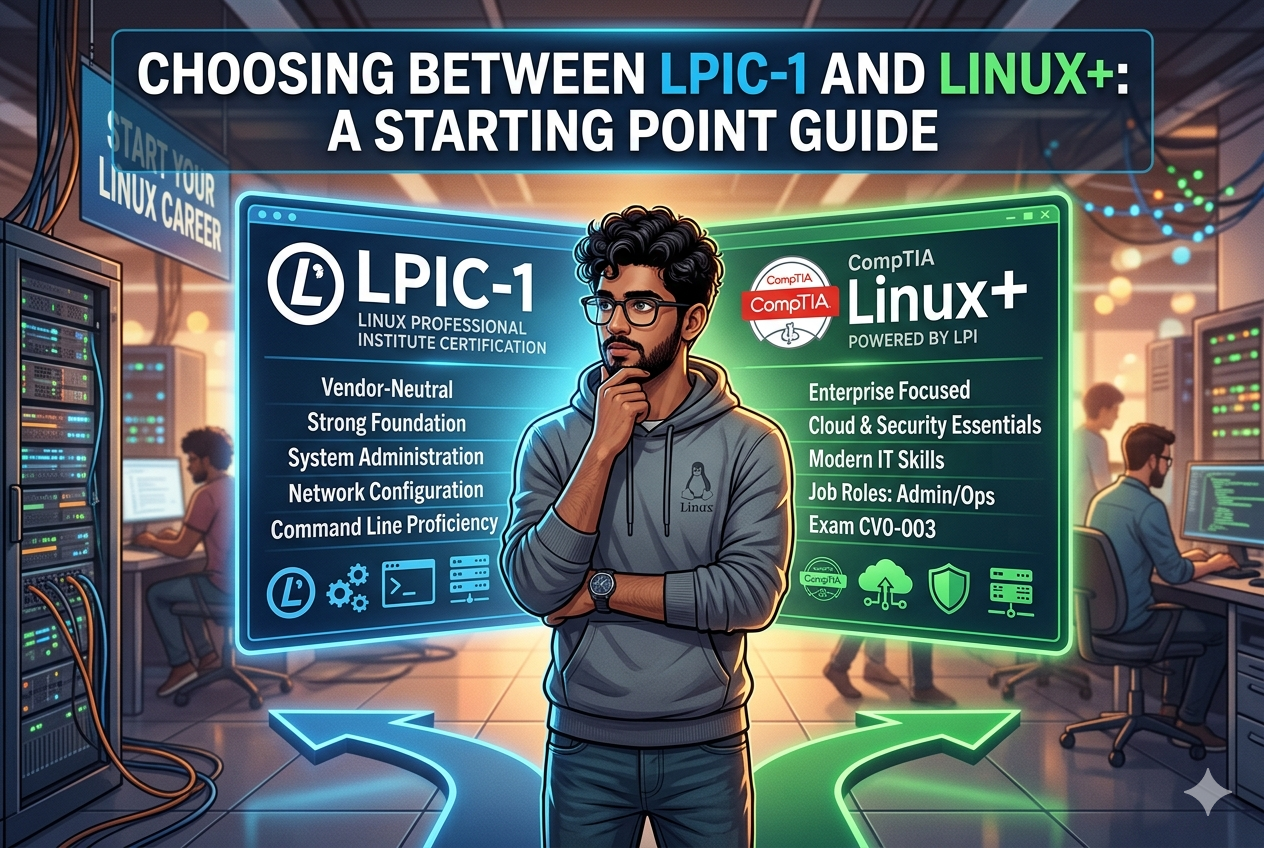
Linux certifications play a major role in shaping the early careers of IT professionals who want to enter system administration, cloud engineering, cybersecurity, and DevOps-related fields. Among the entry-level certifications, LPIC-1 and CompTIA Linux+ are often compared because both validate foundational Linux knowledge. However, the way they approach Linux learning and assessment is quite different. Understanding these differences is important before deciding which path to take.
Linux itself is widely used in servers, cloud infrastructure, embedded systems, and enterprise environments. Because of this wide usage, companies look for professionals who understand how to operate, configure, and troubleshoot Linux systems. Certifications are not just about passing exams but about proving that you can work in real-world environments. LPIC-1 and Linux+ both aim to do this, but their methods differ significantly in depth, structure, and learning style.
Choosing between them is less about which one is better and more about which one aligns with your learning preference and career direction.
Why Linux Skills Matter Today
Linux has become the backbone of modern IT infrastructure. Most cloud platforms, web servers, container systems, and DevOps pipelines rely heavily on Linux-based environments. This makes Linux knowledge essential for anyone entering technical roles in IT.
Organizations prefer professionals who can navigate Linux systems confidently because many critical services run on it. Whether it is managing servers, deploying applications, or securing networks, Linux skills are always in demand.
As automation, cloud computing, and containerization continue to grow, Linux knowledge is no longer optional. It has become a core skill that supports almost every modern IT role. This is why certifications like LPIC-1 and Linux+ are considered strong entry points into the industry.
Both certifications help build this foundation, but they differ in how deeply they explore the operating system and how practical the learning experience feels.
What LPIC-1 Focuses On
LPIC-1 is known for its deep technical focus on Linux fundamentals. It is designed by the Linux Professional Institute and follows a structured path that emphasizes system-level understanding. The certification is divided into two exams, which together cover a broad range of Linux administration topics.
The focus is heavily on command-line usage, system configuration, file permissions, process management, and networking basics within Linux environments. It also expects learners to understand how Linux systems operate internally rather than just how to use tools.
LPIC-1 is considered more traditional in its approach. It often requires memorization of commands, flags, and system behaviors. However, this depth is also what makes it valuable for those who want strong technical foundations.
The certification is ideal for learners who are willing to spend more time practicing in real Linux environments and building a deeper understanding of how systems behave under different conditions.
LPIC-1 Learning Depth and Structure
One of the most defining features of LPIC-1 is its structured and detailed syllabus. Because it is split into two exams, learners are encouraged to build knowledge step by step. This structure allows for gradual development of skills but also requires consistent effort over time.
The content is not limited to basic usage. It includes system administration tasks that require careful attention to detail. Learners often spend significant time working with command-line tools and understanding system configurations at a deeper level.
This makes LPIC-1 more challenging for beginners, but it also ensures that those who complete it have a strong understanding of Linux fundamentals. The learning experience is more technical and less guided, meaning self-discipline is important.
For individuals who enjoy problem-solving, exploring system internals, and working in terminal environments, LPIC-1 provides a rewarding learning path.
What Linux+ Focuses On
CompTIA Linux+ takes a more modern and practical approach to Linux certification. It is designed with current IT job roles in mind, especially those involving cloud computing, DevOps workflows, and IT operations.
Unlike LPIC-1, Linux+ is a single-exam certification. It covers a wide range of topics including system administration, security, scripting basics, troubleshooting, and automation concepts. However, the depth is more focused on practical application rather than detailed theoretical understanding.
Linux+ is designed to reflect real-world tasks that IT professionals are likely to encounter in modern environments. It emphasizes the ability to perform tasks efficiently rather than memorizing deep technical details.
This makes it more accessible for beginners and those transitioning from other IT backgrounds such as Windows administration or networking.
Linux+ Practical Orientation
The learning style of Linux+ is more scenario-based. Instead of focusing heavily on command memorization, it emphasizes understanding how Linux is used in real environments. This includes working with scripts, managing systems, and troubleshooting common issues.
The certification aligns well with environments where Linux is part of a larger ecosystem involving cloud platforms and automation tools. Because of this, learners often find it easier to connect what they study with real job tasks.
Linux+ is also considered more beginner-friendly because it reduces the complexity of Linux concepts while still maintaining technical relevance. It provides a smoother learning curve compared to LPIC-1.
For individuals who want quicker entry into the IT field without diving too deeply into system internals, Linux+ offers a balanced approach.
Key Philosophical Differences
The biggest difference between LPIC-1 and Linux+ lies in their philosophy. LPIC-1 is built around deep technical mastery, while Linux+ focuses on practical job readiness.
LPIC-1 assumes that learners want to build long-term Linux expertise. It encourages understanding systems at a foundational level, which can later support advanced specialization.
Linux+, on the other hand, assumes that learners want to become job-ready quickly and work in environments where Linux is one of many technologies.
This difference affects everything from study materials to exam style. LPIC-1 feels more academic and detailed, while Linux+ feels more applied and practical.
Understanding this difference is crucial because it determines how you will experience your learning journey.
Difficulty and Preparation Reality
LPIC-1 is generally considered more difficult due to its depth and two-exam structure. It requires strong familiarity with Linux command-line tools and a willingness to explore system configurations in detail. Beginners may find it challenging at first, but it builds strong long-term skills.
Linux+ is comparatively easier to approach. While it still requires technical knowledge, the questions are more focused on practical scenarios rather than deep system internals. This makes it more manageable for those new to Linux.
Preparation for LPIC-1 often involves more hands-on practice and self-study, while Linux+ preparation can be more structured and guided.
Both certifications require commitment, but the intensity and depth of study differ significantly.
Exam Experience Comparison
The exam experience for LPIC-1 is more segmented due to its two-exam structure. Candidates must pass both exams to achieve certification, which means preparation is spread across multiple stages. This can increase the overall time required but also allows focused learning.
Linux+ is completed in a single exam session. This makes it more convenient and faster to complete. However, it also means that all topics must be studied at once, which can feel dense for some learners.
LPIC-1 exams often test detailed knowledge of Linux commands and configurations. Linux+ exams focus more on scenario-based problem solving and applied understanding.
Both formats are valid, but they cater to different learning preferences.
Skill Development Outcomes
LPIC-1 builds strong technical confidence in Linux systems. Learners gain deep understanding of system behavior, command-line tools, and administrative tasks. This makes it a strong foundation for advanced Linux roles.
Linux+ builds practical skills that can be immediately applied in IT environments. Learners gain experience in troubleshooting, system management, and basic automation concepts.
While LPIC-1 emphasizes depth, Linux+ emphasizes usability. Both outcomes are valuable depending on career goals.
Career Opportunities with LPIC-1
LPIC-1 is often valued in roles that require strong Linux expertise. These include system administration, server management, and enterprise IT environments. It is also useful for individuals planning to pursue advanced Linux certifications later.
Because of its depth, it is respected in organizations that prioritize technical mastery and long-term Linux specialization.
Career Opportunities with Linux+
Linux+ is widely recognized in modern IT environments that combine Linux with cloud platforms, cybersecurity tools, and DevOps workflows. It is suitable for entry-level IT roles, junior system administrators, and support positions.
It is also a good starting point for individuals planning to expand into multiple IT domains beyond Linux.
Which One Beginners Should Consider First
For beginners, the choice depends on learning style. If you prefer structured, deep, and technical learning, LPIC-1 is a strong option. If you prefer a smoother introduction with practical focus, Linux+ is more suitable.
Both certifications are valid entry points, but Linux+ is generally easier for complete beginners, while LPIC-1 is better for those aiming for long-term Linux specialization.
Common Mistakes Learners Make
One common mistake is choosing a certification based only on popularity rather than personal learning style. Another mistake is underestimating the depth of LPIC-1, which requires consistent practice.
Some learners also rush into exams without hands-on experience, which leads to difficulties in applying knowledge practically. Linux learning requires practice, not just reading.
Understanding the exam objectives and practicing in real environments is essential for success in both certifications.
Study Strategy That Works for Both
A strong study approach includes regular hands-on practice, using Linux systems daily, and focusing on understanding rather than memorization. Working with real command-line tasks helps reinforce concepts effectively.
Consistency is more important than speed. Breaking topics into smaller sections and practicing them repeatedly helps build confidence.
Simulating real system administration tasks is especially helpful for both certifications.
Final Conclusion
Both LPIC-1 and Linux+ are valuable certifications that serve as strong entry points into Linux-based careers. LPIC-1 offers deep technical mastery and is ideal for those who want long-term specialization in Linux systems. Linux+ provides a more practical and accessible approach, making it suitable for beginners and those aiming for broader IT roles.
The right choice depends on your career goals, learning style, and how deeply you want to engage with Linux systems. Whether you choose depth or practicality, both paths lead to strong opportunities in the growing field of IT infrastructure and cloud computing.