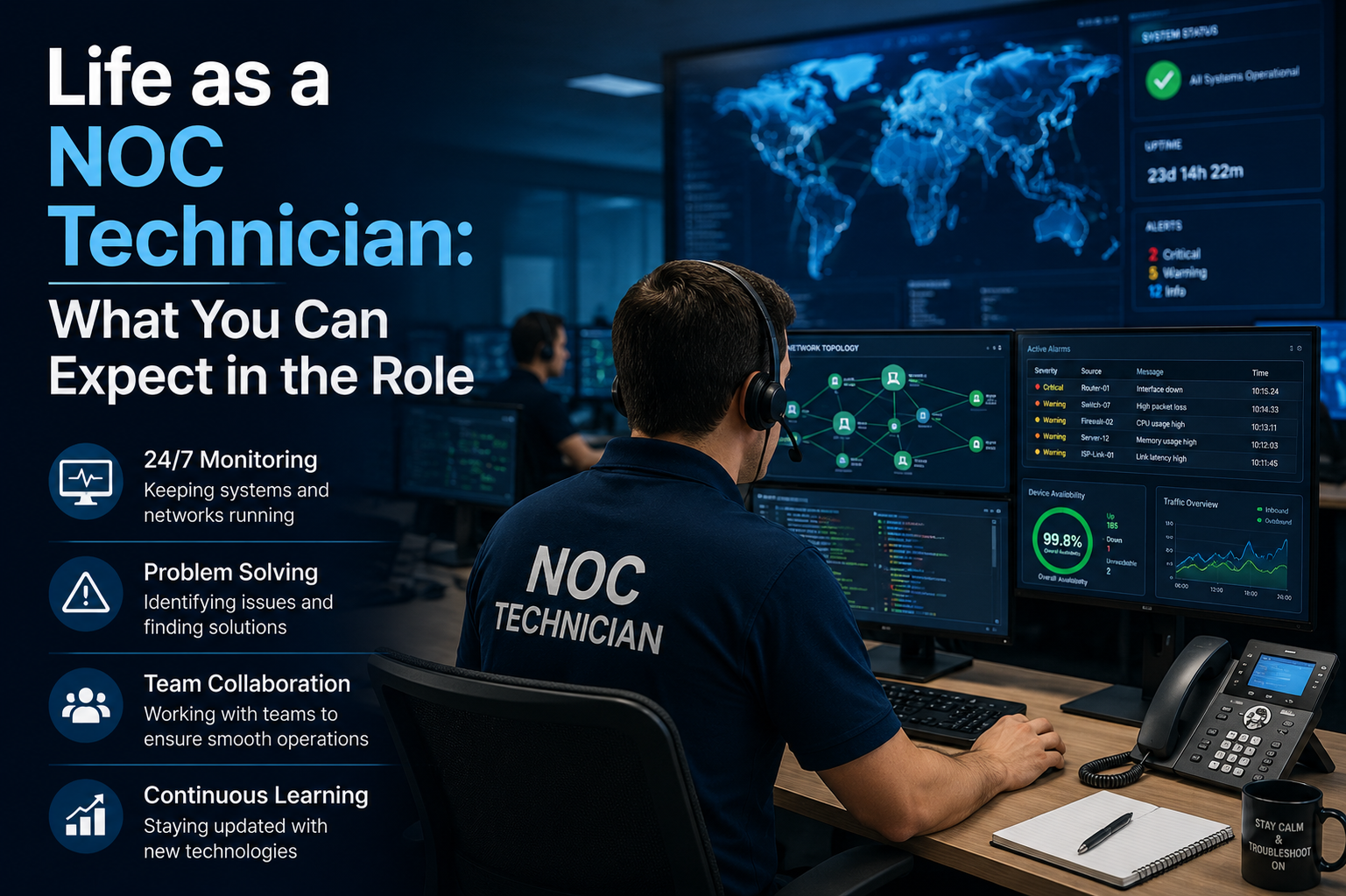
Working in a Network Operations Center is unlike most traditional IT roles. It is a controlled yet highly dynamic environment where technology, time sensitivity, and precision intersect. A NOC Technician is not simply someone who watches screens; instead, they are responsible for ensuring the digital backbone of an organization remains stable, secure, and fully operational.
From the outside, the job may appear repetitive—monitoring systems and responding to alerts—but in reality, it involves continuous decision-making, prioritization, and technical analysis. Every alert tells a story, and every incident requires careful interpretation. Understanding this environment is the first step toward appreciating what the role truly demands.
The First Steps Inside the NOC
When a new technician joins a NOC team, the initial experience is often overwhelming. There are multiple monitoring screens, dashboards filled with real-time metrics, and constant streams of alerts. However, structured onboarding helps new professionals gradually adapt to this environment.
Training typically begins with understanding the architecture of the network. This includes learning how servers, routers, switches, firewalls, and cloud systems interact with each other. Without this foundation, it becomes difficult to interpret alerts or troubleshoot issues effectively.
New technicians are also introduced to standard operating procedures. These procedures act as a guidebook for handling incidents, escalating issues, and communicating with other teams. Over time, these processes become second nature, allowing technicians to respond quickly under pressure.
Daily Workflow and Structured Monitoring
A typical shift begins with a handover from the previous team. This handover is crucial because it provides insight into ongoing issues, unresolved tickets, and system status updates. Once the shift begins, technicians immediately review dashboards and prioritize tasks based on severity.
The workflow is highly structured. Alerts are categorized based on urgency, ranging from informational notifications to critical system failures. Each category has a defined response time, and technicians must adhere to these timelines strictly.
Throughout the shift, monitoring is continuous. Even during periods of low activity, technicians must remain alert. Systems that appear stable can sometimes fail without warning, and early detection is key to minimizing impact.
Ticketing systems play a central role in organizing tasks. Every incident is documented, tracked, and updated until resolution. This ensures transparency and accountability across teams.
Incident Response and Real-Time Problem Solving
One of the most defining aspects of a NOC Technician’s life is incident response. When a critical issue occurs, the environment becomes fast-paced and highly focused. Multiple technicians may collaborate simultaneously to diagnose and resolve the problem.
The first step in incident response is identification. Technicians determine what has failed, which systems are affected, and how severe the impact is. This requires analyzing logs, checking system metrics, and verifying connectivity.
Once the issue is identified, containment becomes the priority. The goal is to prevent the problem from spreading or causing additional disruptions. Depending on the situation, this may involve restarting services, rerouting traffic, or isolating affected systems.
After containment, resolution begins. Technicians either fix the issue directly or escalate it to specialized teams such as network engineers or system administrators. Clear communication during this phase is essential to avoid delays.
Finally, a post-incident review is conducted. This step is often overlooked but extremely important. It helps identify the root cause and implement preventive measures to avoid recurrence.
The Pressure of Real-Time Systems
Unlike many IT roles where deadlines are flexible, NOC work is governed by real-time systems. Downtime directly impacts users, customers, and business operations. This creates a sense of urgency that is always present in the background.
During major incidents, pressure can escalate quickly. Multiple alerts may trigger simultaneously, and technicians must decide which issue to address first. This prioritization skill is critical because not all problems have equal impact.
Despite the pressure, structured processes help maintain order. Teams follow escalation paths, communication protocols, and predefined response strategies. This ensures that even in chaotic situations, there is clarity and direction.
Over time, technicians become more comfortable handling pressure. Experience teaches them how to stay calm, think logically, and avoid panic-driven decisions.
Communication and Team Coordination
A NOC Technician rarely works alone. The role is deeply collaborative, requiring constant communication with team members and other departments. Clear communication is essential to ensure that issues are understood correctly and resolved efficiently.
During incidents, technicians often provide updates to stakeholders. These updates must be accurate, concise, and free of unnecessary technical jargon. The ability to translate complex technical issues into simple explanations is highly valuable.
Coordination also extends to escalation management. When an issue cannot be resolved at the NOC level, it must be escalated to higher-level engineers. Proper escalation includes detailed documentation, logs, and troubleshooting steps already taken.
Team communication tools and structured reporting systems help maintain alignment across shifts and departments. Without this coordination, resolving incidents would take significantly longer.
Technical Skills Developed on the Job
Working as a NOC Technician builds a strong technical foundation. Over time, professionals gain deep familiarity with networking concepts such as IP addressing, subnetting, routing protocols, and DNS resolution.
They also develop expertise in system monitoring tools, log analysis, and performance optimization. These skills are not just theoretical; they are applied daily in real-world scenarios.
Troubleshooting becomes second nature. Technicians learn how to isolate problems by systematically eliminating possible causes. This analytical mindset is one of the most valuable outcomes of working in a NOC environment.
Additionally, exposure to cloud infrastructure and virtualization technologies is increasingly common. As organizations shift toward cloud-based systems, NOC teams must adapt to new architectures and monitoring techniques.
The Importance of Documentation
Documentation is a critical part of the job that is often underestimated. Every incident, no matter how small, must be recorded in detail. This includes timestamps, symptoms, actions taken, and final resolution steps.
Proper documentation serves multiple purposes. It provides a reference for future incidents, helps in performance analysis, and ensures accountability. It also plays a key role during audits and compliance checks.
Good documentation skills distinguish average technicians from excellent ones. Clear, structured records make it easier for teams to understand past incidents and improve future responses.
Shift Life and Personal Adjustment
One of the biggest adjustments in a NOC career is adapting to shift-based work. Since systems operate 24/7, technicians work in rotating schedules that may include nights, weekends, and holidays.
This lifestyle requires discipline. Sleep patterns, meal schedules, and personal routines must be carefully managed to maintain health and productivity. Over time, technicians develop strategies to adapt to irregular hours.
While shift work can be challenging, it also offers certain advantages. Some technicians prefer night shifts due to reduced activity levels, which allow more focused monitoring and fewer distractions.
Maintaining work-life balance is an ongoing effort. Successful technicians learn how to separate work stress from personal life and develop routines that support long-term well-being.
Challenges Faced in the Role
Despite its benefits, the role of a NOC Technician comes with several challenges. One of the most common is information overload. Monitoring tools generate a large volume of alerts, and distinguishing between critical and non-critical issues requires experience.
Another challenge is dealing with repetitive tasks. Some aspects of the job, such as monitoring dashboards or updating tickets, can become routine. Staying motivated in such environments requires focus on long-term career growth.
Technical complexity is also increasing as systems become more distributed and cloud-based. This requires continuous learning and adaptation.
Additionally, the responsibility of maintaining uptime can be mentally demanding. Even small mistakes can have significant consequences, which adds to the pressure of the role.
Career Growth and Future Opportunities
A NOC Technician role is often the starting point for many successful IT careers. It provides exposure to real-world infrastructure and builds essential problem-solving skills.
With experience, technicians can move into roles such as network engineering, systems administration, cloud operations, or cybersecurity. Each of these paths builds on the foundation developed in the NOC environment.
Some professionals also transition into specialized roles such as incident management or IT service management. These positions focus on optimizing processes and improving system reliability.
Continuous learning plays a major role in career growth. Certifications, hands-on practice, and exposure to new technologies help technicians move into higher-level positions over time.
The Human Side of the Job
Beyond technical skills, the human aspect of being a NOC Technician is equally important. Patience, resilience, and emotional control are essential qualities.
Dealing with high-pressure situations requires mental stability. Technicians must remain focused even when systems fail or incidents escalate rapidly.
Team support also plays a significant role in job satisfaction. Working closely with colleagues during challenging situations builds strong professional relationships and a sense of teamwork.
Over time, many technicians develop a strong sense of pride in their work. Knowing that they are responsible for keeping critical systems running adds meaning to their daily responsibilities.
Conclusion
Life as a NOC Technician is a blend of technical responsibility, continuous monitoring, and real-time problem-solving. It is a role that demands focus, discipline, and adaptability.
While the job comes with challenges such as shift work, pressure during incidents, and constant vigilance, it also offers strong career foundations and valuable technical exposure.
For those who enjoy working in structured environments, solving problems under pressure, and building a deep understanding of IT systems, the NOC Technician role can be both rewarding and transformative.
It is not just about monitoring networks; it is about ensuring digital continuity in an increasingly connected world.