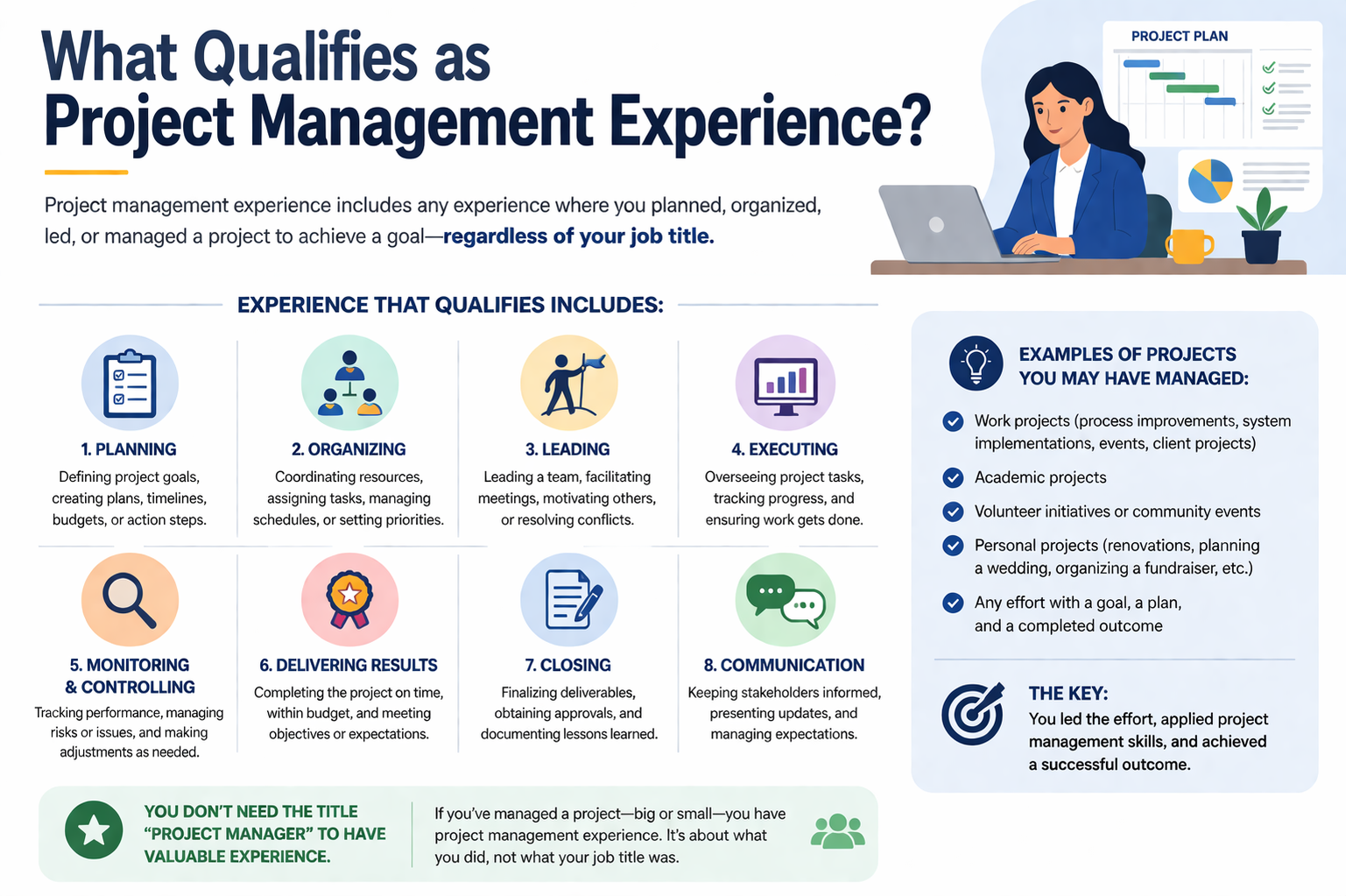
Project management experience is often misunderstood as something that only exists within formal project manager job titles, but in reality, it is much broader and more flexible. It refers to any hands-on involvement in guiding work from initiation to completion with a clear objective in mind. This includes planning, coordination, execution, monitoring, and successful delivery of outcomes. Whether the setting is corporate, academic, volunteer-based, or personal, the core idea remains the same: achieving goals through structured effort and organized execution.
Formal and Informal Project Management Experience
Project management experience can be either formal or informal. Formal experience comes from roles where project management is part of the job description, such as coordinating teams, managing budgets, or leading structured initiatives in an organization. Informal experience, however, is equally valuable and often overlooked. It includes situations where you naturally take responsibility for organizing tasks, leading group efforts, or ensuring something gets completed efficiently without having an official title. Examples include leading school projects, organizing events, managing community activities, or handling workplace assignments that require coordination and planning.
Core Responsibilities That Define Experience
At the heart of project management experience are certain responsibilities that demonstrate control over a process. These include defining what needs to be done, breaking down large goals into smaller tasks, assigning responsibilities, and ensuring that everything progresses in a logical order. It also involves tracking progress, identifying delays, and making adjustments when needed. Anyone who has taken ownership of such responsibilities, even in a small-scale setting, is gaining real project management experience.
Planning and Structuring Work Effectively
Planning is one of the most critical elements of project management. It involves understanding the objective, identifying the steps required to achieve it, and creating a structured path forward. This may include setting timelines, estimating resources, and anticipating challenges. If you have ever created a plan to complete academic assignments, organize a group activity, or manage workplace tasks, you have already practiced essential project planning skills that form the foundation of project management experience.
Leadership and Team Coordination Skills
Leading or coordinating a team is a strong indicator of project management exposure. This does not always mean being in a formal leadership position. It can involve guiding peers, assigning tasks, ensuring collaboration, and maintaining communication among team members. Effective coordination also includes resolving misunderstandings, balancing different opinions, and keeping everyone focused on shared goals. These experiences help develop the ability to manage people, which is a central part of project management.
Time Management and Deadline Control
One of the most practical aspects of project management experience is the ability to manage time effectively. Projects often come with deadlines, and managing those deadlines requires careful scheduling and prioritization. This includes deciding what tasks should be done first, how long each task will take, and how to adjust when delays occur. Experience in meeting deadlines consistently, even under pressure, demonstrates strong project management capability.
Problem Solving and Adaptability in Projects
Projects rarely go exactly as planned, which makes problem-solving an essential skill. Project management experience includes the ability to identify issues early, analyze their impact, and implement solutions quickly. This might involve dealing with unexpected delays, resource limitations, or changes in requirements. Adaptability is equally important, as it shows the ability to adjust plans without losing sight of the final objective. Individuals who can handle challenges while keeping progress on track demonstrate real project management maturity.
Communication and Stakeholder Interaction
Clear communication is a key part of managing any project. This includes sharing updates, explaining responsibilities, and ensuring that everyone involved understands their role. Stakeholder interaction is another important aspect, which involves communicating with individuals who have an interest in the project outcome. This could include team members, supervisors, clients, or external contributors. Experience in maintaining clear, consistent communication helps ensure smooth project execution and reduces misunderstandings.
Managing Scope and Expectations
Project management experience also includes controlling the scope of work, which means ensuring that the project does not grow beyond its original goals without proper approval. This requires discipline and clarity, especially when new requests or changes arise during the process. Managing expectations is closely related, as it involves ensuring that all stakeholders understand what can realistically be achieved within the given time and resources. Handling scope effectively is a strong sign of structured project management experience.
Exposure to Tools and Work Methods
Although not always necessary, familiarity with project management tools and structured work methods can enhance your experience. These may include planning techniques, tracking systems, or collaboration methods used to organize tasks and monitor progress. Even simple tools like spreadsheets, calendars, or task lists can contribute to managing projects effectively. More advanced environments may involve structured methodologies, but the core experience comes from how you use these systems to improve organization and delivery.
Experience Across Different Environments
Project management experience is not limited to one industry or setting. It can come from education, business, technology, healthcare, events, or community work. For example, organizing a school presentation requires planning and coordination, while managing a workplace task requires communication and deadline control. Even planning personal projects such as events, travel arrangements, or group activities can demonstrate the same underlying skills. The environment may change, but the principles of managing work remain consistent.
Risk Awareness and Decision Making
An important part of project management experience is understanding potential risks and making decisions to reduce them. Risks may include delays, resource shortages, miscommunication, or technical challenges. Experience comes from identifying these risks early and taking steps to prevent or minimize their impact. Decision making is closely linked, as project managers often need to choose between multiple options while balancing time, cost, and quality considerations.
Tracking Progress and Ensuring Completion
Monitoring progress is essential to ensure that a project stays on track. This involves checking completed tasks, comparing progress against deadlines, and making adjustments when necessary. Individuals with project management experience often develop the habit of regularly reviewing work to ensure alignment with goals. This ongoing tracking helps ensure that the final outcome is delivered successfully and meets expectations.
Delivering Results and Demonstrating Impact
The most important proof of project management experience is the ability to deliver results. Completing a project successfully means achieving its intended goal within the constraints of time, resources, and quality. This could be launching a product, organizing an event, completing an academic project, or improving a process. The ability to bring all elements together and produce a successful outcome demonstrates practical project management ability.
How Project Management Experience Is Recognized
Employers and organizations often recognize project management experience by looking at real examples of responsibility and impact rather than just job titles. They assess how individuals have handled planning, coordination, leadership, and delivery in past situations. Even small-scale experiences can be valuable if they show clear evidence of organization, problem-solving, and successful completion of tasks. What matters most is the ability to manage work effectively from start to finish.
Building Strong Project Management Experience Over Time
Project management experience develops gradually through repeated involvement in structured tasks and responsibilities. Each project, whether large or small, contributes to skill development in planning, communication, leadership, and execution. Over time, these experiences build confidence and improve the ability to handle more complex responsibilities. Continuous learning and reflection on past projects also help strengthen overall project management capability.
Advanced Indicators of Project Management Experience
Project management experience becomes more advanced when an individual consistently handles multiple responsibilities at once while maintaining control over outcomes. This includes managing overlapping tasks, coordinating different teams or groups simultaneously, and ensuring that all moving parts align with the overall objective. At this stage, experience is not just about completing tasks but about managing complexity and maintaining stability in dynamic environments. Individuals who can handle such situations demonstrate a deeper level of project management capability.
Multi-Task Coordination and Prioritization
A key sign of developed project management experience is the ability to handle multiple tasks at the same time without losing focus on priorities. In real projects, there are always competing demands, and not everything can be done at once. Experience is reflected in how effectively a person can decide what needs immediate attention and what can be scheduled for later. This includes balancing urgent issues with long-term goals and ensuring that progress continues smoothly across all areas of work.
Resource Management in Practical Situations
Project management is not only about tasks and timelines but also about managing available resources efficiently. These resources may include time, people, tools, information, or budget constraints. Experience in this area comes from knowing how to allocate limited resources in a way that maximizes productivity. It also involves making adjustments when resources change unexpectedly. Effective resource management ensures that a project continues moving forward without unnecessary delays or waste.
Conflict Resolution Within Teams
As projects involve people working together, disagreements and conflicts are natural. Project management experience includes the ability to identify conflicts early and resolve them in a constructive manner. This may involve listening to different viewpoints, mediating discussions, and finding solutions that satisfy the overall goals of the project. Strong conflict resolution skills help maintain team harmony and ensure that work is not disrupted by interpersonal issues.
Monitoring Performance and Quality Control
Ensuring quality is a critical aspect of project management experience. This involves regularly checking work outputs to make sure they meet the required standards. Monitoring performance includes reviewing task completion, identifying errors or gaps, and making improvements where necessary. Quality control also means ensuring that the final deliverable meets expectations and aligns with the original objectives. Experience in this area demonstrates attention to detail and responsibility for outcomes.
Experience in Handling Change and Uncertainty
Projects often change due to new requirements, unexpected challenges, or shifting priorities. Project management experience includes the ability to adapt to these changes without losing direction. This requires flexibility, quick thinking, and strong decision-making skills. Individuals who can adjust plans while still maintaining progress show that they are capable of managing uncertainty effectively. This adaptability is one of the most valuable aspects of project management experience.
Documentation and Record Keeping Skills
Proper documentation is an important but often overlooked part of project management experience. It involves keeping records of plans, decisions, progress updates, and outcomes. Good documentation helps ensure transparency and allows others to understand how the project was managed. It also helps in tracking progress and reviewing past work for future improvement. Experience in maintaining organized records shows discipline and attention to detail.
Experience in Cross-Functional Collaboration
Many projects involve working with different departments, teams, or areas of expertise. Project management experience includes the ability to collaborate across these different functions effectively. This means understanding different perspectives, aligning goals, and ensuring smooth communication between groups that may have different priorities. Cross-functional collaboration requires strong interpersonal skills and the ability to connect various parts of an organization toward a common objective.
Risk Management and Preventive Planning
As project experience grows, individuals become more skilled in identifying risks before they become problems. Risk management involves anticipating what could go wrong and planning preventive actions. This may include creating backup plans, setting safety margins in schedules, or preparing alternative solutions. Experience in risk management demonstrates foresight and the ability to think strategically rather than reactively.
Budget Awareness and Cost Responsibility
Even in small-scale projects, managing costs is an important responsibility. Project management experience often includes working within financial limits and making decisions that balance cost with quality. This involves understanding where resources are being used and ensuring that spending aligns with the project’s goals. Individuals with this experience learn how to make cost-effective decisions without compromising the success of the project.
Stakeholder Management in Complex Projects
As projects grow in size, the number of stakeholders involved also increases. These stakeholders may include clients, managers, team members, or external partners. Project management experience includes managing their expectations, providing regular updates, and ensuring that their needs are considered throughout the project. Effective stakeholder management helps build trust and ensures smooth project execution.
Decision-Making Under Pressure
Projects often require quick decisions, especially when unexpected problems arise. Project management experience includes the ability to evaluate situations rapidly and choose the best possible action. This requires balancing available information, considering risks, and understanding potential outcomes. Decision-making under pressure is a strong indicator of practical experience and leadership capability.
Continuous Improvement and Learning From Experience
A strong sign of project management maturity is the ability to learn from past projects. This involves reflecting on what went well, what did not work, and how processes can be improved in the future. Continuous improvement helps individuals refine their skills and become more efficient over time. Experience is not just about completing projects but also about growing through each one.
Documentation of Lessons Learned
In more structured environments, project management experience includes recording lessons learned after project completion. This helps in identifying best practices and avoiding repeated mistakes. Documenting lessons learned contributes to organizational knowledge and improves future project performance. Individuals who actively engage in this practice demonstrate a higher level of professionalism and awareness.
Experience in Delivering Projects From Start to Finish
One of the clearest indicators of project management experience is the ability to handle a project through all its stages. This includes initiation, planning, execution, monitoring, and final delivery. Managing a project from start to finish requires consistency, commitment, and the ability to maintain focus across different phases. Completing full project cycles demonstrates end-to-end responsibility.
Handling Deadlines in High-Pressure Environments
In many real-world situations, deadlines are strict and non-negotiable. Project management experience includes working effectively under pressure while still maintaining quality standards. This requires strong organizational skills and the ability to stay calm in demanding situations. Meeting deadlines consistently builds reliability and trust in professional environments.
Building Leadership Confidence Through Experience
As individuals gain more project management experience, they naturally develop stronger leadership confidence. This comes from repeated exposure to decision-making, problem-solving, and team coordination. Leadership in project management is not just about giving instructions but about guiding others toward a shared goal while maintaining motivation and direction.
Real-World Application Across Different Fields
Project management experience is highly transferable and can be applied in many different fields. Whether in business, education, technology, healthcare, or community service, the core skills remain the same. This versatility makes project management experience valuable across industries. Individuals who have worked in different environments often develop a broader understanding of how projects operate in various contexts.
Long-Term Value of Project Management Experience
Over time, project management experience becomes a strong foundation for career growth and professional development. It builds essential skills such as leadership, communication, planning, and problem-solving. These skills are valuable not only for managing projects but also for handling broader responsibilities in any role. The long-term value lies in the ability to apply structured thinking and organized execution to any challenge.
Project Management Experience Understanding
Project management experience is a combination of practical involvement, responsibility, and skill development across different situations. It is not limited to formal titles but includes any role where planning, coordination, leadership, and delivery are involved. As individuals gain more exposure to structured work, their ability to manage complexity, handle people, and deliver results improves significantly. This experience becomes a powerful asset that supports both personal growth and professional success.
Practical Ways Project Management Experience Is Gained
Project management experience is most effectively developed through real involvement in tasks that require structure, coordination, and responsibility. It does not come only from studying concepts but from actively applying them in situations where outcomes depend on planning and execution. Every time a person takes responsibility for organizing work, managing a timeline, or guiding others toward a goal, they are building practical experience. Over time, these repeated actions shape strong project management capability.
Academic Projects and Student-Based Experience
One of the earliest sources of project management experience comes from academic work. Group assignments, research projects, presentations, and final-year projects often require students to plan tasks, divide responsibilities, and meet deadlines. Even though these are educational settings, they involve real coordination challenges. Students who take leadership roles in such projects gain exposure to scheduling, teamwork, and problem-solving, which directly contributes to project management experience.
Workplace Assignments and Task Ownership
In professional environments, project management experience can develop even without an official project manager role. Employees often manage tasks that require coordination between departments, tracking progress, or ensuring timely completion. Taking ownership of assignments, improving workflows, or handling small internal projects builds practical exposure. These experiences help individuals understand how work moves from planning to execution in real business environments.
Volunteer Work and Community Projects
Volunteer activities and community initiatives are strong sources of project management experience. Organizing events, coordinating volunteers, managing schedules, and ensuring resources are available all require structured planning. These experiences often involve limited resources and tight timelines, making them highly valuable for developing problem-solving and leadership skills. Community-based projects also strengthen communication and collaboration abilities.
Event Planning and Coordination Experience
Event planning is one of the most practical examples of project management in action. Whether it is a seminar, workshop, cultural event, or social gathering, the process involves multiple stages such as planning, budgeting, coordination, and execution. Managing vendors, schedules, participants, and logistics requires strong organizational skills. Successfully delivering an event demonstrates clear project management experience.
Freelance and Independent Project Work
Freelancers and independent professionals often gain project management experience by handling entire assignments themselves. This includes communicating with clients, defining project scope, managing deadlines, and delivering final results. Since they are responsible for every stage of the project, they develop strong self-management skills. This type of experience is highly valuable because it reflects full ownership of outcomes.
Internships and Entry-Level Exposure
Internships are another important source of project management experience. Even in entry-level roles, interns are often assigned small projects or supporting tasks that require coordination and planning. Observing experienced professionals while contributing to ongoing projects helps build foundational understanding. Internships also provide exposure to tools, processes, and workflows used in structured environments.
Managing Personal Projects and Initiatives
Personal projects also contribute significantly to project management experience. These may include starting a blog, organizing a trip, learning a new skill through structured planning, or completing self-directed goals. The key factor is applying a structured approach to achieve a defined outcome. Even though these projects are personal, they still require planning, discipline, and execution.
Developing Transferable Project Management Skills
As experience grows, individuals develop transferable skills that can be applied in any field. These include planning, communication, leadership, time management, and problem-solving. Transferable skills are valuable because they are not limited to a single job or industry. They allow individuals to adapt to different roles and responsibilities while maintaining effectiveness in managing work.
Building Experience Through Responsibility Taking
A major way project management experience develops is through taking responsibility. When individuals step forward to lead tasks or coordinate efforts, they naturally gain exposure to project-related challenges. Responsibility teaches accountability, decision-making, and ownership of outcomes. Even small responsibilities contribute to long-term experience development.
Importance of Documentation in Experience Building
Documenting tasks, progress, and outcomes plays a key role in strengthening project management experience. Keeping track of what has been done, what is pending, and what challenges have been faced helps build clarity. Documentation also supports learning by allowing individuals to review past actions and improve future performance. This habit reflects structured thinking and professional discipline.
Learning Through Mistakes and Adjustments
Project management experience is not only built through success but also through mistakes. Errors in planning, delays, or miscommunication provide valuable learning opportunities. Adjusting strategies based on these experiences helps improve future performance. Individuals who learn from mistakes develop stronger judgment and better decision-making abilities over time.
Growth Through Repeated Exposure to Projects
Experience becomes stronger when individuals repeatedly engage in project-related activities. Each new project adds to their understanding of how tasks should be managed. Over time, patterns begin to emerge, making it easier to anticipate challenges and plan effectively. Repeated exposure builds confidence and improves efficiency in handling complex responsibilities.
Developing Organizational Thinking
Project management experience helps develop structured and organized thinking. This means being able to break down large goals into manageable steps and understand how different tasks connect to each other. Organizational thinking improves clarity and reduces confusion during execution. It also helps in prioritizing tasks effectively and maintaining focus on objectives.
Enhancing Communication Through Experience
Communication skills improve significantly through project management activities. Regular interaction with team members, stakeholders, or clients helps individuals learn how to convey ideas clearly. Experience teaches how to adjust communication styles based on the audience and situation. Strong communication ensures smooth coordination and reduces misunderstandings in projects.
Building Confidence in Handling Complexity
As project management experience increases, individuals become more confident in handling complex situations. Complexity may involve multiple tasks, tight deadlines, or diverse teams. Experience helps individuals stay organized even when situations become challenging. This confidence is developed through repeated exposure to structured problem-solving and coordination tasks.
Developing Strategic Thinking Abilities
Project management experience also contributes to strategic thinking. This involves understanding the bigger picture, setting long-term goals, and aligning tasks with overall objectives. Strategic thinking allows individuals to make decisions that support both immediate progress and long-term success. It shifts focus from task completion to outcome achievement.
Understanding Workflow and Process Management
Experience helps individuals understand how workflows and processes operate in different environments. This includes how tasks move from one stage to another and how different roles contribute to project completion. Understanding workflows improves efficiency and reduces delays. It also helps in identifying areas where improvements can be made.
Gaining Experience Through Leadership Opportunities
Leadership opportunities play a major role in developing project management experience. Leading a team, even in a small setting, teaches responsibility, decision-making, and coordination. Leadership experience also helps in understanding how to motivate others and maintain productivity. These skills are essential for managing larger projects in the future.
Long-Term Development of Project Management Expertise
Over time, continuous involvement in structured work leads to the development of strong project management expertise. This expertise is built through a combination of experience, reflection, and skill improvement. Individuals gradually become more efficient in planning, execution, and delivery. Long-term exposure ensures that project management becomes a natural and intuitive process.
Building Project Management Experience
Project management experience is not limited to formal roles or certifications. It is developed through consistent involvement in structured tasks, leadership responsibilities, and real-world problem-solving. Whether through academic work, professional assignments, volunteer activities, or personal initiatives, every experience contributes to skill development. Over time, these experiences build a strong foundation that supports effective planning, coordination, and successful project delivery in any environment.
Advanced Career Impact of Project Management Experience
Project management experience plays a major role in shaping long-term career growth because it directly influences how individuals handle responsibility, complexity, and leadership. As experience increases, individuals are often trusted with larger tasks and more critical decisions. This shift happens because project management skills demonstrate reliability, structured thinking, and the ability to deliver results consistently. In many careers, this experience becomes a foundation for promotions and leadership roles.
Transitioning From Task Handling to Full Project Ownership
Early experience usually involves handling individual tasks or supporting roles, but as skills develop, individuals begin to take ownership of entire projects. This transition is significant because it reflects trust in one’s ability to manage planning, execution, and delivery independently. Full ownership requires a deeper understanding of objectives, risks, and coordination, making it a key milestone in project management development.
Building Leadership Identity Through Experience
Project management experience gradually shapes leadership identity. Leadership in this context is not limited to authority but includes the ability to guide, influence, and support others toward shared goals. Individuals begin to develop a leadership style based on how they manage communication, handle challenges, and motivate teams. Over time, this experience builds confidence in leading both small and large-scale initiatives.
Managing Stakeholder Expectations at Higher Levels
As experience grows, individuals are exposed to more complex stakeholder environments. This includes working with senior management, clients, and cross-functional teams who may have different priorities and expectations. Managing these expectations requires diplomacy, clarity, and consistency. Experienced project managers learn how to balance competing demands while keeping the project aligned with its goals.
Strategic Alignment With Organizational Goals
Advanced project management experience involves aligning projects with broader organizational objectives. This means understanding how individual projects contribute to long-term business success. Instead of focusing only on task completion, experienced individuals think about value creation, efficiency, and impact. This strategic alignment is a key difference between basic and advanced project management experience.
Handling Large-Scale and Complex Projects
With increased experience, individuals are often assigned larger and more complex projects. These projects may involve multiple teams, extended timelines, and higher levels of risk. Managing such complexity requires strong planning, coordination, and adaptability. Experience helps individuals anticipate challenges and design systems that support smooth execution even in demanding conditions.
Improving Efficiency Through Process Optimization
Project management experience also leads to better efficiency in how work is carried out. Over time, individuals begin to identify repetitive issues, bottlenecks, and unnecessary steps in processes. This allows them to suggest improvements that save time and resources. Process optimization becomes an important part of advanced experience, helping teams work more effectively.
Developing Risk Mitigation Expertise
At higher levels of experience, risk management becomes more proactive than reactive. Instead of responding to problems after they occur, experienced individuals design systems to prevent issues from arising. This includes identifying weak points in planning, preparing backup solutions, and ensuring flexibility in execution. Strong risk mitigation is a hallmark of advanced project management capability.
Enhanced Decision-Making With Limited Information
Experienced project managers often need to make decisions even when complete information is not available. This requires judgment, intuition, and experience-based reasoning. Over time, individuals become better at evaluating situations quickly and selecting the most effective course of action. This ability is critical in fast-moving or high-pressure environments.
Mentoring and Guiding Less Experienced Team Members
As project management experience increases, individuals often take on mentoring roles. This involves guiding newer team members, sharing knowledge, and helping others develop their skills. Mentoring not only strengthens leadership abilities but also reinforces the mentor’s own understanding of project management principles. It creates a cycle of continuous learning and improvement.
Improving Communication at Strategic Levels
Advanced experience improves the ability to communicate at different levels of an organization. This includes presenting updates to senior leadership, coordinating with technical teams, and explaining plans to stakeholders. Effective communication becomes more strategic, focusing on clarity, influence, and alignment rather than just information sharing.
Balancing Multiple Projects Simultaneously
Experienced individuals are often responsible for managing multiple projects at the same time. This requires advanced prioritization, time management, and organizational skills. Balancing multiple responsibilities involves ensuring that each project receives adequate attention while maintaining overall performance standards. This level of experience demonstrates strong multitasking ability.
Adapting to Industry-Specific Project Environments
Project management experience becomes more specialized over time based on industry exposure. Different industries have unique requirements, tools, and workflows. Experienced individuals learn how to adapt their skills to different environments, whether it is technology, construction, healthcare, education, or business operations. This adaptability increases professional versatility.
Handling Organizational Change and Transformation
In many cases, experienced project managers are involved in organizational change initiatives. These may include system upgrades, process improvements, or structural changes within a company. Managing change requires careful planning, communication, and stakeholder engagement. Experience in this area reflects the ability to manage uncertainty and guide organizations through transitions.
Strengthening Analytical and Critical Thinking Skills
Project management experience significantly improves analytical thinking. Individuals learn how to evaluate data, identify trends, and make informed decisions. Critical thinking allows them to assess situations objectively and choose the most effective solutions. These skills are essential for managing complex projects and ensuring successful outcomes.
Developing Accountability and Ownership Mindset
A strong outcome of project management experience is the development of accountability. Individuals become responsible not only for their tasks but for the overall success of the project. This ownership mindset encourages careful planning, attention to detail, and commitment to quality. Accountability is a defining characteristic of experienced professionals.
Experience in Delivering Measurable Results
At advanced levels, project management experience is measured by the ability to deliver consistent and measurable results. This includes completing projects on time, within budget, and according to specifications. Success is evaluated based on outcomes rather than effort alone. The ability to deliver results consistently is a key indicator of expertise.
Long-Term Professional Reputation Building
Over time, project management experience contributes to building a strong professional reputation. Individuals known for reliability, leadership, and successful delivery often gain recognition within their organizations and industries. Reputation is built through repeated success and consistent performance in managing projects effectively.
Continuous Learning and Skill Evolution
Even at advanced levels, project management experience continues to evolve. New tools, methodologies, and practices constantly emerge, requiring professionals to keep learning. Continuous learning ensures that skills remain relevant and effective. Experienced individuals often adapt quickly to new approaches due to their strong foundational knowledge.
Advanced Project Management Experience
Advanced project management experience represents the transition from basic task execution to strategic leadership and full project ownership. It includes managing complexity, guiding teams, making critical decisions, and delivering measurable results. Over time, this experience builds not only technical skills but also leadership, communication, and strategic thinking abilities. It becomes a defining factor in professional growth and long-term career success.
Conclusion
Project management experience is not limited to formal job titles or structured corporate environments. It is built through any situation where planning, coordination, leadership, and execution are required to achieve a defined goal. From academic work and volunteer activities to professional roles and personal initiatives, every experience that involves organizing tasks, managing people, and delivering outcomes contributes to this skill set.
At its core, project management experience reflects the ability to turn ideas into completed results through structured effort. It includes planning effectively, managing time and resources, communicating clearly, solving problems, and adapting to change. As these experiences accumulate, they strengthen decision-making, improve leadership ability, and enhance overall efficiency in handling responsibilities.
With time, repeated exposure to projects builds confidence and strategic thinking. Individuals move from simply completing tasks to managing complex outcomes with greater control and clarity. This progression transforms basic experience into professional capability that is valuable across industries and roles.
Ultimately, project management experience is a continuous journey of learning, applying, and improving. It grows with every responsibility taken and every challenge managed, forming a strong foundation for both career development and long-term success.