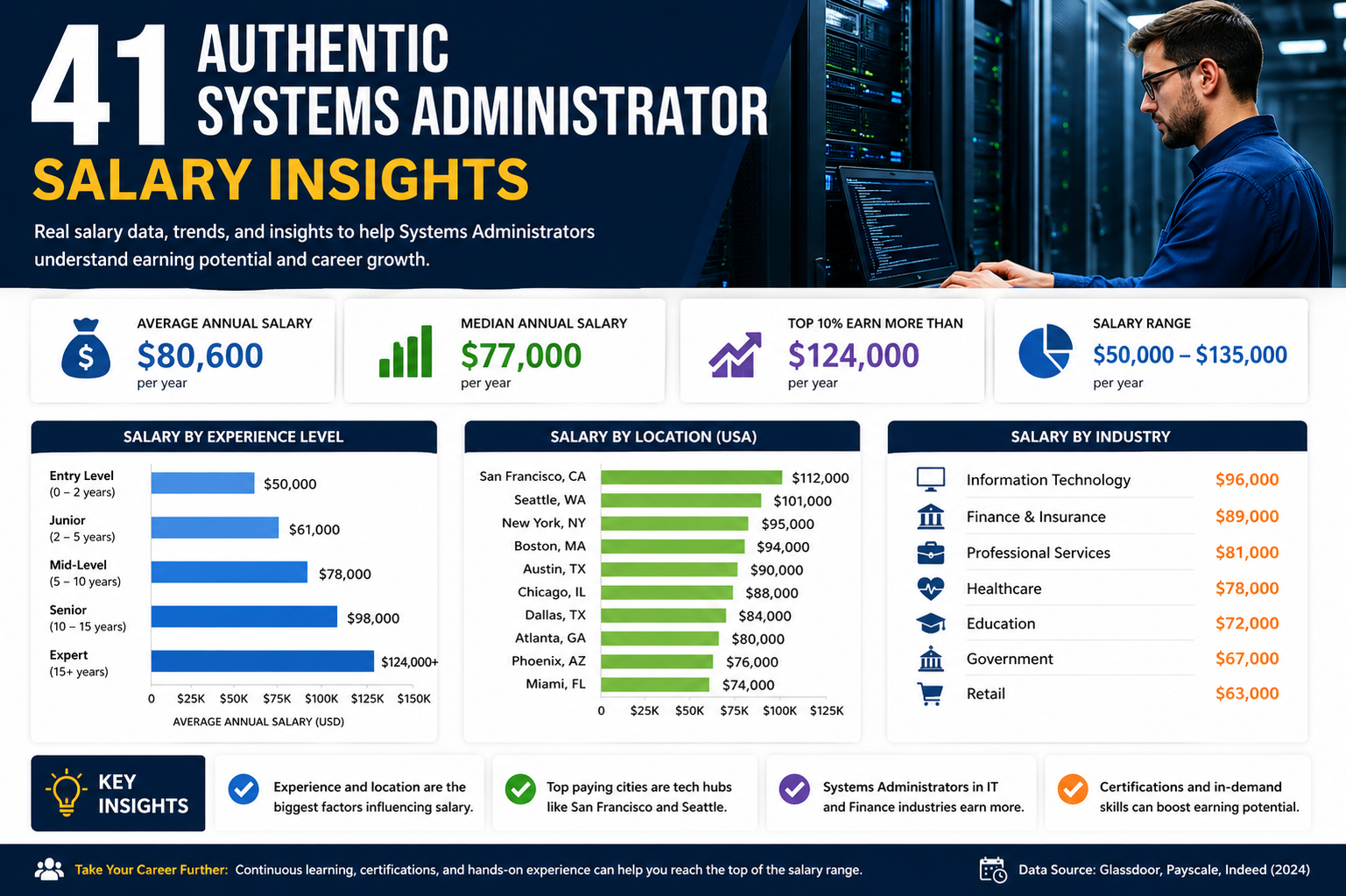
The industry in which a systems administrator works has a significant influence on salary levels. Different sectors value IT infrastructure differently depending on how critical technology is to their operations. Industries that rely heavily on secure, high-performance systems tend to offer higher compensation to attract and retain skilled professionals.
For example, technology companies, financial institutions, healthcare organizations, and government contractors typically offer above-average salaries for systems administrators. These industries depend on uninterrupted system performance and strong cybersecurity, which increases the demand for highly skilled IT staff.
On the other hand, smaller organizations, educational institutions, and non-profit sectors may offer comparatively lower salaries due to limited budgets. However, these roles often provide valuable experience and opportunities for broader responsibility, which can be beneficial for long-term career growth.
Advanced Responsibilities That Increase Salary Potential
As systems administrators gain experience, their responsibilities often expand beyond basic maintenance and support tasks. These advanced responsibilities directly contribute to higher salary opportunities.
Senior sysadmins may take on roles such as infrastructure design, cloud system management, cybersecurity oversight, and enterprise-level network administration. They are often involved in planning system architecture, implementing automation strategies, and managing large-scale IT environments.
In many organizations, experienced systems administrators also act as decision-makers when it comes to technology upgrades and security improvements. This level of responsibility requires deeper technical expertise and strategic thinking, both of which are rewarded with higher compensation.
The Role of Cloud Computing in Modern Sysadmin Careers
Cloud computing has transformed the role of systems administrators significantly. Many organizations now rely on cloud-based infrastructure instead of traditional on-premises systems. This shift has created new opportunities and increased salary potential for professionals who understand cloud platforms.
Sysadmins who are skilled in managing cloud environments can work with virtual servers, storage systems, and network configurations hosted in cloud platforms. This requires knowledge of scalability, security, and performance optimization in distributed environments.
Because cloud technology is now a core part of modern IT infrastructure, systems administrators with cloud expertise are often paid significantly more than those with only traditional system administration skills.
Remote Work and Its Effect on Salary Trends
The rise of remote work has also influenced systems administrator salaries. Many organizations now hire IT professionals regardless of geographic location, which has expanded job opportunities for skilled sysadmins.
Remote roles can sometimes offer salaries based on national averages rather than local market rates, allowing professionals in lower-cost regions to earn competitive pay. However, in some cases, companies adjust salaries based on the employee’s location.
Remote work also increases competition, as candidates from different regions apply for the same roles. This makes advanced skills and certifications even more important for standing out in the job market.
Certifications That Strengthen Career Growth
Certifications play an important role in validating a systems administrator’s technical expertise. They demonstrate a standardized level of knowledge that employers can trust when hiring or promoting candidates.
Entry-level certifications often focus on foundational IT knowledge, including hardware, networking, and basic troubleshooting. These certifications help beginners establish credibility and secure their first roles in the industry.
More advanced certifications focus on specialized areas such as networking, cybersecurity, and system infrastructure management. These credentials are particularly valuable for professionals looking to move into higher-paying positions or leadership roles.
Certifications not only improve technical skills but also signal commitment to professional development, which is highly valued by employers.
How Certifications Impact Salary Growth
Certifications can have a direct impact on salary progression. Employers often use certifications as a benchmark when evaluating candidates for promotions or higher-paying positions.
A systems administrator with multiple relevant certifications is generally seen as more qualified and capable of handling complex responsibilities. This often leads to better job offers, higher starting salaries, and faster career advancement.
In competitive job markets, certifications can be the deciding factor between candidates with similar experience levels. They provide an edge that can translate into significant long-term income growth.
Career Path Progression for Systems Administrators
The systems administrator role often serves as a stepping stone to more advanced IT positions. With experience and skill development, professionals can move into specialized or senior roles that offer higher salaries and greater responsibility.
Common career progression paths include network administration, systems engineering, cloud architecture, cybersecurity specialization, and IT management. Each of these roles builds on the foundational skills developed as a systems administrator.
As professionals advance, they typically take on more strategic responsibilities, including system design, infrastructure planning, and team leadership. These roles require both technical expertise and strong decision-making abilities.
Salary Negotiation Strategies for Sysadmins
Salary negotiation is an important skill that can significantly impact long-term earnings. Many systems administrators accept initial offers without negotiation, potentially leaving money on the table.
Understanding market salary ranges is the first step in effective negotiation. Professionals who research industry standards and regional compensation trends are better equipped to advocate for fair pay.
Highlighting technical skills, certifications, and proven experience during negotiations can strengthen a candidate’s position. Employers are often willing to offer higher salaries when they recognize clear value and expertise.
Confidence, preparation, and a strong understanding of one’s own skill set are key factors in successful salary discussions.
Common Mistakes That Limit Salary Growth
Several common mistakes can prevent systems administrators from maximizing their earning potential. One of the most significant is failing to continuously update technical skills. The IT industry evolves rapidly, and outdated knowledge can limit career opportunities.
Another common issue is avoiding certifications or professional development opportunities. Without recognized credentials, it can be more difficult to compete for higher-paying roles.
Staying in the same position for too long without seeking advancement can also slow salary growth. Regularly evaluating career goals and exploring new opportunities is essential for long-term financial progress.
Future Outlook for Systems Administrator Careers
The future of systems administration remains strong as organizations continue to depend on complex IT infrastructure. While automation and cloud technologies are changing some aspects of the role, they are also creating new opportunities for skilled professionals.
Systems administrators who adapt to emerging technologies such as cloud computing, cybersecurity, and automation tools will remain in high demand. The ability to manage hybrid environments and secure digital systems is becoming increasingly important.
As technology continues to evolve, the role of the systems administrator is expected to become more strategic, with greater emphasis on infrastructure design, security, and optimization.
Salary and Career Growth
A career as a systems administrator offers a solid foundation in the IT industry with strong earning potential and long-term stability. Salaries vary based on experience, location, industry, and technical expertise, but consistent skill development leads to meaningful financial growth.
Professionals who invest in certifications, gain hands-on experience, and stay updated with modern technologies are best positioned to advance in this field. Over time, systems administration can serve as a gateway to higher-level roles with significantly increased compensation and responsibility.
The combination of technical skills, adaptability, and continuous learning ultimately defines success in this career path.
Systems Administrator Skills That Directly Influence Salary Growth
A systems administrator’s salary is strongly shaped by the depth of technical skills they bring to the job. While basic IT knowledge may qualify someone for entry-level roles, advanced skill sets are what separate average earners from high-income professionals in this field.
One of the most important skills is the ability to manage complex IT environments efficiently. This includes understanding how different systems interact, how data flows through a network, and how to quickly identify performance bottlenecks. Employers value sysadmins who can keep systems stable while minimizing downtime.
Problem-solving ability is equally important. Systems administrators are often the first line of defense when technical issues arise, and the speed and accuracy of their response can have a direct impact on business operations. Those who can diagnose issues quickly and implement long-term solutions tend to earn higher salaries over time.
Communication skills also play a major role. Even though the job is highly technical, sysadmins frequently interact with non-technical staff. Being able to explain technical problems in simple terms and provide clear instructions improves efficiency across the organization and increases professional value.
Networking Knowledge and Its Impact on Earnings
A strong understanding of networking is essential for any systems administrator aiming for higher pay. Networks are the backbone of modern IT infrastructure, and sysadmins must understand how data travels between systems, devices, and servers.
This includes knowledge of IP addressing, routing, switching, and network protocols. The ability to configure and troubleshoot network issues is a highly valued skill in almost every organization.
Sysadmins who specialize in networking often transition into higher-paying roles such as network engineer or infrastructure specialist. These roles require deeper technical expertise and typically come with increased compensation due to their complexity and importance.
As businesses grow and expand their digital operations, demand for professionals with strong networking skills continues to rise, directly influencing salary growth in the field.
Security Expertise as a High-Value Skill Set
Cybersecurity has become one of the most important aspects of modern IT systems, and systems administrators play a key role in maintaining security. Organizations depend on sysadmins to protect sensitive data, secure user access, and prevent unauthorized activity.
Knowledge of firewalls, encryption methods, access control systems, and threat detection tools significantly increases a sysadmin’s value in the job market. Security-focused sysadmins are often paid more due to the critical nature of their responsibilities.
With cyber threats becoming more advanced and frequent, companies are increasingly willing to invest in professionals who can strengthen their defenses. This trend has made cybersecurity expertise one of the fastest ways for systems administrators to increase their earning potential.
Automation and Efficiency in Modern IT Environments
Automation has become a major factor in improving efficiency within IT departments. Systems administrators who can automate repetitive tasks are highly valued because they reduce manual workload and increase system reliability.
By using scripts and automation tools, sysadmins can manage large-scale systems more effectively. Tasks such as software deployment, system updates, and user management can be streamlined, saving time and reducing errors.
Automation skills not only improve productivity but also demonstrate advanced technical capability. Employers recognize that sysadmins who can automate processes contribute directly to operational efficiency, which often results in higher salaries.
Cloud Technology Expertise and Salary Advancement
Cloud computing continues to reshape the IT landscape, and systems administrators who understand cloud platforms are in high demand. Organizations are increasingly moving their infrastructure to cloud-based systems for scalability, flexibility, and cost efficiency.
Sysadmins who are skilled in cloud environments can manage virtual machines, storage systems, and distributed networks across platforms. This requires a different approach compared to traditional on-premises systems.
Because cloud infrastructure is now a core part of many businesses, professionals with cloud expertise often earn significantly higher salaries. They are responsible for ensuring system availability, optimizing performance, and maintaining security in virtual environments.
As cloud adoption continues to grow, this skill set is becoming one of the most important drivers of salary growth in systems administration.
The Importance of Continuous Learning in IT Careers
The technology industry evolves rapidly, and systems administrators must continuously update their skills to remain competitive. What is considered advanced knowledge today may become outdated within a few years.
Continuous learning can take many forms, including professional courses, certifications, hands-on practice, and staying updated with industry trends. Sysadmins who invest time in learning new technologies are more likely to advance in their careers and increase their earnings.
Employers value professionals who demonstrate adaptability and a willingness to grow. This mindset often leads to promotions, higher-level responsibilities, and improved salary opportunities over time.
Work Environment and Its Influence on Salary
The work environment also plays a role in determining how much a systems administrator earns. Large enterprises and tech-driven organizations typically offer higher salaries due to the complexity and scale of their systems.
In contrast, smaller organizations may offer lower compensation but provide broader responsibilities and faster skill development opportunities. These environments can still be valuable for gaining experience early in a career.
Government agencies and regulated industries often offer stable salaries and strong job security. While pay may not always match private sector levels, benefits and long-term stability can be attractive.
Understanding different work environments helps sysadmins make informed career decisions based on both salary and professional growth.
Leadership Opportunities for Experienced Sysadmins
As systems administrators gain experience, they may move into leadership or management roles. These positions involve overseeing IT teams, managing infrastructure projects, and coordinating system upgrades.
Leadership roles require both technical knowledge and management skills. Professionals in these positions are responsible for making strategic decisions that affect entire IT systems.
Because of the added responsibility, leadership roles typically come with significantly higher salaries. They also offer opportunities to influence organizational strategy and technology direction.
Challenges That Affect Salary Progression
Despite strong earning potential, systems administrators may face challenges that impact salary growth. One common challenge is keeping up with rapidly changing technologies. Falling behind in technical knowledge can limit career advancement opportunities.
Another challenge is limited access to advanced roles within smaller organizations. In some cases, sysadmins may need to change companies or relocate to access higher-paying positions.
Workload pressure can also be a factor. Systems administrators often handle critical systems, and high stress environments can lead to burnout if not managed properly. Maintaining balance is important for long-term career success.
Job Market Demand for Systems Administrators
The demand for systems administrators remains strong as businesses continue to rely heavily on digital infrastructure. Nearly every industry requires IT support to manage systems, networks, and security.
As organizations grow more dependent on technology, the need for skilled sysadmins continues to increase. This demand helps maintain competitive salaries and job stability in the field.
Emerging technologies such as cloud computing, artificial intelligence, and cybersecurity are further expanding job opportunities for systems administrators with advanced skills.
Long-Term Career Stability and Growth
Systems administration offers strong long-term career stability due to the ongoing need for IT infrastructure management. While specific technologies may change, the core responsibilities of maintaining systems and ensuring uptime remain essential.
Professionals who continue developing their skills can expect consistent career growth. Many sysadmins transition into specialized or senior roles that offer higher salaries and increased responsibility.
The combination of technical expertise, adaptability, and continuous learning ensures that systems administrators remain valuable in the evolving technology landscape.
Workload Expectations in Systems Administration
The workload of a systems administrator can vary significantly depending on the size of the organization and the complexity of its IT infrastructure. In smaller companies, a sysadmin may handle a wide range of responsibilities, including hardware maintenance, software installation, user support, and basic network troubleshooting. In larger enterprises, responsibilities are often more specialized, focusing on specific systems or departments.
Despite differences in scope, the role consistently requires attention to detail and the ability to respond quickly to technical issues. Systems administrators are often expected to be available during system outages or emergencies, as downtime can have a direct financial impact on the business.
In many organizations, sysadmins also participate in planned maintenance windows, where updates and system upgrades are performed outside of regular working hours. This can sometimes lead to irregular schedules, especially in environments that require high availability.
Because of these demands, compensation often reflects not only technical skill but also reliability, responsiveness, and the ability to handle pressure effectively.
Stress Factors and Job Demands
Systems administration is a role that carries a moderate to high level of responsibility, especially in environments where system uptime is critical. Even small technical issues can escalate into major disruptions if not handled quickly and correctly.
One of the main sources of stress is the need to maintain continuous system availability. Businesses rely heavily on IT infrastructure for daily operations, and any downtime can lead to financial losses, productivity issues, or security risks.
Another stress factor is the unpredictability of technical problems. Systems may fail unexpectedly, requiring immediate diagnosis and resolution. This demands strong problem-solving skills and the ability to remain calm under pressure.
Despite these challenges, many professionals find the role rewarding due to the variety of tasks and the opportunity to solve complex technical problems.
Work-Life Balance in Sysadmin Roles
Work-life balance for systems administrators can vary depending on the organization and industry. In traditional office environments, sysadmins may work standard business hours with occasional after-hours support when needed.
However, in industries that require 24/7 system availability, such as finance, healthcare, or large-scale tech companies, on-call rotations are common. This means sysadmins may need to respond to issues outside of regular working hours.
Remote monitoring tools and automation have improved work-life balance in recent years by reducing the need for constant manual intervention. Many issues can now be detected and resolved automatically or remotely, minimizing disruptions to personal time.
Organizations that prioritize employee well-being often implement structured on-call schedules and support teams to distribute workload more evenly.
Career Entry Pathways into Systems Administration
There are multiple pathways into a systems administration career, making it accessible to individuals with different educational and professional backgrounds. While some sysadmins enter the field with formal degrees in IT or computer science, others transition from related technical roles.
Entry-level positions such as IT support technician or help desk analyst are common starting points. These roles provide foundational experience in troubleshooting, user support, and basic system maintenance.
Over time, professionals in these positions can advance into systems administration roles as they gain technical knowledge and hands-on experience. This gradual progression helps build the skills necessary for managing more complex IT environments.
Internships, apprenticeships, and volunteer IT work can also serve as valuable entry points for gaining real-world experience.
Importance of Problem-Solving in Daily Tasks
Problem-solving is at the core of a systems administrator’s responsibilities. Every day presents new technical challenges that require logical thinking and quick decision-making.
Sysadmins must be able to identify the root cause of issues rather than just addressing surface-level symptoms. This often involves analyzing logs, reviewing system performance, and testing different solutions.
Strong analytical skills allow sysadmins to resolve issues more efficiently, reducing downtime and improving overall system stability. Employers place high value on professionals who can consistently solve problems with minimal supervision.
Over time, experienced sysadmins develop a systematic approach to troubleshooting, which increases both productivity and job performance.
Communication Between Technical and Non-Technical Teams
Effective communication is a critical but often overlooked skill in systems administration. Sysadmins frequently interact with employees who may not have technical knowledge, requiring the ability to explain complex issues in simple terms.
Clear communication helps ensure that problems are understood correctly and resolved efficiently. It also reduces frustration among users and improves overall workplace productivity.
In addition, sysadmins often collaborate with other IT teams, such as network engineers, developers, and cybersecurity specialists. Strong communication skills help ensure smooth coordination across departments.
Professionals who can bridge the gap between technical and non-technical teams are often viewed as more valuable, which can positively influence career advancement and salary growth.
Technology Evolution and Its Impact on Sysadmin Roles
The systems administration field continues to evolve as new technologies are introduced. Traditional on-premises infrastructure is increasingly being replaced or supplemented by cloud-based systems and hybrid environments.
This shift has changed the skill requirements for sysadmins. In addition to traditional system management, professionals are now expected to understand virtualization, cloud platforms, and automation tools.
While some basic responsibilities remain the same, the role is becoming more strategic and less focused on manual tasks. This evolution has created opportunities for higher salaries and more specialized positions.
Sysadmins who adapt to technological changes are better positioned for long-term career success.
Specialization Opportunities in Systems Administration
As the field grows, systems administrators have more opportunities to specialize in specific areas of IT. Specialization often leads to higher salaries and more advanced career roles.
Common specializations include network administration, cloud infrastructure management, cybersecurity, database administration, and systems engineering. Each of these areas requires deeper knowledge and focused expertise.
Specializing allows professionals to become experts in a particular domain, making them more valuable to employers. Specialized sysadmins are often responsible for more complex systems and higher-level decision-making.
This increased responsibility is typically reflected in higher compensation and better career prospects.
Impact of Company Size on Salary Structure
Company size plays a significant role in determining systems administrator salaries. Large organizations often have more complex IT infrastructures and larger budgets, allowing them to offer higher compensation packages.
In these environments, sysadmins may work within specialized teams and focus on specific areas of responsibility. The scale of operations often requires advanced technical skills and experience.
Smaller companies may offer lower salaries but provide broader responsibilities, allowing sysadmins to gain experience across multiple areas of IT. This can be beneficial for early career development.
Mid-sized companies often strike a balance between responsibility and compensation, offering steady career growth opportunities.
Job Security in Systems Administration
Systems administration is generally considered a stable and secure career path. Nearly every organization relies on IT systems, ensuring consistent demand for skilled professionals.
While technology evolves, the need for individuals who can maintain, secure, and optimize systems remains constant. This makes sysadmin roles less vulnerable to automation compared to some other IT positions.
Job security is further strengthened by the increasing complexity of modern IT environments. As systems become more interconnected, the need for skilled administrators continues to grow.
Professionals who stay updated with industry trends and technologies are likely to enjoy long-term career stability.
Career Growth Potential
Systems administration offers a strong foundation for a long-term career in information technology. While the role often begins at an entry or mid-level position, it provides numerous opportunities for advancement.
Through continuous learning, skill development, and experience, systems administrators can transition into higher-paying and more specialized roles. The combination of technical expertise and adaptability is key to maximizing career potential.
As technology continues to evolve, the demand for skilled sysadmins remains strong, ensuring ongoing opportunities for growth, stability, and financial improvement.
Career Progression Beyond Systems Administration
Systems administration is often not the final destination in an IT career but rather a strong foundation for multiple advanced roles. With time, experience, and skill development, many sysadmins transition into higher-level positions that offer increased responsibility and significantly higher salaries.
Common career paths include systems engineering, network engineering, cloud architecture, DevOps engineering, and IT management. Each of these roles builds upon the core knowledge gained as a systems administrator while adding more strategic and specialized responsibilities.
As professionals move up, their focus shifts from day-to-day maintenance tasks to system design, optimization, automation, and long-term infrastructure planning. This transition is one of the key drivers of salary growth in the IT field.
Transition into Systems Engineering Roles
One of the most natural progressions from systems administration is into systems engineering. While sysadmins primarily maintain and support systems, systems engineers are more involved in designing and implementing those systems.
Systems engineers work on building scalable, efficient, and secure IT infrastructures. They often participate in planning new system deployments, upgrading enterprise environments, and integrating different technologies across an organization.
Because this role requires a broader understanding of system architecture and strategic planning, it typically comes with higher compensation compared to traditional sysadmin positions. The transition also reflects a shift from operational work to more engineering-focused responsibilities.
Growth into Cloud and DevOps Careers
Cloud computing and DevOps have become two of the most in-demand career paths for experienced systems administrators. These roles focus heavily on automation, scalability, and continuous system improvement.
Cloud professionals manage infrastructure hosted on virtual platforms, ensuring systems remain available, secure, and cost-efficient. DevOps engineers, on the other hand, bridge the gap between development and operations teams, automating workflows and improving deployment processes.
Sysadmins who transition into these roles often see a significant increase in salary due to the specialized nature of the work and the high demand for cloud expertise in the job market.
Moving into IT Management and Leadership
Another common career progression for systems administrators is moving into management roles. IT managers and infrastructure leads are responsible for overseeing teams of technicians and ensuring that all systems operate efficiently across the organization.
This role involves more planning, coordination, and decision-making rather than hands-on technical work. Managers are responsible for budgeting, resource allocation, project planning, and team performance.
Because of the leadership responsibilities involved, IT management positions typically offer higher salaries and additional benefits. However, they also require strong communication, organizational, and leadership skills.
Importance of Continuous Skill Development
In the fast-changing world of technology, continuous skill development is essential for long-term career success. Systems administrators who do not update their skills risk falling behind as new tools and technologies emerge.
Staying current with industry trends, learning new platforms, and gaining certifications all contribute to professional growth. Employers value individuals who actively invest in improving their knowledge and capabilities.
Skill development is not limited to technical expertise alone. Soft skills such as communication, teamwork, and leadership also play a crucial role in career advancement and salary growth.
How Industry Trends Shape Future Salaries
Technology trends have a direct impact on systems administrator salaries. As industries adopt new technologies, demand shifts toward professionals who can manage and support those systems.
For example, the rise of cloud computing has increased demand for cloud-skilled sysadmins. Similarly, growing concerns around cybersecurity have made security expertise highly valuable.
Automation and artificial intelligence are also changing the nature of IT work. While some repetitive tasks are being automated, new opportunities are emerging in system monitoring, optimization, and integration.
Sysadmins who adapt to these trends are more likely to remain competitive and achieve higher earnings over time.
Geographic Mobility and Salary Advancement
Relocation can play an important role in increasing salary potential for systems administrators. Certain regions and cities offer significantly higher pay due to strong demand for IT professionals and the presence of major technology companies.
Moving to tech hubs or high-demand areas can lead to better job opportunities and higher compensation packages. However, this must also be balanced with cost of living considerations.
In some cases, remote work has reduced the need for relocation, allowing professionals to access higher-paying jobs without moving. This has expanded opportunities for sysadmins across different regions.
Remote and Hybrid Work Models in IT Careers
Remote and hybrid work models have become increasingly common in systems administration. Many organizations now allow sysadmins to manage systems from remote locations using advanced monitoring and management tools.
This flexibility has improved work-life balance for many professionals while also expanding job opportunities beyond local markets. Sysadmins can now apply for roles in different regions or even different countries.
However, remote work also increases competition, as employers have access to a larger talent pool. This makes advanced skills and certifications even more important for standing out in the job market.
Economic Factors Affecting Salary Levels
Broader economic conditions also influence systems administrator salaries. During periods of economic growth, companies tend to invest more in IT infrastructure, leading to higher demand and better compensation.
In contrast, during economic downturns, hiring may slow down, and salary growth can become more limited. However, IT roles are generally more stable compared to many other industries due to the essential nature of technology infrastructure.
Inflation, cost of living changes, and regional economic development also play a role in shaping salary expectations over time.
Importance of Professional Reputation and Experience
A systems administrator’s reputation and professional track record can significantly influence earning potential. Employers value candidates with proven experience, strong performance history, and a reputation for reliability.
Building a strong professional reputation involves consistently delivering high-quality work, solving complex technical problems, and contributing positively to team performance.
Over time, experienced sysadmins often receive better job offers based on their reputation within the industry, even without actively searching for new roles.
Networking and Career Opportunities
Professional networking is another important factor in career growth. Many job opportunities in systems administration are not always publicly advertised and are instead filled through referrals or professional connections.
Attending industry events, joining professional communities, and building relationships with other IT professionals can open doors to higher-paying opportunities.
Networking also helps sysadmins stay informed about industry trends, emerging technologies, and job market changes, all of which contribute to better career decisions.
Long-Term Financial Outlook for Sysadmins
The long-term financial outlook for systems administrators remains positive. As organizations continue to rely heavily on digital systems, the demand for skilled IT professionals is expected to remain strong.
While entry-level salaries may vary depending on location and experience, long-term earning potential is significant for those who continue to develop their skills and advance their careers.
Professionals who specialize in high-demand areas such as cloud computing, cybersecurity, or systems architecture can achieve substantially higher incomes over time.
Final Perspective on Career Value
Systems administration offers a stable and rewarding career path with strong opportunities for growth. While the role begins with hands-on technical responsibilities, it can evolve into advanced engineering, leadership, or specialized technical positions.
Success in this field depends on continuous learning, adaptability, and a willingness to embrace new technologies. Those who invest in skill development and career progression can achieve both financial stability and long-term professional success.
The combination of technical expertise, practical experience, and strategic growth ultimately defines the value and earning potential of a systems administrator in today’s technology-driven world.
Conclusion
Systems administration remains one of the most important and stable roles in the modern IT landscape. Behind every functioning network, secure database, and reliable digital service, there is a systems administrator ensuring that everything operates smoothly and efficiently. Their responsibilities may often go unnoticed, but their impact is essential to the daily operations of almost every organization.
Salary trends show that systems administrators have strong earning potential, with income levels influenced by experience, location, industry, and technical expertise. While entry-level positions provide a solid starting point, long-term financial growth is highly achievable for those who continuously build their skills and adapt to evolving technologies.
The gap between basic and advanced roles highlights an important reality: systems administration is not a static career. It is a dynamic field that rewards learning, specialization, and hands-on experience. Professionals who invest in cloud computing, cybersecurity, automation, and networking skills are consistently positioned for higher compensation and better career opportunities.
At the same time, factors such as certifications, communication skills, and problem-solving ability play a major role in shaping career progression. Technical knowledge alone is not enough; success in this field requires a combination of practical expertise and the ability to respond effectively to real-world challenges.