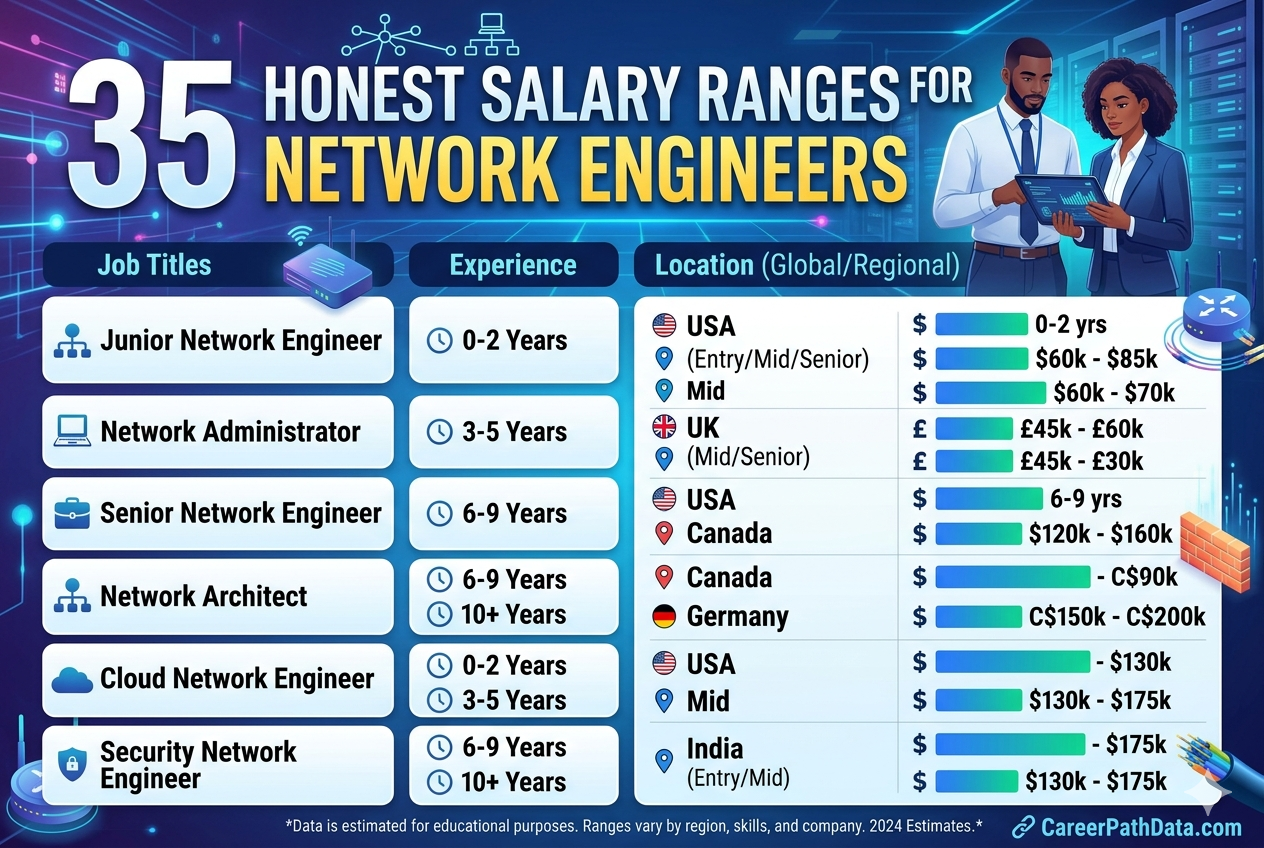
Network engineering continues to be one of the most dependable and technically rewarding careers in the information technology industry. As businesses expand their digital infrastructure, the need for skilled professionals who can design, maintain, and secure networks becomes more critical. Salaries in this field are not fixed; they shift based on experience, specialization, certifications, geographic region, and industry demand. Understanding realistic salary expectations is essential for anyone planning a career in networking because it helps set achievable goals and guides long-term skill development.
In general, network engineers are compensated well compared to many other IT roles, but the range can be extremely broad. Some professionals start at relatively modest salaries, while others in senior or specialized roles earn significantly higher incomes. The following breakdown provides a realistic, experience-based view of how salaries typically progress in this field.
Entry-Level Network Engineer Salary Expectations
At the entry level, network engineers are usually fresh graduates or individuals transitioning from certifications into their first IT role. Their responsibilities are generally focused on supporting existing infrastructure rather than designing it. Tasks often include monitoring network performance, assisting in troubleshooting, documenting configurations, and learning enterprise systems.
In terms of compensation, entry-level network engineers usually fall within a lower but stable salary range. In many regions, this stage reflects foundational work rather than advanced technical expertise. Employers at this level prioritize willingness to learn, basic networking knowledge, and familiarity with concepts like IP addressing, routing fundamentals, and switching basics.
Although salaries at this stage are not the highest, this period is crucial for building experience. Engineers who actively learn and gain certifications often move quickly into higher salary brackets within a short span of time.
Junior Network Engineer Salary Growth
After gaining around one to three years of experience, professionals typically transition into junior network engineering roles. This stage represents the beginning of real independence in technical work. Engineers start handling more direct responsibilities such as configuring network devices, supporting infrastructure upgrades, and resolving moderately complex issues without constant supervision.
Salary growth at this stage becomes more noticeable. Employers begin to reward hands-on experience and problem-solving ability. Junior engineers who demonstrate strong troubleshooting skills and a willingness to take on additional responsibilities often move toward the mid-level range faster than average.
At this stage, certifications and practical experience start to significantly influence salary increases. Those who invest in professional development tend to see better compensation compared to peers who rely solely on initial qualifications.
Mid-Level Network Engineer Salary Range
Mid-level network engineers usually have between three and seven years of experience. This is often considered the most active and skill-expanding phase of a networking career. Professionals at this level are expected to manage core network infrastructure, design small to medium-scale solutions, and handle complex troubleshooting scenarios.
Salaries in this range increase substantially because the responsibilities are more critical to business operations. Mid-level engineers are often trusted with implementing network changes that directly impact performance and security. They may also collaborate with cybersecurity teams, system administrators, and cloud specialists.
At this stage, specialization becomes important. Engineers who focus on areas like enterprise networking, data centers, or cloud integration often earn higher salaries than generalists. Employers value individuals who can bridge multiple systems and ensure smooth communication between different technologies.
Senior Network Engineer Salary Insights
Senior network engineers typically have extensive experience and deep technical knowledge. Their responsibilities go beyond configuration and troubleshooting. They are involved in designing scalable architectures, ensuring network reliability, and optimizing performance across large infrastructures.
Salaries at this level are significantly higher due to the complexity and importance of the role. Senior engineers are often responsible for mission-critical systems, meaning any failure could result in major business disruptions. Because of this, organizations are willing to offer strong compensation packages to retain experienced professionals.
In addition to technical duties, senior engineers often mentor junior staff and contribute to strategic planning. Their decisions can influence long-term infrastructure investments, making them highly valuable within IT departments.
Lead Network Engineer Compensation Range
Lead network engineers combine technical expertise with leadership responsibilities. They oversee teams, manage large-scale network projects, and ensure that all infrastructure aligns with organizational goals. This role requires both deep technical understanding and strong communication skills.
Salaries for lead network engineers are generally higher than senior engineers due to added managerial responsibilities. These professionals coordinate between departments, handle project timelines, and ensure successful implementation of network solutions.
At this level, decision-making ability becomes just as important as technical skill. Employers expect lead engineers to balance performance, security, and scalability while managing team productivity.
Network Architect Salary Overview
Network architects are among the highest-paid professionals in the networking field. Their primary role is to design entire network infrastructures from the ground up. This includes planning for scalability, redundancy, security frameworks, and integration with cloud systems.
The salary range for network architects is significantly higher because their work directly shapes the organization’s technological foundation. They are expected to think strategically and design systems that can support future growth.
Network architects often work closely with executives and senior management, translating business needs into technical solutions. Their expertise requires years of experience, advanced certifications, and a deep understanding of both hardware and software networking systems.
Cloud Network Engineer Salary Trends
Cloud computing has dramatically changed the networking landscape. Cloud network engineers specialize in designing and managing networks within cloud environments. Their work includes configuring virtual networks, managing hybrid systems, and ensuring secure cloud connectivity.
Because cloud technologies are in high demand, salaries in this specialization are often higher than traditional networking roles. Organizations are increasingly migrating to cloud platforms, which creates a strong demand for engineers who understand both networking and cloud infrastructure.
Professionals in this field often work with multiple cloud providers and must stay updated with rapidly evolving technologies. This constant learning curve contributes to higher compensation levels.
Network Security Engineer Salary Range
Network security engineers focus on protecting systems from cyber threats. Their responsibilities include implementing firewalls, intrusion detection systems, encryption protocols, and continuous monitoring for vulnerabilities.
Due to the increasing number of cyberattacks globally, this role has become one of the most critical in IT. Salaries for network security engineers are often higher than general network engineers because of the specialized nature of their work.
Security engineers must remain constantly updated on emerging threats and defense mechanisms. Their ability to prevent data breaches and maintain system integrity makes them highly valuable to organizations.
Wireless Network Engineer Salary Insights
Wireless network engineers specialize in designing and maintaining wireless communication systems. This includes Wi-Fi networks, enterprise mobility solutions, and large-scale wireless deployments in corporate or public environments.
Salaries in this specialization vary depending on the complexity of the systems managed. Engineers working in large organizations with extensive wireless infrastructure tend to earn higher compensation.
As demand for seamless connectivity increases, wireless networking continues to grow in importance. Engineers who understand advanced wireless technologies and optimization techniques are particularly well compensated.
Impact of Certifications on Salary Growth
Certifications play a significant role in determining salary levels in network engineering. Professional certifications demonstrate verified knowledge and practical skills, which employers value highly.
Certifications in routing, switching, security, and cloud networking often lead to higher-paying roles. They also help professionals transition between different career levels more quickly.
Engineers who continuously upgrade their certifications tend to experience faster salary growth compared to those who do not. This is especially true in competitive job markets where validated skills are essential.
Geographic Influence on Salary Differences
Location plays a major role in determining network engineer salaries. In regions with high demand for IT professionals, salaries are generally higher. Urban areas with large technology industries tend to offer better compensation compared to smaller cities or rural regions.
Cost of living also affects salary structures. In higher-cost regions, salaries are adjusted accordingly to attract skilled professionals. Meanwhile, in developing markets, salaries may be lower but still competitive relative to local standards.
Remote work has started to reduce these geographic differences slightly, but location still remains a strong factor in overall compensation.
Industry-Based Salary Variations
Different industries offer different salary ranges for network engineers. For example, financial institutions, cloud service providers, and large technology companies often pay higher salaries due to the critical nature of their networks.
Healthcare and government sectors may offer more stable but slightly lower compensation compared to private tech companies. However, they often provide additional benefits such as job security and long-term stability.
Understanding industry differences helps professionals choose career paths that align with their financial and professional goals.
Negotiation and Career Progression Impact
Salary negotiation plays an important role in overall compensation. Engineers who understand their market value and communicate their skills effectively often secure better salary packages.
Career progression is also closely tied to continuous learning. Professionals who regularly update their skills, take on challenging projects, and demonstrate leadership potential tend to move into higher salary brackets more quickly.
Soft skills such as communication, teamwork, and problem-solving also contribute to long-term career growth.
Future Salary Trends in Network Engineering
The future of network engineering looks strong due to increasing reliance on digital infrastructure, cloud computing, and cybersecurity. As networks become more complex, the demand for skilled engineers will continue to rise.
Emerging technologies such as automation, artificial intelligence in networking, and software-defined networking are also influencing salary trends. Professionals who adapt to these changes will likely see higher earning potential in the coming years.
Specialization will become increasingly important, with cloud and security roles expected to dominate salary growth trends.
Conclusion
Network engineering offers a wide and flexible salary range that grows significantly with experience, specialization, and skill development. From entry-level positions focused on learning fundamentals to highly advanced roles like network architects and security specialists, the career path provides strong financial progression opportunities.
While early stages may offer modest compensation, consistent learning and professional development can lead to substantial salary increases over time. Factors such as certifications, industry choice, geographic location, and specialization all play a major role in determining earnings.
Ultimately, network engineering remains a highly stable and rewarding career path for individuals who are willing to continuously evolve with technology and expand their expertise.