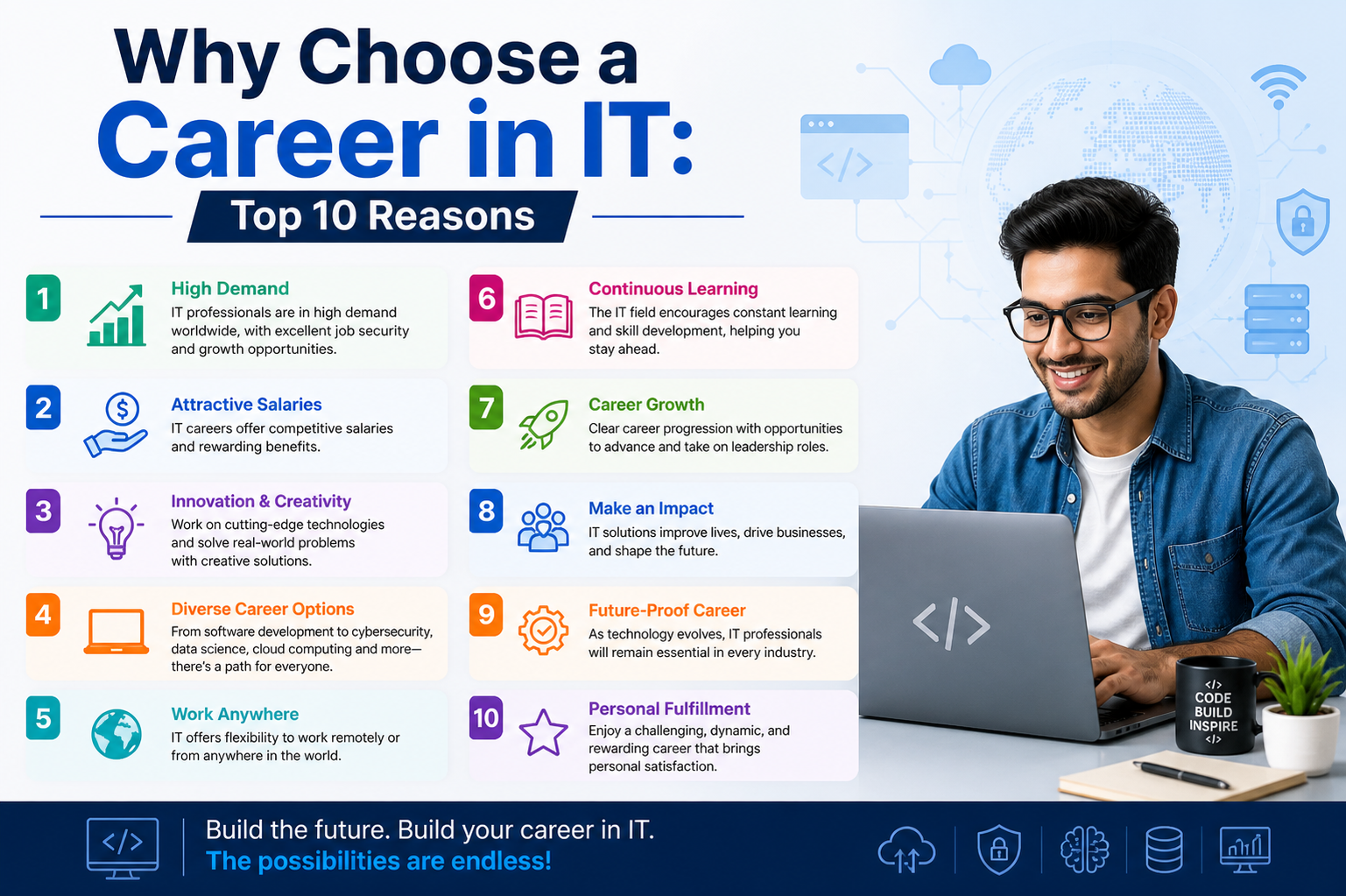
Information technology has become the backbone of nearly every modern industry. From healthcare and education to banking, retail, transportation, and entertainment, digital systems are essential for daily operations. Businesses depend on IT professionals to maintain systems, manage data, secure networks, and develop software solutions that keep operations running smoothly. As organizations continue to expand their digital infrastructure, the need for skilled IT workers continues to rise. This high demand creates a stable and promising career path where opportunities are consistently available. Unlike many traditional fields that may face saturation, IT continues to grow as technology becomes more deeply integrated into everyday life. This ensures that professionals in this field remain relevant and in demand for years to come.
Strong Career Stability and Security
One of the biggest advantages of choosing IT as a career is the level of job security it offers. Since technology is now a core part of business operations, companies cannot function effectively without IT support. Whether it is system maintenance, cybersecurity, or software development, organizations always need experts to manage their digital environment. Even during economic downturns, IT roles are often considered essential rather than optional. This makes the field more stable compared to many others. Professionals with updated skills and practical experience often find it easier to retain jobs and switch between opportunities when needed. This stability gives individuals confidence in building long-term careers without constant uncertainty about employment.
Competitive Salary and Financial Growth
IT careers are widely recognized for offering attractive salary packages. Entry-level positions often start with competitive pay, and with experience, professionals can achieve significant financial growth. Specialized skills in areas such as cybersecurity, cloud computing, artificial intelligence, and data science can further increase earning potential. Companies are willing to invest heavily in skilled professionals because their expertise directly impacts productivity and security. In addition to base salaries, many IT roles also include bonuses, incentives, and other financial benefits. As individuals gain certifications and advanced knowledge, their value in the job market increases, leading to continuous income improvement over time.
Diverse Career Opportunities
The IT field is not limited to a single job role. It offers a wide range of career paths that cater to different interests and skill sets. Some individuals may prefer coding and choose software development, while others may be interested in protecting systems and pursue cybersecurity. There are also roles in data analysis, networking, cloud architecture, database management, and user experience design. This diversity allows professionals to explore different areas and switch roles as they gain experience. It also ensures that individuals can find a niche that aligns with their passion and strengths, making the career more fulfilling and engaging.
Continuous Learning and Skill Development
Technology is constantly evolving, and this makes IT one of the most dynamic career fields. Professionals are always learning new programming languages, tools, frameworks, and systems. This continuous learning process keeps the work interesting and prevents monotony. It also encourages personal and professional growth. Many organizations support learning by offering training programs and certifications. Staying updated with the latest advancements helps professionals remain competitive in the job market. This culture of learning ensures that individuals are always improving their skills and adapting to new challenges, which is essential in a fast-changing digital world.
Global Career Opportunities
IT skills are not restricted by geographical boundaries. Professionals in this field have the opportunity to work with companies around the world. Many organizations hire remote workers or outsource projects internationally, allowing individuals to collaborate across different countries. This global nature of IT opens doors to diverse work environments and international exposure. It also increases the chances of finding better opportunities outside one’s home country. The ability to work globally adds significant value to an IT career, as professionals are not limited to local job markets and can explore a wide range of possibilities.
Flexibility and Work-Life Balance
Many IT roles offer flexible working conditions, including remote work and flexible hours. This flexibility allows professionals to manage their personal and professional lives more effectively. With the rise of digital tools and cloud-based systems, many tasks can be completed from anywhere, reducing the need for strict office attendance. This is especially beneficial for individuals who value work-life balance or prefer working in different environments. Flexibility also helps reduce stress and improves productivity, as professionals can work in ways that suit their lifestyle and preferences.
Innovation and Creativity in Work
The IT field is highly innovative and encourages creative thinking. Professionals are often required to solve complex problems, design new systems, and develop efficient solutions. Whether it is building a mobile application, improving system performance, or designing user-friendly interfaces, creativity plays a key role. This makes IT an exciting career choice for individuals who enjoy innovation and problem-solving. The opportunity to create new technologies and improve existing systems adds a sense of achievement and satisfaction to the work.
Strong Career Growth and Advancement
IT careers offer clear paths for growth and advancement. With experience and skill development, professionals can move into higher positions such as team leads, project managers, system architects, or technical consultants. Certifications and advanced education can further accelerate career progression. The industry values practical skills and performance, which means growth is often based on capability rather than just years of experience. This allows motivated individuals to advance quickly and take on more responsibility over time, leading to better roles and higher rewards.
Problem-Solving and Logical Thinking Development
Working in IT strengthens analytical and problem-solving skills. Professionals regularly encounter technical challenges that require logical thinking and structured solutions. This helps improve decision-making abilities and enhances critical thinking over time. Whether debugging code, optimizing systems, or resolving network issues, IT professionals develop a methodical approach to solving problems. These skills are not only useful in technical roles but also beneficial in everyday life and other professional areas.
Technological Advancement
IT professionals play a key role in shaping the future of technology. From developing innovative software to improving digital security and enabling automation, their work directly contributes to technological progress. This sense of contribution adds meaning to the career, as professionals are actively involved in building solutions that impact society. Technology continues to transform how people live and work, and IT professionals are at the center of this transformation, making their role both influential and valuable.
Strong Industry Growth and Future Potential
The information technology sector is one of the fastest-growing industries in the world. With rapid advancements in artificial intelligence, cloud computing, cybersecurity, and data science, the demand for skilled professionals continues to expand. This growth is not limited to large companies alone; startups and small businesses are also adopting digital solutions at a fast pace. As a result, IT professionals have access to a constantly expanding job market. The future potential of this field is extremely strong because technology is becoming more deeply integrated into everyday life. From smart devices to automated systems, almost every innovation relies on IT expertise. This ensures that the industry will continue to grow and evolve, offering long-term opportunities for those who choose this path.
High Level of Job Variety and Specialization
One of the most attractive aspects of IT careers is the ability to specialize in multiple areas. Unlike traditional careers that may follow a fixed path, IT allows professionals to choose from a wide range of specializations. Some may focus on developing software applications, while others may work in network administration, database management, cloud infrastructure, or cybersecurity. There are also emerging fields such as machine learning, blockchain technology, and artificial intelligence engineering. This variety allows individuals to explore different interests and find a specialization that best matches their skills and passion. It also provides flexibility to switch roles or learn new areas as technology evolves, keeping the career dynamic and engaging.
Opportunities for Remote and Freelance Work
IT careers offer strong opportunities for remote employment and freelancing. Many companies now operate in a digital-first environment, allowing employees to work from home or any location with internet access. This flexibility has opened doors for professionals who prefer independent work styles or who want to avoid traditional office settings. Freelancing platforms and global remote job markets also allow IT experts to work on international projects without relocating. This freedom not only improves work-life balance but also increases earning opportunities by allowing professionals to work with multiple clients. The ability to choose work environments and schedules makes IT one of the most flexible career paths available today.
Fast Career Entry Through Skill-Based Learning
Unlike many traditional professions that require long academic pathways, IT careers often focus more on skills than formal education. While degrees can be helpful, many professionals enter the field through certifications, online learning, and practical experience. This makes IT accessible to a wider range of individuals, including those who want to switch careers or start working early. Skill-based learning allows faster entry into the job market, enabling individuals to begin earning and gaining experience in a shorter time. As long as a person is committed to learning and practicing, they can build a successful career in IT without following a lengthy academic route.
High Demand for Innovation-Driven Roles
Modern businesses are constantly looking for innovative solutions to improve efficiency, reduce costs, and enhance user experience. IT professionals play a key role in this innovation process. They design systems, build applications, and develop technologies that solve real-world problems. This makes the field highly rewarding for individuals who enjoy creativity and innovation. Whether it is developing mobile apps, improving cybersecurity systems, or creating artificial intelligence models, IT professionals are always working on cutting-edge solutions. This constant innovation ensures that the work remains exciting and meaningful.
Strong Problem-Solving Environment
IT careers provide a structured environment where problem-solving is a daily activity. Professionals are often required to analyze technical issues, identify root causes, and develop effective solutions. This continuous problem-solving helps sharpen analytical thinking and logical reasoning skills. It also creates a sense of achievement when complex challenges are resolved successfully. Over time, professionals become more efficient at handling difficult situations, making them valuable assets to any organization. This focus on problem-solving also ensures that the work never becomes repetitive or dull.
Access to Advanced Tools and Technologies
Working in IT provides exposure to some of the most advanced tools and technologies in the world. From cloud platforms and programming frameworks to artificial intelligence systems and cybersecurity tools, professionals constantly interact with cutting-edge innovations. This exposure helps individuals stay updated with global technological trends and improves their technical expertise. Learning and using these tools also enhances career value, as companies prefer professionals who are familiar with modern systems. The constant evolution of technology ensures that IT professionals are always learning and growing.
Strong Community and Knowledge Sharing Culture
The IT industry has a strong global community where professionals actively share knowledge, ideas, and solutions. Online forums, technical groups, and professional networks allow individuals to learn from each other and stay updated with industry trends. This culture of collaboration helps beginners learn faster and allows experienced professionals to refine their skills. It also encourages teamwork and collective problem-solving, which is essential in large-scale projects. Being part of such a global community adds value to the career and provides continuous learning opportunities.
Career Stability with Skill Upgradation
While IT is a fast-changing field, it also offers strong career stability for those who continuously upgrade their skills. Professionals who stay updated with new technologies remain highly valuable in the job market. Regular learning through certifications, training programs, and practical experience ensures long-term career security. Employers often prefer candidates who are adaptable and willing to learn, making skill development a key factor in maintaining job stability. This balance of change and stability makes IT a unique and reliable career choice.
Impact on Everyday Life and Society
IT professionals have a direct impact on how modern society functions. From communication systems and online banking to healthcare technology and digital education, their work influences almost every aspect of daily life. This makes the profession highly meaningful, as it contributes to improving convenience, efficiency, and connectivity in society. The systems and applications developed by IT experts help millions of people every day, making their role essential in shaping the modern world.
Strong Foundation for Entrepreneurship
A career in IT also creates a strong foundation for entrepreneurship. Many successful startups today are built on technology-driven ideas, and individuals with IT skills have a clear advantage in turning ideas into real products or services. Knowledge of programming, system design, and digital tools allows professionals to develop their own applications, websites, or software solutions without relying heavily on external resources. This independence encourages innovation and gives individuals the confidence to start their own ventures. Even small tech-based ideas can grow into large businesses when combined with creativity and technical expertise. As a result, IT not only offers employment opportunities but also opens the door to building and scaling personal businesses.
High Adaptability to Future Technologies
Technology continues to evolve at a rapid pace, and IT professionals are constantly adapting to new trends and systems. This adaptability is one of the strongest advantages of the field. Whether it is artificial intelligence, machine learning, automation, blockchain, or cloud-based computing, IT professionals are often the first to work with these innovations. This continuous adaptation ensures that their skills remain relevant in the future job market. Unlike static professions, IT evolves with time, allowing professionals to stay aligned with modern advancements. This future-readiness makes IT a stable and forward-looking career choice.
Opportunities in Multiple Industries
IT skills are not limited to the technology sector alone. Professionals can find opportunities in almost every industry, including healthcare, finance, education, manufacturing, entertainment, logistics, and government services. Every sector today relies on digital systems for smooth operations, data management, and communication. This wide applicability means IT professionals can choose industries based on their interests. For example, someone interested in healthcare can work on medical software systems, while another person interested in finance can work on banking technologies. This flexibility increases job opportunities and allows individuals to explore different career environments.
Rapid Skill-Based Career Progression
In the IT field, career progression is often based on skills, performance, and experience rather than just academic qualifications. Professionals who continuously improve their abilities can quickly move into higher positions. This merit-based growth system is highly motivating, especially for individuals who are passionate about learning. Promotions can lead to roles such as senior developer, system analyst, project manager, or technical architect. With each step, responsibilities increase along with salary and recognition. This fast-paced growth structure makes IT an appealing career for ambitious individuals who want to advance quickly.
Strong Demand for Cybersecurity Professionals
With the increasing use of digital systems, cybersecurity has become one of the most important areas in IT. Organizations need experts to protect their data, networks, and systems from cyber threats. This has created a high demand for cybersecurity professionals across all industries. These experts are responsible for identifying vulnerabilities, preventing attacks, and ensuring data safety. As cyber threats continue to evolve, the need for skilled security professionals will only increase. This makes cybersecurity one of the most stable and high-demand career paths within IT.
Creative Problem-Solving Opportunities
IT is not just about technical knowledge; it also involves creative thinking and innovation. Professionals often need to find unique solutions to complex problems, design efficient systems, and improve user experiences. This combination of logic and creativity makes the field highly engaging. For example, developing an application requires both technical coding skills and creative design thinking. This balance ensures that professionals are constantly challenged and mentally stimulated. It also allows them to express creativity in a structured and impactful way.
Global Collaboration and Teamwork
Modern IT projects often involve collaboration between teams from different parts of the world. Professionals work with colleagues, clients, and stakeholders across multiple countries, using digital communication tools to stay connected. This global teamwork improves communication skills and exposes individuals to diverse perspectives and working styles. It also helps build strong professional networks that can be valuable for future opportunities. Working in such a global environment enhances cultural understanding and teamwork abilities, which are important skills in today’s interconnected world.
Strong Demand for Data Professionals
Data has become one of the most valuable resources in the modern world. Organizations rely on data professionals to analyze information, identify patterns, and make informed decisions. Careers in data analysis, data science, and business intelligence are growing rapidly. These roles help companies understand customer behavior, improve performance, and develop better strategies. The increasing importance of data ensures that professionals in this field will continue to be in high demand. It also provides opportunities to work with advanced analytical tools and technologies.
Continuous Professional Growth Opportunities
IT careers offer endless opportunities for professional growth. As technology evolves, new roles and specializations continue to emerge. Professionals can upgrade their skills through certifications, training programs, and hands-on experience. This continuous growth ensures that careers never become stagnant. Instead, individuals are always progressing, learning, and adapting to new challenges. This environment of constant improvement helps build strong expertise and long-term career satisfaction.
Career Benefits in IT
A career in IT offers a powerful combination of growth, flexibility, innovation, and stability. It provides opportunities across multiple industries, supports continuous learning, and encourages creativity and problem-solving. The ability to adapt to new technologies and work in global environments makes it one of the most dynamic career choices available today. With strong demand, competitive salaries, and endless opportunities for advancement, IT remains a future-ready field for individuals seeking a meaningful and rewarding professional journey.
Strong Foundation for Lifelong Learning
A career in IT naturally builds a mindset of continuous learning. Since technologies, tools, and frameworks evolve rapidly, professionals are encouraged to keep upgrading their knowledge throughout their careers. This creates a strong culture of lifelong learning where individuals are always improving and expanding their skill set. Unlike static professions where skills remain unchanged for long periods, IT requires active engagement with new developments. This helps professionals stay intellectually active and adaptable. Over time, this habit of learning not only strengthens technical abilities but also improves confidence in handling new challenges and unfamiliar systems.
High Exposure to Real-World Problem Solving
IT professionals often work on real-world problems that directly affect businesses and users. Whether it is improving system performance, fixing software issues, or designing scalable solutions, the work has practical impact. This exposure helps individuals understand how technology supports everyday operations and decision-making. It also builds a strong sense of responsibility, as even small technical improvements can significantly affect efficiency and user experience. Working on real-world problems enhances analytical thinking and helps professionals develop a practical approach to solving complex issues.
Wide Range of Entry-Level Opportunities
The IT field offers numerous entry points for beginners. Even individuals with limited experience can start their careers through internships, junior developer roles, technical support positions, or entry-level analyst jobs. Many organizations focus on practical skills rather than only formal education, which makes it easier for newcomers to enter the field. This accessibility is one of the key strengths of IT as a career option. It allows students, fresh graduates, and career switchers to begin their professional journey without facing overly strict entry barriers.
High Demand for Software Development Skills
Software development remains one of the most in-demand areas in IT. Almost every digital service today relies on software applications, whether it is mobile apps, web platforms, or enterprise systems. Developers play a key role in designing, building, and maintaining these applications. The demand for skilled developers continues to grow as businesses expand their digital presence. This creates strong job opportunities and long-term career stability for individuals with programming knowledge. It also allows developers to work on diverse projects, making the career both dynamic and rewarding.
Opportunities in Artificial Intelligence and Automation
Artificial intelligence and automation are transforming industries worldwide. IT professionals working in these areas are involved in building intelligent systems that can analyze data, make decisions, and automate tasks. This includes technologies like machine learning, robotics, and predictive analytics. These fields are not only highly innovative but also rapidly expanding. Professionals who specialize in AI and automation are likely to remain in high demand in the future. This makes it an exciting area for those interested in advanced technology and future-driven careers.
Strong Career Recognition and Respect
IT professionals are highly valued in modern organizations because their work is essential for business operations. Their skills directly contribute to system efficiency, data security, and technological innovation. This importance leads to strong professional recognition and respect within companies and industries. As technology continues to grow in importance, the role of IT experts becomes even more critical. This recognition adds a sense of pride and motivation to the career, encouraging professionals to continue developing their expertise.
Dynamic Work Environment
The IT industry offers a highly dynamic and fast-paced work environment. Projects often involve new challenges, changing requirements, and evolving technologies. This prevents work from becoming repetitive or monotonous. Professionals are constantly engaged in problem-solving, collaboration, and innovation. This dynamic nature keeps the career exciting and encourages individuals to stay motivated. It also helps develop adaptability, which is an important skill in today’s changing world.
Opportunities for Certification and Professional Validation
IT careers provide numerous certification opportunities that help professionals validate their skills. These certifications are recognized globally and can significantly enhance career prospects. They cover various areas such as networking, cloud computing, cybersecurity, software development, and data analysis. Earning certifications demonstrates commitment and expertise, making individuals more competitive in the job market. It also provides structured learning paths for those who want to specialize in specific areas of IT.
Strong Integration with Emerging Technologies
IT professionals are often at the forefront of emerging technologies. From blockchain and Internet of Things (IoT) to virtual reality and edge computing, new innovations are constantly reshaping the industry. Working in IT provides early exposure to these technologies, allowing professionals to stay ahead of trends. This integration ensures that careers remain modern and future-focused. It also provides opportunities to work on groundbreaking projects that shape the direction of technology.
Long-Term Career Sustainability
One of the most important benefits of an IT career is its long-term sustainability. As technology becomes more embedded in every aspect of life, the need for IT professionals will continue to grow. Skills in this field remain relevant across decades, especially when combined with continuous learning. Unlike industries that may decline over time, IT is consistently expanding. This makes it a reliable and future-proof career choice for individuals looking for long-term professional stability and growth.
Final Perspective on IT Career Advantages
A career in IT offers a powerful combination of opportunity, growth, and innovation. It provides access to global industries, encourages continuous learning, and supports both technical and creative development. With strong demand across all sectors and the constant evolution of technology, IT remains one of the most promising career paths available. It not only ensures financial stability but also offers personal satisfaction through problem-solving, innovation, and meaningful contributions to the modern digital world.
Growing Importance of Digital Transformation
Digital transformation is reshaping how businesses operate, and IT professionals are at the center of this change. Organizations are moving from traditional systems to digital platforms to improve efficiency, reduce costs, and enhance customer experience. This shift requires skilled IT experts who can design, implement, and manage digital solutions. As more companies adopt cloud systems, automation, and data-driven decision-making, the need for IT talent continues to grow. This makes IT not only relevant today but also essential for the future development of every industry.
Strong Opportunities in Cloud Computing
Cloud computing has become a core part of modern technology infrastructure. Businesses are increasingly relying on cloud platforms for data storage, application hosting, and system management. IT professionals specializing in cloud technologies are in high demand because they help organizations scale their operations efficiently and securely. Working in this area provides exposure to advanced systems and global platforms, offering excellent career growth opportunities. Cloud computing also supports remote access and flexibility, making it a key driver of modern IT careers.
Expanding Role of Cybersecurity Awareness
As digital systems grow, so do security threats. Cybersecurity has become a critical priority for all organizations, creating strong demand for professionals who can protect sensitive data and systems. IT experts in this field work to prevent cyberattacks, identify vulnerabilities, and ensure safe digital environments. This role is highly responsible and essential for maintaining trust in digital systems. With increasing online activity worldwide, cybersecurity continues to expand as one of the most important areas in IT.
Rise of Mobile and Web Technologies
Mobile apps and web applications are now central to everyday life. From communication and shopping to education and entertainment, people rely heavily on digital platforms. IT professionals involved in web and mobile development play a major role in building these experiences. This demand continues to grow as businesses aim to reach users through digital channels. The ability to create responsive, user-friendly applications makes this area both creative and highly valuable in the job market.
Increasing Value of Data-Driven Decision Making
Organizations today depend heavily on data to guide their strategies and decisions. IT professionals working in data-related fields help collect, analyze, and interpret large volumes of information. This enables companies to understand trends, improve performance, and make informed decisions. The importance of data continues to grow across industries, making data-focused IT roles highly valuable. Professionals in this area contribute directly to business success by turning raw data into meaningful insights.
Support for Remote Global Collaboration
Modern IT systems make it possible for teams to collaborate from different parts of the world. This has created a global work culture where professionals can contribute to international projects without physical relocation. Tools for communication, project management, and file sharing allow seamless collaboration. This environment helps individuals gain exposure to diverse perspectives and work styles, enhancing both personal and professional development. It also increases job opportunities beyond local markets.
Strong Demand for IT Support and Infrastructure Roles
Behind every successful digital system is a strong support and infrastructure team. IT support professionals ensure that systems run smoothly, troubleshoot technical issues, and maintain operational efficiency. Infrastructure experts manage servers, networks, and system architecture. These roles are essential for keeping businesses functional and stable. As organizations continue to rely on technology, the demand for these foundational IT roles remains consistently strong.
Encouragement of Innovation and Experimentation
The IT field encourages professionals to experiment with new ideas and innovative solutions. Whether developing new software features or improving system performance, creativity is highly valued. This environment allows individuals to test new approaches and contribute to technological advancement. Innovation is a key driver of success in IT, and professionals who think creatively often achieve faster growth and recognition in their careers.
Opportunities for Global Certifications and Recognition
Professional certifications play an important role in IT careers. They help validate skills and increase credibility in the job market. Certifications in areas like cloud computing, cybersecurity, networking, and software development are recognized globally. These credentials help professionals stand out and access better job opportunities. They also provide structured learning paths that help individuals specialize in specific technologies and advance their careers.
Long-Term Relevance in a Digital Future
As the world becomes more digital, the importance of IT will continue to grow. Almost every future innovation will depend on technology, making IT skills essential for upcoming generations. Careers in this field are not limited to current trends but are deeply connected to the future of global development. This long-term relevance ensures that IT remains a secure and valuable career choice for many years ahead.
Conclusion
A career in Information Technology stands out as one of the most rewarding and future-ready choices in the modern world. It offers a strong balance of job stability, financial growth, and continuous learning opportunities, making it suitable for individuals with different interests and skill levels. The field is constantly evolving, which ensures that professionals are always engaged with new technologies, challenges, and innovations.
IT also provides flexibility, global exposure, and the chance to work across multiple industries, from healthcare and finance to education and entertainment. This wide scope allows individuals to shape their careers according to their passion and goals. In addition, the demand for skilled professionals continues to rise as the world becomes more digitally connected, ensuring long-term career security.
Beyond technical growth, IT develops critical thinking, problem-solving abilities, and creativity, all of which are valuable in both professional and personal life. Whether someone aims to work for a global company, start their own business, or specialize in emerging technologies, IT provides a strong foundation to achieve those ambitions.
Overall, choosing a career in IT is not just about finding a job—it is about entering a field full of innovation, opportunity, and continuous progress that aligns with the future of the digital world.