Project management has become one of the most important professional skills in the modern business world. Organizations of every size depend on successful projects to improve operations, launch products, upgrade technology, increase revenue, and remain competitive. Whether a company is implementing a new software platform, expanding its infrastructure, migrating to the cloud, or improving customer service systems, strong project management is often the difference between success and failure.
As industries continue evolving, employers are increasingly searching for professionals who not only possess technical knowledge but also understand how to organize teams, manage timelines, control budgets, and guide projects toward completion. Because of this demand, project management certifications have become valuable credentials for professionals who want to advance their careers.
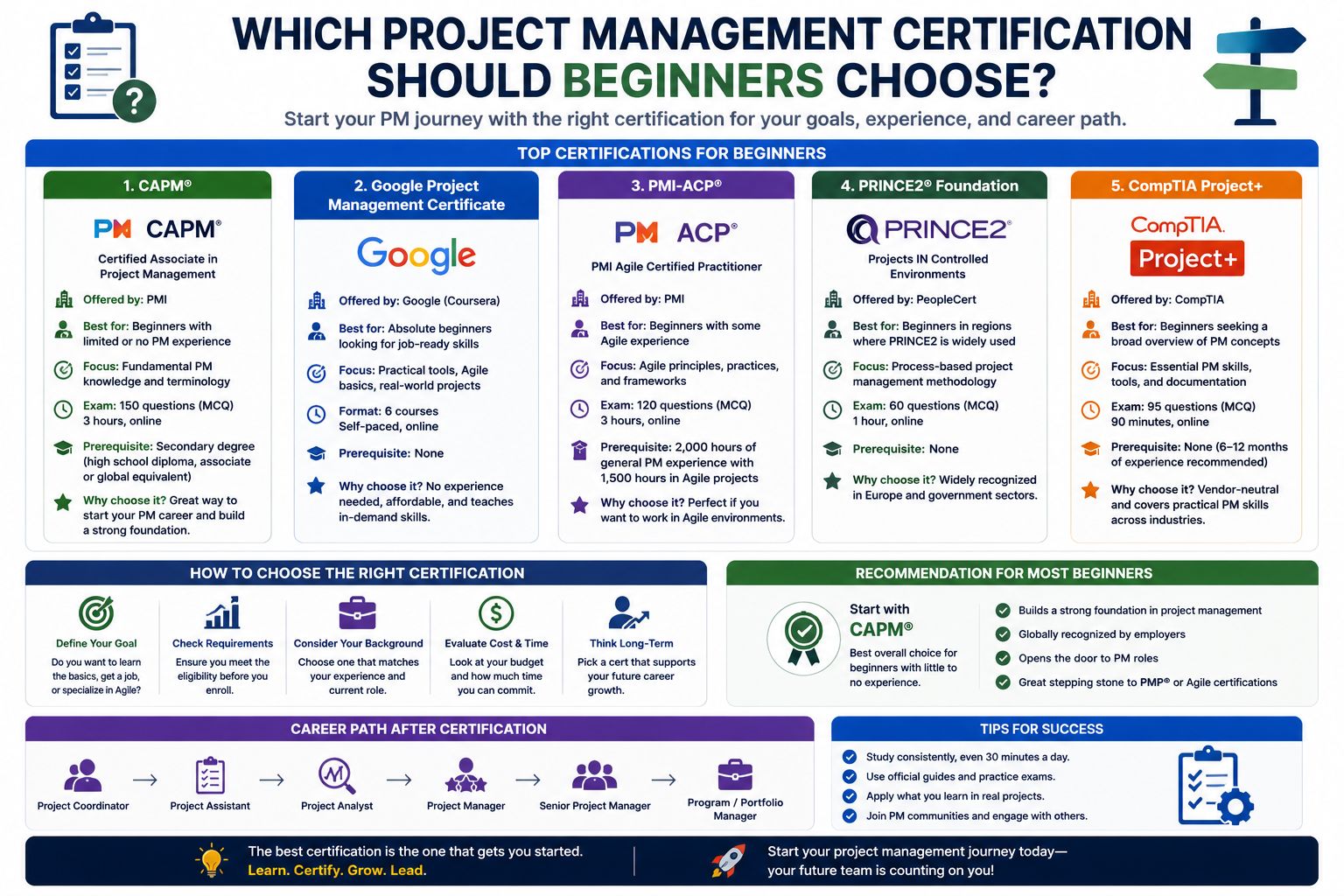
For newcomers entering the field, choosing the right certification can be confusing. There are several respected certifications available, but three names appear more often than most others: CompTIA Project+, Certified Associate in Project Management (CAPM), and Project Management Professional (PMP). Each certification serves a different purpose and targets professionals at different stages of their careers.
Some certifications are designed for beginners who are just learning about project coordination, while others are meant for experienced managers responsible for leading large and complex projects. Understanding the differences between these certifications is essential before committing time and money to a certification path.
Project management certifications do more than simply add a credential to a resume. They help professionals understand proven management methodologies, improve communication skills, develop leadership abilities, and increase confidence in handling real-world projects. They can also open doors to promotions, salary increases, and long-term career growth.
The rise of digital transformation has made project management skills even more valuable in information technology environments. IT departments are constantly handling upgrades, migrations, security improvements, software deployments, and infrastructure changes. These initiatives require careful planning, organized execution, and clear communication across multiple teams.
As a result, even technical professionals who do not hold formal management positions are often expected to participate in project coordination activities. System administrators, cybersecurity specialists, network engineers, developers, and cloud architects frequently work on projects that involve scheduling tasks, managing resources, reporting progress, and collaborating with stakeholders.
This growing overlap between technical and management responsibilities has increased interest in project management certifications among IT professionals. Some individuals want to become full-time project managers, while others simply want to strengthen their ability to manage projects alongside their technical duties.
Understanding which certification best fits a person’s goals is an important first step in building a successful career path.
Why Project Management Skills Matter in Modern Organizations
Modern businesses operate in highly competitive environments where efficiency and organization are critical. Companies must complete projects quickly while controlling costs and maintaining quality standards. Without effective project management, organizations risk delays, budget overruns, communication failures, and missed objectives.
Project managers help prevent these problems by creating structure and accountability. They establish timelines, assign responsibilities, identify risks, monitor progress, and ensure that everyone involved understands project goals.
In technology environments, project management becomes even more important because IT projects often involve multiple departments, technical dependencies, and changing business requirements. A simple software implementation can affect finance, operations, customer service, security, and compliance teams simultaneously.
Without proper coordination, technical projects can quickly become disorganized. Teams may misunderstand priorities, overlook important tasks, or fail to communicate effectively with stakeholders. Skilled project managers help reduce confusion by maintaining clear processes and consistent communication.
Organizations value professionals who can balance technical knowledge with organizational leadership. Someone who understands both technology and project management can bridge communication gaps between technical teams and executive leadership.
This combination of skills is especially valuable because executives often focus on business outcomes while technical teams concentrate on system functionality. Project managers help align these perspectives by translating business goals into actionable project plans.
As businesses continue investing in digital transformation, cloud computing, cybersecurity, and automation, the demand for professionals with project management skills is expected to continue growing.
The Two Major Organizations Behind These Certifications
When researching project management certifications, professionals usually encounter two major organizations: the Project Management Institute and CompTIA.
The Project Management Institute, commonly known as PMI, is one of the world’s leading organizations dedicated entirely to project management education and certification. PMI certifications are recognized internationally and are often associated with professional project management careers.
PMI focuses heavily on structured methodologies, standardized terminology, and detailed project management frameworks. Its certifications are designed to validate professional project management knowledge and experience.
CompTIA, by contrast, is a broader information technology certification organization. It offers certifications in areas such as networking, cybersecurity, technical support, cloud computing, and infrastructure management.
Unlike PMI, CompTIA primarily serves IT professionals who may perform project management duties as part of broader technical roles. Its certifications are generally designed to complement technical careers rather than replace them.
This difference in organizational focus plays a major role in how their project management certifications are structured. PMI certifications tend to be more formal and experience-driven, while CompTIA certifications are often more flexible and accessible to beginners.
Understanding these organizational differences can help professionals select the certification path that best matches their career goals.
Understanding CompTIA Project+
CompTIA Project+ is often viewed as one of the most accessible project management certifications for beginners. It is designed for professionals who participate in projects or manage smaller projects without necessarily serving as dedicated project managers.
One of the biggest advantages of Project+ is that it has no mandatory prerequisites. Candidates are encouraged to have some project experience, but there are no strict educational requirements or minimum hours of documented management experience.
This flexibility makes Project+ attractive to entry-level IT professionals, support technicians, junior administrators, and technical specialists who want to build project management knowledge without committing to a full management career.
Project+ focuses on practical project coordination skills rather than advanced theoretical frameworks. Candidates learn about project planning, communication, scheduling, budgeting, documentation, and risk management in ways that apply directly to real-world business environments.
Because CompTIA serves a wide range of technology professionals, Project+ is designed to fit naturally alongside technical certifications. Someone working in networking, cybersecurity, cloud computing, or systems administration can add Project+ to strengthen their ability to contribute to team-based projects.
For many professionals, Project+ acts as a first step into project management. It introduces key concepts without overwhelming candidates with the extensive terminology and detailed frameworks associated with more advanced certifications.
Who Should Consider Project+
Project+ is ideal for professionals who manage projects occasionally rather than full time. Many technical employees are expected to coordinate tasks, track progress, and communicate updates even though project management is not their primary responsibility.
For example, a network administrator might oversee a hardware upgrade project. A cybersecurity analyst might coordinate a compliance initiative. A cloud engineer might manage a migration timeline.
In these situations, formal project management knowledge can improve organization and efficiency without requiring the professional to become a dedicated project manager.
Project+ is also useful for professionals working in smaller organizations where employees often handle multiple responsibilities. Smaller businesses may not have full-time project managers, so technical staff members are expected to assist with planning and coordination.
Students and recent graduates may also benefit from Project+ because it demonstrates initiative and business awareness. Even without extensive work experience, certification holders can show employers that they understand project fundamentals.
Because Project+ is less intimidating than advanced certifications, it provides a comfortable starting point for individuals exploring whether project management is the right career path for them.
Advantages of CompTIA Project+
One of the biggest advantages of Project+ is accessibility. Since there are no strict prerequisites, candidates can begin studying almost immediately.
The certification is also more affordable and less time-consuming than many advanced project management credentials. Candidates can often prepare using self-study resources, online courses, or short training programs.
Another advantage is versatility. Project+ applies to many industries and complements a wide variety of technical careers. It provides practical skills that can improve workplace performance even for professionals who never become full-time project managers.
Project+ also helps build confidence. Many professionals already participate in projects but lack formal terminology or structured methodologies. Certification preparation helps them understand how projects are organized and managed professionally.
Employers often appreciate Project+ because it demonstrates teamwork, organizational ability, and communication skills. These qualities are valuable in nearly every workplace environment.
The certification can also act as a foundation for future growth. Professionals who later decide to pursue advanced certifications may find it easier because they already understand basic project management concepts.
Challenges Associated with Project+
Although Project+ is considered beginner-friendly, candidates should not assume the exam is easy. Successful preparation still requires serious study and understanding of project management principles.
The certification covers topics such as risk management, budgeting, scheduling, communication planning, and documentation. Candidates must understand how these concepts work together throughout the project lifecycle.
Some professionals underestimate the importance of structured study because there are no prerequisites. However, passing the exam requires familiarity with terminology, workflows, and project coordination strategies.
Another challenge is perception. While Project+ is respected, it does not carry the same prestige as PMI certifications. Professionals pursuing senior project management careers may eventually need more advanced credentials.
However, for beginners and technical professionals, Project+ remains a valuable and practical certification.
Introduction to the CAPM Certification
The Certified Associate in Project Management certification, commonly known as CAPM, represents a more formal entry into professional project management.
Offered by PMI, CAPM is intended for individuals who are serious about developing project management careers. Unlike Project+, CAPM aligns closely with PMI’s structured methodologies and standardized frameworks.
Although CAPM is considered an entry-level PMI certification, it is significantly more demanding than many beginner certifications. Candidates must demonstrate either project management education or practical experience before qualifying for the exam.
This requirement immediately separates CAPM from more accessible certifications. PMI expects candidates to show commitment to the profession before earning certification.
CAPM focuses heavily on project management terminology, processes, planning techniques, and organizational frameworks. Candidates must study a wide range of topics related to managing projects professionally.
The certification introduces candidates to structured approaches for handling scope, schedules, budgets, communication, procurement, quality assurance, and stakeholder engagement.
CAPM is often viewed as a stepping stone toward PMP certification because it introduces many of the same methodologies and principles used in advanced project management environments.
Why CAPM Appeals to Aspiring Project Managers
CAPM is attractive to professionals who want to establish credibility in project management early in their careers.
Recent graduates often pursue CAPM because it strengthens their resumes and demonstrates professional ambition. Employers recognize PMI certifications as respected industry credentials.
Technical professionals transitioning into management roles may also benefit from CAPM because it shows they are preparing for leadership responsibilities.
Another reason CAPM appeals to newcomers is that it helps candidates understand professional project management language. Many organizations already use PMI frameworks internally, so certification holders may integrate more easily into structured project environments.
CAPM can also provide long-term career advantages. Professionals who later pursue PMP certification often find preparation easier because they already understand foundational concepts.
The certification demonstrates discipline, organization, and commitment to professional development. These qualities can help candidates stand out in competitive job markets.
The Difficulty of CAPM Preparation
Many people underestimate the difficulty of CAPM because it is labeled as an entry-level certification. In reality, the preparation process can be demanding.
Candidates must learn extensive terminology and understand how different project management processes interact throughout the project lifecycle.
Unlike technical certifications that focus on hands-on troubleshooting, CAPM emphasizes structured methodologies and theoretical frameworks. Some candidates find this type of material more challenging because it requires memorization and conceptual understanding.
Preparation often involves reading large amounts of material, completing practice exams, and reviewing detailed project management processes repeatedly.
Time management is another challenge. Many candidates prepare while working full time, making it difficult to maintain consistent study schedules.
Despite these difficulties, CAPM remains highly respected because it reflects serious professional effort and dedication to learning project management principles.
Comparing Project+ and CAPM for Beginners
For beginners trying to choose between Project+ and CAPM, the decision often depends on long-term career goals.
Project+ is generally better for professionals who want practical project management skills without pursuing full-time management careers. It works especially well for technical employees who occasionally coordinate projects alongside other responsibilities.
CAPM, by contrast, is better suited for individuals who plan to focus heavily on project management in the future. It introduces more formal methodologies and carries stronger recognition within professional project management communities.
Project+ is usually easier, faster, and more affordable to obtain. CAPM requires more preparation, deeper study, and greater commitment.
However, CAPM may provide stronger long-term value for professionals planning to become dedicated project managers.
Both certifications can improve career opportunities, increase confidence, and strengthen professional credibility. The right choice depends largely on career direction, experience level, and willingness to invest time in certification preparation.
Understanding the PMP Certification Path
Among all project management certifications available today, the Project Management Professional certification is widely considered one of the most respected and influential credentials in the industry. Offered by the Project Management Institute, PMP is designed for experienced professionals who have already spent years leading projects and managing teams.
Unlike beginner certifications that focus primarily on foundational knowledge, PMP validates advanced project leadership abilities. It demonstrates that a professional understands how to manage complex projects, coordinate stakeholders, handle risks, control budgets, and guide organizations through challenging initiatives.
The PMP certification is recognized across industries and countries. Companies in information technology, healthcare, finance, manufacturing, telecommunications, construction, and government sectors often view PMP-certified professionals as highly qualified leaders capable of managing critical business projects.
For many professionals, earning the PMP certification represents a major career milestone. It often leads to greater responsibilities, improved career opportunities, and increased earning potential. However, reaching that level requires dedication, experience, and extensive preparation.
One of the main reasons PMP carries such prestige is the strict eligibility process. Candidates cannot simply decide to take the exam without proving substantial project management experience. PMI requires applicants to document thousands of hours spent leading and directing projects before becoming eligible.
This requirement ensures that PMP certification holders possess both theoretical understanding and real-world management experience. The credential is not intended for beginners. Instead, it serves as validation that a professional has already demonstrated leadership abilities in practical workplace environments.
Eligibility Requirements for PMP Certification
The eligibility requirements for PMP certification are significantly more demanding than those for Project+ or CAPM.
Professionals with a four-year college degree must document at least 36 months of project leadership experience along with 35 hours of project management education or training. Candidates without a four-year degree must demonstrate even more extensive experience, typically around 60 months of project leadership involvement.
These requirements highlight PMI’s emphasis on practical management experience. The organization wants candidates to prove they have handled real projects before earning certification.
Documenting experience can sometimes become one of the most stressful parts of the PMP application process. Candidates must carefully describe their project responsibilities, leadership roles, and management contributions. PMI may also audit applications, requiring additional documentation or supervisor verification.
Because of these strict standards, PMP certification often carries greater credibility among employers. Hiring managers understand that certified professionals have already spent years working in project environments.
The educational requirement is also important. Candidates must complete formal project management training before taking the exam. This training helps ensure familiarity with PMI methodologies, frameworks, and terminology.
For many aspiring project managers, these eligibility requirements create a long-term career roadmap. Professionals often begin with smaller certifications or junior management roles before gradually building enough experience to pursue PMP certification later in their careers.
Why PMP Is Considered the Gold Standard
The PMP certification is frequently described as the gold standard of project management credentials because of its global recognition, rigorous standards, and strong industry reputation.
Organizations trust PMP-certified professionals because the certification process is comprehensive and demanding. Employers know that candidates must demonstrate both knowledge and experience to qualify.
Another reason PMP is highly respected is its broad applicability. The certification is not limited to one industry or technical field. Project management principles can apply to nearly any business environment, making PMP valuable across many career paths.
PMP certification also focuses heavily on leadership and strategic thinking rather than simple task coordination. Certified professionals are expected to understand organizational priorities, stakeholder communication, risk management, team leadership, and business objectives.
This strategic perspective separates PMP from many entry-level certifications. While beginner certifications may focus on terminology and project basics, PMP emphasizes decision-making, adaptability, and leadership in complex situations.
Another major factor contributing to PMP’s reputation is salary potential. Numerous industry surveys consistently show that PMP-certified professionals often earn higher salaries than non-certified peers. Employers are often willing to pay more for experienced professionals who possess recognized leadership credentials.
In competitive job markets, PMP certification can provide a strong advantage. Many senior project management positions specifically list PMP as a preferred or required qualification.
The Structure of the PMP Exam
The PMP examination is widely known for its difficulty. Candidates must prepare extensively to succeed because the exam covers a broad range of project management topics.
The test evaluates not only memorization but also practical understanding of how project management principles apply in real-world situations. Questions often involve scenarios requiring candidates to choose the best leadership approach, communication strategy, or risk response.
The exam typically includes topics such as project planning, scope management, scheduling, budgeting, quality control, procurement, stakeholder engagement, communication management, and risk analysis.
Candidates must also understand different project methodologies, including predictive, agile, and hybrid approaches. Modern project environments frequently combine traditional project management structures with flexible agile practices, so PMI expects professionals to understand multiple management styles.
Time management during the exam is another major challenge. The test is lengthy and mentally demanding, requiring sustained concentration for several hours.
Many candidates spend months preparing through textbooks, practice exams, study groups, online courses, and boot camps. Some professionals attempt the exam multiple times before passing successfully.
Despite the difficulty, the PMP certification remains highly desirable because of the long-term career benefits it can provide.
How PMP Changes Career Opportunities
Earning PMP certification can significantly transform a professional’s career trajectory. Many certified professionals report increased confidence, stronger leadership skills, and greater visibility within their organizations.
One major benefit is expanded job opportunities. Companies frequently seek PMP-certified candidates for project management positions because the certification serves as proof of professional competence.
Certified professionals may also gain access to larger and more complex projects. Organizations often trust PMP holders with high-priority initiatives involving substantial budgets, cross-functional teams, and executive-level stakeholders.
Another advantage is improved earning potential. Project management roles often offer competitive salaries, especially for experienced professionals with recognized certifications.
PMP certification can also strengthen long-term career stability. As businesses continue investing in technology, digital transformation, and organizational growth, the need for experienced project managers remains strong.
Some professionals use PMP certification to transition into consulting, program management, operations leadership, or executive management roles. The leadership and organizational skills developed through project management can apply to many senior business positions.
For professionals interested in international opportunities, PMP certification may also increase global career mobility because PMI credentials are recognized worldwide.
Comparing Project+ and PMP
Project+ and PMP represent very different stages of the project management journey.
Project+ is designed for beginners and technical professionals who participate in projects but may not manage them full time. PMP is intended for experienced leaders responsible for directing large and complex initiatives.
The difference in difficulty between the two certifications is substantial. Project+ focuses on foundational concepts and practical coordination skills, while PMP requires advanced understanding and extensive real-world experience.
Preparation time also differs significantly. Many candidates prepare for Project+ within a few weeks or months, whereas PMP preparation often requires several months of intensive study.
Career impact varies as well. Project+ can help professionals strengthen their resumes and improve workplace performance, but PMP often leads to higher-level leadership opportunities and greater salary growth.
The cost and commitment involved are also much greater for PMP certification. Candidates must invest considerable time, energy, and financial resources into training, application preparation, and exam study.
Despite these differences, both certifications serve valuable purposes. Project+ introduces project management concepts, while PMP validates advanced professional leadership abilities.
Comparing CAPM and PMP
CAPM and PMP are both offered by PMI, but they target very different audiences.
CAPM is designed for individuals beginning their project management journeys. It focuses heavily on terminology, frameworks, and foundational project management concepts.
PMP, on the other hand, is intended for experienced professionals who already understand project management fundamentals and have practical leadership experience.
One major difference is eligibility. CAPM requires limited experience or education, making it accessible to newcomers. PMP requires extensive documented project leadership involvement before candidates can even apply.
The level of responsibility associated with each certification also differs. CAPM holders are typically preparing for entry-level management or coordinator roles, while PMP holders often lead major projects and supervise teams.
CAPM can serve as a stepping stone toward PMP certification. Many professionals use CAPM to build foundational knowledge before gaining enough experience to pursue PMP later.
Another key difference is industry perception. While CAPM is respected, PMP carries significantly greater prestige because of its difficulty and experience requirements.
For newcomers without extensive management experience, CAPM provides a realistic path into professional project management. PMP becomes a future goal once sufficient workplace experience has been gained.
Choosing the Right Certification Based on Career Goals
Selecting the right certification depends heavily on career objectives.
Professionals who primarily want to strengthen their technical careers while gaining basic project management knowledge may find Project+ sufficient. It complements technical roles without requiring a complete career transition into management.
Individuals who want to pursue dedicated project management careers may benefit more from CAPM because it introduces PMI methodologies and provides stronger alignment with professional management environments.
Experienced professionals already leading projects should consider PMP once they meet eligibility requirements. The certification offers substantial long-term career advantages for those committed to management leadership.
Career stage also matters. Students and recent graduates may prefer Project+ or CAPM because they lack the experience required for PMP.
Mid-level professionals with growing management responsibilities may use CAPM to strengthen their qualifications before eventually pursuing PMP.
Senior professionals with extensive leadership backgrounds may choose to go directly for PMP if they already meet the requirements.
Choosing the right path requires honest evaluation of experience level, career ambitions, study commitment, and long-term professional goals.
The Importance of Practical Experience in Project Management
While certifications are valuable, practical experience remains essential in project management careers.
Real-world projects involve unpredictable challenges that cannot always be fully understood through textbooks alone. Managing deadlines, handling team conflicts, communicating with stakeholders, and responding to changing priorities require hands-on experience.
Employers value professionals who can apply project management principles effectively in workplace environments. Certifications help demonstrate knowledge, but experience proves the ability to execute.
This is one reason why PMP eligibility requirements are so strict. PMI recognizes that leadership skills develop over time through direct involvement in projects.
New professionals should therefore focus not only on certification preparation but also on gaining practical exposure. Participating in projects, volunteering for leadership tasks, assisting with coordination efforts, and managing smaller initiatives can help build valuable experience.
Even entry-level professionals can begin developing project management abilities by improving organization, communication, documentation, and teamwork skills.
Over time, these experiences become the foundation for more advanced certifications and leadership opportunities.
How Certifications Improve Professional Confidence
One overlooked benefit of project management certifications is increased confidence.
Many professionals already perform project-related tasks without fully understanding structured management principles. Certification training helps individuals recognize and organize the skills they are already using.
Learning formal terminology and methodologies can improve communication with colleagues, managers, and clients. Professionals often feel more comfortable participating in meetings, presenting updates, and discussing project strategies after certification preparation.
Confidence also grows through deeper understanding of planning, scheduling, budgeting, and risk management techniques.
For aspiring managers, certification preparation can reduce uncertainty about leadership responsibilities. Understanding established frameworks helps professionals approach projects more systematically.
This confidence can positively influence workplace performance, career advancement, and professional relationships.
The Role of Soft Skills in Project Management Success
Although certifications focus heavily on methodologies and frameworks, successful project management also depends on soft skills.
Communication is one of the most important abilities for project managers. Professionals must communicate clearly with team members, executives, clients, vendors, and stakeholders throughout project lifecycles.
Leadership is equally important. Project managers often coordinate teams without direct authority, requiring strong interpersonal and motivational skills.
Problem-solving abilities also play a major role. Projects rarely proceed exactly as planned, so managers must adapt quickly and make effective decisions under pressure.
Time management, organization, negotiation, and conflict resolution skills are also essential.
Certifications help introduce these concepts, but professionals develop mastery through real-world practice and experience.
Strong soft skills combined with technical knowledge and certification credentials create highly effective project managers capable of succeeding in complex business environments.
Why Project Management Continues to Grow as a Career Field
Project management continues expanding because organizations increasingly rely on structured execution to achieve business goals.
Digital transformation initiatives, cybersecurity improvements, cloud migrations, software development projects, and infrastructure upgrades all require organized leadership.
Businesses recognize that poor project management can lead to financial losses, missed deadlines, operational disruptions, and customer dissatisfaction.
As a result, companies continue investing in professionals who can successfully manage projects from initiation through completion.
This demand creates strong long-term opportunities for individuals pursuing project management careers. Certifications such as Project+, CAPM, and PMP help professionals demonstrate readiness for these opportunities.
For newcomers entering the field, understanding the differences between these certifications is the first step toward building a successful and rewarding career in project management.
The Long-Term Value of Project Management Certifications
Project management certifications are often viewed as career investments rather than short-term achievements. Professionals who pursue certifications like Project+, CAPM, and PMP are not only preparing for exams but also developing skills that can remain valuable throughout their entire careers.
In many industries, project management has evolved into one of the most stable and adaptable professional disciplines. Organizations consistently launch projects to improve operations, implement new technologies, reduce costs, and support business growth. Because of this constant demand for organized execution, professionals with project management expertise are often considered essential contributors to business success.
Certifications help individuals stand out in competitive job markets by validating their knowledge and commitment to professional development. Employers frequently receive applications from candidates with similar technical backgrounds, but certifications can serve as differentiators that demonstrate initiative and discipline.
Another important aspect of certification value is credibility. When professionals earn recognized credentials from respected organizations such as PMI or CompTIA, employers gain confidence in their abilities. Certification holders are often viewed as more prepared to handle responsibility, communicate effectively, and follow structured management practices.
The long-term value of certifications also extends beyond immediate job opportunities. The skills learned during certification preparation can improve workplace performance, increase confidence, and strengthen leadership abilities over time.
Project management knowledge is highly transferable, meaning professionals can apply it across multiple industries and career paths. Someone who begins managing IT infrastructure projects may later transition into operations management, consulting, business analysis, or executive leadership roles.
Because project management principles apply broadly across business environments, certified professionals often enjoy greater career flexibility than those limited to highly specialized technical roles.
How Employers View Project Management Credentials
Employers often use certifications as indicators of professionalism and readiness for leadership responsibilities. While certifications alone do not guarantee success, they can influence hiring decisions and promotion opportunities.
For entry-level candidates, certifications show motivation and willingness to learn. Employers understand that beginners may not possess extensive practical experience, so certifications help demonstrate foundational knowledge and career commitment.
For mid-level professionals, certifications can validate growing management responsibilities. Employees who coordinate projects, lead teams, or manage timelines often use certifications to formalize their experience and strengthen their qualifications.
For senior professionals, advanced certifications such as PMP can significantly enhance credibility. Organizations often trust certified managers with larger projects, higher budgets, and more strategic responsibilities.
Many employers also prefer certifications because they introduce standardized methodologies and terminology. Certified professionals may integrate more easily into structured project management environments because they already understand industry frameworks and best practices.
Another reason employers value certifications is risk reduction. Organizations investing significant resources into major projects want leaders who understand planning, communication, budgeting, and risk management principles.
In some industries, certifications may even become unofficial requirements for advancement. Large corporations, consulting firms, and government organizations frequently prefer or require PMP-certified candidates for senior management roles.
As competition in the workforce increases, certifications continue becoming more important for professionals seeking long-term career growth.
The Relationship Between Technical Skills and Project Management Skills
One of the biggest advantages for IT professionals entering project management is their technical background. Understanding systems, networks, cybersecurity, software development, or infrastructure operations can make communication with technical teams much easier.
Technical professionals who transition into project management often possess strong problem-solving abilities and analytical thinking skills. These qualities can help them manage complex projects more effectively.
However, technical expertise alone is not enough to guarantee project management success. Managing projects requires communication, organization, leadership, negotiation, and strategic planning abilities that differ significantly from purely technical work.
This is where certifications become valuable. Project management certifications help technical professionals develop structured management approaches that complement their existing technical knowledge.
For example, a network engineer may understand how to configure enterprise systems but struggle with budgeting, stakeholder communication, or scheduling dependencies across departments.
Similarly, a cybersecurity analyst may excel at identifying vulnerabilities but need guidance on managing cross-functional security initiatives involving multiple teams and executives.
Project management certifications help bridge these gaps by teaching professionals how to organize work, coordinate resources, manage risks, and maintain accountability.
Professionals who successfully combine technical expertise with management skills often become especially valuable because they can communicate effectively with both technical teams and business leadership.
This combination of abilities is increasingly important as organizations continue relying on technology-driven operations.
How Project Management Methodologies Continue Evolving
The field of project management has changed significantly over the years. Traditional project management methodologies focused heavily on structured planning, detailed documentation, and sequential workflows.
While these methods remain important, modern organizations increasingly adopt flexible management approaches that can adapt to changing business requirements.
Agile methodologies, iterative development cycles, and hybrid management frameworks have become more common, especially in technology environments. Businesses now expect project managers to balance structure with adaptability.
Modern certifications reflect these evolving industry trends. PMP certification, for example, now includes agile and hybrid project management concepts alongside traditional frameworks.
Professionals pursuing project management careers must therefore remain adaptable and willing to continue learning throughout their careers.
Certifications provide foundational knowledge, but ongoing education and practical experience remain essential for long-term success.
Technology itself continues changing rapidly. Cloud computing, artificial intelligence, cybersecurity threats, automation, and digital transformation initiatives constantly reshape how organizations operate.
Project managers must understand not only management principles but also how emerging technologies influence business operations and project requirements.
Professionals who stay informed about industry changes and continue improving their skills often position themselves for stronger long-term career growth.
The Importance of Communication in Project Management
Communication is often considered the most important skill for successful project managers.
Projects involve multiple stakeholders with different priorities, expectations, and technical understanding levels. Project managers must communicate clearly with executives, technical teams, clients, vendors, and department leaders throughout project lifecycles.
Poor communication can create misunderstandings, delays, frustration, and project failure. Even technically successful projects can become problematic if stakeholders feel uninformed or disconnected.
Project management certifications emphasize communication planning because effective information sharing helps maintain alignment across teams.
Communication involves more than simply providing updates. Project managers must also listen carefully, resolve misunderstandings, manage expectations, and facilitate collaboration between groups with competing interests.
Technical professionals transitioning into project management sometimes struggle with communication because technical discussions often focus heavily on systems and details rather than business outcomes.
Certifications help professionals develop broader communication strategies that address organizational goals, stakeholder concerns, and project priorities.
Strong communication skills also improve leadership effectiveness. Team members are more likely to trust and follow managers who communicate clearly and consistently.
Professionals who combine communication abilities with technical expertise and project management knowledge often become highly respected leaders within organizations.
Risk Management and Decision-Making Skills
One of the most challenging aspects of project management is handling uncertainty.
Every project involves risks related to budgets, timelines, staffing, technology, vendor performance, security, and business requirements. Successful project managers learn how to identify potential problems early and develop strategies to minimize disruptions.
Risk management is therefore a major component of project management certifications.
Candidates learn how to evaluate risks, estimate potential impact, prioritize concerns, and create contingency plans. These skills become increasingly important as projects grow more complex.
Decision-making is closely connected to risk management. Project managers frequently face situations where they must make difficult choices with incomplete information.
For example, managers may need to balance competing priorities, allocate limited resources, adjust timelines, or respond to unexpected technical problems.
Strong decision-making requires analytical thinking, communication skills, leadership confidence, and organizational awareness.
Certifications introduce frameworks that help professionals approach decisions systematically rather than emotionally.
Over time, practical experience strengthens these abilities further. Experienced project managers learn how to remain calm under pressure, evaluate alternatives objectively, and communicate decisions effectively to stakeholders.
These leadership qualities often separate average project managers from exceptional ones.
The Financial Benefits of Project Management Certifications
Salary potential is one of the main reasons many professionals pursue project management certifications.
Numerous industry studies consistently show that certified project managers often earn higher salaries than non-certified peers. Advanced certifications such as PMP are especially associated with strong earning potential.
Several factors contribute to these salary differences.
First, certifications help professionals qualify for higher-level positions involving greater responsibility. Organizations typically pay more for employees trusted with managing large budgets, critical initiatives, and cross-functional teams.
Second, certifications demonstrate specialized expertise that can increase market value. Employers often view certified professionals as lower-risk hires because they possess validated knowledge and structured management skills.
Third, project management roles themselves frequently offer competitive compensation because businesses recognize the importance of successful project execution.
However, salary growth usually depends on a combination of certification, experience, leadership ability, and industry demand.
Beginners should not expect immediate dramatic salary increases simply from earning entry-level certifications. Instead, certifications should be viewed as long-term career investments that support gradual professional advancement.
As professionals gain experience and move into larger management roles, certifications can contribute significantly to long-term earning potential.
The Importance of Continuing Education
Project management is not a field where learning stops after earning certification.
Business environments, technologies, methodologies, and organizational structures continue evolving. Professionals who remain stagnant may eventually struggle to keep pace with industry expectations.
Many certifications therefore require continuing education or periodic renewal.
PMP certification holders, for example, must earn professional development units over time to maintain active certification status. These continuing education requirements encourage professionals to remain engaged with industry developments.
Continuing education can involve attending seminars, completing training courses, participating in professional organizations, reading industry publications, or gaining additional certifications.
Lifelong learning is especially important in technology-focused project management because digital transformation continues changing how businesses operate.
Professionals who consistently update their knowledge often become more adaptable, innovative, and valuable to employers.
Continuous improvement also strengthens confidence and leadership effectiveness. Managers who stay informed about new tools, methodologies, and business trends are better prepared to guide teams through change.
Successful project managers therefore view education as an ongoing professional responsibility rather than a one-time achievement.
Networking and Professional Growth Opportunities
Another major advantage of certifications is access to professional communities and networking opportunities.
Organizations such as PMI offer conferences, local chapters, workshops, webinars, and online communities where professionals can connect with peers, mentors, and industry leaders.
Networking can provide valuable career benefits, including job opportunities, mentorship relationships, collaboration partnerships, and knowledge sharing.
New project managers often learn significantly from experienced professionals who can offer practical advice about leadership challenges, career growth, and industry expectations.
Professional communities also help individuals stay informed about changing trends, emerging technologies, and evolving management methodologies.
Networking is especially important because project management often depends heavily on relationships and communication. Strong professional connections can lead to career opportunities that may not appear through traditional job searches alone.
Many successful project managers build long-term careers not only through technical knowledge and certifications but also through strong professional relationships.
Participating in industry communities can therefore become an important part of long-term career development.
Common Mistakes New Project Managers Should Avoid
New project managers often encounter challenges as they transition into leadership roles.
One common mistake is focusing too heavily on technical details while neglecting communication and stakeholder management. Successful project management requires balancing technical understanding with broader organizational awareness.
Another mistake is poor time management. Inexperienced managers sometimes underestimate project complexity, leading to unrealistic schedules and missed deadlines.
Failure to communicate risks early can also create serious problems. Some managers avoid discussing potential issues because they fear negative reactions, but delaying communication often makes situations worse.
Micromanagement is another common challenge. New managers may struggle to delegate responsibilities effectively, leading to reduced team morale and productivity.
On the other hand, some managers provide too little oversight, resulting in confusion and inconsistent accountability.
Certifications help introduce strategies for avoiding these mistakes, but practical experience remains essential for developing leadership judgment and confidence.
Professionals who remain open to feedback, continue learning, and focus on improving communication often adapt successfully over time.
Choosing the Best Certification Path for Your Future
There is no single correct certification path for every professional.
The best choice depends on career goals, current experience, industry focus, and long-term ambitions.
Project+ is often ideal for technical professionals who want practical project coordination skills without committing to full-time management careers.
CAPM works well for individuals serious about pursuing professional project management but who lack the experience required for PMP certification.
PMP is best suited for experienced professionals seeking advanced leadership opportunities and industry recognition.
Some professionals may eventually earn multiple certifications as their careers evolve. Others may focus on a single credential that aligns with their specific goals.
What matters most is choosing a path that supports long-term professional development rather than simply chasing credentials.
Successful project managers combine knowledge, communication, leadership, adaptability, and practical experience to guide projects effectively.
Certifications provide valuable tools and credibility, but long-term success ultimately depends on how professionals apply these skills in real-world environments.
Conclusion
Project management certifications have become increasingly valuable in today’s technology-driven business world. As organizations continue relying on complex projects to support growth and innovation, the demand for skilled project managers continues rising across industries.
CompTIA Project+, CAPM, and PMP each serve important roles within the project management profession. Project+ provides accessible foundational knowledge for technical professionals and beginners. CAPM introduces structured PMI methodologies for aspiring project managers. PMP validates advanced leadership abilities and extensive practical experience for senior professionals.
Choosing the right certification depends on career goals, experience level, and professional ambitions. Beginners may benefit from starting with Project+ or CAPM, while experienced leaders may pursue PMP to strengthen career advancement opportunities.
Although certifications are valuable, true project management success depends on much more than passing exams. Communication, leadership, organization, adaptability, and real-world experience remain essential qualities for effective project managers.
Professionals who continue learning, developing their skills, and gaining practical experience often build rewarding and long-lasting careers in project management. As businesses continue evolving through digital transformation and technological innovation, certified project managers will remain critical contributors to organizational success for years to come.