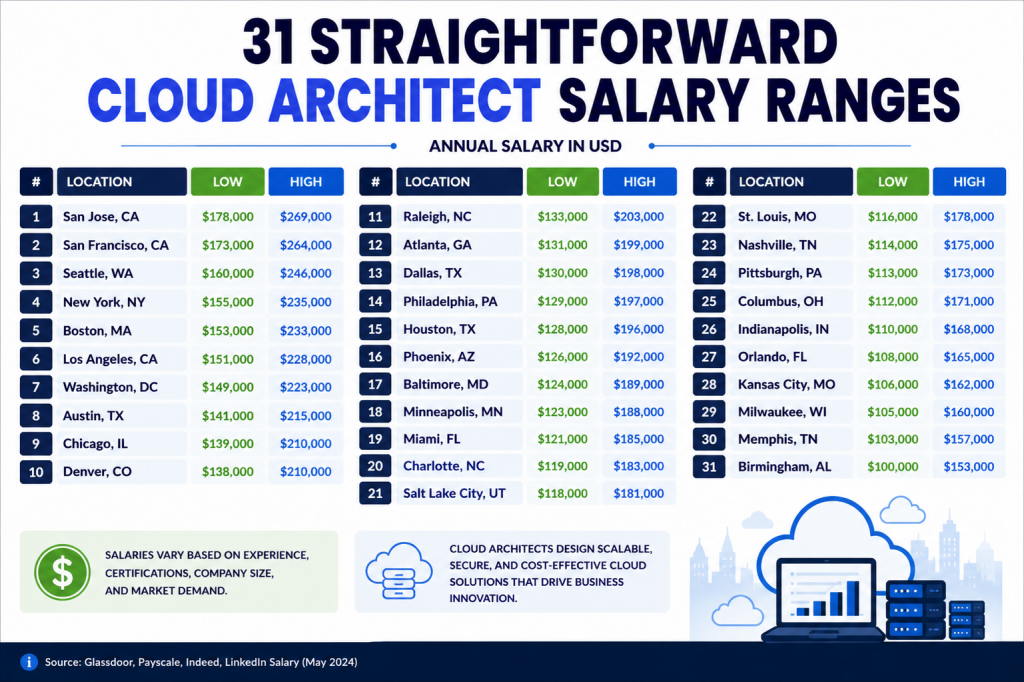
Cloud architects are among the most in-demand professionals in the tech industry, and their salaries vary widely based on experience, location, company size, and technical expertise. Below is a detailed breakdown of realistic salary ranges across different roles, regions, and career levels to give a clear picture of earning potential in this field.
Entry-Level Cloud Architect (Junior Level)
At the beginning of a cloud architecture career, professionals typically transition from roles like cloud engineer or system administrator. Entry-level cloud architects generally earn between $70,000 and $110,000 per year. Salaries are lower in smaller companies but increase quickly with hands-on experience in cloud platforms like AWS, Azure, or Google Cloud.
Associate Cloud Architect
Associate-level professionals usually have 1–3 years of cloud experience. Their responsibilities include assisting in cloud design and deployment. The typical salary range falls between $90,000 and $130,000 annually, depending on certifications and technical exposure.
Mid-Level Cloud Architect
Mid-level cloud architects often manage small to medium cloud infrastructures independently. Their salaries generally range from $120,000 to $160,000 per year. Strong knowledge of automation, networking, and cloud security significantly increases earning potential.
Senior Cloud Architect
Senior cloud architects design enterprise-level cloud solutions and lead technical teams. Their salaries typically range from $150,000 to $210,000 annually. Experience in multi-cloud environments and large-scale systems is a key factor in compensation.
Lead Cloud Architect
Lead cloud architects oversee entire cloud strategy and architecture for organizations. They usually earn between $180,000 and $240,000 per year. Leadership responsibilities and strategic decision-making heavily influence their pay scale.
Principal Cloud Architect
Principal-level professionals are highly experienced experts who define cloud architecture standards across organizations. Their salaries range from $200,000 to $260,000 annually, often including bonuses and stock options.
Enterprise Cloud Architect
Enterprise cloud architects work on large-scale digital transformation projects. Their compensation typically falls between $190,000 and $250,000 per year, depending on industry and company size.
AWS Cloud Architect
Specializing in AWS can significantly boost salary potential. AWS cloud architects generally earn between $130,000 and $220,000 annually, with higher salaries in enterprise environments requiring advanced AWS certifications.
Azure Cloud Architect
Azure-focused professionals earn slightly similar ranges, typically between $125,000 and $210,000 per year. Microsoft-heavy organizations often offer additional benefits and performance bonuses.
Google Cloud Architect
Google Cloud architects are in high demand, especially in data-driven companies. Their salaries usually range from $135,000 to $215,000 per year, depending on expertise in Kubernetes and data engineering.
Cloud Security Architect
Security-focused cloud architects are highly valued due to increasing cyber threats. Their salaries typically range between $140,000 and $230,000 annually, with strong demand in financial and healthcare sectors.
DevOps Cloud Architect
DevOps-integrated cloud architects earn between $130,000 and $200,000 per year. Automation, CI/CD pipelines, and infrastructure-as-code skills strongly influence compensation.
Hybrid Cloud Architect
Hybrid cloud specialists design environments that combine on-premises and cloud systems. Their salary range is typically $135,000 to $210,000 annually.
Multi-Cloud Architect
Professionals working across multiple cloud platforms earn higher salaries due to complexity. Their compensation usually ranges from $145,000 to $230,000 per year.
Cloud Solutions Architect
Solutions architects focus on designing end-to-end cloud systems for clients. Their salaries typically fall between $120,000 and $190,000 annually.
Cloud Infrastructure Architect
Infrastructure architects focus on networking, compute, and storage systems in the cloud. Their earnings generally range from $125,000 to $200,000 per year.
Cloud Network Architect
Network-focused cloud architects specialize in cloud connectivity and performance optimization. Salaries typically range between $130,000 and $205,000 annually.
Cloud Data Architect
Cloud data architects work with big data platforms and analytics systems. Their salaries usually range from $140,000 to $220,000 per year.
Big Data Cloud Architect
These professionals specialize in large-scale data processing systems. Their compensation generally falls between $150,000 and $240,000 annually.
Freelance Cloud Architect
Freelance professionals earn variable income depending on projects. On average, they can make $80 to $200 per hour or $120,000 to $250,000 annually if consistently booked.
Contract Cloud Architect
Contract roles often pay higher hourly rates due to short-term demand. Annualized income typically ranges from $140,000 to $260,000.
Cloud Architect in USA
In the United States, salaries are among the highest globally, ranging from $130,000 to $250,000 depending on region and company tier.
Cloud Architect in Canada
Canadian cloud architects earn between $110,000 and $190,000 per year, with higher salaries in Toronto and Vancouver.
Cloud Architect in United Kingdom
In the UK, salaries typically range from £70,000 to £130,000 annually, with London offering the highest pay scales.
Cloud Architect in Germany
German cloud architects usually earn between €80,000 and €140,000 per year depending on industry and experience.
Cloud Architect in India
In India, salaries vary widely, typically ranging from ₹900,000 to ₹3,500,000 annually, with top firms paying higher packages.
Cloud Architect in Australia
Australian professionals generally earn between AUD 120,000 and AUD 220,000 per year depending on expertise.
Cloud Architect in Middle East
In regions like UAE and Saudi Arabia, salaries typically range from $100,000 to $200,000 tax-free in many cases.
Cloud Architect in Europe (General)
Across Europe, average salaries range between €75,000 and €150,000 depending on country and specialization.
Cloud Architect in Startup Companies
Startups may offer lower base salaries but higher equity potential, typically ranging from $100,000 to $170,000 annually.
Cloud Architect in Big Tech Companies
Large tech firms offer some of the highest compensation packages, ranging from $160,000 to $300,000 including bonuses and stock options.
Cloud Architect with Certifications
Professionals with certifications like AWS Solutions Architect Professional or Azure Expert often earn 10–30% more, typically between $140,000 and $260,000 annually.
Cloud Architect Career Growth Potential
With continued experience, cloud architects can progress into roles such as cloud engineering director or CTO, where salaries can exceed $300,000 per year depending on company scale and responsibilities.
Cloud Architect Salary by Industry
Salary ranges for cloud architects can vary significantly depending on the industry they work in. In finance and banking, compensation is often higher due to strict security requirements and large-scale infrastructure demands. Professionals in this sector typically earn between $160,000 and $280,000 annually. Healthcare organizations also offer strong salaries, generally ranging from $140,000 to $230,000, especially for architects working with sensitive patient data and compliance-heavy systems. In the retail and e-commerce industry, cloud architects usually earn between $130,000 and $220,000, depending on the scale of online operations and global reach.
Cloud Architect Salary in Finance and Banking Sector
The finance sector consistently offers some of the highest salaries for cloud architects. Institutions such as investment banks, insurance companies, and fintech firms rely heavily on secure, scalable cloud infrastructure. As a result, cloud architects in this field often receive not only high base salaries but also substantial performance bonuses. Total compensation can reach up to $300,000 in senior roles, especially when risk management and regulatory compliance expertise are involved.
Cloud Architect Salary in Healthcare Industry
Healthcare organizations increasingly depend on cloud systems for data storage, telemedicine, and patient management platforms. Cloud architects in this sector typically earn between $140,000 and $230,000 annually. Those with experience in data privacy regulations and secure cloud environments are especially valuable, often receiving higher compensation due to the sensitive nature of healthcare data.
Cloud Architect Salary in E-Commerce and Retail
E-commerce companies require highly scalable cloud infrastructure to manage traffic spikes and global user bases. Cloud architects working in this space earn between $130,000 and $220,000 per year. Large online retailers and digital marketplaces tend to offer additional incentives such as stock options and performance bonuses.
Cloud Architect Salary in Government and Public Sector
Government organizations offer stable but slightly lower salaries compared to private enterprises. Cloud architects in the public sector generally earn between $110,000 and $180,000 annually. However, benefits, job security, and retirement packages often compensate for the lower base pay.
Remote Cloud Architect Salary Trends
Remote work has significantly influenced salary structures in cloud computing. Many companies now offer location-adjusted or even location-independent salaries. Remote cloud architects typically earn between $120,000 and $220,000 per year, depending on experience and employer location policies. Senior remote professionals working for international companies may earn even more due to global talent competition.
Freelance and Consulting Cloud Architect Income
Freelance cloud architects often have flexible but highly variable income. Experienced consultants can charge between $100 and $250 per hour, depending on project complexity and expertise. Annual income for full-time freelancers can range from $120,000 to over $300,000 if they maintain consistent client work. Consulting roles often pay premium rates for short-term, high-impact projects such as cloud migration or security audits.
Impact of Certifications on Salary
Certifications play a major role in determining cloud architect salaries. Professionals with advanced certifications in AWS, Azure, or Google Cloud typically earn 10% to 30% more than non-certified peers. Specialized certifications in security, networking, or DevOps further increase earning potential. In some enterprise environments, certifications can directly influence promotions and salary hikes.
Effect of Experience on Cloud Architect Earnings
Experience is one of the strongest factors influencing salary growth. Early-career professionals earn modest salaries, but with 5 to 10 years of experience, earnings increase significantly. Highly experienced cloud architects often move into leadership or strategic roles where compensation exceeds $200,000 annually. Long-term expertise in system design, scalability, and cloud optimization leads to premium pay levels.
Skills That Increase Cloud Architect Salary
Certain technical and soft skills directly impact earning potential. Expertise in multi-cloud environments, containerization, Kubernetes, DevOps pipelines, and cloud security significantly increases salary offers. Strong problem-solving ability, leadership skills, and communication with business stakeholders also contribute to higher compensation packages. Cloud architects who can bridge technical and business strategy are especially well paid.
Bonuses, Stock Options, and Additional Compensation
In many large companies, cloud architects receive compensation beyond base salary. Bonuses based on performance, project completion, and company profitability are common. Stock options are also frequently offered, especially in tech companies and startups. These additional benefits can increase total compensation by 20% to 50% or more in some cases, making overall earnings significantly higher than base salary figures suggest.
Cloud Architect Salary Growth Over Time
Cloud architecture is a rapidly growing field, and salaries tend to increase steadily with time. Entry-level professionals see moderate increases within the first few years, while mid-level architects experience sharper salary growth as they gain responsibility. Senior and principal architects often see the highest jumps when transitioning into leadership or specialized consulting roles. Continuous learning and adaptation to new cloud technologies are essential for sustained salary growth.
Future Outlook for Cloud Architect Salaries
The demand for cloud architects is expected to remain strong as more companies shift to cloud-based infrastructure. Emerging technologies such as artificial intelligence integration, edge computing, and hybrid cloud systems will further increase demand for skilled professionals. As a result, salaries are expected to continue rising over the coming years, especially for those with advanced and cross-platform expertise.
Factors That Influence Salary Negotiation
Negotiating a cloud architect salary depends on several key factors including experience, certifications, project portfolio, and industry demand. Candidates with proven success in large-scale cloud deployments often have stronger negotiation power. Geographic location and cost of living also influence salary offers, although remote work is gradually reducing these differences. Strong negotiation skills can significantly increase final compensation packages.
Cloud Architect Salary Landscape
Cloud architect salaries reflect the importance of the role in modern digital infrastructure. With wide-ranging pay scales influenced by experience, industry, skills, and location, this career offers strong earning potential at every level. As cloud adoption continues to grow globally, professionals in this field are likely to see continued financial growth and expanding opportunities across industries.
Cloud Architect Salary Comparison Across Company Sizes
The size of a company plays a major role in determining how much a cloud architect earns. Large enterprises and global tech companies typically offer the highest compensation packages due to complex infrastructure, larger budgets, and critical system dependencies. In these organizations, cloud architects often earn between $160,000 and $300,000 annually, with additional bonuses and equity compensation. Mid-sized companies usually offer salaries ranging from $120,000 to $200,000, balancing competitive pay with operational flexibility. Small companies and startups may offer lower base salaries, typically between $100,000 and $170,000, but they often compensate with equity, faster career growth, and broader responsibilities.
Cloud Architect Salary Based on Educational Background
Education can influence starting salaries, but its impact decreases as experience grows. Cloud architects with a bachelor’s degree in computer science, information technology, or related fields typically begin at standard entry-level pay ranges. Those with master’s degrees in cloud computing, cybersecurity, or data engineering may start with slightly higher salaries, often 10% to 20% above entry-level averages. However, in this field, practical experience, certifications, and real-world project work carry more weight than formal education alone. Employers prioritize proven cloud expertise over academic qualifications.
Self-Taught Cloud Architects and Salary Potential
Many cloud architects enter the field through self-learning and certifications rather than formal education paths. Self-taught professionals who build strong portfolios, complete real-world projects, and obtain recognized certifications can achieve salaries comparable to traditionally educated peers. Their earnings typically range from $120,000 to $200,000 depending on experience and skill level. In some cases, highly skilled self-taught architects outperform formally educated candidates due to hands-on expertise and problem-solving ability.
Impact of Programming and Automation Skills on Salary
Cloud architects who also possess strong programming skills tend to earn significantly higher salaries. Knowledge of languages such as Python, Go, or Java, along with infrastructure automation tools, increases efficiency and value within organizations. Automation expertise using tools like Terraform, Ansible, and Kubernetes is especially valuable. Professionals with these skills often earn 15% to 35% more than those focused solely on cloud design. Employers highly value architects who can automate infrastructure and reduce operational costs.
Security Expertise and High-Income Cloud Roles
Security-focused cloud architects are among the highest-paid professionals in the field. As cyber threats continue to increase, organizations invest heavily in secure cloud infrastructure. Architects with expertise in identity management, encryption, threat detection, and compliance frameworks often earn between $150,000 and $250,000 annually. In highly regulated industries such as banking and healthcare, salaries can exceed these ranges due to the critical importance of data protection.
Cloud Architect Salary Progression Timeline
Career progression in cloud architecture follows a relatively fast growth trajectory compared to many other IT roles. Within the first two years, professionals typically move from entry-level positions into associate or mid-level roles with noticeable salary increases. Between three and six years, many reach senior-level positions with significantly higher compensation. After seven to ten years, cloud architects often transition into principal or leadership roles, where salaries can exceed $200,000 and continue growing based on strategic responsibilities and organizational impact.
Cloud Architect Salary in High Cost of Living Regions
Geographic location strongly influences salary levels. In high cost of living regions such as major technology hubs, salaries are significantly higher to compensate for living expenses and talent competition. Cloud architects in these areas often earn 20% to 40% more than the global average. However, remote work has started to balance these differences, allowing professionals in lower-cost regions to earn competitive global salaries while maintaining lower personal expenses.
Cloud Architect Salary in Low Cost of Living Regions
In regions with lower living costs, salaries are generally lower in absolute terms but may offer strong purchasing power locally. Cloud architects in such regions often earn between $80,000 and $150,000 depending on experience and company type. While these figures may seem lower compared to global tech hubs, the quality of life can still be strong due to reduced living expenses.
Cloud Architect Salary Negotiation Strategies
Salary negotiation plays a crucial role in maximizing earnings. Professionals who can clearly demonstrate their technical expertise, project impact, and business value often secure higher compensation packages. Strong negotiation outcomes are typically achieved by presenting measurable achievements such as cost savings, system optimization, or successful cloud migrations. Candidates who research market salary trends and understand their skill value tend to negotiate more effectively and secure better offers.
Common Mistakes That Limit Salary Growth
Several mistakes can limit a cloud architect’s earning potential. Relying on outdated skills, ignoring new cloud technologies, or failing to obtain relevant certifications can slow career growth. Another common issue is focusing too narrowly on technical tasks without developing strategic or leadership abilities. Cloud architects who do not engage in continuous learning or fail to expand into multi-cloud and DevOps environments often experience slower salary progression compared to peers who actively upskill.
Cloud Architect Demand and Salary Trends
Demand for cloud architects continues to grow rapidly as organizations migrate to cloud-based infrastructures. This increasing demand directly drives salary growth across all experience levels. Companies are competing for skilled professionals who can design scalable, secure, and cost-efficient cloud systems. As cloud adoption expands globally, salaries are expected to remain strong with consistent upward trends, especially for professionals with advanced and specialized skills.
Role of Cloud Migration Projects in Salary Growth
Cloud migration projects are highly valuable for both organizations and professionals. Cloud architects who specialize in migrating legacy systems to modern cloud environments often earn higher salaries due to the complexity and importance of their work. These projects require deep technical knowledge, risk management skills, and strategic planning, all of which contribute to higher compensation levels.
Leadership Transition and Executive-Level Cloud Roles
As cloud architects gain experience, many transition into leadership or executive roles such as cloud engineering manager, director of cloud infrastructure, or chief technology officer. These positions involve strategic decision-making, team leadership, and long-term technology planning. Salaries in these roles can range from $200,000 to over $400,000 depending on company size and industry. Executive-level compensation often includes bonuses, stock options, and long-term incentive plans.
Future Salary Growth Expectations for Cloud Architects
The future outlook for cloud architect salaries remains highly positive. With the continued expansion of cloud computing, artificial intelligence integration, and digital transformation initiatives, demand for skilled architects is expected to increase further. Salaries are likely to rise steadily over the next decade, particularly for professionals who stay updated with emerging technologies and adapt to evolving industry needs.
Perspective on Cloud Architect Earnings
Cloud architecture remains one of the most financially rewarding careers in the technology sector. Earnings vary widely based on experience, specialization, industry, and location, but the overall trend shows strong and consistent growth. Professionals who continuously upgrade their skills, gain certifications, and take on complex projects can achieve high-income positions and long-term career stability in this field.
Cloud Architect Hourly Rate Breakdown
Cloud architects who work on hourly or freelance contracts often earn significantly different rates compared to full-time roles. Hourly compensation usually ranges from $80 to $250 depending on expertise, project complexity, and urgency. Junior contractors tend to fall on the lower end, while highly experienced architects working on enterprise-level cloud transformations can command premium rates. Specialized short-term projects such as cloud migration audits or security hardening assessments often pay even higher due to time sensitivity and required expertise.
Contract vs Full-Time Cloud Architect Compensation
Contract cloud architects generally earn more per hour than full-time employees, but they do not always receive long-term benefits such as health coverage, retirement contributions, or stock options. Full-time roles offer stability and additional compensation components, including bonuses and equity, which can significantly increase total annual income. Contract professionals, on the other hand, benefit from flexibility and the ability to work on multiple high-paying projects throughout the year, which can sometimes lead to higher overall earnings than traditional employment.
Top Paying Cloud Architecture Work Environments
Cloud architects tend to earn the highest salaries in environments where infrastructure is mission-critical and large-scale. Technology-driven enterprises, financial systems, artificial intelligence companies, and global SaaS platforms typically offer the most competitive compensation packages. These environments require high availability, security, and performance, which increases the value of experienced cloud architects. In such settings, total compensation often includes base salary, performance bonuses, and equity incentives that significantly raise annual earnings.
Advanced Certification Impact on Salary Levels
Cloud certifications continue to play a strong role in salary growth, especially at mid and senior levels. Foundational certifications provide entry opportunities, while advanced certifications in architecture, security, and multi-cloud design can increase salaries by a substantial margin. Professionals with multiple advanced certifications are often seen as specialists and may receive higher offers due to their validated expertise. Employers frequently use certifications as a benchmark when determining compensation packages for senior roles.
Specialized Cloud Architecture Niches and Earnings
Certain niche areas within cloud architecture offer significantly higher earning potential due to their complexity and demand. Artificial intelligence cloud architecture is one of the highest-paying niches, as it requires knowledge of scalable machine learning infrastructure. Edge computing architecture is also growing rapidly, especially with the rise of IoT devices and real-time data processing needs. Another high-value specialization is FinOps architecture, which focuses on optimizing cloud spending and cost efficiency. Professionals in these niches often earn above-average salaries due to limited talent availability and high business impact.
Equity and Long-Term Incentive Compensation
Equity compensation is a major component of cloud architect earnings in startups and large technology firms. Stock options or restricted stock units can significantly increase total compensation over time, especially if the company grows or becomes publicly traded. While base salaries provide immediate income, equity offers long-term financial potential that can sometimes exceed annual salary figures. This makes total compensation highly variable depending on company performance and market conditions.
Salary Differences Between Established Companies and Startups
Established companies tend to offer higher base salaries and structured benefits, while startups often provide lower base pay but higher equity stakes. In established environments, cloud architects benefit from stability and predictable compensation. In startups, the risk is higher, but so is the potential reward if the company scales successfully. Many professionals choose startups for faster career growth and broader responsibilities, even if initial salaries are slightly lower.
Cloud Architecture Salary Inflation Trends
Salaries in cloud architecture have consistently increased over recent years due to growing demand for cloud services. As more organizations migrate from traditional infrastructure to cloud-based systems, the need for skilled architects continues to rise. This demand has led to competitive hiring markets where companies increase compensation packages to attract talent. Inflation in tech salaries is also influenced by global digital transformation initiatives, making cloud architecture one of the fastest-growing salary fields in technology.
Global Outsourcing and Its Effect on Salaries
Outsourcing has introduced more global competition in cloud architecture roles. Companies now hire talent from different regions, which can create salary variation across markets. However, highly skilled cloud architects remain in strong demand regardless of location, which helps maintain competitive pay levels. In some cases, remote global hiring allows professionals in lower-cost regions to earn salaries aligned with higher-paying markets, improving overall income opportunities.
Skill Premiums That Increase Cloud Architect Pay
Certain advanced skills can significantly increase salary potential beyond standard cloud architecture knowledge. Expertise in distributed systems, high-availability design, and disaster recovery planning is highly valued. Additionally, skills in cost optimization, performance tuning, and infrastructure automation often lead to higher compensation. Cloud architects who can combine technical depth with business understanding are especially valuable, as they help organizations reduce costs while improving system performance.
Career Transition Paths Into Cloud Architecture
Many professionals enter cloud architecture from related fields such as DevOps engineering, system administration, software development, or network engineering. These transition paths often influence starting salaries, as individuals bring different levels of experience and specialization. DevOps professionals, for example, may transition at higher salary levels due to their familiarity with automation and infrastructure management. Software engineers may need additional cloud-specific experience before reaching higher compensation brackets.
Cloud Architect Salary Growth Through Continuous Learning
Continuous learning is essential for long-term salary growth in cloud architecture. The field evolves rapidly, with new services, tools, and architectural patterns emerging frequently. Professionals who consistently update their skills and adapt to new technologies tend to experience faster salary growth. Those who specialize early in emerging areas such as serverless computing or AI-driven infrastructure often position themselves for higher-paying opportunities.
Impact of Remote Work on Global Salary Equality
Remote work has reduced some geographic salary disparities, allowing cloud architects to access global job markets. This shift has increased competition but also expanded opportunities for high-paying roles regardless of location. Many organizations now offer standardized salary bands for remote employees, which can significantly increase earnings for professionals in regions that previously had lower compensation levels.
Performance-Based Compensation Models
Some organizations use performance-based compensation structures for cloud architects. In these models, salary increases and bonuses are tied to measurable outcomes such as system uptime, cost savings, or successful project delivery. This approach allows high-performing professionals to significantly increase their annual income based on results rather than fixed salary bands alone.
Long-Term Financial Outlook for Cloud Architects
The long-term financial outlook for cloud architects remains strong due to ongoing digital transformation across industries. As cloud infrastructure becomes more central to business operations, demand for skilled architects is expected to remain high. This sustained demand supports continued salary growth, particularly for professionals who specialize in advanced cloud design, security, and automation.
Overall Earnings Potential Summary
Cloud architects have one of the highest earning potentials in the technology industry, with salaries spanning a wide range depending on experience, specialization, and work environment. Entry-level professionals begin with solid compensation, while senior and specialized architects can achieve six-figure and even executive-level earnings. Combined with bonuses, equity, and freelance opportunities, total compensation can increase substantially over time, making this one of the most financially rewarding career paths in modern IT.
Hidden Factors That Influence Cloud Architect Salaries
Many elements affecting cloud architect salaries are not immediately visible in job listings. Beyond experience and certifications, factors such as negotiation ability, project impact, and business value contribution play a major role. Professionals who can clearly demonstrate how their architecture decisions reduce costs, improve scalability, or increase system reliability often receive significantly higher compensation than peers with similar technical skills.
Salary Differences Between Generalists and Specialists
Cloud architects can either remain generalists or move into specialized domains. Generalists who work across multiple cloud platforms and services tend to have steady but moderate salary growth. Specialists, however, often earn more due to their deep expertise in areas like cloud security, data engineering, or AI infrastructure. Organizations are willing to pay a premium for niche skills that are harder to find in the job market.
Impact of Project Complexity on Earnings
The complexity of projects directly influences how much a cloud architect can earn. Designing a simple cloud migration system does not pay as much as architecting a global, multi-region, highly available system. Projects involving high traffic systems, financial transactions, or real-time analytics typically come with higher compensation because they require deeper expertise and carry greater responsibility.
How Company Revenue Impacts Salary Levels
Company revenue is closely linked to cloud architect compensation. High-revenue organizations have larger budgets for infrastructure and talent, allowing them to offer premium salaries. In contrast, smaller companies with limited budgets may offer lower base pay but compensate with equity or flexible work arrangements. This creates a wide salary spectrum even within the same role.
Role of Leadership in Salary Growth
As cloud architects move into leadership roles, their salaries increase significantly. Leadership responsibilities include managing teams, setting cloud strategy, and aligning technical decisions with business goals. These roles often transition into positions such as cloud engineering manager or director of cloud infrastructure, where compensation can exceed standard technical roles by a large margin.
Cloud Architecture as a Path to Executive Roles
Many senior cloud architects eventually move into executive positions. Roles such as Chief Technology Officer or Vice President of Engineering are common career progressions for experienced professionals. These positions focus less on hands-on technical work and more on strategic decision-making, budgeting, and organizational growth, with salaries reaching the highest tiers in the industry.
Importance of Reputation and Industry Experience
A cloud architect’s reputation within the industry can significantly influence earning potential. Professionals known for successful large-scale deployments or contributions to well-known projects often receive higher-paying offers. Industry recognition builds trust, which leads to better job opportunities and stronger negotiation power.
Global Talent Competition and Salary Pressure
The global nature of cloud computing has increased competition among professionals worldwide. Companies can hire talent from different regions, which sometimes puts pressure on salary structures. However, highly skilled architects remain in strong demand, which helps maintain high compensation levels for experienced professionals despite global competition.
Future Salary Trends in Cloud Architecture
The future of cloud architect salaries is expected to remain upward trending. As technologies like artificial intelligence, machine learning, and edge computing become more integrated into cloud systems, demand for advanced architectural skills will continue to grow. This will likely push salaries higher, especially for professionals who stay updated with emerging technologies.
Conclusion
Cloud architect salaries reflect both the growing importance of cloud technology and the high level of expertise required to design and manage modern infrastructure. Across different experience levels, industries, and regions, earnings can vary widely, but the overall trend shows consistently strong and rising compensation. Entry-level professionals can build a solid financial foundation, while mid and senior-level architects move into highly competitive salary brackets with substantial growth potential.
As organizations continue shifting toward cloud-first strategies, demand for skilled cloud architects remains strong across the globe. This demand directly influences salary growth, making the profession one of the most financially rewarding in the technology sector. Factors such as certifications, specialized skills, industry choice, and hands-on experience play a major role in determining individual earning potential.
Ultimately, cloud architecture offers not just high salaries but also long-term career stability and growth opportunities. Professionals who continuously adapt to new technologies, expand their skill sets, and take on complex cloud challenges are well positioned to achieve strong financial success and advanced career progression over time.