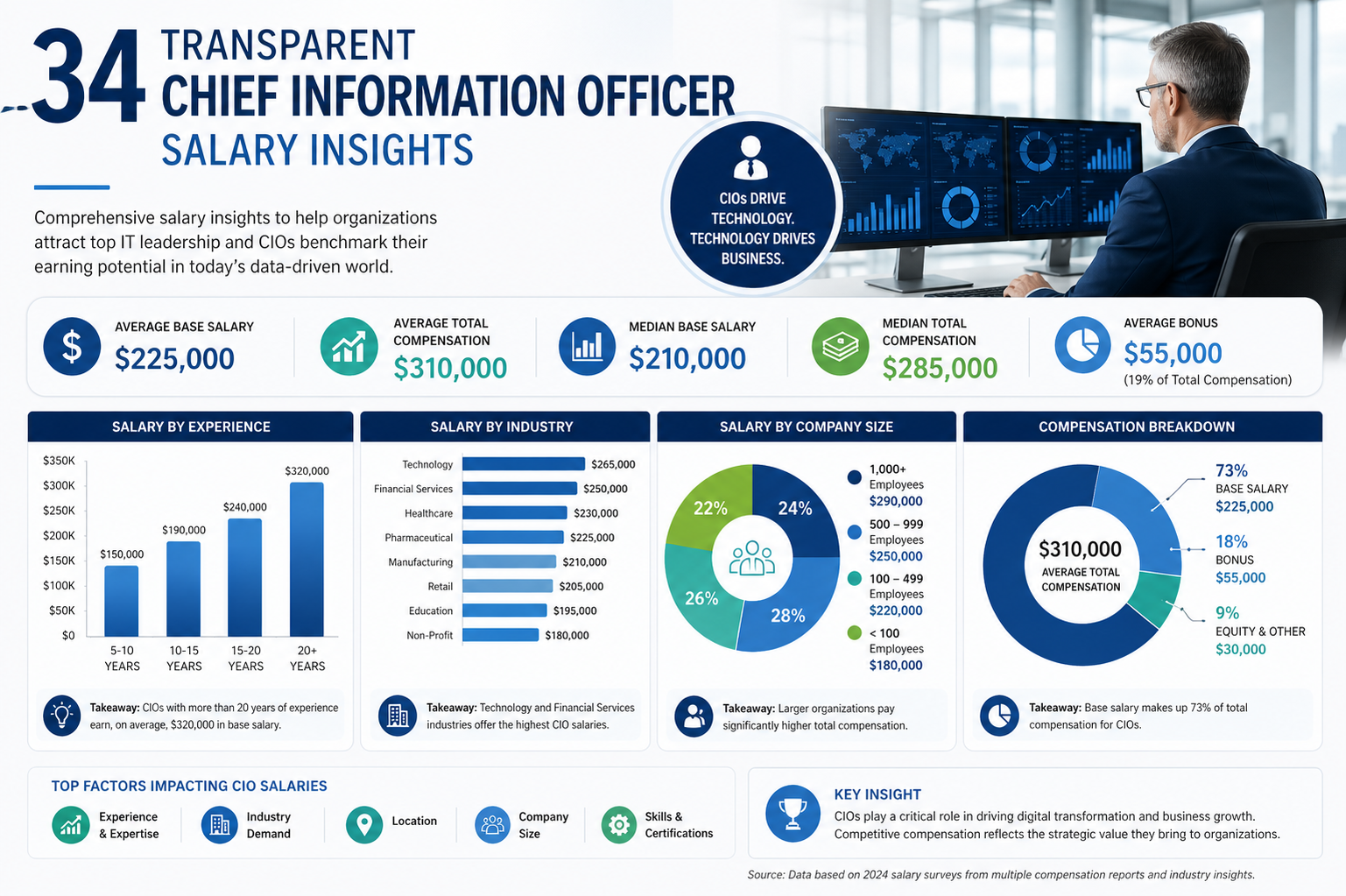
Chief Information Officer compensation is shaped by a combination of organizational scale, technological maturity, and the strategic expectations placed on the role. In modern enterprises, the CIO is no longer viewed purely as an IT operations leader but as a core business executive responsible for enabling growth through technology. This shift has significantly expanded salary ranges and elevated the overall value of the position in corporate hierarchies.
Evolution of the CIO Role and Its Effect on Salary Growth
Over time, the CIO position has transformed from a technical management role into a strategic leadership function. Earlier, CIOs were primarily responsible for maintaining systems and ensuring uptime. Today, they are deeply involved in digital transformation, innovation strategy, and revenue-driving initiatives. This evolution has directly influenced compensation growth, as organizations now expect CIOs to contribute to business outcomes rather than only technical stability.
The increasing reliance on digital infrastructure across all industries has made CIO leadership indispensable. As a result, organizations are willing to offer higher salaries to attract individuals who can bridge the gap between technology and business strategy effectively.
Core Components of CIO Compensation Packages
A CIO’s compensation is rarely limited to a fixed salary. Instead, it is structured as a comprehensive package that includes multiple financial and non-financial components. The base salary forms the foundation, but it is often complemented by annual performance bonuses, long-term incentive plans, retirement benefits, and equity participation.
Performance bonuses are typically tied to measurable outcomes such as system efficiency improvements, successful implementation of large-scale IT projects, or overall business growth driven by technology initiatives. This structure ensures that CIOs are incentivized to align IT performance with organizational objectives.
Long-Term Incentives and Wealth Accumulation
Long-term incentive plans play a significant role in CIO compensation, especially in large corporations. These may include stock options, restricted stock units, or deferred compensation plans. Such incentives are designed to retain top executive talent while aligning their interests with the long-term success of the organization.
In high-growth companies, equity-based compensation can sometimes surpass base salary value over time. This makes CIO positions particularly attractive in technology-driven industries and startups with strong expansion potential.
Regional Differences in CIO Earnings
Geographic location has a major influence on CIO salary levels. In developed economies, particularly in major financial and technology hubs, compensation tends to be significantly higher due to increased demand for experienced digital leaders and higher cost of living.
In contrast, emerging markets may offer lower base salaries but often provide faster career advancement opportunities. Multinational companies also adjust compensation based on regional benchmarks while maintaining internal parity for global leadership roles.
These regional differences highlight the global nature of the CIO role, where mobility and international experience can strongly influence earning potential.
Industry-Specific Salary Variations
Different industries place varying levels of importance on technology leadership, which directly affects CIO compensation. In financial services, CIOs are often among the highest paid due to the critical nature of secure transactions, regulatory compliance, and real-time data processing.
In healthcare, CIOs manage sensitive patient data systems and ensure compliance with strict privacy regulations, which increases the complexity of the role. Similarly, in the technology sector, CIOs are expected to continuously innovate and maintain competitive digital infrastructure, resulting in higher compensation packages.
Manufacturing and logistics industries also increasingly rely on CIO leadership for automation, supply chain optimization, and industrial digitalization, further expanding salary ranges in these sectors.
Organizational Complexity and Its Impact on Pay
The complexity of an organization’s IT ecosystem is a major determinant of CIO compensation. Enterprises with global operations, multiple subsidiaries, or highly integrated digital platforms require CIOs with advanced coordination and governance skills.
Managing such complexity involves overseeing large teams, coordinating across time zones, and ensuring seamless integration of multiple systems. These responsibilities justify higher salary levels due to the scale of impact and risk involved.
Organizations undergoing rapid digital transformation often offer premium compensation to CIOs who can successfully modernize legacy systems while minimizing disruption to operations.
Leadership Expectations and Strategic Influence
Modern CIOs are expected to participate in board-level discussions and contribute directly to corporate strategy. This elevated responsibility has significantly increased the strategic value of the role.
CIOs influence decisions related to investment in technology, cybersecurity frameworks, data governance, and innovation initiatives. Their ability to align technology investments with long-term business goals plays a crucial role in determining their compensation.
Executives who demonstrate strong leadership in driving digital transformation initiatives are often rewarded with higher bonuses and accelerated salary growth.
Cybersecurity Responsibility and Risk Management
As cyber threats continue to evolve, CIOs are increasingly responsible for overseeing cybersecurity strategy and risk management. This responsibility adds significant pressure to the role, as breaches can lead to financial loss, reputational damage, and regulatory penalties.
Organizations place high value on CIOs who can build resilient security frameworks and ensure compliance with global data protection standards. This expertise often leads to higher compensation due to the critical nature of cybersecurity in modern business environments.
Cloud Computing and Infrastructure Modernization
The shift toward cloud computing has reshaped the responsibilities of CIOs. Managing cloud migration, hybrid infrastructure, and scalable systems has become a central part of the role.
CIOs who successfully lead cloud transformation projects often see a notable increase in compensation, as these initiatives directly impact operational efficiency and cost reduction.
Cloud expertise has become a key differentiator in CIO hiring decisions, further influencing salary expectations across industries.
Artificial Intelligence and Data Strategy Leadership
The growing importance of artificial intelligence and data analytics has added another layer of responsibility to the CIO role. Organizations expect CIOs to lead data-driven strategies and integrate AI into business processes.
This requires a deep understanding of emerging technologies and their practical applications in business environments. CIOs who successfully implement AI-driven solutions often command higher compensation due to their contribution to innovation and competitive advantage.
Negotiation Factors in CIO Compensation
Salary negotiation for CIO roles is highly complex and often depends on multiple variables including experience, industry reputation, and prior achievements. Candidates with a proven track record of leading successful digital transformations typically have stronger negotiating power.
Other factors such as leadership style, global experience, and crisis management capabilities can also influence final compensation packages. In many cases, negotiation extends beyond salary to include equity, bonuses, and long-term incentives.
Career Progression and Salary Growth Potential
CIO roles often serve as stepping stones to even higher executive positions. Many CIOs transition into roles such as Chief Technology Officer or Chief Executive Officer, depending on their experience and organizational structure.
This potential for upward mobility contributes to the attractiveness of the role and supports long-term salary growth. Continuous skill development and adaptation to emerging technologies are essential for sustained career advancement.
Future Outlook of CIO Compensation Trends
The demand for CIOs is expected to remain strong as digital transformation continues across industries. Emerging technologies such as artificial intelligence, blockchain, and advanced analytics will further expand the scope of the role.
As organizations become more digitally dependent, the strategic importance of CIOs will continue to increase, driving further growth in compensation levels. The role is likely to evolve into an even more integrated business leadership position, blending technology expertise with executive decision-making responsibilities.
Advanced Compensation Structures in CIO Roles
In the second phase of CIO salary insights, compensation structures become more sophisticated and performance-driven. Organizations increasingly design pay packages that go beyond fixed remuneration and short-term bonuses. The goal is to retain top-tier executive talent while ensuring long-term alignment with business strategy and digital transformation outcomes.
Modern CIO compensation frameworks are heavily influenced by measurable KPIs such as system uptime, digital adoption rates, cost optimization, cybersecurity resilience, and innovation delivery. These performance indicators directly affect annual bonuses and long-term incentive payouts, making the role deeply tied to organizational success metrics.
Performance-Based Salary Progression
Unlike traditional roles with predictable salary increments, CIO compensation is strongly performance-based. Annual reviews are not limited to individual performance but are evaluated against enterprise-wide achievements. If a CIO successfully leads a major transformation project, such as enterprise cloud migration or digital ecosystem integration, salary adjustments can be substantial.
In many organizations, compensation committees assess CIO performance using balanced scorecards that include financial impact, operational efficiency, innovation contribution, and leadership effectiveness. Strong performance in these areas often results in accelerated salary growth compared to standard executive roles.
Equity Ownership and Wealth Creation Opportunities
Equity-based compensation is one of the most influential components of modern CIO packages, especially in publicly traded companies and high-growth enterprises. Stock options and restricted stock units provide CIOs with direct ownership stakes in the organization’s future performance.
This structure transforms the CIO role from a purely salaried position into a wealth-building opportunity. When companies experience significant growth or successful market expansion, equity compensation can dramatically increase total earnings over time.
In technology-driven industries, equity often represents a large percentage of total compensation, reinforcing long-term commitment between the executive and the organization.
Impact of Digital Transformation Maturity
Organizations at different stages of digital maturity offer varying compensation levels to CIOs. Companies in early transformation stages often require CIOs to rebuild outdated infrastructure, integrate modern platforms, and redesign IT strategy from the ground up.
These responsibilities demand high expertise and often result in premium compensation packages. On the other hand, organizations with mature digital ecosystems may focus more on optimization, innovation, and incremental improvement, which can influence salary structures differently.
The level of transformation complexity directly correlates with compensation intensity, as higher risk and broader responsibility justify increased pay.
Global CIO Market Demand Trends
The global demand for CIOs has been consistently rising due to rapid digitalization across all sectors. Businesses are increasingly dependent on technology leadership to remain competitive in dynamic markets.
This demand-supply imbalance has strengthened CIO salary benchmarks, especially for professionals with cross-industry experience and global leadership exposure. Multinational corporations often compete for top CIO talent by offering highly competitive compensation packages that include relocation benefits, global equity plans, and international leadership opportunities.
As digital ecosystems expand, CIOs with multi-regional experience become even more valuable, further increasing their earning potential.
Enterprise Risk Management Responsibilities
CIOs are now central figures in enterprise risk management strategies. Their responsibilities extend beyond IT operations to include data protection, regulatory compliance, business continuity planning, and cyber risk mitigation.
This expanded risk profile significantly impacts compensation structures. Organizations are willing to pay premium salaries to CIOs who can safeguard digital assets and ensure operational resilience during crises.
In highly regulated industries, such as banking and healthcare, the risk management component of the CIO role becomes even more critical, leading to higher compensation thresholds.
Leadership in Innovation and Product Development
Modern CIOs are increasingly involved in innovation leadership, particularly in organizations where technology drives product development. They collaborate with product teams, engineering departments, and business units to design new digital solutions.
This involvement in innovation ecosystems elevates the CIO role from operational management to strategic product influence. CIOs who actively contribute to revenue-generating digital products often receive higher bonuses and long-term incentives.
Their ability to identify emerging technologies and translate them into business opportunities plays a crucial role in determining compensation growth.
Organizational Culture and Compensation Philosophy
Different organizations adopt varying compensation philosophies that directly affect CIO pay levels. Some companies prioritize aggressive performance-based pay structures, while others emphasize stability and long-term retention.
In performance-driven cultures, CIO compensation is closely tied to quarterly and annual results, leading to higher variability in income. In contrast, more traditional organizations may offer stable but comparatively moderate salary progression.
The cultural approach to leadership compensation significantly influences how CIO roles are valued internally.
Succession Planning and Executive Retention Strategies
CIOs are often included in executive succession planning frameworks due to their strategic importance. Organizations invest heavily in retaining top CIO talent to ensure continuity in digital leadership.
Retention strategies may include multi-year incentive plans, accelerated vesting of stock options, and long-term bonus guarantees. These mechanisms ensure that CIOs remain committed to organizational goals over extended periods.
Retention-focused compensation structures also reduce leadership turnover, which is critical for maintaining stability in large-scale IT environments.
Technological Expertise as a Salary Driver
A CIO’s technical depth continues to play a role in compensation, even as the position becomes more strategic. Expertise in areas such as cloud architecture, cybersecurity frameworks, enterprise systems integration, and data analytics significantly enhances earning potential.
Organizations value CIOs who can combine technical knowledge with executive decision-making capabilities. This hybrid skill set is rare and therefore commands higher compensation levels in the job market.
Continuous learning and adaptation to emerging technologies are essential for maintaining competitive salary positioning.
Board-Level Influence and Executive Visibility
CIOs who regularly interact with board members and executive committees often receive higher compensation due to their influence on strategic decision-making. Their insights into technology investments, digital risks, and innovation strategies directly shape organizational direction.
This elevated visibility increases accountability but also enhances earning potential. CIOs who can effectively communicate complex technological concepts to non-technical executives are particularly valued in board-level discussions.
Their ability to translate IT strategy into business value strengthens their compensation position within executive hierarchies.
Economic Cycles and Compensation Adjustments
Macroeconomic conditions play a significant role in shaping CIO salary trends. During periods of economic expansion, organizations invest heavily in digital transformation, often increasing CIO compensation budgets.
Conversely, during economic downturns, salary growth may slow, but CIOs remain among the least affected executive roles due to the critical nature of their responsibilities.
Even in challenging economic environments, organizations prioritize retaining strong technology leadership to maintain operational stability and competitive advantage.
Future Evolution of CIO Compensation Models
The future of CIO compensation is expected to become even more performance-linked and innovation-driven. As artificial intelligence, automation, and advanced analytics reshape industries, CIOs will play an increasingly central role in business transformation.
Compensation models are likely to incorporate more real-time performance metrics, long-term innovation impact assessments, and digital value creation benchmarks.
This evolution will further strengthen the CIO position as one of the most strategically important and highly compensated executive roles in modern organizations.
Executive Pay Benchmarking and CIO Positioning
In many organizations, CIO compensation is determined through structured benchmarking against peer companies and industry standards. Compensation committees regularly compare CIO salaries with those of similar roles in competing firms to ensure market competitiveness. This process is particularly important in industries where digital leadership directly influences competitive advantage.
Benchmarking also considers regional salary variations, organizational revenue size, and the complexity of IT environments. CIOs working in multinational corporations are often benchmarked against global peers, which can significantly elevate their compensation levels compared to local standards.
Impact of Revenue Scale on CIO Compensation
Company revenue is one of the strongest indicators of CIO salary potential. Large enterprises with multi-billion-dollar revenues typically allocate higher compensation packages to CIOs due to the scale of responsibility involved.
As revenue increases, so does the complexity of IT systems, global operations, and digital infrastructure dependencies. CIOs in such environments are responsible for ensuring uninterrupted operations across multiple markets, which justifies higher base salaries and performance incentives.
In contrast, mid-market organizations may offer comparatively lower salaries but often provide faster career growth opportunities and broader hands-on leadership exposure.
Transformation Leadership Premium
CIOs who are actively leading enterprise-wide transformation initiatives often receive a compensation premium. These transformations may include cloud adoption, legacy system replacement, data modernization, or automation deployment.
Such initiatives involve significant risk, high investment, and long execution timelines. Organizations reward CIOs who can successfully manage these challenges with enhanced bonuses and long-term incentives.
The ability to deliver measurable transformation outcomes is one of the strongest differentiators in CIO compensation growth.
Role of Strategic Partnerships in Compensation Growth
Modern CIOs frequently engage with external vendors, technology partners, and consulting firms to execute large-scale IT strategies. Their ability to manage these partnerships effectively is increasingly factored into compensation decisions.
Strong vendor negotiation skills, cost optimization strategies, and ecosystem management capabilities can lead to higher performance evaluations. CIOs who successfully build strategic partnerships that improve efficiency and reduce operational costs are often rewarded financially.
This aspect of the role highlights the shift from internal IT management to external ecosystem leadership.
Digital Product Ownership and Revenue Contribution
In many modern enterprises, CIOs are directly or indirectly involved in digital product development. This includes overseeing platforms, customer-facing applications, and data-driven services that generate revenue.
When CIOs contribute to revenue-generating initiatives, their compensation structures often shift closer to those of business executives rather than traditional IT leaders. This includes higher bonus potential and revenue-linked incentives.
Organizations increasingly view CIOs as contributors to top-line growth, not just cost management.
Leadership Style and Compensation Outcomes
Leadership effectiveness plays a significant role in determining CIO compensation growth. CIOs who demonstrate strong communication skills, cross-functional collaboration, and organizational influence tend to progress faster in salary structures.
Transformational leadership styles that encourage innovation and employee engagement are highly valued in modern enterprises. Conversely, purely operational leadership approaches may limit long-term compensation growth.
Organizations increasingly evaluate CIOs based on their ability to inspire teams and drive cultural change alongside technical execution.
Talent Management and Organizational Scaling
CIOs are responsible for building and scaling high-performing IT teams, often across multiple geographies. Their ability to attract, retain, and develop top technology talent directly impacts organizational performance.
Strong talent management capabilities are often reflected in compensation packages, particularly when CIOs successfully build leadership pipelines and reduce dependency on external hiring.
As organizations face global IT skill shortages, this aspect of the role has become increasingly valuable.
Data-Driven Decision Making and Business Intelligence
CIOs play a central role in enabling data-driven decision-making across organizations. They oversee the implementation of analytics platforms, business intelligence systems, and data governance frameworks.
Organizations that prioritize data as a strategic asset often reward CIOs who can effectively structure and operationalize data ecosystems.
The ability to convert raw data into actionable business insights is a key factor in determining modern CIO compensation levels.
Integration of Emerging Technologies
CIO compensation is also influenced by their ability to adopt and integrate emerging technologies. These may include artificial intelligence, machine learning, blockchain, edge computing, and Internet of Things systems.
CIOs who successfully implement these technologies to improve efficiency or create new business models are often considered high-value executives.
Early adoption of disruptive technologies can significantly accelerate salary growth and bonus eligibility.
Regulatory Compliance and Governance Responsibilities
In highly regulated industries, CIOs carry significant responsibility for ensuring compliance with data protection laws, industry regulations, and international standards.
This includes overseeing audit processes, implementing governance frameworks, and maintaining transparent reporting systems.
Failure in compliance can result in severe penalties, making this responsibility a critical factor in compensation determination. CIOs with strong governance expertise often receive higher salaries due to reduced organizational risk.
Mergers, Acquisitions, and System Integration Leadership
CIOs play a crucial role during mergers and acquisitions, where they are responsible for integrating complex IT systems, aligning digital infrastructures, and ensuring business continuity.
These projects are highly complex and time-sensitive, often requiring extensive coordination across multiple departments and external partners.
Due to the high stakes involved, CIOs who successfully lead M&A integrations are frequently rewarded with substantial bonuses and accelerated compensation growth.
Organizational Digital Maturity Index Influence
Some organizations evaluate CIO compensation based on a digital maturity index that measures the sophistication of their technology environment. This includes cloud adoption levels, automation usage, cybersecurity strength, and data integration capabilities.
CIOs operating in low-maturity environments often face more transformation challenges, which can increase compensation potential due to higher workload and risk.
Conversely, highly mature digital organizations may focus more on innovation and optimization, influencing different compensation structures.
Global Mobility and Expatriate CIO Roles
CIOs with global mobility are often offered enhanced compensation packages when working in international assignments. These packages may include relocation allowances, housing support, tax equalization benefits, and global equity participation.
Multinational corporations highly value CIOs who can operate across diverse cultural and regulatory environments, making global experience a strong salary driver.
Expatriate CIO roles often sit at the top end of compensation scales due to added complexity and responsibility.
Technology Investment Management Responsibility
CIOs are responsible for managing large-scale technology investments, often running into millions or even billions of dollars. This includes budgeting for infrastructure, software, cybersecurity, and innovation initiatives.
The ability to allocate resources efficiently and demonstrate return on investment significantly influences compensation decisions.
Organizations reward CIOs who can balance cost control with strategic innovation investment.
Organizational Change Management Leadership
Digital transformation often requires significant organizational change, including process redesign, workforce reskilling, and cultural adaptation.
CIOs who successfully lead change management initiatives are highly valued, as resistance to change is one of the biggest barriers to digital success.
Effective change leadership often results in improved compensation due to its direct impact on transformation success rates.
Long-Term Strategic Value Creation
Ultimately, CIO compensation is increasingly tied to long-term value creation rather than short-term operational performance. Organizations expect CIOs to contribute to sustainable growth through innovation, efficiency, and digital capability building.
This long-term orientation ensures that compensation structures continue to evolve, rewarding CIOs who deliver lasting impact rather than temporary improvements.
As digital transformation accelerates globally, the CIO role continues to strengthen its position as one of the most influential and highly compensated executive roles in modern business environments.
Future Growth Drivers of CIO Compensation
The future of CIO compensation is expected to be shaped by rapid technological disruption and increasing business dependence on digital ecosystems. As organizations expand their use of artificial intelligence, automation, and advanced analytics, the CIO role will continue shifting toward higher strategic value. This evolution will naturally drive further increases in compensation levels, especially for leaders who can effectively integrate emerging technologies into core business operations.
In addition, the growing complexity of global digital infrastructure will require CIOs to manage more interconnected systems, which increases responsibility and, in turn, salary expectations. Companies will continue to prioritize executives who can ensure stability while enabling innovation at scale.
Artificial Intelligence Leadership as a Premium Skill
Artificial intelligence is becoming one of the most influential factors in CIO compensation growth. CIOs who can successfully lead AI-driven transformation initiatives are highly valued due to the competitive advantages such systems provide.
AI integration requires not only technical knowledge but also ethical oversight, governance frameworks, and alignment with business goals. This combination of responsibilities increases the strategic importance of the CIO role, resulting in higher compensation packages.
Organizations are increasingly willing to invest in CIOs who can turn AI capabilities into measurable business outcomes such as cost reduction, improved customer experience, and predictive decision-making.
Cybersecurity Escalation and Compensation Impact
As cyber threats become more sophisticated, CIOs are taking on expanded responsibilities in digital defense strategies. This includes overseeing cybersecurity architecture, incident response planning, and risk mitigation frameworks.
The financial impact of cybersecurity failures has made this responsibility one of the highest priority areas for executive leadership. CIOs who demonstrate strong expertise in protecting enterprise systems and data assets are often rewarded with higher base salaries and performance bonuses.
The rising importance of cybersecurity ensures that CIO compensation will continue to grow in alignment with global risk levels.
Cloud-First Strategy Leadership
Cloud computing has become a foundational element of modern IT strategy. CIOs leading cloud-first transformations are responsible for redesigning entire infrastructure ecosystems, optimizing costs, and ensuring scalability.
This responsibility significantly influences compensation structures, especially in large enterprises undergoing full digital migration. CIOs who successfully manage hybrid and multi-cloud environments are often placed in higher compensation brackets due to the complexity involved.
Cloud expertise is now considered essential rather than optional, making it a core driver of CIO salary competitiveness.
Data Monetization and Business Value Creation
Organizations are increasingly recognizing data as a revenue-generating asset rather than just an operational resource. CIOs play a central role in enabling data monetization strategies through analytics platforms, customer insights, and digital services.
When CIOs contribute directly to revenue generation, their compensation models often shift to include performance-based incentives tied to business growth. This elevates their role closer to revenue leadership rather than traditional IT management.
The ability to turn data into actionable and profitable business strategies is becoming one of the most valuable CIO skill sets.
Sustainability and Green IT Responsibilities
Sustainability has emerged as a key focus area for modern enterprises, and CIOs are increasingly responsible for implementing environmentally responsible IT strategies. This includes optimizing data centers for energy efficiency, reducing digital waste, and supporting corporate sustainability goals.
Organizations that prioritize environmental, social, and governance standards often reward CIOs who contribute to green technology initiatives. This adds a new dimension to compensation structures, linking leadership performance to sustainability outcomes.
As global regulations around environmental impact become stricter, this responsibility will continue to grow in importance.
Remote Work Infrastructure Expansion
The rise of hybrid and remote work models has significantly increased the responsibilities of CIOs. They are now responsible for ensuring secure, scalable, and efficient remote work environments across global teams.
This includes managing collaboration platforms, cybersecurity for remote access, and cloud-based productivity tools. The complexity of supporting distributed workforces has added new layers of responsibility to the CIO role.
Organizations that rely heavily on remote operations often offer higher compensation to CIOs who can maintain productivity and security across decentralized environments.
Talent Shortage in Technology Leadership
A global shortage of experienced technology leaders continues to drive CIO salaries upward. The demand for skilled executives who can manage both technical and strategic responsibilities far exceeds supply in many regions.
This imbalance has created a highly competitive job market, where organizations must offer premium compensation packages to attract and retain qualified CIOs.
As digital transformation accelerates, this talent gap is expected to persist, further supporting salary growth trends.
Boardroom Influence and Executive Integration
CIOs are increasingly being integrated into core executive decision-making bodies. Their participation in board discussions related to digital strategy, investment planning, and risk management highlights their growing influence.
This elevated role increases both responsibility and compensation expectations. CIOs who can effectively communicate technology value to non-technical executives are particularly highly valued.
Their ability to bridge business and technology continues to strengthen their position within executive compensation structures.
Global Economic and Technological Convergence
The convergence of global economic growth and rapid technological innovation continues to shape CIO compensation trends. As digital transformation becomes a universal business priority, CIOs are positioned at the center of organizational strategy.
This convergence ensures that CIO salaries will remain strong even during economic fluctuations, as their role is essential for maintaining competitiveness in modern markets.
Organizations increasingly view CIOs as long-term strategic assets rather than cost centers.
Conclusion
Chief Information Officer compensation reflects far more than technical expertise; it represents the strategic importance of technology leadership in modern organizations. As businesses continue to evolve digitally, the CIO role has transformed into one of the most influential executive positions, directly impacting revenue, efficiency, innovation, and risk management.
Salary structures for CIOs are increasingly complex, combining base pay, performance incentives, equity ownership, and long-term wealth-building opportunities. These components are designed to align executive performance with organizational success and future growth.
The continued expansion of digital ecosystems, artificial intelligence adoption, cybersecurity demands, and global connectivity ensures that CIO compensation will remain on an upward trajectory. Organizations will continue to reward CIOs who can balance operational excellence with visionary leadership, making the role one of the most critical and highly compensated positions in the modern business world.