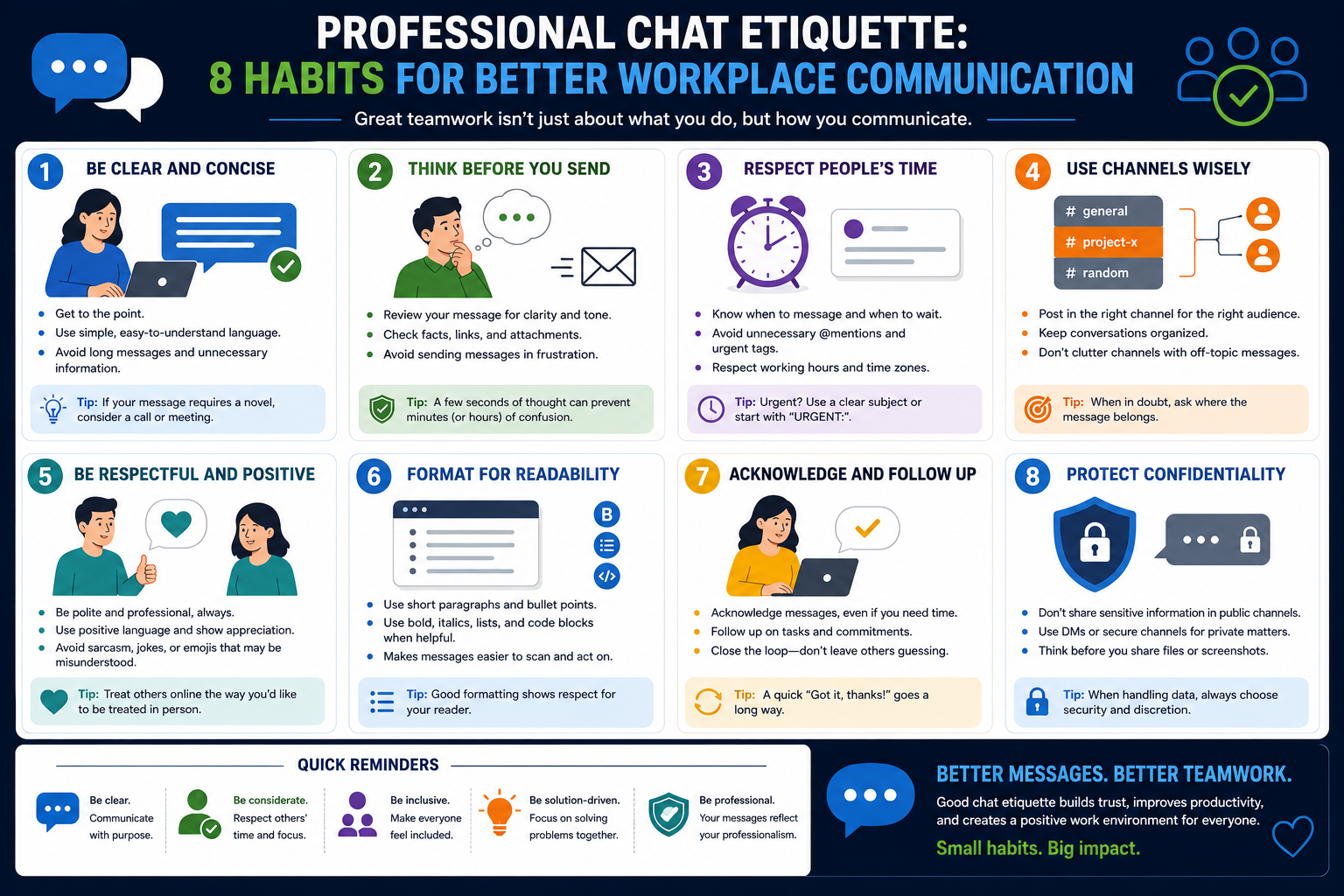
Modern workplaces rely heavily on digital communication. Teams no longer depend only on meetings, phone calls, or long email threads to complete projects and coordinate daily responsibilities. Workplace chat platforms have become one of the most common tools for communication in organizations of every size. Employees use instant messaging applications to ask questions, provide updates, solve technical issues, share files, and collaborate in real time.
The rise of remote and hybrid work has made chat communication even more important. Employees often work from different cities, countries, or time zones, making instant communication tools essential for productivity. These systems allow teams to stay connected throughout the day regardless of physical location. While this technology creates speed and convenience, it also introduces new communication challenges.
Many people treat workplace chats too casually because the environment feels informal. Since messages are short and immediate, employees may type quickly without considering tone, clarity, or professionalism. However, workplace messaging systems are still professional communication channels. Every message reflects the sender’s attitude, professionalism, and communication skills.
Professional chat etiquette refers to the standards and behaviors that help employees communicate respectfully and effectively in digital work environments. These practices help reduce misunderstandings, improve teamwork, and maintain positive professional relationships. Good etiquette is not about sounding robotic or overly formal. Instead, it focuses on communicating clearly, respectfully, and responsibly.
One of the biggest challenges of digital communication is the absence of face-to-face interaction. In physical conversations, people rely on facial expressions, voice tone, gestures, and body language to understand meaning. In text-based communication, those signals disappear. As a result, even simple messages can easily be misunderstood.
A short message intended to sound efficient may appear rude. A joke may be interpreted as criticism. A delayed response may seem dismissive even when no offense was intended. Because of this, employees must communicate carefully and thoughtfully when using workplace chat systems.
Good chat etiquette improves workplace culture significantly. Teams that communicate respectfully often experience stronger collaboration, higher productivity, and fewer conflicts. Employees feel more comfortable asking questions, sharing ideas, and working together when communication remains professional and positive.
Organizations also benefit from strong communication practices because misunderstandings can waste time and create operational problems. Clear communication reduces confusion and helps projects move forward more efficiently. Professional digital interactions also strengthen trust between coworkers, managers, and clients.
As workplace communication continues evolving, digital etiquette becomes an essential professional skill. Employees who communicate effectively through chat systems often develop stronger reputations and better working relationships. Understanding how to use workplace messaging platforms responsibly is now just as important as understanding how to write professional emails or conduct meetings.
Understanding the Importance of Professionalism in Chats
Many employees mistakenly believe that chat systems are private or temporary communication spaces. In reality, workplace chats are usually monitored, archived, or accessible by administrators depending on company policies. Messages may remain stored for long periods and can sometimes be reviewed during audits, investigations, or internal discussions.
Because of this, employees should approach workplace chats with the same professionalism they would use during official meetings or business emails. Messages should remain respectful, appropriate, and work-focused.
A useful principle is simple: never write anything in a workplace chat that would be inappropriate to say aloud in front of coworkers or supervisors. This mindset helps employees avoid careless mistakes that could damage relationships or reputations.
Professionalism in chats also means avoiding gossip, offensive humor, personal attacks, or emotionally charged comments. Even messages intended jokingly can create tension or discomfort if interpreted differently by recipients.
Digital communication often creates a false sense of distance. People sometimes write things online that they would never say directly in person. However, workplace communication should always maintain professional standards regardless of the platform being used.
Employees should also remember that workplace communication contributes to organizational culture. Respectful communication encourages teamwork and cooperation, while negative interactions create stress and conflict. Every employee contributes to this environment through daily communication habits.
Professionalism does not mean eliminating friendliness or personality. Positive and warm communication can improve morale and strengthen relationships. However, employees should balance friendliness with professionalism to ensure conversations remain appropriate for the workplace.
Thinking Before Sending Messages
One of the most valuable habits in workplace communication is pausing briefly before sending messages. Because chat systems are designed for speed, employees often type quickly without reviewing their words carefully. This can lead to misunderstandings, spelling errors, accidental tone problems, or incomplete information.
Taking a few extra seconds to reread a message can prevent many communication issues. Employees should ask themselves several important questions before pressing send.
Is the message clear?
Does the tone sound respectful?
Could the wording be misunderstood?
Is all necessary information included?
Would this message appear professional if shared publicly within the organization?
These simple checks help improve communication quality significantly.
Emotional reactions are especially risky in workplace chats. When employees feel stressed, frustrated, or angry, they may send messages impulsively. Written words can have lasting consequences because they may remain stored permanently or be forwarded easily.
For example, responding harshly during a disagreement may damage professional relationships even after the situation is resolved. In many cases, it is better to pause, calm down, and rethink the message before responding.
Professional communication requires emotional control and awareness. Employees who remain calm and respectful under pressure often build stronger reputations and greater trust within organizations.
Remembering the Human Behind the Screen
One of the most important aspects of workplace etiquette is recognizing that every message involves real people with emotions, responsibilities, and challenges. Digital communication can sometimes feel impersonal because conversations happen through screens rather than face-to-face interactions.
This distance may cause employees to communicate more harshly or abruptly than they would in person. However, respect and empathy remain essential in digital environments.
Simple gestures such as greeting coworkers politely, saying thank you, and acknowledging assistance can improve communication dramatically. Respectful interactions help create a more positive and supportive workplace atmosphere.
When starting conversations, employees should avoid immediately making demands or requests without context. A polite introduction creates a more collaborative tone.
For example, instead of sending a message that says:
“Need this report now.”
A more professional version would be:
“Good morning. Could you please send the updated report when you have a chance? Thank you.”
The second approach communicates urgency while still showing respect and professionalism.
This principle becomes even more important when interacting with customers, clients, or technical support users. Service-related communication should always remain patient, respectful, and solution-focused.
People remember how they are treated during conversations. Respectful communication strengthens trust and encourages better collaboration in the future.
Choosing the Right Communication Method
While workplace chats are extremely useful, they are not always the best communication method for every situation. One of the key elements of professional etiquette is understanding when chat should and should not be used.
Instant messaging works well for quick updates, simple questions, scheduling discussions, and short clarifications. However, complex conversations may require different communication methods.
For example, detailed project planning, sensitive discussions, performance feedback, or emotionally difficult conversations are often better handled through meetings or video calls. Important discussions involving nuance and emotion can become confusing when limited to text alone.
Employees should also avoid sending extremely long or complicated instructions through chat systems. Large blocks of text are difficult to follow and may cause important details to be missed. In many cases, organized emails or shared documents provide better clarity.
Understanding communication preferences also matters. Some coworkers respond quickly through chat, while others prefer email or scheduled discussions. Professional communicators adapt their approach depending on the needs of the situation and the preferences of others.
Good communication is not only about speed. It is also about choosing the most effective method for delivering information clearly and respectfully.
Responding Promptly and Responsibly
Timely responses are an important part of workplace communication. When someone sends a message through a chat platform, they usually expect a relatively quick reply. Delayed responses may create frustration or slow down workflow.
This does not mean employees must respond instantly at all times. People may be attending meetings, focusing on projects, or unavailable for other reasons. However, acknowledging messages appropriately helps maintain professionalism.
If a complete response is not possible immediately, a short update can help manage expectations. For example:
“I’m currently working on another task but will respond within an hour.”
This simple message shows awareness and respect for the sender’s time.
Status indicators also help communicate availability. Most workplace chat platforms allow users to display statuses such as available, busy, in a meeting, or away. Keeping statuses updated reduces confusion and helps coworkers understand when responses may be delayed.
At the same time, employees should avoid expecting constant availability from others. Repeatedly messaging coworkers or demanding immediate responses for non-urgent matters can create unnecessary stress and distraction.
Professional communication involves balancing responsiveness with respect for others’ time and workload.
Avoiding Distractions and Maintaining Productivity
Workplace chat systems are powerful collaboration tools, but they can also become major distractions if used improperly. Constant notifications, off-topic discussions, and excessive messaging can interrupt focus and reduce productivity.
Many organizations create informal channels for hobbies, entertainment, or casual conversations. These spaces can strengthen team relationships and improve morale when used appropriately. However, employees should still manage their time responsibly.
Spending too much time in unrelated conversations during work hours may affect productivity and performance. Professional employees understand how to maintain balance between social interaction and work responsibilities.
Employees should also avoid distracting coworkers unnecessarily. Sending repeated notifications, tagging multiple people without reason, or interrupting others frequently can reduce concentration and increase stress.
Respecting boundaries becomes especially important in remote work environments where employees may already struggle to separate work from personal life.
Non-urgent messages should generally wait until working hours whenever possible. Sending messages late at night or during weekends may create pressure for coworkers to remain constantly connected.
Healthy communication habits contribute to healthier workplace culture overall.
Writing Clearly and Professionally
Good writing remains essential even in informal workplace chats. Employees do not need to write perfectly formal messages at all times, but communication should still remain readable, organized, and professional.
Spelling mistakes, poor grammar, and unclear wording can create confusion and reduce credibility. Simple efforts such as proofreading messages and using complete sentences improve communication quality significantly.
Formatting also matters. Large blocks of text are difficult to read quickly, especially during busy workdays. Breaking information into smaller paragraphs or bullet points improves readability and helps recipients understand messages more efficiently.
Employees should also avoid using excessive abbreviations, slang, or unclear shorthand that others may not understand. Clarity should always take priority over speed.
Tone deserves careful attention as well. Because written communication lacks vocal tone and facial expressions, messages can sometimes appear harsher than intended.
For example, short replies such as:
“Fine.”
“Do it.”
“Whatever.”
may sound rude or dismissive even if no offense was intended.
Adding polite language softens communication and improves professionalism. Small words such as “please,” “thank you,” and “could you” make conversations feel more respectful and collaborative.
Using Humor and Informal Language Carefully
Humor can help create friendly workplace environments, but it must be used carefully in digital communication. Jokes often rely on tone, timing, and context, all of which are harder to interpret through text.
Sarcasm is particularly risky because recipients may misunderstand the intended meaning. A sarcastic comment meant humorously may appear insulting or unprofessional.
Employees should avoid humor that could offend others or create discomfort. Workplace communication should remain inclusive and respectful for everyone involved.
Emojis and casual expressions may be acceptable in some workplace cultures, especially among close teams. However, professionals should understand organizational expectations before using informal communication styles extensively.
Different workplaces maintain different standards regarding casual communication. Observing team culture and leadership behavior can help employees determine what level of informality is appropriate.
Creating Positive Digital Workplace Relationships
Strong communication skills help employees build better professional relationships. Respectful and thoughtful communication creates trust, improves teamwork, and strengthens collaboration across departments.
People appreciate coworkers who communicate clearly, respond responsibly, and remain respectful during stressful situations. These qualities often contribute to stronger reputations and career growth.
Positive communication habits also improve workplace morale. Encouraging messages, appreciation, and respectful interactions create more supportive environments where employees feel comfortable contributing ideas and asking questions.
Simple acts such as thanking coworkers for assistance or acknowledging contributions during projects can make a significant difference in workplace relationships.
Digital communication may happen through screens, but it still involves human connection. Professional chat etiquette helps ensure those interactions remain productive, respectful, and supportive.
As workplaces continue relying more heavily on digital communication tools, these skills will become even more valuable. Employees who master professional communication habits position themselves as reliable, collaborative, and professional team members.
The Growing Role of Digital Communication at Work
Workplace communication has changed dramatically over the last decade. Businesses now depend heavily on instant messaging systems to maintain collaboration, coordinate projects, and manage daily operations. Teams communicate through digital platforms throughout the workday because these systems offer speed, convenience, and accessibility that traditional communication methods cannot always provide.
Employees use workplace chats to ask questions, solve technical problems, update project statuses, share documents, and connect with colleagues across departments. Remote work and hybrid work environments have increased this dependence even further. In many organizations, chat platforms now function as the primary communication channel between coworkers.
While these tools improve efficiency, they also create challenges. Because chat systems feel quick and informal, people often communicate without thinking carefully about tone, clarity, or professionalism. Messages typed in a few seconds can sometimes create misunderstandings that damage teamwork or productivity.
Professional chat etiquette helps prevent these problems. It ensures that communication remains respectful, organized, and effective regardless of the platform being used. Employees who understand proper communication habits contribute to healthier workplace culture and stronger collaboration.
Good etiquette is not about making conversations overly formal or unnatural. Instead, it focuses on balancing professionalism with friendliness while maintaining respect for coworkers and organizational standards.
As digital communication becomes increasingly central to professional life, employees who communicate effectively through workplace chats gain an important advantage. Clear communication improves trust, reduces confusion, and helps teams work together more efficiently.
Managing Tone in Written Conversations
One of the biggest difficulties in digital communication is controlling tone. In face-to-face conversations, people rely heavily on vocal tone, facial expressions, and body language to understand emotions and intentions. Written messages remove these signals completely.
As a result, readers interpret messages based only on words and formatting. A short reply intended to save time may appear rude or impatient. A neutral statement may seem aggressive. Even silence or delayed responses can sometimes create negative assumptions.
Professionals must therefore think carefully about how their messages might sound to others. Tone awareness is one of the most important aspects of workplace communication.
For example, a message that says:
“Need this immediately.”
may sound demanding or aggressive.
A slightly different version creates a much more professional impression:
“Could you please send this as soon as possible? Thank you.”
The second version communicates urgency while still showing respect.
Small adjustments in wording often make major differences in how communication is received. Employees who consistently communicate politely and clearly usually build stronger relationships with coworkers and managers.
Tone becomes especially important during stressful situations. Tight deadlines, technical failures, project delays, and workplace pressure can increase frustration levels. During these moments, people may type impulsively without considering how their words affect others.
Professionals should avoid sending emotionally charged messages when upset. Taking a short pause before responding allows time to think more clearly and communicate more effectively.
Maintaining professionalism during difficult conversations demonstrates maturity and emotional intelligence. These qualities are highly valued in every professional environment.
The Importance of Respectful Communication
Respect forms the foundation of all effective workplace communication. Every employee deserves to be treated professionally regardless of role, department, or level of experience.
In digital environments, respect is demonstrated through tone, patience, responsiveness, and courtesy. Simple communication habits can significantly improve workplace relationships.
Greeting coworkers politely before making requests creates a more collaborative atmosphere. Saying thank you after receiving help shows appreciation and professionalism. Acknowledging others’ contributions encourages teamwork and mutual respect.
Even small gestures matter. Employees often remember how they were treated during conversations, especially during stressful moments. Respectful communication helps create positive experiences and stronger working relationships.
Respect also means avoiding dismissive or passive-aggressive language. Sarcastic remarks, rude comments, or public criticism can damage morale and create tension within teams.
Professional employees focus on solving problems constructively rather than attacking individuals personally. Discussions should remain solution-oriented and respectful even during disagreements.
For example, instead of saying:
“This makes no sense.”
a more professional response would be:
“I think we may need to review this section again to improve clarity.”
The second approach encourages collaboration rather than defensiveness.
Respectful communication creates safer and more productive workplace environments where employees feel comfortable sharing ideas and asking questions.
Understanding Communication Preferences
Not everyone communicates in the same way. Some employees prefer short, direct messages, while others appreciate more detailed explanations. Some people respond quickly through chat systems, while others focus better when using email or scheduled meetings.
Professional communicators recognize these differences and adapt their communication style accordingly.
Understanding communication preferences improves collaboration because it reduces frustration and misunderstandings. Employees who adjust their approach depending on the situation often communicate more effectively than those who use the same style in every interaction.
For example, sending long paragraphs to someone who prefers concise communication may overwhelm them. Similarly, providing too little detail to someone handling a complex task may create confusion.
Good communication involves flexibility. The goal is not simply to send messages quickly but to ensure information is understood clearly and respectfully.
Time zones and work schedules also influence communication preferences, especially in remote or international teams. Employees should remain aware that coworkers may not always be available immediately.
Respecting availability demonstrates professionalism and consideration for others’ workloads and personal boundaries.
Avoiding Information Overload
Modern workplace communication often involves constant notifications, updates, and conversations happening simultaneously. While instant messaging improves accessibility, excessive communication can overwhelm employees and reduce productivity.
One common problem in workplace chats is information overload. Employees sometimes send too many messages, unnecessary updates, or repetitive notifications that distract coworkers from important tasks.
Professional etiquette requires communicating intentionally rather than excessively.
Before sending messages to large groups, employees should ask themselves whether everyone truly needs the information. Unnecessary group notifications waste time and create distraction.
Tagging or mentioning coworkers should also be done carefully. Constant notifications can increase stress and interrupt concentration, especially during focused work sessions.
Professionals should organize information efficiently to reduce confusion. Instead of sending multiple disconnected messages rapidly, combining related information into one clear message often improves readability.
Concise communication is valuable, but clarity should never be sacrificed for speed. Employees should include enough context to ensure recipients understand the purpose and expectations of the conversation.
Efficient communication helps teams remain focused and productive.
Maintaining Focus and Productivity
Workplace chat systems can easily become distractions if employees use them carelessly. Constant messaging interruptions may reduce concentration, increase stress, and slow progress on important tasks.
Many organizations create social channels for casual discussions, hobbies, entertainment, or team bonding activities. These spaces can improve morale and strengthen relationships when used appropriately.
However, employees should still manage their time responsibly. Spending excessive time in unrelated conversations during work hours can negatively affect productivity and performance.
Professionals understand how to balance social interaction with work responsibilities. They use communication tools to support productivity rather than allowing them to become distractions.
Employees should also avoid distracting coworkers unnecessarily. Repeatedly messaging people who are busy, interrupting meetings with non-urgent questions, or expecting immediate responses for minor issues can create frustration.
Respecting others’ focus time is an important part of professional etiquette.
Many professionals now use strategies such as disabling notifications temporarily, scheduling focused work periods, or setting status indicators to reduce interruptions during important tasks.
Healthy communication habits support healthier and more productive workplaces overall.
Using Status Indicators Properly
Most workplace messaging platforms include status features that allow employees to communicate availability. These indicators help coworkers understand when someone is available, busy, away, or in meetings.
Using status indicators correctly improves communication efficiency significantly.
For example, if an employee is deeply focused on an important task, setting a status such as “Busy” or “Do Not Disturb” helps reduce interruptions. Coworkers can then decide whether messages are urgent enough to require immediate attention.
Similarly, employees attending meetings or stepping away from work should update statuses accordingly. This prevents confusion when responses are delayed.
Professional etiquette also involves respecting the statuses of others. Messaging someone repeatedly while they are marked unavailable may create unnecessary stress or pressure.
Availability management is especially important in remote work environments where employees cannot rely on physical office signals to determine whether coworkers are free to talk.
Clear status communication improves workflow and reduces misunderstandings.
Writing Messages Clearly and Effectively
Strong writing skills remain essential even in fast-paced workplace chats. Poorly written messages often create confusion, repeated questions, and wasted time.
Professional communication should remain organized, readable, and easy to understand.
Employees should avoid sending giant walls of text because they are difficult to process quickly. Breaking information into smaller paragraphs improves readability significantly.
Using bullet points or numbered lists can also help organize detailed information more effectively. Clear formatting makes conversations easier to follow and reduces the risk of missing important details.
Grammar and spelling matter as well. While workplace chats are usually less formal than business emails, messages should still demonstrate basic professionalism and attention to detail.
Frequent spelling mistakes or unclear writing may reduce credibility and create misunderstandings.
Employees should also avoid excessive abbreviations or slang that others may not understand. Clarity should always remain the priority.
Good formatting, clear wording, and thoughtful structure improve communication efficiency across teams.
Handling Disagreements Professionally
Disagreements naturally occur in workplaces. Employees may have different ideas, priorities, or perspectives regarding projects and decisions. Professional chat etiquette becomes especially important during these situations.
Digital communication can sometimes escalate conflict more quickly than face-to-face discussions because tone is harder to interpret through text.
Professionals should avoid aggressive responses, personal attacks, or emotionally charged language during disagreements.
Instead of focusing on blame, conversations should focus on solutions and constructive discussion.
For example, rather than saying:
“You caused this problem.”
a more professional approach would be:
“I think we should review what happened so we can prevent similar issues moving forward.”
The second response encourages collaboration rather than conflict.
When discussions become emotionally intense, moving the conversation to a video call or meeting may help improve understanding and reduce tension.
Professional employees understand that respectful disagreement is healthy, but disrespectful communication damages teamwork and trust.
Being Careful with Humor and Casual Language
Humor can strengthen workplace relationships when used appropriately. Friendly jokes and lighthearted interactions often improve morale and help teams feel more connected.
However, humor through text communication carries risks because tone and intention are harder to interpret digitally.
Sarcasm is especially dangerous in workplace chats because recipients may misunderstand it as criticism or disrespect.
Professionals should avoid humor that could offend others, create discomfort, or appear unprofessional.
Employees should also understand that workplace cultures vary. Some organizations encourage casual communication styles, while others maintain more formal expectations.
Observing how leadership and coworkers communicate can help employees determine appropriate levels of informality.
Emojis, abbreviations, and internet slang may be acceptable in some environments but inappropriate in others. Professional communicators adapt to organizational culture while maintaining respect and clarity.
Protecting Confidential and Sensitive Information
Professional chat etiquette also includes protecting privacy and confidential information. Employees should be cautious about what they share through workplace messaging systems.
Sensitive company information, customer data, passwords, financial records, or confidential discussions should only be shared through approved secure methods according to organizational policies.
Careless information sharing can create security risks and damage trust within organizations.
Employees should also double-check recipients before sending messages or files. Accidentally sending confidential information to the wrong person can create serious problems.
Attention to detail is an important aspect of professional responsibility.
Organizations rely on employees to handle information carefully and responsibly in all communication environments.
Building Stronger Workplace Relationships Through Communication
Professional communication does more than exchange information. It also shapes workplace culture and relationships.
Employees who communicate respectfully, clearly, and consistently often become trusted collaborators within organizations. Coworkers appreciate individuals who remain calm under pressure, respond thoughtfully, and contribute positively to discussions.
Strong communication habits also improve leadership potential. Managers and supervisors value employees who handle conversations professionally and support healthy team dynamics.
Positive communication creates more supportive and productive work environments. Employees feel more comfortable sharing ideas, asking questions, and collaborating when interactions remain respectful.
Simple habits such as acknowledging others’ efforts, offering constructive feedback, and expressing appreciation contribute significantly to stronger teamwork.
Digital communication tools are powerful, but their success depends on how people use them. Professional chat etiquette helps ensure these tools improve collaboration rather than create confusion or conflict.
As workplaces continue evolving through technology and remote collaboration, strong communication skills will remain essential for long-term professional success.
Developing Strong Digital Communication Skills
Professional chat etiquette is not simply a workplace rule employees follow temporarily. It is a long-term communication skill that affects collaboration, productivity, leadership opportunities, and workplace culture. As organizations continue relying on digital communication tools, employees who master respectful and effective communication become increasingly valuable.
Modern workplaces move quickly. Teams often communicate across multiple projects simultaneously while managing deadlines, customer expectations, and organizational goals. In this fast-paced environment, communication problems can easily slow progress and create unnecessary confusion.
Strong digital communication skills help prevent these issues. Employees who communicate clearly and professionally improve workflow because they reduce misunderstandings and support efficient collaboration. Their messages are easier to understand, their intentions are clearer, and their interactions contribute positively to workplace relationships.
Building strong communication habits requires consistency. Professionalism should not appear only during formal conversations or interactions with management. Every message contributes to an employee’s professional image regardless of whether the conversation seems casual or important.
Employees who consistently demonstrate professionalism through digital communication often gain stronger trust from coworkers and supervisors. They become known as dependable team members who communicate responsibly even during stressful situations.
These communication habits also support career development. Leadership roles require strong interpersonal and communication abilities. Employees who handle conversations respectfully, organize information clearly, and collaborate effectively often stand out within organizations.
Professional chat etiquette therefore benefits not only workplace culture but also individual professional growth.
The Relationship Between Communication and Workplace Culture
Workplace culture is shaped largely through daily interactions between employees. Every conversation contributes to the overall environment within an organization. Positive communication creates supportive and productive workplaces, while poor communication creates stress, frustration, and conflict.
Digital communication now plays a major role in shaping this culture because employees spend significant portions of their workdays interacting through messaging systems. The tone and quality of these interactions influence morale and teamwork across departments.
When employees communicate respectfully, acknowledge each other’s contributions, and remain patient during challenges, workplace relationships improve. Teams become more collaborative and supportive because employees feel valued and respected.
On the other hand, rude communication, dismissive behavior, or constant negativity can quickly damage morale. Even small repeated behaviors such as ignoring messages, responding harshly, or publicly criticizing coworkers can create tension within teams.
Professional communication encourages psychological safety in the workplace. Employees feel more comfortable asking questions, sharing ideas, and participating in discussions when they know communication will remain respectful.
This type of environment supports innovation and collaboration because employees are less afraid of judgment or embarrassment.
Organizations that prioritize healthy communication often experience stronger teamwork, higher employee satisfaction, and improved productivity overall.
The Importance of Active Listening in Digital Communication
Many people think communication is mainly about speaking or sending messages. However, listening is equally important. In digital communication, active listening involves reading carefully, understanding context, and responding thoughtfully.
Employees sometimes respond too quickly without fully understanding the message they received. This can create confusion, repeated explanations, or unnecessary mistakes.
Active listening requires attention and patience. Professionals should read messages completely before replying, especially during complex discussions. Misunderstanding instructions or responding based on assumptions can slow projects and create frustration.
Good communicators also ask clarifying questions when needed. Rather than pretending to understand unclear information, professionals seek clarification respectfully.
For example, instead of making incorrect assumptions, an employee might respond:
“Just to confirm, would you like the report completed before the meeting tomorrow?”
This approach reduces misunderstandings and ensures expectations remain clear.
Active listening also means acknowledging others’ perspectives during discussions. Employees who demonstrate understanding and consideration build stronger relationships because coworkers feel heard and respected.
Strong communication depends on both clear messaging and careful listening.
Maintaining Professionalism During High-Pressure Situations
Stressful situations reveal the true strength of communication habits. Tight deadlines, technical failures, customer complaints, or project delays can create pressure that affects how people interact.
During these moments, some employees become impatient or emotional in workplace chats. Short tempers and rushed communication often lead to misunderstandings or unnecessary conflict.
Professional employees maintain composure even during difficult situations. They focus on solving problems rather than assigning blame or expressing frustration aggressively.
For example, when technical problems occur, unprofessional communication may sound like:
“Who caused this mess?”
A more professional response would be:
“We need to identify the issue quickly so we can resolve it.”
The second approach keeps attention on solutions rather than conflict.
Remaining calm under pressure improves teamwork significantly because it helps teams stay focused and collaborative. Emotional reactions may increase tension and reduce efficiency during already stressful situations.
Employees who consistently communicate professionally during challenges often earn stronger respect from coworkers and leadership.
Balancing Friendliness and Professional Boundaries
Workplace chats often create friendly and informal environments where employees build relationships through daily conversations. Positive social interaction can strengthen teamwork and improve morale.
However, maintaining professional boundaries remains important.
Employees should avoid becoming so casual that communication loses professionalism. Oversharing personal information, making inappropriate jokes, or engaging in gossip can create uncomfortable situations and damage workplace relationships.
Professional boundaries also involve respecting personal time and availability. Remote work environments sometimes blur the line between work and personal life because employees remain connected through digital platforms throughout the day.
Sending unnecessary messages outside working hours may create pressure for coworkers to remain constantly available. Professionals should respect schedules, time zones, and personal boundaries whenever possible.
Healthy communication balances friendliness with professionalism. Employees can remain approachable and supportive while still maintaining workplace standards.
Using Constructive Feedback Effectively
Feedback is an essential part of workplace communication. Employees regularly provide input on projects, performance, ideas, and problem-solving approaches.
Professional etiquette plays a major role in how feedback is delivered and received.
Constructive feedback focuses on improvement rather than criticism. The goal should be helping coworkers succeed rather than embarrassing or attacking them personally.
For example, instead of saying:
“This presentation was terrible.”
A constructive approach would be:
“I think the presentation could become even stronger with more detailed examples in the main section.”
The second response encourages improvement while remaining respectful.
Digital communication requires extra care when giving feedback because written messages may appear harsher than intended. Tone, wording, and structure all influence how feedback is interpreted.
Professionals should also avoid criticizing coworkers publicly in group chats unless absolutely necessary. Sensitive feedback is often better handled privately to maintain respect and professionalism.
Receiving feedback professionally is equally important. Employees should avoid becoming defensive immediately when receiving suggestions or corrections. Listening carefully and responding respectfully improves collaboration and professional growth.
Strong teams depend on open but respectful communication regarding improvement and performance.
Preventing Miscommunication in Workplace Chats
Miscommunication is one of the most common challenges in digital environments. Without tone of voice and visual cues, messages can easily be interpreted differently than intended.
Several habits help reduce misunderstandings significantly.
First, employees should provide enough context when discussing tasks or requests. Vague messages often confuse recipients and lead to repeated questions.
For example, instead of saying:
“Please fix this.”
a clearer version would be:
“Could you please update the formatting in the sales report before tomorrow’s meeting?”
Specific instructions improve efficiency and reduce confusion.
Second, employees should organize information clearly. Long, disorganized messages are difficult to read and may cause important details to be missed.
Breaking information into paragraphs or bullet points improves readability significantly.
Third, professionals should confirm important decisions or instructions when necessary. Summarizing agreements helps ensure everyone shares the same understanding.
For example:
“Just to confirm, we’ll finalize the design revisions by Friday afternoon.”
Simple confirmations help avoid future misunderstandings.
Clear communication saves time, reduces errors, and improves teamwork across organizations.
The Role of Leadership in Communication Standards
Leaders strongly influence communication culture within organizations. Employees often follow the communication habits demonstrated by managers, supervisors, and executives.
When leadership communicates respectfully, responds professionally, and treats employees thoughtfully, these behaviors often spread throughout teams.
On the other hand, negative leadership communication can damage workplace culture quickly. Managers who communicate aggressively, ignore messages, or create fear through digital interactions often contribute to lower morale and weaker collaboration.
Strong leaders model healthy communication practices consistently. They encourage respectful interaction, clear expectations, and constructive discussions.
Leadership also plays a role in establishing communication standards within organizations. Clear guidelines regarding response expectations, after-hours communication, respectful behavior, and digital professionalism help teams communicate more effectively.
Training employees on communication best practices can also improve workplace culture significantly. Many communication problems occur because employees have never been taught how digital communication affects collaboration and professionalism.
Organizations that invest in communication training often experience stronger teamwork and reduced workplace conflict.
Adapting to Different Workplace Communication Styles
Every workplace develops its own communication culture. Some organizations maintain highly formal communication standards, while others encourage more casual interaction.
Professionals should learn how to adapt appropriately depending on workplace expectations and team dynamics.
Observing communication patterns within teams helps employees understand acceptable levels of formality, humor, and messaging style.
However, professionalism should remain consistent regardless of organizational culture. Even in relaxed environments, employees should still communicate respectfully and responsibly.
Global workplaces add another layer of communication complexity because employees may come from different cultural backgrounds. Communication styles, expectations, and interpretations vary across cultures.
For example, some cultures prefer very direct communication while others emphasize politeness and indirect wording. Understanding these differences improves international collaboration and reduces misunderstandings.
Adaptability is therefore an important communication skill in modern workplaces.
Managing Group Conversations Professionally
Group chats are common in workplace communication because they allow teams to collaborate quickly and share updates efficiently. However, managing group conversations professionally requires additional awareness.
Employees should avoid flooding group chats with unnecessary messages or unrelated discussions. Excessive notifications can distract coworkers and reduce productivity.
Before posting in group channels, professionals should consider whether the information is relevant to everyone involved.
Employees should also avoid dominating conversations or interrupting others repeatedly during active discussions. Balanced participation encourages collaboration and inclusivity.
Acknowledging others’ contributions during group conversations strengthens teamwork and encourages participation.
For example, simple responses such as:
“That’s a great suggestion.”
or
“Thanks for sharing that update.”
help create positive and supportive communication environments.
Respectful participation improves group collaboration significantly.
The Future of Workplace Communication
Technology will continue changing workplace communication in the coming years. Artificial intelligence tools, automation systems, virtual collaboration platforms, and global remote work will further transform how employees interact professionally.
Despite these technological advances, the human side of communication will remain essential.
Employees will still need empathy, clarity, patience, professionalism, and respect to communicate effectively. Technology may improve speed and convenience, but strong relationships still depend on human communication skills.
Organizations increasingly recognize that communication abilities are critical professional competencies. Employees who communicate effectively contribute to stronger teamwork, healthier workplace culture, and better organizational performance.
As digital communication continues expanding, professional etiquette will become even more valuable.
Conclusion
Professional chat etiquette is far more than a set of workplace rules. It is a critical communication skill that shapes teamwork, productivity, relationships, and workplace culture. Every message employees send contributes to how they are perceived professionally and how effectively teams collaborate.
Strong communication habits help reduce misunderstandings, improve efficiency, and create healthier work environments. Respectful tone, clear writing, active listening, emotional control, and thoughtful interaction all play essential roles in successful digital communication.
Modern workplaces rely heavily on messaging systems because they provide speed and convenience. However, these tools only function effectively when employees use them responsibly and professionally.
Employees who communicate respectfully and consistently often become trusted team members because they support collaboration and maintain positive workplace relationships. Their communication habits help create environments where people feel comfortable sharing ideas, asking questions, and solving problems together.
As workplaces continue evolving through remote work and digital collaboration, professional communication skills will remain one of the most important qualities employees can develop. Technology will continue changing, but professionalism, empathy, clarity, and respect will always remain essential foundations of effective workplace communication.