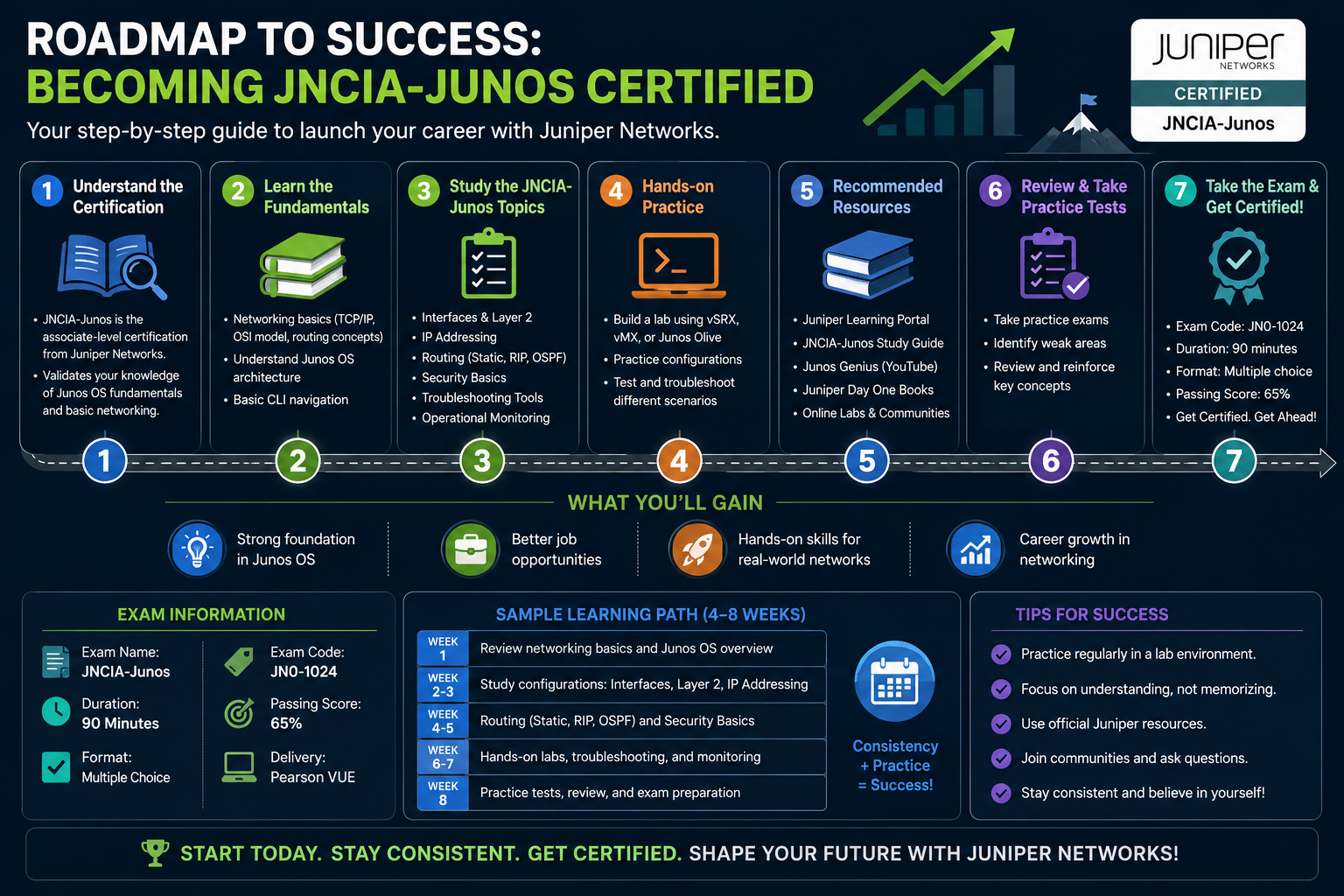
The world of information technology continues to grow at an extraordinary pace, and networking remains one of the most important pillars supporting modern digital infrastructure. Every organization, from small businesses to multinational enterprises, depends on stable and secure networks to keep operations running smoothly. Because of this dependency, networking professionals play a critical role in maintaining communication, connectivity, and access to digital resources.
For many aspiring IT professionals, networking serves as the gateway into the technology industry. Unlike some highly specialized areas of IT that require years of focused expertise before entry, networking provides a more structured path for beginners who are willing to learn technical concepts and develop practical skills. Certifications help simplify this journey by giving learners a roadmap that outlines the knowledge and competencies needed to succeed.
Among the many networking certifications available today, the Juniper Networks Certified Associate Junos certification, widely known as JNCIA-Junos, has earned recognition as a respected entry-level credential for individuals interested in Juniper technologies and enterprise networking. This certification introduces learners to networking fundamentals while helping them understand how Juniper devices and the Junos operating system function in real-world environments.
The JNCIA-Junos certification is not merely a test of memorized facts. Instead, it represents the beginning of a broader educational journey into routing, switching, infrastructure management, and network operations. For learners who want to establish a long-term career in networking, this certification can provide a strong starting point.
Understanding Juniper Networks
Juniper Networks is a global networking technology company that develops solutions for enterprise networking, cloud infrastructure, cybersecurity, data centers, and telecommunications. Over the years, Juniper has built a reputation for delivering high-performance networking equipment capable of supporting large-scale and mission-critical environments.
Many internet service providers, government agencies, educational institutions, financial organizations, and cloud providers rely on Juniper infrastructure to support daily operations. Because of this widespread adoption, networking professionals with Juniper expertise often find themselves in demand across multiple industries.
One of the key reasons Juniper has remained competitive within the networking market is its focus on performance, scalability, reliability, and automation. Modern organizations require networks that can handle increasing amounts of traffic while remaining stable and secure. Juniper technologies are designed to meet those expectations.
The company also emphasizes operational simplicity through its Junos operating system. Unlike some networking platforms that use different operating systems across various devices, Junos provides a more unified experience. This consistency simplifies device management and allows administrators to transfer skills more easily between routers, switches, and security platforms.
For learners entering the networking industry, understanding Juniper technologies can provide exposure to enterprise-grade infrastructure that is widely used in production environments around the world.
What is the JNCIA-Junos Certification
The JNCIA-Junos certification serves as the entry-level credential within the Juniper certification program. It is designed to validate a learner’s understanding of basic networking principles and foundational Junos OS operations.
The certification focuses on helping candidates develop competency in areas such as:
- Networking fundamentals
- Routing basics
- Switching concepts
- Junos operating system fundamentals
- Device configuration
- Operational monitoring
- Interface management
- Routing policies
- Firewall filters
- User interfaces
The certification acts as the foundation for more advanced Juniper certifications. Learners who eventually pursue specialist or professional-level Juniper credentials usually begin with JNCIA-Junos because it establishes the core knowledge required for future progression.
For beginners, the certification provides structure. Networking contains many interconnected concepts, and without a clear roadmap, learners can easily become overwhelmed. The JNCIA-Junos curriculum helps organize these concepts into manageable learning objectives that gradually build technical understanding.
The certification also demonstrates to employers that a candidate possesses both theoretical networking knowledge and practical familiarity with Juniper environments. Even at the associate level, this validation can help improve employability for entry-level networking roles.
Why Entry-Level Networking Certifications Matter
Entry-level certifications play an important role in helping learners transition into professional IT environments. Many aspiring networking professionals lack formal work experience when they begin their careers. Certifications help bridge this gap by providing measurable proof of technical knowledge.
Employers often use certifications as indicators of a candidate’s dedication, motivation, and technical readiness. A learner who has invested time and effort into studying networking concepts demonstrates initiative and a willingness to pursue professional development.
Another major advantage of certifications is that they create a standardized framework for learning. Networking involves numerous technologies, protocols, and operational procedures. Without guidance, beginners may struggle to identify which topics deserve the most attention. Certification objectives simplify this process by outlining essential knowledge areas.
Certifications also provide confidence. For many newcomers, networking initially appears intimidating due to the volume of technical terminology and command-line operations involved. Structured learning paths help reduce uncertainty and create achievable milestones that encourage continued progress.
Additionally, certifications can support career advancement even after obtaining employment. Employers may use certifications to determine eligibility for promotions, specialized projects, or salary increases. In competitive job markets, certifications may also help resumes stand out during hiring processes.
The Role of Junos OS in Networking
A defining feature of the JNCIA-Junos certification is its focus on the Junos operating system. Junos OS powers Juniper networking devices and serves as the interface through which administrators configure, monitor, and troubleshoot infrastructure.
Junos is known for its consistency and modular architecture. Instead of maintaining completely different operating systems across routers, switches, and security appliances, Juniper uses a more unified approach. This consistency simplifies operations and improves learning efficiency for administrators.
The operating system includes several important components:
- Command-line interface
- Configuration management
- Routing engine operations
- Interface configuration tools
- Monitoring utilities
- Security policy management
- Routing protocol support
For networking professionals, learning Junos helps develop practical operational skills. Administrators must often interact directly with devices through terminal sessions, making command-line familiarity an essential competency.
Junos also supports advanced features related to automation and scripting. As organizations continue adopting network automation technologies, professionals who understand programmable networking environments become increasingly valuable.
The JNCIA-Junos certification introduces learners to these operational concepts while keeping the focus at an accessible entry-level depth.
Networking Fundamentals Covered in JNCIA-Junos
Networking fundamentals form the backbone of the JNCIA-Junos certification. Before learners can configure enterprise infrastructure, they must first understand how networks function at a conceptual level.
Some of the most important foundational topics include:
- OSI model concepts
- TCP/IP communication
- IPv4 addressing
- IPv6 fundamentals
- Subnetting
- Ethernet operations
- Routing principles
- Switching behavior
- Network segmentation
- Basic security concepts
These topics are essential because they apply not only to Juniper environments but also to networking as a whole. Professionals who understand foundational networking principles can more easily adapt to new technologies and vendor platforms throughout their careers.
The OSI model, for example, helps learners understand how data moves across networks through different communication layers. TCP/IP concepts explain how devices identify and communicate with one another across local and wide-area networks.
IP addressing and subnetting are particularly important areas of study. Networking professionals frequently work with address allocation, subnet planning, and routing decisions. A strong understanding of these concepts supports both exam preparation and real-world troubleshooting.
Routing and switching concepts also play a major role in the certification. Learners must understand how routers forward traffic between networks and how switches manage communication within local environments.
The Importance of Routing Knowledge
Routing serves as one of the central concepts within networking. Routers are responsible for determining the best path for data traveling between networks. Without routing, devices would be unable to communicate beyond their local segments.
The JNCIA-Junos certification introduces learners to routing fundamentals, including:
- Static routing
- Dynamic routing basics
- Route selection
- Forwarding behavior
- Routing tables
- Path determination
Understanding routing is critical because enterprise environments often involve complex network topologies with multiple interconnected locations. Networking professionals must understand how routers exchange information and make forwarding decisions.
Even at the entry level, familiarity with routing concepts helps learners develop a deeper understanding of how modern infrastructure operates.
The Role of Switching in Enterprise Networks
Switching is another essential topic covered in the certification. Switches connect devices within local networks and enable efficient communication between endpoints such as computers, printers, servers, and wireless access points.
The certification introduces switching concepts such as:
- Ethernet switching
- MAC address learning
- VLAN fundamentals
- Broadcast domains
- Layer 2 communication
- Interface operations
Switching plays a major role in enterprise environments because it supports internal communication and network segmentation. Proper switch configuration improves performance, enhances security, and supports efficient traffic management.
Understanding how switches learn and forward traffic helps networking professionals troubleshoot connectivity problems and optimize local network operations.
Learning the Command-Line Interface
Many newcomers to networking initially feel intimidated by command-line environments. Modern consumer technology often relies heavily on graphical interfaces, so working directly within a terminal can feel unfamiliar at first.
However, command-line proficiency remains an essential skill for networking professionals. Most enterprise networking devices are configured and managed through terminal sessions rather than graphical tools.
The JNCIA-Junos certification introduces learners to Junos command-line operations, including:
- Navigating operational mode
- Entering configuration mode
- Viewing device status
- Configuring interfaces
- Monitoring system health
- Reviewing routing tables
- Saving configurations
Learning command-line operations provides several advantages:
- Greater operational flexibility
- Faster troubleshooting
- More efficient device management
- Improved automation compatibility
- Better understanding of network behavior
As learners gain confidence using terminal commands, they become more comfortable managing enterprise networking infrastructure.
Operational Monitoring and Maintenance
A major responsibility for networking professionals involves monitoring infrastructure health and maintaining stable operations. Networks must remain reliable because downtime can disrupt communication, productivity, and business continuity.
The JNCIA-Junos certification introduces basic operational monitoring concepts such as:
- Interface monitoring
- System logs
- Performance observation
- Configuration management
- Device maintenance
- Status verification
Monitoring tools help administrators identify issues before they escalate into major outages. For example, rising interface errors may indicate faulty hardware or cabling problems. High resource utilization could suggest capacity limitations or configuration issues.
Learning how to interpret operational data prepares learners for real-world troubleshooting responsibilities.
Maintenance procedures also play a major role in enterprise networking. Administrators must manage software updates, backup configurations, and ensure devices continue operating correctly over time.
Firewall Filters and Routing Policies
The certification also introduces learners to routing policies and firewall filters. These topics provide foundational exposure to traffic management and security operations within networking environments.
Routing policies help administrators control how routing information is shared and processed across networks. Firewall filters help regulate traffic by permitting or denying specific types of communication.
While the certification covers these topics at an introductory level, they represent important stepping stones toward more advanced networking and security concepts.
Understanding traffic control mechanisms becomes increasingly valuable as professionals progress into larger enterprise environments where security and traffic optimization are critical priorities.
Who Should Pursue JNCIA-Junos
The certification is ideal for individuals who want to begin or expand a networking career. It is especially beneficial for:
- Beginners entering IT
- Help desk professionals transitioning into networking
- Junior network administrators
- Technical support staff
- Students studying networking technologies
- Professionals seeking Juniper expertise
Because there are no strict prerequisites, motivated learners can begin studying even with limited prior experience. However, candidates with basic networking knowledge often find the learning process easier.
Many learners benefit from spending time developing foundational networking skills before attempting certification preparation. Basic familiarity with IP addressing, subnetting, and network communication concepts can significantly improve comprehension.
Hands-on experience also helps. Even small home labs or virtual networking environments can provide valuable operational exposure that reinforces theoretical learning.
Building Confidence Through Structured Learning
One of the greatest benefits of pursuing JNCIA-Junos is the confidence learners gain throughout the preparation process. Networking may initially seem complex due to the large number of technologies and protocols involved, but structured certification study helps break the material into manageable sections.
As learners progress through networking fundamentals, routing concepts, switching operations, and Junos configuration tasks, they gradually build technical competence that translates into real-world readiness.
This confidence becomes especially important during job interviews, technical discussions, and workplace troubleshooting scenarios. Professionals who understand foundational networking concepts can communicate more effectively and solve problems more efficiently.
For many IT professionals, the journey into networking begins with a single certification. JNCIA-Junos often serves as that starting point, opening the door to deeper technical expertise, broader career opportunities, and long-term growth within the networking industry.
Developing the Right Mindset for Networking Success
Success in networking requires more than memorizing commands or passing certification exams. The field demands analytical thinking, curiosity, patience, and a willingness to continuously learn. Technology changes rapidly, and networking professionals must adapt to new protocols, infrastructure models, security requirements, and automation tools throughout their careers.
For beginners pursuing the JNCIA-Junos certification, developing the right mindset early can make the learning process significantly smoother. Many newcomers initially feel overwhelmed by technical terminology, command-line interfaces, and networking diagrams. This feeling is completely normal because networking involves multiple layers of communication, device interaction, and infrastructure management.
The key is consistency. Networking is easier to understand when learners study gradually and build one concept upon another. Strong foundational knowledge eventually creates the confidence needed to tackle more advanced topics.
Another important aspect of success is practical experimentation. Reading about routing or switching provides theoretical understanding, but hands-on practice helps learners truly understand how networks behave. Making configuration mistakes, troubleshooting connectivity issues, and testing commands are all valuable learning experiences that improve long-term retention.
The JNCIA-Junos certification journey is not simply about earning a credential. It is about building the technical thinking and operational discipline that define successful networking professionals.
Understanding the Certification Exam Structure
Before beginning serious preparation, learners should understand the overall structure and expectations of the JNCIA-Junos certification exam. Knowing how the exam is organized helps candidates create effective study plans and allocate time appropriately across different objectives.
The certification exam typically includes around seventy multiple-choice questions that must be completed within a ninety-minute time limit. The questions are designed to evaluate foundational networking knowledge as well as practical familiarity with Junos OS operations.
Unlike highly advanced networking certifications that may involve extensive simulations or lab-based scenarios, the JNCIA-Junos exam primarily focuses on conceptual understanding and operational awareness. However, candidates still benefit greatly from hands-on experience because practical exposure makes it easier to interpret technical questions accurately.
The exam covers several broad knowledge domains, including:
- Networking fundamentals
- Junos operating system basics
- User interfaces
- Configuration fundamentals
- Routing principles
- Operational monitoring
- Firewall filters
- Routing policies
Candidates should avoid focusing exclusively on one topic area. Because the exam covers a wide range of concepts, balanced preparation is essential for success.
Time management also matters during the exam. Some questions may require careful analysis, while others test straightforward conceptual knowledge. Practicing with sample questions can help learners improve pacing and reduce anxiety during the actual test.
Creating an Effective Study Plan
A well-structured study plan can dramatically improve certification preparation. Many learners struggle not because the material is impossible, but because their preparation lacks organization and consistency.
An effective study plan should include:
- Clearly defined goals
- Weekly study objectives
- Hands-on practice sessions
- Review periods
- Practice assessments
- Time for weak-topic reinforcement
Breaking study topics into smaller sections prevents burnout and helps learners maintain motivation. Instead of attempting to study every objective at once, candidates should focus on mastering one topic area before progressing to the next.
For example, learners might dedicate separate study sessions to:
- IP addressing
- Subnetting
- Routing concepts
- Switching fundamentals
- Junos commands
- Interface configuration
- Monitoring operations
Consistency is more important than long study marathons. Short, focused sessions repeated regularly often produce better results than occasional intensive cramming.
Another important strategy involves active learning. Simply reading textbooks repeatedly is usually less effective than combining reading with practical labs, note-taking, command practice, and troubleshooting exercises.
Mastering Networking Fundamentals
Networking fundamentals form the foundation of the entire certification. Without strong conceptual understanding, Junos-specific configurations may seem confusing or disconnected from their practical purpose.
Candidates should become comfortable with several key networking concepts before focusing heavily on advanced configuration tasks.
These concepts include:
- The OSI model
- TCP/IP communication
- IP addressing
- Subnetting
- Ethernet communication
- Switching operations
- Routing behavior
- Packet forwarding
- VLAN concepts
- Basic network security
Understanding the OSI model helps learners visualize how data moves through networks. Each layer performs specific functions that contribute to successful communication between devices.
TCP/IP concepts explain how modern networks operate in real-world environments. Learners should understand how devices use IP addresses to communicate and how routing enables connectivity across multiple networks.
Subnetting is particularly important because it affects network organization, routing efficiency, and address management. Many beginners initially struggle with subnetting calculations, but regular practice usually improves confidence significantly.
Strong networking fundamentals also make troubleshooting easier. Professionals who understand how networks should behave can more quickly identify where communication problems originate.
Building Strong Subnetting Skills
Subnetting is one of the most essential technical skills for networking professionals. It allows administrators to divide larger networks into smaller, more manageable segments.
The JNCIA-Junos certification expects learners to understand:
- Network addresses
- Host addresses
- Broadcast addresses
- Subnet masks
- CIDR notation
- Address allocation
- Subnet calculations
Subnetting improves network efficiency, enhances security, and supports organized infrastructure design. Enterprise environments frequently contain numerous subnets dedicated to different departments, locations, or operational functions.
Many beginners find subnetting intimidating because it involves binary calculations and address planning. However, repeated practice gradually builds familiarity and speed.
One effective learning method involves manually calculating subnets without relying on automated calculators. This approach strengthens conceptual understanding and improves exam readiness.
Subnetting knowledge also supports routing comprehension because routers make forwarding decisions based on network boundaries and addressing structures.
Understanding Routing Concepts
Routing is one of the central pillars of networking. Routers are responsible for directing traffic between networks and ensuring data reaches its intended destination.
The JNCIA-Junos certification introduces learners to foundational routing concepts such as:
- Static routing
- Dynamic routing basics
- Routing tables
- Forwarding decisions
- Route selection
- Default routes
- Next-hop resolution
Understanding routing behavior is critical because enterprise environments often contain multiple interconnected networks that require efficient communication paths.
Static routes are manually configured and useful in smaller or predictable environments. Dynamic routing protocols automatically exchange routing information between devices and adapt to network changes.
Although the certification focuses primarily on foundational concepts, learners should understand why routing protocols are necessary in larger infrastructures.
Routing tables are especially important because they determine how traffic flows through networks. Administrators frequently review routing tables during troubleshooting to verify connectivity paths and identify configuration problems.
Hands-on routing labs help learners observe how routers respond to different configurations and network scenarios.
Exploring Switching Fundamentals
Switches play a critical role in local network communication. They connect devices within local area networks and manage traffic between endpoints such as computers, servers, printers, and wireless access points.
The certification introduces several important switching concepts, including:
- Ethernet switching
- MAC address learning
- Broadcast domains
- VLANs
- Interface behavior
- Layer 2 communication
Switches improve network efficiency by forwarding traffic intelligently based on MAC address tables. Unlike older hub-based environments that transmitted traffic to all connected devices, switches send frames only where needed.
VLANs are another important topic because they allow administrators to logically segment networks without requiring separate physical infrastructure. VLAN segmentation improves security, performance, and organizational flexibility.
Understanding switching behavior helps learners troubleshoot common connectivity issues such as:
- VLAN mismatches
- Interface problems
- Loop conditions
- Broadcast storms
- Incorrect port assignments
Even though switching may appear simpler than routing initially, it remains a vital component of enterprise networking operations.
Learning Junos Command-Line Operations
The command-line interface is one of the defining characteristics of enterprise networking administration. Networking professionals frequently configure, monitor, and troubleshoot devices directly through terminal sessions.
The JNCIA-Junos certification introduces learners to Junos command-line operations and navigation techniques.
Important areas include:
- Operational mode
- Configuration mode
- Viewing system information
- Interface configuration
- Saving configurations
- Monitoring commands
- System verification
Many beginners initially feel uncomfortable working within command-line environments because they are more accustomed to graphical interfaces. However, command-line proficiency becomes easier with regular practice.
The Junos operating system is known for its logical structure and consistent syntax. Once learners understand the hierarchy and command flow, navigation becomes more intuitive.
Command-line operations provide several advantages:
- Faster configuration management
- More detailed troubleshooting
- Greater operational control
- Better automation integration
- Improved scalability
Networking professionals often spend large portions of their daily work interacting with command-line environments, making this skill highly valuable.
The Importance of Hands-On Labs
Hands-on practice is one of the most effective methods for preparing for networking certifications. Reading theoretical material helps build conceptual understanding, but practical labs transform abstract ideas into operational knowledge.
Lab environments allow learners to:
- Configure devices
- Test commands
- Observe routing behavior
- Troubleshoot problems
- Experiment safely
- Reinforce theory
Even simple virtual labs can provide meaningful educational value. Learners do not necessarily need expensive physical hardware to begin practicing networking concepts.
Virtual environments often support:
- Router emulation
- Switch configuration
- Interface testing
- Routing simulations
- Topology experimentation
Lab exercises help learners develop confidence because they create opportunities to interact directly with networking technologies.
Another major benefit of labs is troubleshooting exposure. Real-world networks rarely operate perfectly all the time. Administrators must identify and resolve issues efficiently, often under pressure.
Practical troubleshooting develops analytical thinking and operational discipline that cannot be fully learned through reading alone.
Operational Monitoring and Device Maintenance
Enterprise networks require continuous monitoring and maintenance to ensure reliability and stability. Networking professionals are responsible for identifying issues before they impact users and services.
The JNCIA-Junos certification introduces basic operational monitoring concepts such as:
- Interface status monitoring
- System logging
- Resource observation
- Connectivity verification
- Device maintenance
- Configuration management
Monitoring commands help administrators evaluate network health and diagnose problems.
For example, professionals may monitor:
- Interface errors
- CPU usage
- Memory utilization
- Routing table changes
- Traffic statistics
- System alerts
Operational awareness is essential because network outages can disrupt business operations, productivity, and communication.
Maintenance procedures are equally important. Administrators must manage software updates, backup configurations, hardware replacements, and system optimizations to maintain stable environments.
Learning these operational habits early helps prepare learners for real-world networking responsibilities.
Understanding Routing Policies
Routing policies help administrators control how routing information is processed and shared across networks. These policies influence route selection, traffic flow, and network behavior.
Although the JNCIA-Junos certification covers routing policies at an introductory level, understanding their purpose is important for future progression.
Routing policies may be used to:
- Prefer specific routes
- Block unwanted advertisements
- Influence path selection
- Control routing behavior
- Improve traffic engineering
Enterprise environments often contain multiple routing paths and complex topologies. Policies help administrators maintain control over how traffic moves through infrastructure.
Even entry-level exposure to routing policies helps learners develop a broader understanding of enterprise networking operations.
Introduction to Firewall Filters
Firewall filters provide foundational traffic filtering and security capabilities within Junos environments.
The certification introduces basic concepts such as:
- Traffic matching
- Packet filtering
- Permit actions
- Deny actions
- Traffic control
Firewall filters help protect networks by regulating which types of traffic are allowed or blocked.
Security awareness has become increasingly important in modern networking because cyber threats continue evolving rapidly. Even networking professionals who do not specialize in cybersecurity must understand basic traffic filtering concepts.
Firewall filters also demonstrate how networking and security frequently overlap in enterprise environments.
Building Troubleshooting Skills
Troubleshooting is one of the most valuable skills a networking professional can develop. Networks are complex systems containing numerous devices, protocols, and communication paths. Problems can occur for many reasons, including configuration mistakes, hardware failures, software bugs, or connectivity disruptions.
Strong troubleshooting requires:
- Logical thinking
- Patience
- Technical understanding
- Attention to detail
- Systematic analysis
The best troubleshooting professionals avoid guessing randomly. Instead, they follow structured processes to isolate and resolve issues methodically.
For example, troubleshooting often involves:
- Verifying physical connectivity
- Checking interface status
- Reviewing routing tables
- Testing reachability
- Examining logs
- Validating configurations
Hands-on labs are especially valuable for troubleshooting development because they expose learners to realistic operational scenarios.
Over time, troubleshooting experience becomes one of the defining characteristics that separates strong networking professionals from inexperienced administrators.
The Importance of Documentation
Documentation is frequently overlooked by beginners, but it plays a major role in professional networking environments.
Networking professionals must often:
- Record configurations
- Document topology designs
- Track changes
- Create maintenance procedures
- Write troubleshooting notes
Clear documentation improves operational consistency and reduces confusion during outages or maintenance activities.
The ability to read technical documentation is equally important. Networking vendors provide extensive command references, configuration guides, and operational manuals that professionals rely on regularly.
Learning how to interpret technical documentation efficiently can significantly improve troubleshooting and configuration accuracy.
Preparing Mentally for Exam Day
Certification exams can create stress and anxiety, especially for first-time candidates. Proper preparation helps reduce nervousness and improve performance.
Several strategies can help candidates remain calm and focused:
- Getting adequate rest before the exam
- Reviewing key concepts without cramming
- Arriving early
- Reading questions carefully
- Managing time effectively
- Avoiding panic during difficult questions
It is important to remember that certification exams are designed to evaluate competency, not perfection. Candidates do not need to answer every question flawlessly to succeed.
Confidence usually improves when learners have invested time in consistent preparation and hands-on practice.
The JNCIA-Junos certification journey represents more than an exam challenge. It is the process of developing technical skills, operational thinking, and foundational networking knowledge that can support long-term growth within the IT industry.
Building a Long-Term Career in Networking
Earning the JNCIA-Junos certification is an important milestone, but it represents only the beginning of a much larger professional journey. Networking is a constantly evolving field that offers long-term career growth, specialization opportunities, and exposure to some of the most critical technologies powering modern organizations.
Once learners complete the foundational stage of networking education, they begin developing practical experience and deeper technical understanding that can lead to increasingly advanced responsibilities. The skills introduced through JNCIA-Junos create a base upon which professionals can continue building throughout their careers.
Many successful network engineers started with entry-level certifications before progressing into advanced enterprise networking, cloud infrastructure, cybersecurity, network automation, and architecture design roles. The foundational knowledge gained during the JNCIA-Junos preparation process often becomes valuable for years because networking fundamentals remain relevant regardless of how technology evolves.
Professionals who continue learning and adapting can build highly rewarding careers in networking. Organizations continue investing heavily in infrastructure modernization, remote connectivity, cloud adoption, and cybersecurity improvements, all of which rely heavily on strong networking expertise.
The networking industry rewards individuals who combine technical knowledge with problem-solving ability, operational discipline, and a commitment to continuous improvement.
Understanding the Juniper Certification Path
The JNCIA-Junos certification acts as the entry point into the broader Juniper certification ecosystem. After earning the associate-level credential, professionals can pursue more specialized certifications that focus on enterprise routing, switching, security, service provider environments, and advanced infrastructure operations.
Juniper certifications are structured in progressive levels, allowing learners to advance step by step as their knowledge and experience grow.
The certification hierarchy generally includes:
- Associate-level certifications
- Specialist-level certifications
- Professional-level certifications
- Expert-level certifications
This progression encourages learners to build increasingly advanced skills while maintaining a strong understanding of networking fundamentals.
As professionals gain experience, they often choose specialization paths based on career interests, industry demand, or workplace responsibilities. Some may focus on enterprise routing and switching, while others pursue security, automation, cloud networking, or service provider technologies.
The structured nature of the Juniper certification program helps learners create clear long-term development plans.
Advancing Beyond JNCIA-Junos
After completing the JNCIA-Junos certification, many professionals continue toward higher-level Juniper credentials.
One common next step is the Juniper Networks Certified Specialist Enterprise Routing and Switching certification. This certification expands on the concepts introduced at the associate level and introduces more advanced routing, switching, and enterprise networking operations.
At this stage, learners begin exploring topics such as:
- Advanced routing protocols
- Enterprise switching design
- Traffic engineering
- Redundancy mechanisms
- High availability
- Advanced policy configuration
- Scalable network operations
The professional-level certifications go even deeper, requiring stronger troubleshooting skills and more advanced operational understanding.
As certification difficulty increases, hands-on experience becomes increasingly important. Advanced networking concepts are often easier to understand when professionals have already encountered real operational scenarios in production environments.
Progressing through higher-level certifications demonstrates not only technical expertise but also long-term commitment to professional growth.
The Importance of Practical Experience
Although certifications are valuable, practical experience remains one of the most important aspects of a successful networking career. Employers often seek professionals who can apply technical knowledge effectively within real-world environments.
Hands-on experience develops skills that certifications alone cannot fully provide, including:
- Troubleshooting under pressure
- Managing outages
- Working within production environments
- Collaborating with technical teams
- Handling maintenance windows
- Performing infrastructure upgrades
- Supporting end users
Networking professionals frequently encounter situations where theoretical knowledge must be adapted to unpredictable operational conditions. Devices may fail unexpectedly, configurations may conflict, or performance problems may emerge without warning.
Real-world experience teaches professionals how to remain calm, think systematically, and resolve issues efficiently.
Many entry-level networking professionals gain experience through:
- Network operations center roles
- Help desk support
- Junior administrator positions
- Technical support engineering
- Infrastructure support roles
- Internship opportunities
Even smaller environments provide valuable exposure to operational procedures, troubleshooting workflows, and infrastructure management practices.
Developing Strong Troubleshooting Abilities
Troubleshooting is one of the defining skills of successful network engineers. Networks involve numerous interconnected devices, protocols, and services, meaning problems can originate from many different sources.
Strong troubleshooting professionals understand how to:
- Identify symptoms accurately
- Analyze connectivity paths
- Interpret system logs
- Isolate faults systematically
- Validate configurations
- Test solutions safely
Rather than guessing randomly, experienced engineers follow structured troubleshooting methodologies.
For example, troubleshooting may involve:
- Verifying physical connections
- Checking interface status
- Reviewing routing tables
- Testing reachability
- Analyzing traffic patterns
- Validating VLAN assignments
- Examining firewall behavior
Troubleshooting skills improve significantly through repetition and operational exposure. Every resolved issue contributes to deeper technical understanding and greater professional confidence.
Organizations place enormous value on professionals who can diagnose and resolve infrastructure problems quickly because downtime can disrupt business operations and create financial losses.
Building Confidence with Enterprise Technologies
One of the major benefits of pursuing Juniper certifications is exposure to enterprise-grade networking technologies. Many beginners initially work only with consumer networking equipment or small office environments. Enterprise infrastructure introduces additional complexity and scalability requirements.
Enterprise networks often include:
- Multiple geographic locations
- Redundant infrastructure
- Advanced routing policies
- Segmented network architectures
- High-availability systems
- Centralized management platforms
- Security enforcement mechanisms
Learning how enterprise technologies operate helps professionals transition more smoothly into larger organizational environments.
As learners become comfortable with enterprise concepts, they develop the confidence needed to participate in larger infrastructure projects and more advanced operational responsibilities.
This confidence becomes especially valuable during interviews, technical discussions, and collaborative engineering environments.
The Role of Network Automation
Modern networking continues evolving toward automation-driven operations. As infrastructures grow larger and more complex, organizations increasingly rely on automation tools to improve efficiency, reduce human error, and accelerate deployments.
Juniper technologies are known for supporting automation capabilities, making automation awareness an important long-term skill for networking professionals.
Network automation may involve:
- Automated configuration deployment
- Scripted operational tasks
- Infrastructure monitoring automation
- Configuration validation
- Centralized orchestration
- Programmable network management
Although the JNCIA-Junos certification focuses primarily on foundational concepts, it introduces learners to an ecosystem that supports automation-friendly operations.
Professionals who eventually learn scripting languages, automation frameworks, and infrastructure orchestration tools often gain significant career advantages.
Automation does not eliminate networking jobs. Instead, it changes the nature of networking work by reducing repetitive manual tasks and increasing the importance of analytical and design-focused skills.
Networking professionals who embrace automation are often better positioned for long-term career growth.
Cloud Networking and Modern Infrastructure
Cloud computing has transformed how organizations build and manage infrastructure. Instead of relying entirely on traditional on-premises environments, many businesses now operate hybrid or cloud-based architectures.
Despite these changes, networking fundamentals remain critically important.
Cloud environments still depend on:
- Routing
- Switching
- IP addressing
- Traffic management
- Security controls
- Connectivity design
Professionals with strong networking foundations can adapt more easily to cloud networking roles because the underlying communication principles remain consistent.
Cloud networking introduces additional concepts such as:
- Virtual networks
- Software-defined networking
- Cloud connectivity
- Hybrid infrastructure
- Virtual routing
- Distributed security
Networking professionals who combine traditional infrastructure knowledge with cloud networking expertise often become highly valuable within modern organizations.
The foundational skills introduced through JNCIA-Junos continue supporting career growth even as networking environments evolve toward cloud-centric architectures.
The Relationship Between Networking and Cybersecurity
Networking and cybersecurity are closely connected disciplines. Secure infrastructure depends heavily on proper network design, traffic control, segmentation, and monitoring.
Many cybersecurity professionals begin their careers in networking because strong network knowledge improves security awareness and incident analysis capabilities.
Networking professionals often contribute to security operations by:
- Configuring firewall policies
- Implementing segmentation
- Monitoring suspicious traffic
- Managing secure connectivity
- Supporting incident response
- Enforcing access controls
As cyber threats continue increasing globally, organizations place greater emphasis on secure infrastructure management.
Professionals who understand both networking and security concepts often gain access to broader career opportunities.
The JNCIA-Junos certification introduces basic firewall filter concepts that help learners begin understanding how traffic control contributes to infrastructure security.
Over time, some networking professionals specialize further in cybersecurity-focused roles such as:
- Network security engineering
- Security operations
- Firewall administration
- Security architecture
- Threat monitoring
- Incident response
Strong networking knowledge remains extremely valuable in all of these areas.
The Importance of Continuous Learning
Technology changes rapidly, and networking professionals must commit to lifelong learning if they want to remain competitive.
New technologies, protocols, and operational models emerge regularly. Professionals who stop learning may eventually struggle to adapt to evolving infrastructure requirements.
Continuous learning may involve:
- Pursuing advanced certifications
- Building lab environments
- Studying new technologies
- Reading technical documentation
- Attending training programs
- Participating in technical communities
- Practicing troubleshooting scenarios
One of the most important habits successful networking professionals develop is curiosity. Curious learners explore how technologies work, test new ideas, and seek deeper understanding beyond basic exam preparation.
The networking industry rewards individuals who actively expand their knowledge and remain adaptable.
Career Opportunities After JNCIA-Junos
The JNCIA-Junos certification can support entry into multiple networking-related roles.
Common career paths include:
- Network administrator
- Junior network engineer
- Technical support engineer
- Network operations center technician
- Infrastructure support specialist
- Systems support administrator
As professionals gain experience, they may progress into more advanced roles such as:
- Senior network engineer
- Network architect
- Infrastructure engineer
- Cloud network engineer
- Network automation engineer
- Security engineer
Career progression usually depends on a combination of:
- Technical knowledge
- Practical experience
- Communication skills
- Problem-solving ability
- Professional certifications
Employers value professionals who can work effectively under pressure, collaborate with teams, and troubleshoot issues efficiently.
Strong communication skills are especially important because networking professionals often interact with management, vendors, security teams, and non-technical stakeholders.
Salary Growth and Professional Advancement
Networking careers often provide strong long-term earning potential. Compensation varies depending on experience, geographic location, industry, and technical specialization.
Entry-level roles may focus primarily on operational support and infrastructure monitoring, while senior positions often involve:
- Network design
- Strategic planning
- Infrastructure optimization
- Architecture development
- Advanced troubleshooting
- Automation implementation
As responsibilities increase, compensation typically rises as well.
Professionals who pursue advanced certifications and develop specialized expertise may gain access to higher-paying opportunities in enterprise networking, cloud infrastructure, and cybersecurity.
Juniper expertise can be particularly valuable within organizations that rely heavily on Juniper equipment and enterprise routing technologies.
Building a Professional Reputation
Technical skills are important, but professional reputation also plays a major role in long-term career success.
Networking professionals build strong reputations by:
- Demonstrating reliability
- Solving problems effectively
- Communicating clearly
- Supporting team collaboration
- Maintaining professionalism
- Continuing to learn
Organizations often trust experienced and dependable engineers with larger responsibilities and more critical projects.
Professional reputation develops gradually over time through consistent performance and positive working relationships.
Networking professionals who combine technical competence with professionalism often advance more quickly into leadership or architecture-focused roles.
The Value of Patience and Persistence
Networking can sometimes feel challenging for beginners. Certain topics may initially seem confusing, especially concepts related to routing behavior, subnetting, or protocol operations.
However, persistence is extremely important.
Most successful networking professionals encountered difficult learning periods during the early stages of their careers. The difference is that they continued practicing, studying, and building experience until the concepts became clearer.
Patience is equally important during troubleshooting. Complex infrastructure problems may require careful analysis and multiple testing steps before a solution becomes obvious.
Over time, repeated exposure to networking scenarios gradually strengthens technical intuition and operational confidence.
Creating Long-Term Learning Goals
One effective way to maintain career momentum is by creating long-term professional development goals.
These goals might include:
- Earning advanced certifications
- Learning automation tools
- Building enterprise lab environments
- Studying cloud networking
- Developing scripting skills
- Expanding cybersecurity knowledge
Structured goals help professionals remain focused and motivated as they progress through different stages of their careers.
The networking industry offers numerous specialization opportunities, allowing professionals to shape career paths according to their interests and strengths.
Conclusion
The JNCIA-Junos certification represents far more than an entry-level networking credential. It serves as the foundation for a broader journey into enterprise networking, infrastructure operations, troubleshooting, automation, and long-term technical growth.
By pursuing JNCIA-Junos, learners begin developing essential networking knowledge that applies across countless technologies and operational environments. The certification introduces critical concepts such as routing, switching, device management, operational monitoring, and traffic control while also providing valuable exposure to the Junos operating system.
More importantly, the certification helps learners build confidence. Networking can initially appear complex and intimidating, but structured learning combined with hands-on practice gradually transforms uncertainty into technical understanding.
The networking industry continues evolving through cloud computing, automation, virtualization, and cybersecurity advancements. Despite these changes, strong networking fundamentals remain essential because modern digital infrastructure still depends on reliable communication, routing, and connectivity.
Professionals who continue learning, practicing, and adapting can build highly rewarding careers in networking. Whether pursuing enterprise infrastructure, cloud networking, automation, or cybersecurity, the foundational skills developed through JNCIA-Junos can support long-term success across multiple technology disciplines.
Every experienced network engineer once started with the basics. The JNCIA-Junos certification provides one of those important starting points, opening the door to deeper technical expertise, broader career opportunities, and a future within one of the most important fields in modern technology.