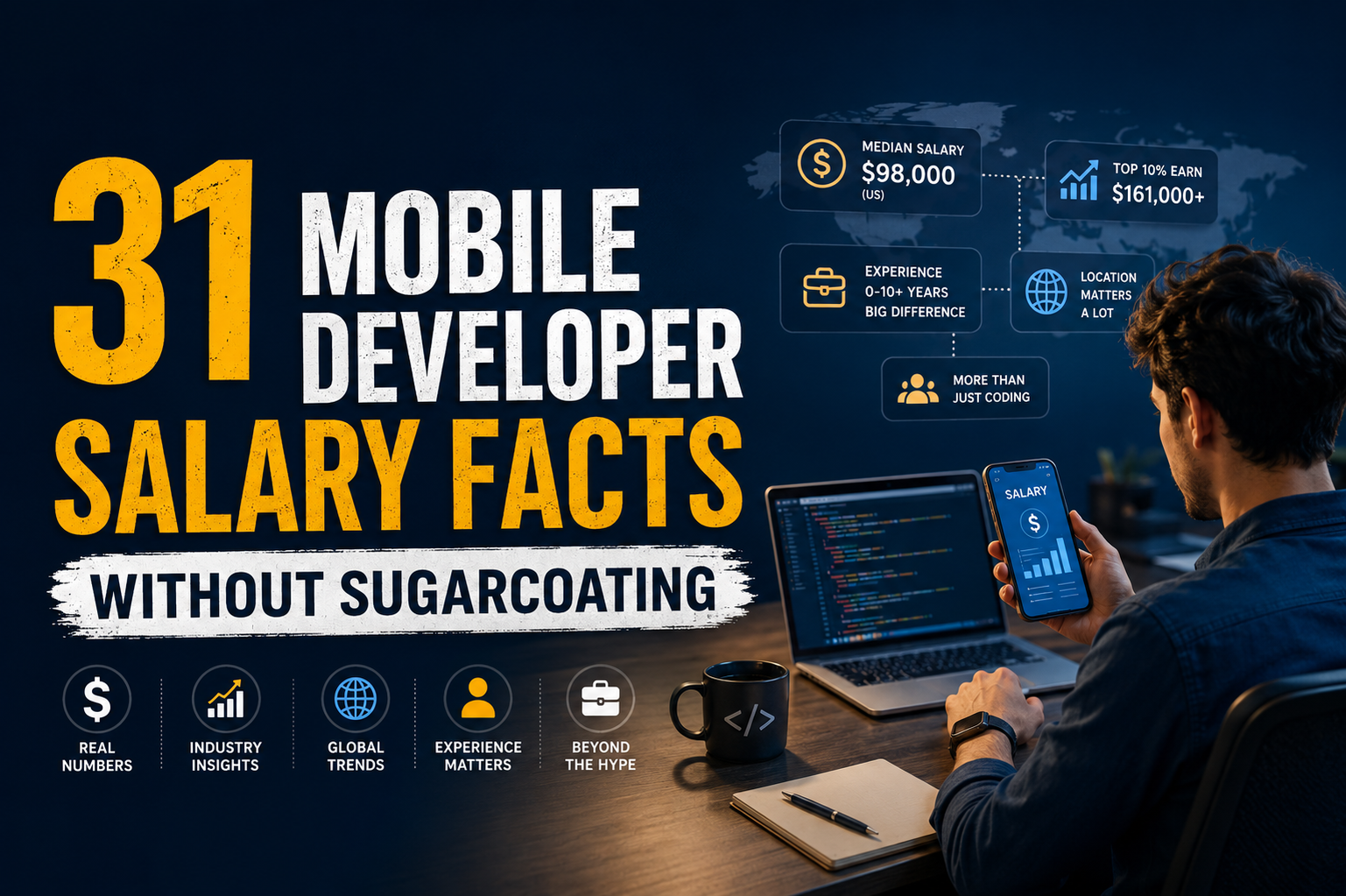
Mobile development has become one of the most in-demand career paths in the tech industry, but salary expectations are often misunderstood. Many people enter the field expecting extremely high pay from the beginning, while others underestimate how much experience, location, and skill specialization affect income. The reality is that mobile developer salaries vary widely, and understanding the true landscape helps professionals make better career decisions. Mobile developers are responsible for building applications for Android, iOS, and cross-platform systems, and their compensation reflects not just coding ability but also problem-solving skills, architecture knowledge, and product impact.
Entry-Level Salaries Are Lower Than Expected
One of the first realities new developers face is that entry-level mobile developer salaries are often modest compared to expectations created online. While tech success stories highlight six-figure incomes, beginners usually start at a much lower range. Companies invest in junior developers more for their growth potential than immediate productivity, which means the salary reflects training investment rather than output value. However, even at entry level, mobile development still pays better than many non-technical fields.
Experience Has a Direct Impact on Pay Growth
In mobile development, experience is one of the strongest salary drivers. Developers with just one or two years of experience often see significant salary jumps once they demonstrate real-world project contributions. Companies value developers who can independently ship apps, fix performance issues, and understand deployment pipelines. The difference between a junior and mid-level developer can sometimes mean a doubling of salary within a few years.
iOS Developers Often Earn Slightly More Than Android Developers
In many markets, iOS developers tend to earn slightly higher salaries compared to Android developers. This is not because Android development is less valuable, but because iOS development is often associated with higher-paying consumer markets and stricter technical ecosystems. Apple-focused companies also tend to have more premium product positioning, which reflects in compensation structures.
Cross-Platform Developers Are in High Demand
Developers who specialize in cross-platform frameworks such as Flutter or React Native often see competitive salaries because companies want to reduce costs by maintaining a single codebase. These developers are valued for efficiency and speed, and while salaries can vary, strong cross-platform engineers are often paid close to native developers.
Location Still Plays a Huge Role in Salary Differences
Where a developer works can dramatically affect earnings. Developers in major tech hubs typically earn significantly more than those in smaller cities or remote regions. However, remote work has started reducing this gap, allowing skilled developers in lower-cost regions to access higher-paying international jobs. Despite this shift, location still remains one of the strongest salary factors.
Freelancers Experience Highly Variable Income
Mobile developers who work independently often have unpredictable income. Some months can bring very high earnings, while others may be slow depending on client availability. Freelancing offers flexibility but lacks stability. Successful freelancers usually build long-term client relationships or specialize in high-demand skills to maintain consistent income.
Startup Developers Often Earn Less Cash but More Equity
Working at startups can result in lower base salaries compared to large companies, but developers are sometimes compensated with equity or stock options. While this can lead to significant future gains, it is also risky because not all startups succeed. Developers must weigh immediate income against long-term potential when joining early-stage companies.
Big Tech Companies Offer the Highest Salaries
Large technology companies generally provide the most competitive compensation packages. These companies often include base salary, bonuses, stock options, and additional benefits. However, the hiring process is also highly competitive, requiring strong technical skills, system design knowledge, and problem-solving abilities.
Skills in Performance Optimization Increase Value
Mobile developers who understand performance optimization, memory management, and efficient UI rendering tend to earn more. Apps that run smoothly and consume fewer resources are highly valued, especially in markets where user retention depends heavily on performance.
Knowledge of UI/UX Improves Salary Potential
Developers who understand user interface and user experience principles often earn more because they contribute beyond coding. They help create apps that are not only functional but also visually appealing and easy to use. This hybrid skill set makes them more valuable to product teams.
Backend Knowledge Adds Significant Salary Advantage
Mobile developers who also understand backend systems, APIs, and databases often earn higher salaries. This full-stack capability allows them to work more independently and reduce reliance on separate backend teams.
Debugging and Problem-Solving Skills Are Highly Paid
Companies value developers who can quickly identify and fix bugs. Strong debugging skills reduce downtime and improve product quality, making such developers more valuable in the job market.
Remote Work Has Changed Salary Expectations
Remote work has created a more global salary competition. Developers in lower-cost regions can now earn salaries closer to international standards, but they also compete with a global talent pool. This has increased both opportunity and competition.
Frequent Job Switching Can Increase Salary Faster
In the tech industry, switching companies every few years often leads to faster salary growth compared to staying in one place. Many developers increase their income significantly by negotiating new offers rather than waiting for internal raises.
Certifications Have Limited but Useful Impact
Certifications alone do not guarantee high salaries, but they can help beginners get interviews or demonstrate commitment. Practical experience still carries more weight than certificates in mobile development.
Open Source Contributions Can Improve Earnings
Developers who contribute to open-source projects often gain visibility in the industry. This can lead to better job offers, freelance opportunities, and higher salary negotiations.
App Store Experience Increases Developer Value
Developers who have successfully published apps on app stores often earn more because they understand the full lifecycle of app development, including deployment, updates, and user feedback management.
Security Knowledge Is Increasingly Important
Mobile security is becoming a major concern, and developers who understand secure coding practices are highly valued. Protecting user data and preventing vulnerabilities is now a key part of mobile development.
Artificial Intelligence Integration Skills Are Rising in Demand
Developers who can integrate AI features into mobile applications are becoming more valuable. This includes recommendation systems, chatbots, and smart personalization features.
Soft Skills Influence Salary Growth
Communication, teamwork, and project management skills can indirectly affect salary growth. Developers who collaborate well with teams often get promoted faster.
Industry Type Affects Salary Range
Mobile developers working in finance, healthcare, or enterprise software often earn more than those in entertainment or small consumer apps due to higher business impact and security requirements.
Freelance Platforms Do Not Always Reflect True Market Value
Online freelance platforms often show a wide range of pricing, but top developers typically earn more through direct client relationships rather than platform bidding.
Learning Speed Matters More Than Initial Skill Level
Developers who learn quickly and adapt to new technologies tend to increase their salary faster over time compared to those who rely only on existing knowledge.
Burnout Can Affect Long-Term Earnings
High-pressure environments can lead to burnout, which may reduce productivity and career growth. Sustainable work habits often lead to better long-term income stability.
Mentorship Can Accelerate Salary Growth
Developers who learn under experienced mentors often progress faster in their careers, leading to higher salaries in shorter timeframes.
Side Projects Can Increase Income Opportunities
Personal apps or side projects can generate additional income or lead to better job offers if they gain popularity or demonstrate technical ability.
Market Demand Fluctuates Over Time
Mobile development demand changes based on technology trends. Developers who stay updated with modern frameworks and tools tend to maintain higher earning potential.
Negotiation Skills Directly Affect Salary
Many developers lose potential income simply by not negotiating job offers effectively. Strong negotiation can significantly increase starting salaries and bonuses.
Company Size Influences Work-Life Balance and Pay
Smaller companies may offer flexibility but lower pay, while larger companies offer higher salaries but more structured environments. Developers often choose based on personal priorities.
Continuous Learning Is the Biggest Salary Factor
The most consistent factor in long-term salary growth is continuous learning. Mobile development evolves quickly, and staying updated with tools, languages, and frameworks ensures long-term career success.
The Real Truth About Mobile Developer Salaries
Mobile developer salaries are not fixed or predictable; they are shaped by a combination of skill, experience, location, industry, and adaptability. While entry-level positions may not pay as much as many expect, growth potential in this field is significant for those who continuously improve. The highest earners are not necessarily the best coders at the beginning, but those who adapt, learn, and position themselves strategically in the market. Mobile development remains one of the most rewarding career paths in technology, but success depends on long-term consistency rather than short-term expectations.
Conclusion:
Mobile developer salaries are best understood as a reflection of skill growth, adaptability, and market demand rather than a fixed number attached to the job title. While the early stages of the career may feel modest in terms of pay, the long-term trajectory can become highly rewarding for those who continuously upgrade their abilities and stay aligned with evolving technologies.
The most important takeaway is that salary growth in mobile development is not automatic. It is shaped by how well a developer builds real-world experience, solves complex problems, and expands beyond basic coding into areas like system design, performance optimization, and user experience. Developers who remain flexible and willing to learn new frameworks, tools, and architectural patterns consistently move into higher-paying roles faster than those who rely only on foundational skills.
Another key insight is that external factors such as location, company type, and industry can significantly influence income. However, these factors are becoming less rigid due to remote work opportunities, which now allow skilled developers to compete in a more global job market. This shift has created both opportunity and competition, making personal skill development more important than ever.
Ultimately, mobile development remains a strong and future-focused career path, but it rewards patience and continuous improvement. The highest salaries are achieved not through shortcuts but through consistent effort, practical experience, and the ability to deliver real value in production-level applications.