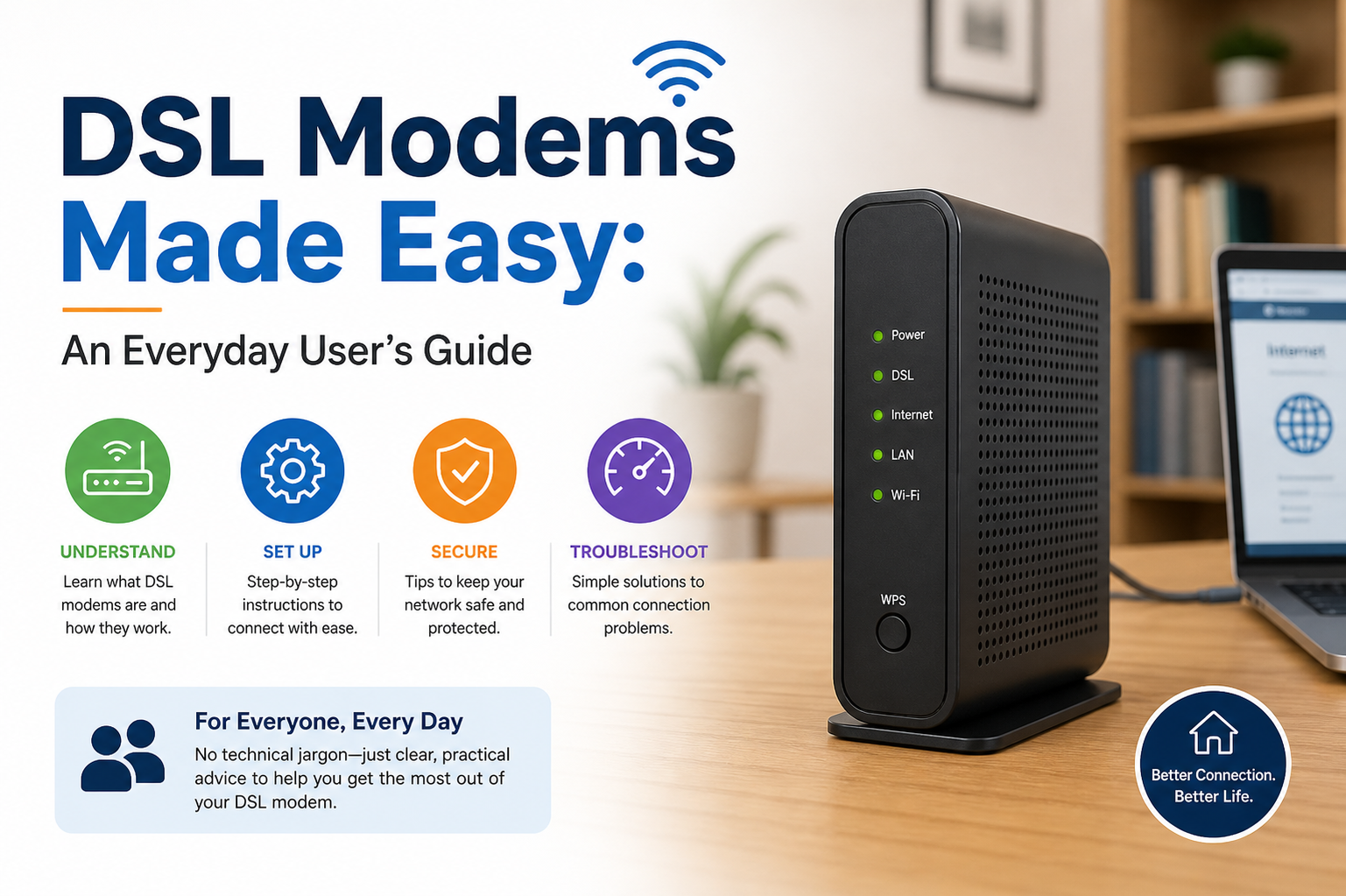
DSL modems continue to play an important role in internet connectivity, especially in areas where newer fiber-based infrastructure has not yet been fully deployed. Even though internet technology has evolved rapidly, DSL systems remain relevant due to their ability to operate over traditional telephone lines. This makes them a practical solution for millions of users who rely on stable and affordable internet access for daily tasks.
DSL technology, which stands for Digital Subscriber Line, works by transmitting digital data over copper telephone wires. Unlike older dial-up systems, DSL allows users to use the internet and make phone calls simultaneously without interference. This separation of signals is achieved through frequency division, where voice and data are carried at different frequency ranges on the same line. This innovation significantly improved internet usability and became a foundation for early broadband adoption.
The Core Architecture Behind DSL Modems
A DSL modem is built around a signal processing system that converts analog signals from telephone lines into digital data usable by computers and smart devices. Inside the modem, a digital signal processor handles modulation and demodulation tasks. This ensures that incoming data from the internet service provider is translated into readable information while outgoing requests are encoded efficiently for transmission.
The modem also includes filtering mechanisms that separate voice frequencies from data frequencies. This allows uninterrupted phone service while maintaining an active internet connection. The internal architecture is designed to maintain synchronization with the service provider’s equipment, ensuring stable data flow even during peak usage times.
Modern DSL modems often integrate routing capabilities, meaning they can distribute internet access to multiple devices through both wired Ethernet ports and wireless Wi-Fi signals. This combination of modem and router functions has simplified home networking setups significantly.
Types of DSL Technologies Used in Modems
DSL technology comes in several variations, each offering different performance levels depending on distance and infrastructure quality. The most common type is ADSL, which stands for Asymmetric Digital Subscriber Line. It provides higher download speeds compared to upload speeds, making it suitable for general browsing, streaming, and downloading content.
Another variation is VDSL, or Very High Bitrate Digital Subscriber Line, which offers significantly faster speeds but requires users to be closer to the service provider’s infrastructure. VDSL is commonly used in urban environments where network nodes are more densely distributed.
There are also newer enhancements such as ADSL2 and ADSL2+, which improve speed and stability compared to early ADSL systems. These technologies optimize signal handling and reduce latency, resulting in a smoother internet experience for users.
Signal Transmission and Distance Sensitivity
One of the most important characteristics of DSL technology is its sensitivity to distance. The performance of a DSL modem depends heavily on how far the user is from the provider’s central office or distribution point. As distance increases, signal strength gradually weakens, leading to reduced internet speeds and potential instability.
This limitation occurs because copper telephone lines naturally degrade high-frequency signals over long distances. While DSL technology uses advanced signal processing to minimize this loss, it cannot completely eliminate the effects of distance. As a result, users closer to infrastructure nodes typically experience faster and more reliable connections.
Despite this limitation, DSL remains widely used because it provides consistent performance within its operational range. In many regions, it serves as a reliable alternative where fiber deployment is not economically feasible.
Installation Process and Initial Configuration
Installing a DSL modem involves a straightforward process that requires minimal technical knowledge. The modem is connected to a telephone wall socket using a DSL cable, which carries both the internet signal and line communication. Once connected to a power source, the modem begins synchronizing with the service provider’s network.
During this synchronization phase, the modem establishes communication parameters such as speed, stability thresholds, and authentication settings. This process may take a few minutes, depending on the quality of the line and the provider’s configuration.
After successful synchronization, users can connect their devices either through Ethernet cables or wireless networks if the modem supports Wi-Fi functionality. Many modern DSL modems come preconfigured, reducing the need for manual setup and allowing users to access the internet almost immediately after installation.
Performance Optimization Techniques
To achieve optimal performance from a DSL modem, several factors must be considered. The quality of telephone wiring plays a significant role in determining connection stability. Old or damaged wiring can introduce noise into the signal, reducing speed and causing interruptions.
Placement of the modem also affects performance. Positioning it in a central, open area of the home helps improve wireless coverage and reduces interference from walls or electronic devices. Avoiding proximity to heavy electrical equipment can also minimize signal disruption.
Regularly restarting the modem can help clear temporary glitches and refresh the connection to the service provider. Additionally, ensuring that firmware is up to date can improve compatibility and introduce performance enhancements provided by the manufacturer.
Security Aspects of DSL Modems
Security is an important consideration for any internet-connected device, including DSL modems. Since these devices serve as gateways to the internet, they must be protected against unauthorized access and potential cyber threats.
Most modern DSL modems include built-in firewalls that monitor incoming and outgoing traffic. These firewalls help block suspicious activity and prevent unauthorized users from accessing the network. Encryption protocols such as WPA2 or WPA3 are commonly used in wireless configurations to secure Wi-Fi connections.
Changing default login credentials is also an essential step in securing a DSL modem. Many devices come with factory-set usernames and passwords that can be easily guessed if not updated. Strengthening these credentials reduces the risk of unauthorized configuration changes.
Common Issues and Troubleshooting Methods
Users may occasionally experience issues with DSL modem connectivity. One common problem is loss of synchronization with the service provider, often indicated by blinking or absent DSL signal lights. This can result from line disturbances, maintenance work, or internal wiring faults.
Another frequent issue is reduced internet speed, which may be caused by network congestion, distance from the central office, or outdated hardware. In such cases, checking line quality and ensuring proper configuration can help restore performance.
Intermittent disconnections may also occur due to loose cables or electrical interference. Inspecting all physical connections and repositioning the modem can often resolve these issues without requiring technical support.
Role of DSL Modems in Modern Digital Life
Despite the rise of fiber optics and 5G technology, DSL modems continue to serve as an important part of global internet infrastructure. They provide reliable access in areas where newer technologies are not yet available or economically viable.
For many households, DSL remains sufficient for everyday online activities such as browsing websites, using social media, attending video calls, and streaming standard-definition content. Its stability and widespread availability make it a dependable choice for users with moderate internet requirements.
Businesses in rural or remote locations also benefit from DSL connections, as they allow basic digital operations without requiring extensive infrastructure investment. This accessibility helps bridge the digital divide between urban and rural regions.
Future Outlook of DSL Technology
While DSL technology is gradually being replaced by faster alternatives, it is still expected to remain in use for several more years. Continued improvements in signal processing and line optimization have extended its relevance in the broadband ecosystem.
In some regions, hybrid systems are being developed that combine DSL with fiber infrastructure, improving speed and reliability. These hybrid models allow service providers to maximize existing infrastructure while gradually transitioning to newer technologies.
As digital demand continues to grow, DSL may eventually become a secondary option. However, its legacy as one of the most widely deployed broadband technologies ensures that it will remain an important part of internet history and development.
Final Understanding of DSL Modem Usage
A DSL modem represents a practical and widely accessible solution for internet connectivity. It transforms traditional telephone infrastructure into a functional broadband system capable of supporting a wide range of online activities. While it has limitations in speed and distance sensitivity, its reliability and availability continue to make it relevant in many regions.
Understanding how DSL modems work, how they are installed, and how they can be optimized helps users get the most out of their internet connection. Even as newer technologies emerge, DSL remains a foundational part of global connectivity, bridging gaps and providing essential access to the digital world.
Advanced Features and Internal Processing of DSL Modems
Building on the foundational understanding of DSL modems, it is important to explore how modern devices have evolved in terms of internal processing and advanced functionality. Today’s DSL modems are no longer simple signal converters; they are multi-functional networking devices that integrate routing, security, diagnostics, and performance optimization into a single unit.
At the core of a DSL modem lies a sophisticated chipset responsible for handling signal modulation and demodulation. This chipset processes incoming analog signals from telephone lines and converts them into digital data streams. It also performs the reverse function when sending data back to the internet service provider. The efficiency of this chipset directly influences internet speed, latency, and overall stability.
Modern DSL modems also include embedded memory and processing units that manage network traffic intelligently. These components help prioritize data packets, ensuring that critical applications such as video calls or streaming receive stable bandwidth. This internal management reduces congestion and improves user experience even when multiple devices are connected simultaneously.
Data Flow Management and Packet Handling
DSL modems operate using packet-based communication, where data is broken into small units before transmission. These packets travel independently across the network and are reassembled at their destination. The modem plays a crucial role in ensuring that these packets are transmitted efficiently and without corruption.
When data is received, the modem checks for errors using built-in error correction protocols. If any inconsistencies are detected, the modem requests retransmission of the affected packets. This process ensures data integrity and prevents issues such as incomplete downloads or distorted streaming.
Packet prioritization is another important feature found in advanced DSL modems. This system allows time-sensitive data, such as voice or video calls, to be prioritized over less critical traffic like background downloads. As a result, users experience smoother real-time communication even under heavy network load.
Wireless Integration and Home Networking Capabilities
Many DSL modems today come integrated with wireless routers, enabling them to create Wi-Fi networks within homes and offices. This integration eliminates the need for separate networking devices and simplifies setup and management.
The wireless component operates using radio frequency signals, typically in the 2.4 GHz or 5 GHz bands. These frequencies allow devices such as smartphones, laptops, and smart TVs to connect to the internet without physical cables. The modem manages multiple connections simultaneously, distributing bandwidth according to demand and signal strength.
Advanced DSL modems also support features like guest networks, parental controls, and device prioritization. Guest networks allow temporary users to access the internet without compromising the main network’s security. Parental controls enable restrictions on content and usage time, making them useful for households with children.
Latency, Jitter, and Stability Considerations
In network performance, latency refers to the time it takes for data to travel from one point to another. DSL modems are designed to minimize latency by maintaining stable synchronization with the service provider’s infrastructure. However, factors such as line quality and distance can still influence performance.
Jitter, which refers to variations in packet arrival times, can affect real-time applications such as video conferencing and online gaming. DSL modems reduce jitter through buffering techniques and traffic stabilization mechanisms. These systems help maintain consistent data flow even when network conditions fluctuate.
Stability is one of the key strengths of DSL technology. Unlike shared cable networks, DSL provides a more dedicated line structure, which reduces the impact of external network congestion. This makes DSL suitable for users who prioritize consistent connectivity over peak speed performance.
Firmware Systems and Software Control
DSL modems rely heavily on firmware, which is embedded software that controls hardware functions. This firmware manages everything from signal processing to network configuration and security enforcement. Manufacturers periodically release firmware updates to improve performance, fix bugs, and enhance compatibility with service provider systems.
Updating firmware can significantly improve modem efficiency. It may introduce better signal handling algorithms, enhanced security protocols, and improved support for newer internet standards. Users can usually access firmware settings through a web-based configuration interface provided by the modem.
This interface also allows users to monitor network activity, adjust settings, and troubleshoot connectivity issues. It serves as a central control panel for managing the entire internet connection experience.
Error Detection and Line Diagnostics
DSL modems continuously monitor the quality of the telephone line they operate on. They measure parameters such as signal-to-noise ratio, attenuation, and error rates. These metrics help determine the stability and performance of the connection.
If the modem detects poor line conditions, it may automatically adjust transmission speed to maintain stability. This adaptive behavior ensures that users experience fewer disconnections, even in challenging environments.
Diagnostic tools built into modern modems allow users to check line quality and identify potential issues. These tools provide insights into connection health, helping users or technicians resolve problems more efficiently.
Energy Efficiency and Thermal Management
Energy efficiency has become an important consideration in modern DSL modem design. Many devices are optimized to consume minimal power while maintaining continuous operation. This is particularly important for devices that remain active 24 hours a day.
Thermal management systems are also integrated into modem design to prevent overheating. These systems include ventilation structures, heat-resistant materials, and internal temperature regulation mechanisms. Maintaining optimal temperature ensures long-term reliability and reduces hardware degradation.
Some advanced modems also include eco-modes, which reduce power consumption during periods of low network activity. This feature contributes to energy savings without affecting performance during active usage.
Compatibility with Emerging Technologies
Although DSL is an older technology, modern modems are designed to remain compatible with evolving digital standards. Many devices support hybrid configurations that allow integration with fiber-based networks or advanced routing systems.
This compatibility ensures that users can transition gradually to newer technologies without replacing all their equipment at once. In some cases, DSL modems can function as secondary routers within larger network systems, extending coverage and improving connectivity distribution.
Manufacturers also focus on backward compatibility, ensuring that newer modems continue to support older DSL infrastructure. This flexibility helps maintain service continuity in regions where infrastructure upgrades are still ongoing.
Network Security Enhancements in Modern DSL Modems
Security has become a critical aspect of modem design due to increasing cyber threats. Modern DSL modems include advanced encryption protocols that protect data transmission between devices and service providers.
Firewall systems are now more intelligent, capable of detecting suspicious patterns and blocking unauthorized access attempts. These systems operate in real time, analyzing traffic behavior and responding to potential threats instantly.
Some DSL modems also include intrusion detection systems that monitor network activity for unusual behavior. If a threat is detected, the modem can isolate affected devices or restrict access until the issue is resolved.
User Experience and Interface Design
The user interface of DSL modems has evolved significantly over time. Early devices required technical knowledge to configure, but modern modems offer simplified graphical interfaces that make setup and management accessible to everyday users.
These interfaces allow users to view connection status, manage connected devices, and adjust settings with ease. Visual indicators and guided setup processes reduce complexity and improve usability.
Mobile applications are also becoming common, allowing users to control modem settings remotely. This adds convenience and flexibility, especially for managing home networks while away from the physical location.
Long-Term Reliability and Maintenance Practices
DSL modems are generally known for their durability and long operational lifespan. With proper maintenance, they can function reliably for many years without significant performance degradation.
Regular maintenance practices include checking cable integrity, ensuring proper ventilation, and occasionally restarting the device to refresh system processes. Keeping firmware updated also plays a key role in maintaining long-term stability.
Avoiding physical damage and protecting the modem from power surges can further extend its lifespan. Many users also use surge protectors to safeguard their devices from electrical fluctuations.
Advanced Understanding
The evolution of DSL modems reflects the broader development of internet technology over time. From simple signal converters to advanced networking systems, these devices have adapted to meet growing digital demands.
Even in a world increasingly dominated by high-speed fiber and wireless technologies, DSL modems continue to provide reliable and accessible internet connectivity. Their combination of stability, compatibility, and widespread availability ensures that they remain relevant in many parts of the world.
Understanding their internal workings, performance factors, and advanced features provides a deeper appreciation of how everyday internet access is made possible.
Practical Usage of DSL Modems in Daily Life
DSL modems continue to serve a practical role in everyday internet usage, especially in homes, small offices, and regions where high-speed fiber connections are not yet widely available. Their consistent performance makes them suitable for a wide range of digital activities such as browsing, streaming, online communication, and basic cloud services.
In a typical household setup, a DSL modem acts as the central gateway between all connected devices and the internet. Smartphones, laptops, smart televisions, and other smart devices rely on this single point of connection to access online services. The modem ensures that each device receives stable internet access without requiring separate connections for each one.
For families, DSL modems are particularly useful because they can handle multiple users at the same time. While one person streams a video, another can browse the web or attend an online class without major interruptions. Although speed may vary depending on usage and distance from the service provider, the connection remains generally stable for everyday needs.
Role in Education and Remote Learning
DSL modems have become an important tool in education, especially with the rise of online learning platforms. Students rely on internet connectivity to attend virtual classes, access educational materials, and submit assignments. In areas where advanced broadband services are limited, DSL provides a reliable alternative.
Even though DSL speeds may not match modern fiber networks, they are usually sufficient for video conferencing, document sharing, and online research. This makes them a practical solution for students who require consistent access to learning resources without high infrastructure demands.
Educational institutions in remote regions also benefit from DSL connectivity. Schools can use it to connect administrative systems, manage communication, and provide digital learning opportunities where other technologies are unavailable or too expensive to implement.
Importance in Small Businesses and Work Environments
Small businesses often depend on DSL modems for daily operations. Tasks such as email communication, online transactions, customer management systems, and cloud-based tools can all function effectively on a DSL connection.
For startups and small offices, DSL provides a cost-effective solution compared to more expensive high-speed alternatives. It allows businesses to maintain an online presence, manage operations, and communicate with clients without requiring complex infrastructure setups.
Remote workers also benefit from DSL connections, especially in rural or suburban areas. While working from home, employees can attend virtual meetings, access company servers, and collaborate with teams using standard internet applications supported by DSL bandwidth.
Streaming, Browsing, and Entertainment Usage
DSL modems are commonly used for entertainment purposes such as video streaming, music playback, and online gaming. Although streaming in ultra-high definition may be limited by speed constraints, standard-definition and high-definition content can usually be accessed without major issues.
Web browsing and social media usage remain smooth and responsive under normal conditions. Pages load steadily, and most online platforms are optimized to function well even on moderate-speed connections like DSL.
Online gaming performance depends on latency and stability rather than just speed. DSL connections often provide stable ping times, which can be suitable for casual gaming. However, competitive gaming experiences may require faster and more consistent broadband technologies.
Impact on Communication and Connectivity
DSL modems play a key role in modern communication by enabling access to email services, messaging platforms, and video calling applications. These communication tools rely on stable internet connectivity to function effectively.
Voice and video calls require consistent data flow, and DSL connections are generally capable of supporting these services under normal conditions. While occasional fluctuations may occur, especially during peak usage hours, overall communication remains reliable.
Social media platforms also depend on continuous connectivity. DSL modems ensure that users can stay connected with friends, family, and global communities without frequent disruptions.
Challenges in High-Demand Applications
Despite their reliability, DSL modems have limitations when it comes to high-demand applications. Activities such as large file transfers, ultra-HD streaming, and heavy cloud computing tasks can be affected by speed restrictions.
When multiple devices are using the network simultaneously, bandwidth may become limited, resulting in slower performance. This is especially noticeable in households with high digital consumption.
Latency-sensitive applications may also experience slight delays compared to newer technologies. While these delays are usually minimal for general use, they can become noticeable in real-time competitive environments.
Environmental and Infrastructure Advantages
One of the key advantages of DSL technology is its use of existing telephone infrastructure. This reduces the need for new cable installations, making it both cost-effective and environmentally efficient.
By utilizing copper telephone lines, DSL reduces the need for extensive physical infrastructure expansion. This is particularly beneficial in rural or geographically challenging areas where laying new fiber cables would be expensive and time-consuming.
This reuse of infrastructure also allows for faster deployment of internet services in underserved regions, helping bridge the digital gap between urban and rural populations.
Longevity and Continued Relevance
Even with the rise of advanced technologies, DSL modems continue to remain relevant due to their widespread availability and reliability. Many regions still depend on DSL as their primary internet solution.
Service providers continue to support DSL networks, ensuring that users can maintain connectivity without requiring immediate upgrades. This long-term support helps extend the usefulness of existing systems.
In many cases, DSL serves as a transitional technology, bridging the gap between traditional telephone-based systems and modern fiber-optic networks.
User Experience and Everyday Convenience
For most users, DSL modems provide a simple and hassle-free internet experience. Once installed, they require minimal configuration and can operate continuously with little maintenance.
Automatic connection management ensures that users remain online without needing constant adjustments. Restarting the modem occasionally is often enough to maintain optimal performance.
The simplicity of DSL systems makes them suitable for users who prefer straightforward internet access without complex setup requirements.
Future Role in Hybrid Network Systems
As internet infrastructure continues to evolve, DSL technology is increasingly being integrated into hybrid systems. These systems combine DSL with fiber or wireless technologies to improve overall performance.
In such setups, DSL may serve as a backup connection or support secondary data routing. This ensures uninterrupted internet access even if the primary connection experiences issues.
Hybrid models allow service providers to maximize existing infrastructure while gradually upgrading to faster systems, making DSL a continuing part of modern networking strategies.
Final Perspective on DSL Modem Usage
DSL modems remain a practical and dependable solution for internet connectivity in many parts of the world. Their ability to deliver stable performance over existing telephone lines makes them especially valuable in regions with limited infrastructure development.
While they may not offer the highest speeds compared to modern alternatives, their reliability, accessibility, and ease of use ensure that they continue to serve an important role in digital communication.
From education and business to entertainment and everyday communication, DSL modems provide the foundation for essential online activities. Their continued presence highlights the importance of adaptable and widely accessible internet technologies in a constantly evolving digital landscape.
Future of DSL Modems in a Changing Internet Landscape
As internet technology continues to advance rapidly, DSL modems are gradually moving into a more transitional role within global connectivity systems. While fiber-optic networks and advanced wireless technologies offer significantly higher speeds, DSL still maintains a presence in many regions due to its accessibility and reliance on existing telephone infrastructure. This makes it an important technology in the gradual evolution of global broadband access.
In many developing and rural areas, infrastructure upgrades take time and significant investment. DSL continues to bridge this gap by providing a functional and stable internet connection without requiring new physical cabling. This ensures that communities are not left behind while newer technologies are being deployed.
Telecommunication providers are increasingly focusing on hybrid models that combine DSL with newer systems. These hybrid setups allow users to experience improved performance while still relying on existing copper lines for last-mile connectivity. This approach helps extend the usefulness of DSL technology while gradually integrating it into modern networks.
Integration with Modern Networking Technologies
DSL modems are also evolving to support integration with modern networking systems. Many devices now function as part of larger home networks that include smart devices, cloud storage systems, and wireless extensions. This integration allows DSL connections to remain functional in increasingly complex digital environments.
Smart home systems, for example, rely on continuous internet connectivity to manage devices such as security cameras, thermostats, lighting systems, and appliances. DSL modems, when paired with efficient routers, are capable of supporting these ecosystems for everyday usage.
Additionally, some DSL modems now support Quality of Service configurations, allowing users to prioritize specific types of internet traffic. This ensures that important activities such as video conferencing or work-related tasks receive stable bandwidth even when the network is under load.
Adaptation in Rural and Underserved Regions
One of the most significant roles of DSL technology today is its continued use in rural and underserved regions. In areas where fiber deployment is not economically feasible, DSL remains one of the few reliable options for internet access.
This accessibility helps support education, healthcare communication, business development, and government services in remote locations. By enabling basic digital connectivity, DSL contributes to social and economic inclusion in areas that might otherwise remain disconnected.
In many such regions, DSL networks are still being maintained and upgraded incrementally. This ensures that users can benefit from improved stability and performance even without complete infrastructure replacement.
Technological Limitations and Natural Phase-Out
Despite its advantages, DSL technology has inherent limitations that become more noticeable as digital demands increase. The dependence on copper telephone lines restricts speed potential and makes performance highly sensitive to distance and line quality.
As user expectations shift toward high-definition streaming, cloud computing, and real-time digital collaboration, DSL struggles to match the performance of fiber-optic and 5G technologies. This gap in capability is one of the main reasons why DSL is gradually being phased out in highly developed regions.
However, this phase-out is not immediate or uniform. In many parts of the world, DSL will continue to operate for years due to infrastructure constraints and cost considerations. It remains a practical solution where upgrading to newer systems is not yet possible.
Economic Value and Accessibility
From an economic perspective, DSL remains one of the most cost-effective internet solutions available. Since it relies on existing telephone infrastructure, service providers do not need to invest heavily in new physical networks to offer connectivity.
This affordability benefits both providers and users. Customers can access internet services at lower costs, while providers can extend coverage without significant infrastructure expansion. This balance makes DSL an attractive option in price-sensitive markets.
For many households, especially those with basic internet needs, DSL offers sufficient performance without the expense associated with high-speed fiber connections. This ensures that internet access remains widely available across different income levels.
Sustainability and Infrastructure Efficiency
DSL technology also contributes to infrastructure sustainability by maximizing the use of existing copper networks. Instead of replacing entire systems, DSL allows continued use of installed telephone lines, reducing electronic waste and construction requirements.
This reuse of infrastructure reduces environmental impact and minimizes disruption during deployment. It also allows service providers to allocate resources more efficiently by upgrading systems gradually rather than rebuilding them entirely.
In this sense, DSL plays a role in sustainable technological development by extending the lifecycle of existing infrastructure while supporting modern communication needs.
Transition Toward Future Connectivity Systems
The future of DSL modems is closely tied to the broader transition toward advanced internet technologies. While they may eventually be replaced in many regions, their role as a foundational broadband technology cannot be overlooked.
As fiber and wireless networks expand, DSL is likely to remain as a backup or secondary connectivity option in hybrid systems. This ensures continuity of service in cases where primary networks experience disruptions.
In some scenarios, DSL may continue to serve as a complementary technology, supporting low-priority traffic or providing redundancy in critical systems. This layered approach to networking enhances overall reliability.
Final Conclusion
DSL modems have played a crucial role in shaping global internet connectivity and continue to serve millions of users worldwide. Their ability to deliver stable internet access over existing telephone lines has made them one of the most widely deployed broadband technologies in history.
While newer technologies now offer faster speeds and greater efficiency, DSL remains valuable due to its accessibility, affordability, and reliability. It continues to support essential digital activities in homes, businesses, and educational environments, especially in regions where modern infrastructure is still developing.
The long-term significance of DSL lies not only in its technical capabilities but also in its contribution to bridging the digital divide. It has enabled countless users to connect to the digital world and participate in modern communication systems.
As the internet continues to evolve, DSL modems will gradually transition into supporting roles within hybrid networks. However, their legacy as a foundational technology in global connectivity will remain an important part of internet history and development.