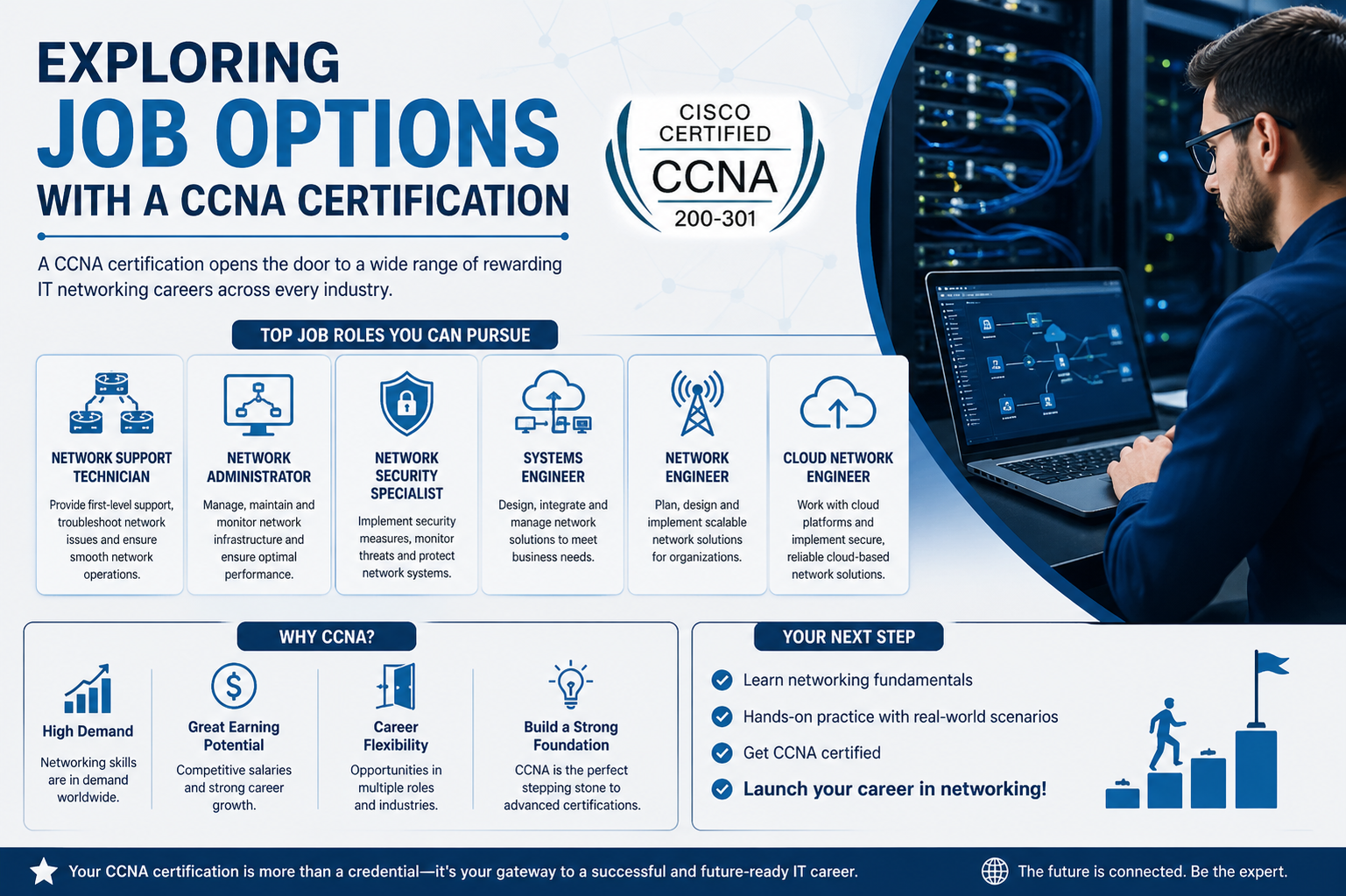
A CCNA certification is widely recognized as an entry-level credential that validates a strong understanding of networking fundamentals. It is often pursued by individuals who want to start a career in information technology, particularly in networking and infrastructure management. The certification builds essential knowledge of how networks operate, how devices communicate, and how data flows across systems. Because almost every modern organization relies on networked systems, professionals with CCNA skills are in demand across various industries including corporate IT departments, telecommunications companies, financial institutions, educational organizations, and service providers. The value of this certification lies not only in technical knowledge but also in the ability to apply that knowledge in real-world environments where connectivity, security, and reliability are critical.
Foundation of Networking Careers
One of the most important aspects of CCNA certification is that it establishes a strong foundation for long-term career growth. Individuals who complete this certification gain practical knowledge of routing, switching, IP addressing, subnetting, and network troubleshooting. These concepts are essential for any networking-related role. Employers often prefer CCNA-certified candidates because they already understand core networking principles and require less initial training. This allows new professionals to integrate more quickly into workplace environments. The certification also helps individuals develop problem-solving skills, which are essential when dealing with network outages, configuration errors, or performance issues. This strong foundation becomes the stepping stone for more advanced certifications and career paths in networking and cybersecurity.
Entry-Level Networking Positions
After earning a CCNA certification, many professionals begin their careers in entry-level networking roles. These positions often include responsibilities such as assisting senior engineers, monitoring network systems, and performing basic troubleshooting tasks. Entry-level roles are important because they provide hands-on exposure to real networking equipment and live environments. Working in such positions allows individuals to understand how theoretical concepts apply in practice. They learn how organizations manage network traffic, maintain uptime, and resolve technical issues. These early career experiences are essential for building confidence and technical competence. Over time, individuals in these roles develop the skills required to handle more complex networking tasks independently.
Network Support and Technical Assistance Roles
Network support roles are among the most common career paths for CCNA-certified professionals. In these positions, individuals are responsible for diagnosing and resolving network-related issues that affect users or systems. This may include problems such as slow connectivity, IP conflicts, or device configuration errors. Professionals in these roles often work closely with IT support teams to ensure that networks remain operational and efficient. Strong communication skills are also important because they frequently interact with non-technical users who require assistance. These roles help build both technical expertise and customer service abilities, making them an excellent starting point for individuals new to the IT industry.
Network Administration Careers
As professionals gain experience, they can progress into network administration roles. These positions involve greater responsibility and require a deeper understanding of network systems. Network administrators are responsible for configuring and maintaining routers, switches, firewalls, and other network devices. They ensure that systems are secure, efficient, and properly optimized for organizational needs. In addition, they monitor network performance and implement upgrades or changes when necessary. This role requires strong analytical skills and the ability to anticipate potential issues before they affect system performance. CCNA certification provides the foundational knowledge needed to succeed in these responsibilities and serves as a bridge to more advanced networking roles.
Opportunities in System and Infrastructure Support
Beyond traditional networking roles, CCNA certification also opens doors to system and infrastructure support positions. These roles involve managing the broader IT environment, including servers, storage systems, and communication networks. Professionals in this area ensure that all components of an organization’s IT infrastructure work together seamlessly. They may also assist in deploying new technologies, maintaining system updates, and ensuring data availability. This type of work requires a broader understanding of how different IT systems interact with each other. CCNA-certified individuals are well-prepared for this because they already understand how data moves across networks and how different devices communicate.
Cybersecurity Pathways and Advanced Roles
Another significant career direction for CCNA-certified professionals is cybersecurity. As organizations face increasing security threats, the demand for skilled cybersecurity professionals continues to grow. CCNA provides a strong foundation in network security principles, including access control, firewall configuration, and secure communication protocols. With additional training or certifications, individuals can transition into roles focused on protecting systems from cyber threats. These roles may involve monitoring network traffic for suspicious activity, implementing security policies, and responding to incidents. The networking knowledge gained through CCNA is especially valuable in cybersecurity because understanding how networks operate is essential for identifying vulnerabilities.
Career Growth and Specialization Opportunities
CCNA certification is not the end of the journey but rather the beginning of a long-term career path in IT. After gaining experience, professionals can choose to specialize in different areas such as wireless networking, cloud computing, network security, or data center management. Specialization allows individuals to focus on specific technologies and develop deeper expertise in their chosen field. As they progress, they may take on senior roles such as network engineer, infrastructure architect, or IT consultant. These positions involve designing complex network systems, managing large-scale infrastructure projects, and making strategic technology decisions for organizations. Continuous learning and certification upgrades play a key role in achieving these advanced career opportunities.
Roles in Internet Service Providers (ISP) Environment
CCNA certification is highly relevant in Internet Service Provider environments where large-scale networks must be maintained and monitored continuously. Professionals working in ISPs are responsible for ensuring that customers receive stable and uninterrupted internet connectivity. These roles often include tasks such as configuring backbone routers, managing bandwidth distribution, and troubleshooting connectivity issues across wide geographic areas. Working in an ISP environment provides exposure to high-traffic networks and complex infrastructure systems. It is a valuable experience for those who want to understand how large-scale internet systems function. CCNA-certified professionals in this field gain practical knowledge of routing protocols, network optimization techniques, and fault isolation methods, which significantly enhance their technical expertise.
Data Center Support and Operations Roles
Another strong career option for CCNA-certified individuals is working in data center environments. Data centers are the backbone of modern digital services, hosting servers, storage systems, and networking equipment that support websites, applications, and cloud services. Professionals in data center roles are responsible for maintaining connectivity between servers, ensuring uptime, and managing hardware and network configurations. They also monitor system performance and respond quickly to any issues that may affect service availability. This environment requires attention to detail and the ability to work under pressure, especially when handling critical systems. CCNA certification helps individuals understand how data flows within these environments and how network infrastructure supports large-scale computing operations.
Network Operations Center (NOC) Careers
A Network Operations Center, commonly known as NOC, is another important career destination for CCNA-certified professionals. In a NOC environment, technicians monitor networks 24/7 to ensure smooth operation and immediate response to any issues. Their responsibilities include tracking network performance, identifying outages, and escalating problems when necessary. NOC roles are ideal for individuals who want to gain continuous exposure to real-time network activity. These positions help professionals develop strong analytical and troubleshooting skills while working with advanced monitoring tools. CCNA knowledge is particularly useful in understanding alerts, interpreting network behavior, and resolving connectivity issues efficiently.
Field Network Technician Opportunities
Field network technician roles offer a more hands-on career path for CCNA-certified individuals. These professionals work on-site to install, configure, and maintain networking equipment such as routers, switches, and cabling systems. They are often responsible for setting up new network connections for businesses or resolving physical infrastructure issues. This role requires both technical knowledge and practical skills, as technicians must work directly with hardware in different environments. Field technicians often travel to various locations, making it a dynamic and active job role. CCNA certification provides the technical foundation needed to understand device configuration and network setup procedures, making it easier to perform field tasks effectively.
Cloud Networking and Virtual Infrastructure Roles
With the rapid growth of cloud computing, CCNA-certified professionals also have opportunities to enter cloud networking roles. These positions involve managing virtual networks, cloud-based infrastructure, and hybrid systems that combine on-premises and cloud environments. Professionals in this field work with cloud platforms to ensure secure and efficient data transfer between systems. They may also configure virtual networks, manage access controls, and optimize cloud performance. Understanding traditional networking concepts from CCNA helps professionals transition into cloud environments more easily because many core principles remain the same. This career path is especially valuable as organizations continue to shift toward cloud-based solutions.
Telecommunications Industry Careers
The telecommunications industry is another major employer of CCNA-certified professionals. This sector involves managing communication networks that support voice, data, and video services. Professionals in telecommunications work on maintaining mobile networks, fiber optic systems, and long-distance communication infrastructure. They may be involved in configuring switching systems, optimizing network coverage, and troubleshooting service disruptions. This field requires a strong understanding of networking principles as well as the ability to work with advanced communication technologies. CCNA certification provides the foundational knowledge needed to enter this industry and contribute to the development of reliable communication systems.
Government and Public Sector IT Roles
Government organizations and public sector institutions also require skilled networking professionals to manage their IT infrastructure. CCNA-certified individuals can find opportunities in maintaining secure communication systems, managing internal networks, and supporting digital services used by government departments. These roles often involve working with sensitive data, which requires a strong focus on security and compliance. Professionals in this sector may also contribute to upgrading legacy systems and implementing new technologies to improve efficiency. Working in government IT roles provides stability and long-term career growth opportunities while allowing professionals to contribute to essential public services.
Freelancing and Independent IT Support
CCNA certification can also open doors to freelancing opportunities in the IT networking field. Freelancers offer services such as network setup, troubleshooting, configuration, and maintenance to small businesses and individual clients. This career path provides flexibility and the ability to work on diverse projects. Freelancers must be self-motivated and skilled in managing client relationships, as they are responsible for delivering solutions independently. CCNA knowledge allows freelancers to handle a wide range of networking tasks confidently, from setting up home office networks to managing small business infrastructure. Over time, successful freelancers can build a strong client base and expand their service offerings.
Skill Development and Professional Growth
Beyond job roles, CCNA certification plays a crucial role in overall skill development and professional growth. It encourages individuals to think logically, solve complex problems, and understand how different networking components interact. These skills are highly valuable not only in networking but also in broader IT domains. Professionals are encouraged to continue learning and upgrading their skills through hands-on practice and additional certifications. As technology evolves, staying updated with new networking trends and tools becomes essential for career advancement. CCNA serves as the first step in building a lifelong learning mindset in the IT field.
Pathway to Advanced Certifications and Specializations
CCNA certification is often the starting point for more advanced certifications in networking and IT infrastructure. After gaining experience, professionals may choose to pursue higher-level certifications that focus on specialized areas such as advanced routing, network security, or cloud technologies. These advanced certifications help individuals qualify for senior-level positions and increase their earning potential. Specialization also allows professionals to focus on areas that match their interests and strengths. Whether it is designing complex enterprise networks or securing large-scale systems, advanced certifications build upon the foundation established by CCNA.
Salary Potential and Job Stability
One of the key benefits of pursuing a CCNA certification is improved salary potential and job stability. Entry-level networking roles provide competitive salaries compared to many other beginner positions in the IT industry. As professionals gain experience and move into advanced roles, their earning potential increases significantly. Network engineers, administrators, and specialists often receive higher compensation due to their technical expertise and responsibility levels. In addition to financial benefits, networking careers also offer strong job stability because organizations continuously depend on reliable IT infrastructure. This demand ensures consistent opportunities for skilled professionals in the field.
Career Expansion Opportunities
CCNA certification provides a versatile foundation that supports a wide range of career paths in the IT and networking industry. From ISP environments and data centers to cloud computing and telecommunications, the opportunities are diverse and continuously expanding. Professionals can choose roles based on their interests, whether they prefer hands-on technical work, system monitoring, or advanced infrastructure design. The certification not only enhances technical knowledge but also builds confidence and problem-solving abilities. With continuous learning and experience, CCNA-certified individuals can progress into highly skilled and well-paid positions, making it a valuable investment for long-term career development in technology.
Transitioning from Junior to Mid-Level Networking Roles
After gaining initial experience in entry-level positions, CCNA-certified professionals often progress into mid-level networking roles where responsibilities become more complex and independent. At this stage, individuals are expected to handle network configurations with less supervision and take ownership of specific infrastructure components. Tasks may include designing small to medium-sized network segments, optimizing performance, and implementing security measures across departmental systems. This transition is important because it marks the shift from learning fundamentals to applying them in strategic ways. Professionals in this stage are also expected to diagnose complex issues that may involve multiple layers of the network stack. Strong analytical thinking and practical troubleshooting experience become essential for success in these roles.
Network Engineer Career Path
One of the most common progression paths for CCNA-certified professionals is becoming a network engineer. Network engineers are responsible for designing, implementing, and maintaining enterprise-level network systems. Their work involves configuring routers and switches, setting up routing protocols, ensuring redundancy, and improving network efficiency. They also play a key role in planning network expansions and upgrades based on organizational needs. This position requires a deeper understanding of networking concepts beyond CCNA, but the certification provides the essential foundation. Network engineers often collaborate with other IT teams to ensure seamless integration of systems and services. This role is considered a significant step forward in both responsibility and earning potential.
Systems Engineer and Infrastructure Roles
CCNA certification can also lead to systems engineering and broader infrastructure roles. Systems engineers focus on the overall IT environment, ensuring that servers, networks, storage systems, and applications work together efficiently. They are responsible for designing integrated solutions that support business operations. In many organizations, systems engineers are involved in both hardware and software aspects of IT infrastructure. They may also participate in capacity planning, system upgrades, and performance optimization. The networking knowledge gained through CCNA is highly valuable in these roles because it helps professionals understand how data flows between different systems and how network design impacts overall performance.
Network Security Specialist Opportunities
As cyber threats continue to grow, network security has become one of the most important areas in IT. CCNA-certified professionals can transition into network security roles where they focus on protecting systems from unauthorized access, attacks, and vulnerabilities. These specialists configure firewalls, manage access control lists, and monitor network traffic for suspicious activity. They also implement security policies and ensure compliance with organizational standards. This role requires a strong understanding of both networking and security principles. CCNA provides the networking foundation needed to understand how attacks occur and how to prevent them effectively. With additional certifications, professionals can further specialize in cybersecurity and advance into roles such as security analyst or security engineer.
Wireless Networking and Mobility Roles
Wireless networking is another specialized field that CCNA-certified professionals can explore. These roles involve designing and managing wireless networks that support mobile devices, laptops, and IoT systems. Wireless network specialists ensure strong coverage, minimal interference, and secure connectivity across different environments. They may work on configuring access points, optimizing signal strength, and troubleshooting wireless connectivity issues. As organizations increasingly rely on mobile technologies, demand for wireless networking expertise continues to grow. CCNA provides foundational knowledge that helps professionals understand how wireless communication integrates with traditional wired networks.
Cloud Infrastructure and Hybrid Network Roles
The shift toward cloud computing has created new opportunities for networking professionals. CCNA-certified individuals can move into cloud infrastructure roles where they manage hybrid networks that combine on-premises systems with cloud platforms. These professionals are responsible for ensuring secure and efficient communication between physical data centers and cloud environments. They may also configure virtual networks, manage cloud-based routing, and optimize bandwidth usage. Understanding traditional networking concepts is essential in these roles because cloud environments still rely on core networking principles. This career path offers strong growth potential as more organizations adopt cloud-first strategies.
DevNet and Network Automation Pathways
Modern networking is increasingly moving toward automation, and CCNA-certified professionals can transition into network automation and DevNet roles. These positions involve using programming and scripting to automate network configuration, monitoring, and management tasks. Instead of manually configuring devices, professionals use tools and scripts to streamline operations and reduce human error. This improves efficiency and scalability in large networks. While this path requires additional learning in programming languages and automation tools, CCNA provides the networking foundation necessary to understand what needs to be automated. This combination of networking and coding skills is highly valued in modern IT environments.
Senior Network Architect Roles
With significant experience and advanced certifications, CCNA-certified professionals can eventually move into senior-level positions such as network architect. Network architects are responsible for designing large-scale enterprise networks that meet organizational requirements for performance, security, and scalability. They create detailed network plans, select appropriate technologies, and ensure that systems can support future growth. This role requires deep technical knowledge as well as strategic thinking. Network architects often work closely with management teams to align network design with business goals. While CCNA is only the beginning of this journey, it plays a critical role in building the foundational knowledge required for such advanced positions.
Consulting and Freelance Networking Expertise
Experienced networking professionals may also choose to work as consultants or independent contractors. In this role, they provide expert advice and solutions to businesses that need help with network design, optimization, or troubleshooting. Consultants may work on short-term projects or long-term contracts depending on client needs. This career path offers flexibility and the opportunity to work with different industries and technologies. CCNA certification helps establish credibility, especially for individuals starting their consulting careers. Over time, professionals can build a strong reputation and expand their client base, leading to higher income potential and diverse project opportunities.
Leadership and IT Management Roles
As networking professionals gain experience, they may transition into leadership or IT management positions. These roles involve overseeing teams of network engineers, technicians, and support staff. Managers are responsible for planning IT strategies, managing budgets, and ensuring that network infrastructure aligns with organizational goals. They also handle project coordination and decision-making related to technology investments. Strong communication and leadership skills are essential in these positions. While technical knowledge remains important, the focus shifts more toward management and strategic planning. CCNA certification provides the technical credibility needed to progress into leadership roles within IT departments.
Continuous Learning and Industry Evolution
The IT and networking industry is constantly evolving, which means professionals must continue learning throughout their careers. Technologies such as cloud computing, cybersecurity, automation, and artificial intelligence are reshaping how networks are designed and managed. CCNA-certified individuals are encouraged to keep updating their skills through advanced certifications and hands-on experience. Staying current with industry trends ensures long-term career growth and adaptability. Continuous learning also helps professionals remain competitive in a job market that increasingly values specialized and up-to-date technical knowledge.
Overview of Career Expansion
CCNA certification is not just an entry-level qualification but a gateway to a wide range of advanced career opportunities in networking and IT infrastructure. From junior technical roles to senior engineering and architectural positions, the certification supports a long and progressive career path. Professionals can choose to specialize in areas such as security, cloud computing, automation, or wireless networking depending on their interests. With experience, dedication, and continuous learning, CCNA-certified individuals can build highly successful careers in some of the most important and in-demand areas of modern technology.
Role of CCNA in Enterprise IT Environments
In large enterprise environments, CCNA-certified professionals play a key role in maintaining the backbone of organizational communication systems. Enterprises rely heavily on internal networks to connect employees, departments, and global offices. In such environments, networking professionals are responsible for ensuring uninterrupted connectivity, secure data transfer, and efficient system performance. Their work often includes managing VLANs, configuring enterprise routers, and maintaining redundant systems to prevent downtime. These roles require a strong understanding of structured networking environments where even small misconfigurations can impact entire business operations. CCNA certification provides the foundational skills needed to operate effectively in these high-demand enterprise settings.
Collaboration with IT and Cross-Functional Teams
Networking professionals rarely work in isolation, especially in modern IT environments. CCNA-certified individuals often collaborate with system administrators, software developers, cybersecurity teams, and cloud engineers. This collaboration ensures that all parts of the IT infrastructure function together seamlessly. For example, when deploying a new application, network engineers must ensure that bandwidth, security policies, and routing configurations support its performance. This cross-functional interaction enhances problem-solving skills and broadens technical understanding beyond networking alone. It also helps professionals develop communication skills, which are essential for explaining technical issues to non-technical stakeholders.
Importance of Networking in Digital Transformation
As organizations undergo digital transformation, networking professionals have become even more important. Digital transformation involves shifting from traditional systems to modern, cloud-based, and automated environments. This shift requires strong, secure, and scalable networks to support new technologies such as remote work solutions, cloud applications, and real-time communication tools. CCNA-certified professionals contribute by designing and maintaining networks that can handle increased digital demands. They also support the integration of new technologies into existing systems, ensuring smooth transitions and minimal disruption. This makes networking professionals essential contributors to business innovation and technological advancement.
Emerging Technologies Impacting Networking Careers
The networking field is continuously evolving due to the rise of emerging technologies. Concepts such as Software-Defined Networking (SDN), Internet of Things (IoT), artificial intelligence in network monitoring, and cloud-native infrastructures are changing how networks are built and managed. CCNA-certified professionals who continue to upgrade their knowledge can transition into roles that involve these advanced technologies. For example, IoT networks require the ability to manage large numbers of connected devices, while SDN focuses on centralized network control through software. Understanding these innovations allows professionals to stay relevant and competitive in a rapidly changing industry.
Global Demand for Networking Professionals
Networking skills are in demand worldwide, making CCNA certification valuable across different countries and industries. Almost every organization, regardless of size or sector, depends on reliable network infrastructure. This global demand creates opportunities for professionals to work in international companies, remote positions, or overseas projects. The ability to understand standardized networking concepts means CCNA-certified individuals can adapt to different environments and technologies used globally. This flexibility is one of the major advantages of pursuing a career in networking, as it opens doors to diverse job markets and cultural experiences.
Practical Experience and Real-World Application
While certification provides theoretical knowledge, practical experience is what truly shapes a successful networking career. CCNA-certified professionals are encouraged to gain hands-on experience through labs, internships, and real-world job roles. Working with actual network devices helps individuals understand how theoretical concepts apply in real scenarios. It also improves troubleshooting speed and accuracy. Many employers value candidates who can demonstrate practical problem-solving abilities in addition to certification knowledge. Over time, this combination of theory and practice builds strong technical expertise that is essential for advanced roles.
Challenges in Networking Careers
Although networking careers offer many opportunities, they also come with challenges. Professionals often work in high-pressure environments where system downtime must be minimized. They may need to respond to network failures outside regular working hours or handle urgent security incidents. Additionally, the rapid pace of technological change requires continuous learning and adaptation. CCNA-certified individuals must be prepared to update their skills regularly to keep up with industry advancements. Despite these challenges, the field remains highly rewarding for those who are passionate about technology and problem-solving.
Career Flexibility and Multiple Pathways
One of the strongest advantages of CCNA certification is career flexibility. Professionals are not limited to a single job role or industry. Instead, they can choose from a variety of pathways including networking, cybersecurity, cloud computing, telecommunications, and IT management. This flexibility allows individuals to shift their careers based on interests and market demand. For example, someone starting in network support may later move into cloud engineering or cybersecurity. This adaptability makes CCNA a valuable long-term investment in professional development.
Long-Term Career Stability and Growth
Networking careers offer strong long-term stability because IT infrastructure is essential to all modern organizations. As long as businesses rely on digital systems, the demand for skilled networking professionals will continue to grow. CCNA-certified individuals often experience steady career progression as they gain experience and additional certifications. Over time, they can move into senior technical roles, leadership positions, or specialized fields. This stability, combined with continuous growth opportunities, makes networking one of the most reliable career choices in the IT industry.
Building a Strong Resume with CCNA Certification
A CCNA certification can significantly improve a resume, but how it is presented makes a major difference in job opportunities. Employers do not only look for the certification itself but also for how well candidates can demonstrate practical understanding of networking concepts. A strong resume should highlight hands-on skills such as routing and switching configuration, IP addressing, subnetting, network troubleshooting, and basic security implementation. It is also important to include any lab experience, virtual simulations, or internships that show real-world application of knowledge. Instead of simply listing the certification, candidates should connect it with specific technical abilities and problem-solving experience. This approach helps employers understand that the candidate is ready to contribute in a practical work environment rather than only having theoretical knowledge.
Preparing for Technical Interviews in Networking Roles
Technical interviews for CCNA-related positions often focus on both conceptual understanding and practical problem-solving. Candidates may be asked questions about network models, routing protocols, switching behavior, and troubleshooting scenarios. Interviewers also test how candidates think under pressure when faced with real-world network issues. For example, they might present a scenario where a network is down and ask the candidate to explain how they would diagnose the problem step by step. Success in such interviews depends on clarity of thought and structured problem-solving rather than memorized answers. Practicing mock interviews and working with lab simulations can significantly improve confidence and performance.
Importance of Hands-On Practice and Labs
One of the most important aspects of succeeding in a networking career is hands-on experience. CCNA certification provides theoretical knowledge, but practical labs help bridge the gap between learning and real-world application. Using simulation tools or physical devices allows learners to configure routers, set up networks, and troubleshoot issues in a controlled environment. This practice builds confidence and prepares individuals for real job responsibilities. Employers often prefer candidates who can demonstrate practical skills rather than those who only understand concepts theoretically. Continuous lab practice also helps improve speed and accuracy, which are essential in professional environments where quick problem resolution is required.
Developing Problem-Solving Skills in Networking
Networking careers are heavily dependent on problem-solving abilities. Network professionals constantly deal with issues such as connectivity failures, configuration errors, bandwidth limitations, and security threats. CCNA-certified individuals must learn how to analyze problems systematically rather than relying on guesswork. A structured approach involves identifying the problem, isolating possible causes, testing hypotheses, and implementing solutions. Over time, this method becomes a natural part of thinking. Strong problem-solving skills not only improve job performance but also increase career growth opportunities, as employers value individuals who can handle complex situations efficiently.
Time Management and Working Under Pressure
Networking roles often require professionals to work under time pressure, especially when dealing with system outages or critical failures. In such situations, downtime can directly impact business operations, making quick resolution extremely important. CCNA-certified professionals must develop strong time management skills to prioritize tasks effectively. They need to quickly assess which issues are most critical and allocate attention accordingly. Working under pressure also requires emotional control and clear thinking, as panic can lead to mistakes. With experience, professionals become more confident in handling urgent situations calmly and efficiently.
Importance of Continuous Learning in Networking
The networking field is constantly evolving, which means learning does not stop after certification. New technologies, protocols, and security threats emerge regularly, requiring professionals to update their knowledge continuously. CCNA certification is only the beginning of a learning journey that can extend throughout an entire career. Professionals are encouraged to explore advanced topics such as cloud networking, cybersecurity, automation, and advanced routing techniques. Staying updated ensures long-term career relevance and helps individuals remain competitive in the job market. Continuous learning also opens doors to higher-level certifications and more advanced job roles.
Career Planning and Setting Long-Term Goals
Having a clear career plan is essential for anyone pursuing CCNA certification. Without direction, it becomes easy to remain stuck in entry-level roles without progressing further. Professionals should set both short-term and long-term goals. Short-term goals may include gaining practical experience, improving troubleshooting skills, or securing an entry-level job. Long-term goals might involve becoming a network engineer, cloud specialist, or IT manager. Having a structured roadmap helps individuals stay focused and motivated throughout their career journey. It also allows them to make better decisions about which skills and certifications to pursue next.
Common Mistakes to Avoid in Networking Careers
Many beginners in networking make common mistakes that can slow down their career progress. One major mistake is focusing only on theoretical knowledge without gaining practical experience. Another mistake is avoiding continuous learning after obtaining CCNA certification. Some individuals also fail to develop soft skills such as communication and teamwork, which are essential in professional environments. Overconfidence without sufficient experience can also lead to performance issues in real-world scenarios. Avoiding these mistakes requires discipline, consistent practice, and a willingness to learn from experience and feedback.
Soft Skills in Networking Careers
While technical knowledge is essential, soft skills play an equally important role in career success. Networking professionals often work in teams and interact with colleagues from different departments. Strong communication skills help in explaining technical issues clearly to non-technical staff. Teamwork is important when working on large infrastructure projects that require coordination between multiple professionals. Problem-solving, adaptability, and patience are also important soft skills that contribute to career growth. CCNA-certified professionals who develop both technical and soft skills tend to perform better and advance faster in their careers.
Work Environment and Daily Responsibilities
The daily work environment of a CCNA-certified professional varies depending on the role. In some positions, individuals may spend most of their time monitoring network performance and responding to alerts. In others, they may be involved in configuring devices, setting up new systems, or troubleshooting issues. Some professionals work in office environments, while others may work in data centers or field locations. Regardless of the environment, attention to detail and responsibility are critical. Networking systems are essential to business operations, so even small errors can have significant consequences. This makes accuracy and focus important qualities in this profession.
Future of Networking Careers
The future of networking careers is highly promising due to increasing digital dependency across all industries. As more devices connect to the internet and businesses move toward cloud-based systems, the demand for skilled networking professionals continues to grow. Technologies such as automation, artificial intelligence, and advanced cybersecurity are shaping the future of the industry. Networking roles are becoming more specialized and advanced, creating opportunities for professionals to develop niche expertise. CCNA certification remains a strong starting point for entering this evolving field and building a future-proof career.
Final Conclusion
CCNA certification provides far more than just an entry-level qualification; it serves as the foundation for a long and dynamic career in networking and information technology. It opens doors to multiple job opportunities across industries such as enterprise IT, cloud computing, cybersecurity, telecommunications, and data center operations. With experience, professionals can progress from entry-level support roles to advanced positions such as network engineer, systems architect, or IT manager.
The certification also builds essential skills such as problem-solving, analytical thinking, and technical communication, all of which are highly valued in the IT industry. However, success in this field requires continuous learning, practical experience, and adaptability to new technologies. Those who remain committed to improving their skills and gaining real-world experience can achieve strong career growth and long-term stability.
Ultimately, CCNA is not just a certification but a career foundation that supports lifelong development in one of the most important and fast-growing fields in the modern digital world.