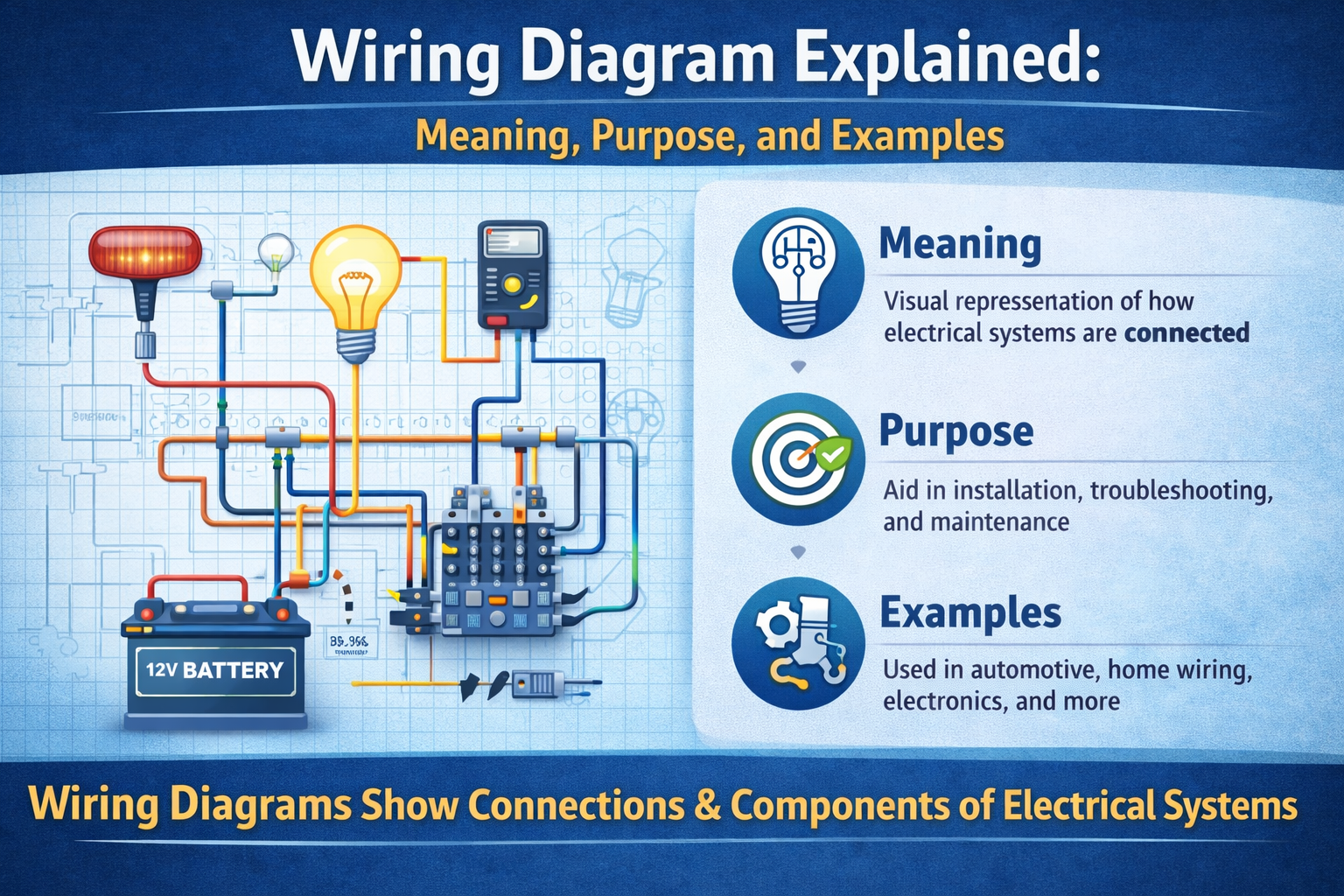
A wiring diagram is an essential technical drawing used in electrical and electronic fields to represent the way different components are connected within a system. It simplifies complex electrical layouts into clear symbolic illustrations that can be understood by professionals and learners alike. Instead of showing the physical appearance of components, it focuses on how each element is electrically linked, making it easier to understand system behavior without physically inspecting the installation.
These diagrams are widely used in construction, automotive engineering, manufacturing, and home electrical planning. They act as a universal language that helps ensure accuracy, safety, and consistency when dealing with electrical systems of any scale.
Basic Concept of Electrical Representation
The core idea behind a wiring diagram is to represent electricity flow through symbols and connecting lines. Each symbol corresponds to a real electrical component, while the lines indicate how current travels between them. This abstract representation allows complex systems to be broken down into simpler visual structures.
Instead of focusing on physical placement, wiring diagrams emphasize logical connections. This makes it possible to understand how a system functions even before it is physically built. It also helps professionals modify or repair systems without confusion.
Importance in Electrical Work
Wiring diagrams are extremely important in electrical work because they reduce errors and improve safety. When installing electrical systems, even a small mistake can lead to malfunction or hazardous conditions. A clear diagram ensures that every connection is made correctly according to design specifications.
Electricians rely on these diagrams to install wiring in buildings, machines, and vehicles. Engineers use them to design systems before construction begins. Technicians depend on them for diagnosing faults and carrying out repairs. Without wiring diagrams, modern electrical work would be significantly more difficult and risky.
Common Electrical Symbols Used
Wiring diagrams use standardized symbols to represent components such as switches, resistors, capacitors, batteries, motors, and grounding points. These symbols are universally recognized, allowing professionals from different regions to interpret diagrams consistently.
Each symbol is designed to be simple and distinct so that it can be quickly identified. For example, a switch is shown in a way that represents opening and closing of a circuit, while a battery is shown using alternating lines representing positive and negative terminals. Understanding these symbols is essential for reading and interpreting wiring diagrams effectively.
Types of Wiring Diagrams
There are different types of wiring diagrams used depending on the purpose and complexity of the system. Some diagrams focus on basic connections, while others provide detailed technical layouts.
One common type is the schematic diagram, which shows the functional relationship between components without focusing on physical placement. Another type is the pictorial diagram, which resembles actual components and shows their physical arrangement. There are also ladder diagrams, often used in industrial control systems, which represent electrical circuits in a step-by-step format.
Each type serves a specific purpose, helping users understand different aspects of electrical systems.
How to Read a Wiring Diagram
Reading a wiring diagram requires understanding symbols, line connections, and the overall flow of electricity. The process begins by identifying the power source and then following the path of current through different components.
Lines represent wires, and junctions indicate connection points. Components are placed in a logical sequence to show how electricity moves through the system. By following this flow, it becomes easier to understand how each part contributes to the overall function.
With practice, reading wiring diagrams becomes a systematic process that helps in both installation and troubleshooting.
Role in System Design and Planning
Wiring diagrams play a crucial role in designing electrical systems before they are physically built. Engineers use them to plan circuits, determine load distribution, and ensure that all components work together efficiently.
This planning stage helps prevent design flaws that could lead to system failure. It also allows modifications to be made easily on paper rather than during physical installation, saving time and resources. Proper planning through wiring diagrams ensures that systems operate smoothly and safely once implemented.
Use in Troubleshooting Electrical Problems
When electrical systems fail, wiring diagrams become essential tools for troubleshooting. They help technicians trace the flow of electricity and identify where a fault may have occurred.
By comparing the actual system with the diagram, it becomes easier to locate broken connections, faulty components, or incorrect wiring. This reduces repair time and increases accuracy in diagnosing issues. Without a wiring diagram, identifying problems in complex systems would be much more difficult and time-consuming.
Application in Residential Systems
In residential environments, wiring diagrams are used to design and maintain household electrical systems. They show how lighting, fans, sockets, switches, and appliances are connected to the main power supply.
These diagrams ensure that electrical loads are distributed properly to avoid overloads and short circuits. They also help electricians install wiring safely during construction or renovation. Homeowners may not always read these diagrams directly, but they benefit from the safety and efficiency they provide.
Application in Automotive Systems
In vehicles, wiring diagrams are used to represent complex electrical networks that control lighting, ignition, sensors, entertainment systems, and engine management.
Modern vehicles contain highly advanced electrical systems, and wiring diagrams help technicians understand how these systems interact. They are essential for diagnosing electrical faults, installing new components, or modifying vehicle systems. Without these diagrams, automotive repair and maintenance would be highly challenging.
Industrial and Commercial Use
In industrial environments, wiring diagrams are used to control machinery, production systems, and automation processes. These systems often involve complex electrical networks that require precise control and coordination.
Wiring diagrams help engineers design control panels, connect sensors, and integrate automated systems. They also play a key role in maintaining large-scale electrical infrastructure in factories and commercial buildings. Proper use of diagrams ensures continuous operation and reduces downtime caused by electrical failures.
Safety and Standardization
Safety is one of the most important aspects of electrical work, and wiring diagrams contribute significantly to it. By providing a clear representation of electrical connections, they reduce the risk of incorrect wiring that could lead to accidents.
Standardized symbols and formats ensure that diagrams can be understood universally, reducing miscommunication between professionals. This standardization is essential in global industries where teams from different regions collaborate on the same projects.
Educational Importance
Wiring diagrams are also widely used in education to teach students about electrical systems. They help learners understand how circuits are formed and how electricity flows through different components.
By studying these diagrams, students develop foundational knowledge that is essential for careers in electrical engineering, electronics, and related fields. They provide a visual learning method that makes complex concepts easier to grasp.
Understanding Electrical Symbols in Depth
Electrical symbols form the foundation of any wiring diagram because they replace real physical objects with simplified visual representations. Each symbol is carefully designed to communicate function rather than appearance. This allows a diagram to remain clean and readable even when it represents a highly complex system.
For example, a lamp symbol indicates a lighting load, while a resistor symbol shows a component that limits current. A fuse symbol represents protection against overcurrent, and a motor symbol represents mechanical energy conversion. These symbols are not random; they follow standardized electrical conventions so that anyone trained in the field can interpret them without confusion.
In more advanced systems, symbols may also include annotations that describe voltage levels, current ratings, or specific operational conditions. This extra information helps ensure that components are used within safe limits.
Electrical Wiring Conventions and Color Coding
Wiring diagrams often include color coding systems to represent different types of conductors in real installations. These colors are not just visual aids in diagrams but are also used in actual wiring to reduce mistakes during installation.
Common conventions may include specific colors for live wires, neutral conductors, and grounding paths. This ensures that electricians can quickly identify the purpose of each wire both in diagrams and in physical systems.
In addition to colors, line styles are also important. Solid lines usually represent main power connections, while dashed or dotted lines may represent control signals or optional connections. This distinction helps separate high-power circuits from low-power control circuits, improving clarity and safety.
Step-by-Step Understanding of Diagram Reading
Reading a wiring diagram becomes easier when approached in a structured way. The first step is identifying the power source, which is usually marked clearly with a battery or supply symbol. From there, the path of electricity is traced through the circuit step by step.
The next step involves identifying control elements such as switches or relays. These components determine when and how electricity flows through the system. After that, load components such as lamps, motors, or heaters are identified to understand what work the circuit performs.
Finally, return paths such as grounding or neutral lines are followed to complete the circuit loop. By repeating this process, even highly complex diagrams can be broken down into simple logical sequences.
Common Errors in Wiring Interpretation
One of the most frequent mistakes when working with wiring diagrams is misinterpreting symbols or overlooking connection points. A small misunderstanding can lead to incorrect wiring, which may cause system failure or safety hazards.
Another common issue is ignoring junction points where multiple wires meet. These points are critical because they determine how current is distributed across different parts of the system. Missing a junction can result in incomplete circuits or malfunctioning devices.
Incorrect identification of wire types is also a major problem. Confusing power lines with control lines can lead to damage to sensitive components. This is why careful reading and verification are essential before any physical wiring is performed.
Troubleshooting Using Wiring Diagrams
Wiring diagrams are extremely valuable when diagnosing electrical problems. The process usually begins by comparing the expected circuit shown in the diagram with the actual physical system. Any deviation indicates a potential fault.
Technicians often trace the circuit step by step, checking continuity at different points. If a component is not functioning, the diagram helps determine whether the issue lies in the component itself, the wiring, or the power source.
This systematic approach saves time and reduces guesswork. Instead of randomly testing parts of a system, technicians follow a logical path guided by the diagram. This improves accuracy and minimizes the risk of further damage.
Control Circuits and Ladder Logic Representation
In industrial systems, wiring diagrams often take the form of control circuits or ladder logic diagrams. These are specially designed to represent automation processes in a structured and easy-to-follow format.
Ladder diagrams are drawn with two vertical power rails and multiple horizontal rungs. Each rung represents a control function, such as starting a motor or activating a sensor. This format makes it easier to understand sequential operations in machines.
Control circuits are widely used in manufacturing systems where machines must operate in a specific order. They ensure that processes are automated, safe, and efficient without requiring constant human intervention.
Programmable Logic Controllers and Modern Wiring Systems
Modern electrical systems often integrate programmable logic controllers, which replace traditional hardwired control systems. Wiring diagrams for these systems include both physical wiring and logical programming elements.
In such systems, input devices like sensors send signals to the controller, which then processes the information and activates output devices like motors or alarms. The wiring diagram shows how these components are physically connected, while the logic defines how they behave.
This combination of hardware and software has made modern automation more flexible and efficient. Changes can often be made through programming rather than rewiring entire systems.
Digital Tools and Computer-Aided Design
In modern engineering, wiring diagrams are frequently created using computer-aided design tools. These digital platforms allow engineers to draw precise diagrams, simulate electrical behavior, and detect potential errors before physical installation.
Digital diagrams can be easily modified, shared, and stored, making collaboration more efficient. They also allow automatic generation of wiring lists, which help technicians during installation.
These tools reduce human error and improve overall design quality. They also make it possible to manage very large and complex electrical systems that would be difficult to design manually.
Safety Considerations in Electrical Design
Safety is a critical aspect of any wiring system. Wiring diagrams play a key role in ensuring that electrical installations meet safety standards and avoid hazardous conditions.
Proper grounding is one of the most important safety features shown in wiring diagrams. It ensures that excess current is safely directed away from users and sensitive components.
Protection devices such as fuses and circuit breakers are also clearly marked in diagrams. These devices automatically disconnect power in case of overload or short circuit, preventing damage and reducing fire risk.
Careful adherence to wiring diagrams during installation is essential to maintaining a safe electrical environment.
Real-World Application Workflow
In practical scenarios, wiring diagrams are used throughout the entire lifecycle of an electrical system. During design, engineers create the diagram to plan the system layout. During installation, electricians use it as a guide to connect components correctly.
Once the system is operational, technicians refer to the diagram for maintenance and troubleshooting. Even years after installation, wiring diagrams remain useful for upgrades or modifications.
This continuous use highlights their importance as long-term technical documents rather than temporary references.
Evolution of Wiring Diagram Practices
Wiring diagrams have evolved significantly over time. In earlier periods, they were drawn manually and often lacked standardization. This made interpretation difficult across different regions or industries.
With the development of international standards, symbols and formats became more consistent. This allowed engineers from different backgrounds to understand diagrams without confusion.
The transition from paper-based drawings to digital systems further improved accuracy and accessibility. Today, wiring diagrams are dynamic tools that can be updated and shared instantly.
Integration with Smart Technologies
Modern electrical systems increasingly incorporate smart technologies such as sensors, automated controls, and networked devices. Wiring diagrams for these systems are more complex because they include both electrical and data communication pathways.
These diagrams help visualize how smart devices interact within a larger system. For example, a sensor may trigger an automated response based on environmental conditions, and this interaction is clearly shown in the diagram.
This integration of intelligence into electrical systems has expanded the role of wiring diagrams beyond simple power distribution.
Understanding of Wiring Diagrams
Wiring diagrams are more than just technical drawings; they are essential communication tools in electrical engineering. They provide clarity, ensure safety, and enable efficient system design and maintenance.
From simple household circuits to complex industrial automation systems, wiring diagrams guide every stage of electrical work. Their structured representation of connections allows professionals to build, analyze, and repair systems with confidence and precision.
As electrical systems continue to advance, wiring diagrams will remain a fundamental part of understanding and managing how energy and information flow through modern technology.
Advanced Applications of Wiring Diagrams
Wiring diagrams are not limited to basic electrical installations; they play a major role in advanced technological systems where precision and coordination are essential. In modern industries, these diagrams are used to design integrated systems that combine electrical power, automation, and digital control. The complexity of these systems requires highly detailed diagrams that map out every connection clearly.
In sectors such as aerospace, robotics, telecommunications, and smart infrastructure, wiring diagrams are essential for ensuring that all components work together seamlessly. They help engineers manage multiple subsystems that must operate in synchronization, reducing the risk of malfunction and improving system efficiency.
Wiring Diagrams in Automation Systems
Automation systems rely heavily on wiring diagrams to function correctly. These systems often include sensors, controllers, actuators, and feedback loops that work together to perform tasks without human intervention.
A wiring diagram in automation shows how sensors collect data from the environment and send signals to a control unit. The control unit then processes this information and activates output devices such as motors, valves, or alarms. This entire process depends on precise wiring connections, which are clearly illustrated in the diagram.
Without accurate diagrams, automation systems would be difficult to design, install, and maintain. They ensure that every signal path is correctly established and that the system operates as intended.
Role in Communication Systems
Wiring diagrams are also essential in communication networks, including telephone systems, internet infrastructure, and broadcasting equipment. These systems depend on accurate signal transmission between multiple devices.
In such diagrams, different types of lines may represent data cables, fiber optics, or wireless connections. Each connection point must be carefully planned to avoid signal loss or interference.
Engineers use these diagrams to design network layouts, identify connection points, and ensure proper signal flow. They also help in troubleshooting network failures by tracing the exact path of communication.
Importance in Renewable Energy Systems
Renewable energy systems such as solar panels, wind turbines, and battery storage setups rely heavily on wiring diagrams for proper installation and operation. These systems involve multiple components that must work together efficiently to generate, store, and distribute energy.
A wiring diagram for a solar power system, for example, shows how panels are connected to inverters, batteries, and electrical loads. It also includes safety devices such as charge controllers and circuit breakers.
Proper wiring ensures maximum energy efficiency and prevents damage caused by overcharging, overload, or incorrect connections. As renewable energy systems become more common, wiring diagrams play an increasingly important role in sustainable technology.
Maintenance and System Upgrades
Wiring diagrams are essential tools during system maintenance and upgrades. Over time, electrical systems may require modifications due to wear, technological advancements, or changing requirements.
Technicians use diagrams to understand the original design before making any changes. This ensures that upgrades do not disrupt existing connections or create safety hazards.
When replacing components or expanding systems, wiring diagrams help maintain consistency and compatibility. They also make it easier to integrate new technologies into older systems without complete redesigns.
Training and Skill Development
Learning to interpret wiring diagrams is a key skill for anyone entering electrical, electronics, or engineering fields. Training programs often begin with simple diagrams and gradually progress to more complex systems.
Students learn how to identify symbols, trace circuits, and understand system behavior. This knowledge forms the foundation for practical electrical work.
Hands-on practice with wiring diagrams helps learners develop problem-solving skills and technical confidence. It also prepares them for real-world applications where accuracy and attention to detail are critical.
Challenges in Complex Electrical Systems
As electrical systems become more advanced, wiring diagrams also become more complex. One of the main challenges is maintaining clarity while representing a large number of components and connections.
In very large systems, diagrams may span multiple pages or be divided into sections for easier understanding. Even then, maintaining consistency between different parts of the diagram is essential.
Another challenge is keeping diagrams updated. As systems are modified over time, outdated diagrams can lead to confusion and errors. This is why proper documentation and regular updates are important in professional environments.
Integration of Software and Electrical Design
Modern engineering often combines electrical design with software-based control systems. Wiring diagrams now include both physical connections and logical operations.
Software tools allow engineers to simulate how a system will behave before it is physically built. This helps identify potential issues early in the design process.
By combining electrical diagrams with programming logic, engineers can create highly efficient and flexible systems. This integration has become a key part of modern industrial design.
Importance of Accuracy and Precision
Accuracy is critical when creating and using wiring diagrams. Even a small mistake in a diagram can lead to incorrect installation or system failure.
Every line, symbol, and connection must be carefully checked to ensure it reflects the actual design. Professional engineers often follow strict standards and verification processes to maintain accuracy.
Precision in wiring diagrams directly affects system performance, safety, and reliability. This is why they are treated as official technical documents in engineering projects.
Global Standardization of Wiring Systems
To ensure consistency across industries and countries, wiring diagrams follow standardized rules and symbols. These standards allow professionals from different regions to understand and work with the same diagrams.
Standardization also improves communication between manufacturers, engineers, and technicians. It ensures that electrical systems can be designed and maintained globally without confusion.
This universal approach has made wiring diagrams an important part of international engineering practices.
Future of Wiring Diagram Technology
The future of wiring diagrams is closely linked to advancements in digital technology. Artificial intelligence, smart design software, and virtual simulation tools are changing how diagrams are created and used.
In the future, wiring diagrams may become fully interactive, allowing users to simulate system behavior in real time. This could make troubleshooting and design even more efficient.
Augmented reality may also play a role, allowing technicians to view wiring diagrams directly over physical systems using smart devices. This would further simplify installation and repair work.
Extended Understanding
Wiring diagrams are fundamental to modern electrical and electronic systems. They provide a structured way to design, analyze, and maintain complex networks of components.
From simple household wiring to advanced industrial automation, communication systems, and renewable energy networks, these diagrams ensure that everything functions correctly and safely.
As technology continues to evolve, wiring diagrams will remain a vital tool for engineers and technicians, adapting to new systems while maintaining their core purpose of clarity, precision, and reliability.
Wiring Diagrams in Everyday Technology
Wiring diagrams are deeply connected to everyday technology, even when they are not directly visible to users. Almost every electrical or electronic device relies on an internal wiring plan that ensures proper functioning. From mobile chargers to household appliances, these diagrams guide how components interact within a compact system.
In devices like refrigerators, washing machines, air conditioners, and microwaves, wiring diagrams are used to connect motors, sensors, control boards, and power supplies. These systems depend on precise electrical coordination, and even a minor wiring error can affect performance or safety. Engineers use diagrams to ensure that every function operates correctly under different conditions.
Internal Structure of Appliances
Inside modern appliances, wiring diagrams act as a blueprint for assembling internal components. They show how electricity flows from the main power input to various functional parts. For example, in a washing machine, the diagram will illustrate connections between the control panel, water pump, drum motor, and safety switches.
Each component must receive the correct voltage and current at the right time. Wiring diagrams help designers sequence these operations so that the machine performs its tasks efficiently. They also include protective elements that prevent overheating or electrical damage during operation.
Wiring Diagrams in Electronics
In electronics, wiring diagrams become even more detailed due to the small size and high complexity of circuits. Devices like smartphones, computers, and televisions contain thousands of interconnected components on circuit boards.
These diagrams help engineers design how signals travel between microchips, processors, memory units, and power modules. Unlike large electrical systems, electronic wiring diagrams focus more on signal flow and data processing rather than just power distribution.
This level of precision is essential for ensuring that devices function at high speed without errors or interference.
Role in Troubleshooting Consumer Electronics
When electronic devices stop working, wiring diagrams are crucial for repair technicians. They help identify whether the issue lies in a broken connection, damaged component, or power failure.
Technicians trace circuit paths step by step, checking voltage levels and continuity at different points. This methodical approach reduces guesswork and increases repair accuracy.
Without wiring diagrams, diagnosing faults in modern electronics would be extremely difficult due to their compact and highly integrated design.
Industrial Electrical Control Panels
Industrial control panels are complex systems that rely heavily on wiring diagrams for design and maintenance. These panels control machinery, production lines, and safety systems in factories.
A wiring diagram for a control panel shows how switches, relays, timers, and controllers interact to manage industrial operations. It ensures that machines operate in the correct sequence and respond properly to input signals.
These diagrams are also essential for emergency systems, where rapid shutdown or safety activation is required. Proper wiring ensures that such actions happen instantly and reliably.
Electrical Load Management
Wiring diagrams also play an important role in managing electrical loads within a system. Load management ensures that electrical demand is distributed evenly to prevent overloads and failures.
In large installations, diagrams show how different circuits are separated and protected. This helps maintain stability and prevents damage to sensitive equipment.
By analyzing wiring diagrams, engineers can balance electrical loads effectively and improve system efficiency over time.
Role in Building Infrastructure
In modern buildings, wiring diagrams are used to design complete electrical infrastructure. This includes lighting systems, power outlets, backup generators, and emergency systems.
Architects and engineers collaborate to ensure that wiring layouts meet both functional and safety requirements. The diagram acts as a guide during construction, ensuring that electrical installations follow the intended design.
Proper planning at this stage reduces future maintenance issues and ensures long-term reliability of the building’s electrical system.
Emergency and Safety Systems
Wiring diagrams are especially important in emergency systems such as fire alarms, smoke detectors, and emergency lighting. These systems must function instantly during critical situations.
The diagrams show how sensors detect danger and activate alarms or safety responses. They also include backup power systems that ensure operation even during power failures.
Reliability in these systems depends entirely on accurate wiring design and proper installation.
Electrical Testing and Quality Control
Before any electrical system is approved for use, it undergoes testing and quality control. Wiring diagrams are used as reference documents during this process.
Inspectors compare actual installations with diagram specifications to ensure compliance. This includes checking connections, insulation, grounding, and load distribution.
Any deviation from the diagram must be corrected before the system is approved, ensuring safety and performance standards are met.
Documentation and Record Keeping
Wiring diagrams also serve as important documentation for future reference. Once a system is installed, the diagram becomes part of its technical record.
This documentation is useful for future repairs, upgrades, or expansions. It ensures that anyone working on the system in the future can understand its original design.
Proper record keeping also helps in maintaining compliance with safety regulations and engineering standards.
Impact on Engineering Efficiency
Wiring diagrams significantly improve engineering efficiency by reducing design time and minimizing errors. They allow engineers to visualize complex systems before physical construction begins.
This early visualization helps identify potential issues and optimize system performance. It also reduces material waste by ensuring that installations are planned accurately.
As a result, projects can be completed faster, safer, and with higher reliability.
Role in Innovation and Development
Wiring diagrams are also essential in innovation and technological development. When new devices or systems are being created, diagrams help engineers experiment with different configurations.
They allow designers to test ideas on paper or digitally before building prototypes. This encourages creativity while maintaining technical accuracy.
Many modern innovations in electronics, automation, and energy systems begin with detailed wiring diagrams as their foundation.
Human Understanding and Communication
One of the most important roles of wiring diagrams is improving communication between professionals. Electrical systems are complex, and verbal descriptions alone are often not enough.
Wiring diagrams provide a clear visual language that everyone can understand regardless of background or language differences. This improves collaboration between engineers, technicians, and designers.
It also reduces misunderstandings that could lead to costly or dangerous errors.
Continuous Relevance in Modern Technology
Despite advances in digital systems and automation, wiring diagrams remain highly relevant. Even as systems become more intelligent, the need for clear electrical representation does not disappear.
They continue to serve as the backbone of system design, installation, and maintenance. Whether in simple devices or advanced smart systems, wiring diagrams provide essential structure and clarity.
Their role evolves with technology, but their fundamental purpose remains unchanged.
Final Perspective on Wiring Diagrams
Wiring diagrams are a critical part of modern engineering and technology. They connect theory with practical application, ensuring that electrical systems function safely and efficiently.
From household appliances to industrial automation and advanced electronics, they provide the guidance needed to design, build, and maintain reliable systems.
As technology continues to evolve, wiring diagrams will remain a foundational tool that supports innovation, safety, and precision across all electrical disciplines.
Conclusion
Wiring diagrams are a fundamental part of electrical and electronic systems, serving as a clear and structured way to represent how components are connected and how electricity flows within a system. They transform complex networks into understandable visual formats, making it possible for engineers, technicians, and learners to design, install, and maintain systems with accuracy and confidence.
Across residential, industrial, automotive, and advanced technological applications, wiring diagrams ensure that electrical work is performed safely and efficiently. They reduce errors, simplify troubleshooting, and provide a reliable reference for maintenance and future upgrades. Their standardized symbols and structured layouts make them universally understandable, improving communication between professionals worldwide.
As technology continues to advance, wiring diagrams remain just as important, evolving alongside modern systems while maintaining their core purpose. Whether used in simple household circuits or highly complex automated industries, they continue to be an essential tool that supports safety, precision, and innovation in the electrical world.