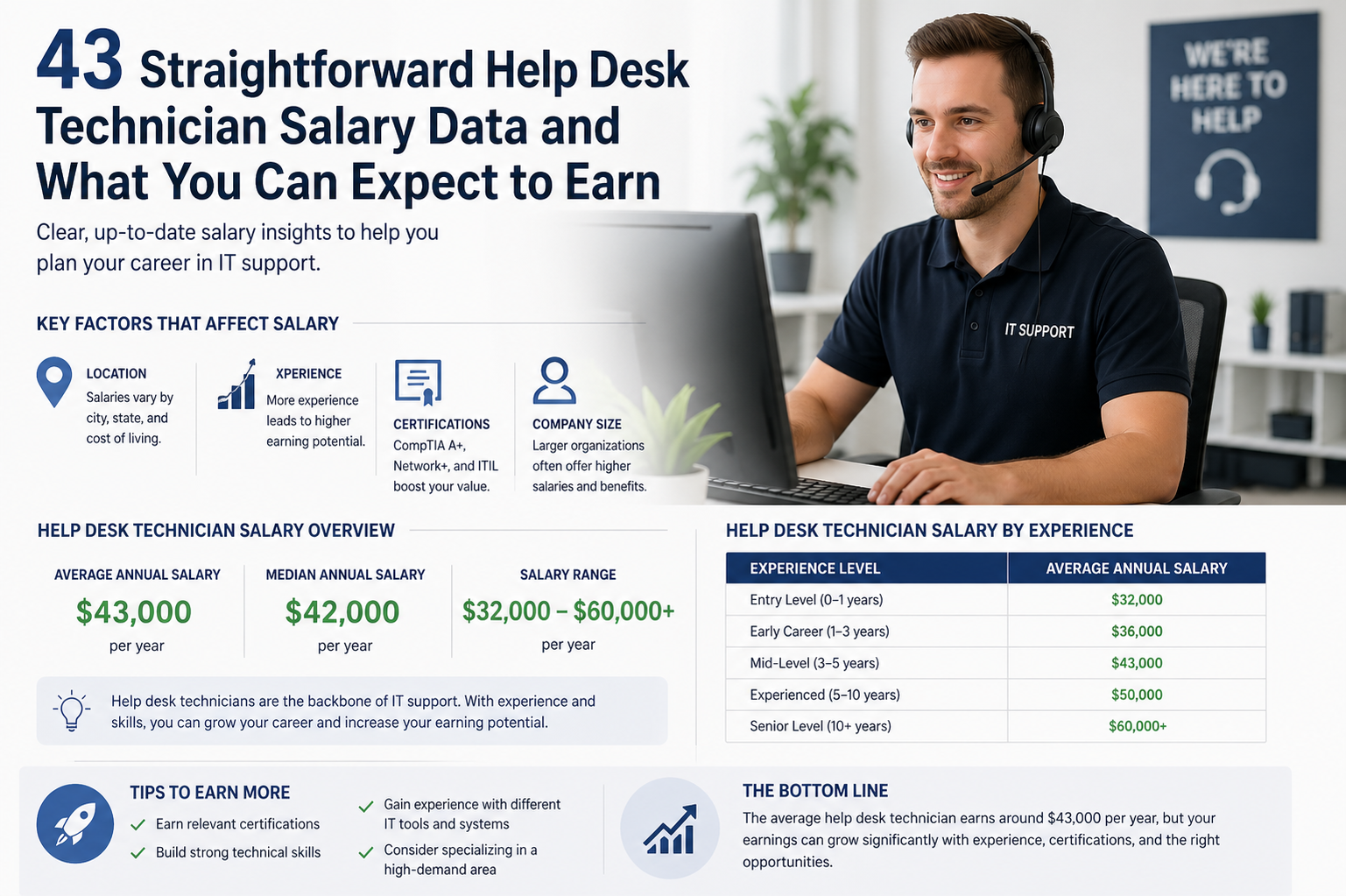
Help desk technicians are the first line of support in most IT environments. Their main responsibility is to assist users who face technical issues with hardware, software, networks, or internal systems. Because they act as the initial contact point for troubleshooting, their work directly affects productivity across an organization. The salary associated with this role reflects both its entry-level accessibility and its importance in keeping business operations running smoothly. While it is often considered a starting point in information technology, it also serves as a foundation for higher-paying career paths.
How Salary Levels Are Structured in This Field
Compensation for help desk technicians is generally structured in tiers based on experience and responsibility. At the lowest tier, individuals are still learning core technical skills and working under supervision. The next tier includes technicians who can independently resolve a wide range of issues and may begin handling escalations. The highest tier within this role includes senior support staff who manage complex problems, mentor junior technicians, and sometimes coordinate IT support workflows. Each progression step usually comes with noticeable salary improvement, reflecting growing expertise and reliability.
Entry-Level Earnings and What Influences Them
At the entry stage, salary expectations are modest but stable. New technicians typically focus on basic troubleshooting tasks such as password resets, printer issues, software installation support, and general user assistance. Several factors influence how much an entry-level technician earns, including geographic location, company size, and educational background. Those with formal IT education or certifications often start at slightly higher pay levels compared to those entering without technical credentials. Even at this stage, gaining practical experience is more valuable than starting salary, as it sets the foundation for future growth.
Mid-Level Compensation and Skill Development
After gaining experience, help desk technicians usually move into mid-level positions where their responsibilities expand significantly. At this stage, they are expected to handle more advanced technical problems such as network connectivity issues, system configuration errors, and software compatibility challenges. Salary increases at this level are tied not only to experience but also to demonstrated problem-solving ability and efficiency. Employers begin to value technicians who can resolve issues quickly and reduce downtime for users, as this directly improves productivity across the organization.
Senior Help Desk Roles and Advanced Pay Scales
Senior help desk technicians often act as the backbone of IT support teams. They deal with high-priority incidents, assist in system upgrades, and provide guidance to junior staff. In some organizations, they also participate in IT planning and process improvement. Because of their advanced skills and leadership responsibilities, their salaries are considerably higher than those at entry level. At this stage, technical depth and communication skills become equally important, as senior technicians must often explain complex issues in simple terms to non-technical users.
The Impact of Location on Earnings
Geographic location plays a major role in determining salary levels for help desk technicians. In areas with a higher cost of living, salaries tend to be significantly higher to match living expenses. Urban centers and technology-driven regions often offer better compensation compared to rural or less developed areas. However, remote work opportunities are changing this dynamic, allowing some technicians to earn competitive salaries regardless of location. Even so, local demand for IT support professionals continues to influence pay structures.
Industry Differences in Pay Structure
Not all industries pay help desk technicians the same salary. Organizations in finance, healthcare, and technology sectors often offer higher compensation due to the critical nature of their systems and the sensitivity of their data. In contrast, educational institutions or small businesses may offer lower salaries but provide more relaxed work environments or better work-life balance. The complexity of systems being supported also affects pay, as more advanced infrastructures require higher skill levels and therefore better compensation.
Certifications and Their Effect on Salary Growth
Professional certifications can significantly impact earning potential in this field. Certifications demonstrate validated technical knowledge and commitment to professional development. Technicians with certifications are often able to negotiate higher starting salaries and faster promotions. Common certifications focus on networking, hardware troubleshooting, cybersecurity fundamentals, and system administration. Employers view certified professionals as more reliable and capable of handling complex tasks, which directly translates into better pay opportunities.
Experience Versus Education in Salary Determination
While formal education can help secure an initial position, hands-on experience is often more influential in determining long-term salary growth. Many help desk technicians begin their careers with basic degrees or even without formal higher education in IT. However, those who consistently build practical experience by solving real-world technical issues tend to advance more quickly. Employers value problem-solving ability and technical confidence, which are typically developed through experience rather than classroom learning alone.
Career Progression Beyond Help Desk Roles
Help desk positions are often viewed as stepping stones to more advanced IT careers. With enough experience, technicians can move into roles such as network administrator, system analyst, cybersecurity specialist, or IT manager. Each of these roles comes with significantly higher salary potential. The transition usually depends on skill development, additional certifications, and exposure to more complex systems. Many professionals use help desk roles as a launchpad into long-term IT careers with strong financial growth.
Work Environment and Its Influence on Pay
The work environment can also affect salary expectations. Help desk technicians working in large corporations or managed service providers often earn more due to higher workloads and greater system complexity. These environments may require shift work, on-call availability, or support for multiple clients simultaneously. Smaller organizations may offer lower salaries but provide more predictable schedules and less pressure. Compensation is often balanced against workload expectations and job intensity.
Demand for Help Desk Technicians in the Job Market
The demand for help desk technicians remains consistently strong as almost every organization relies on technology. As businesses continue to expand their digital operations, the need for technical support grows accordingly. This steady demand helps maintain stable salary levels and provides job security for those entering the field. In addition, the increasing reliance on remote systems and cloud-based infrastructure has expanded opportunities for technicians with updated skills.
Soft Skills and Their Role in Salary Advancement
While technical knowledge is essential, soft skills play a major role in career advancement and salary growth. Communication skills, patience, problem-solving ability, and customer service orientation are highly valued in help desk roles. Technicians who can explain technical issues clearly and maintain a calm approach under pressure are often promoted more quickly. Employers recognize that effective communication reduces frustration for users and improves overall service quality.
Long-Term Earning Potential in the Field
Over time, help desk technicians can significantly increase their earning potential by combining experience, certifications, and specialization. Those who continue to grow technically often transition into higher-paying IT roles, while others move into management positions overseeing support teams. The long-term financial outlook in this field is strong for individuals who actively invest in skill development and adapt to evolving technologies.
Final Perspective on Salary Expectations
Help desk technician salaries should be viewed as part of a broader career development journey rather than a fixed endpoint. While initial earnings may be modest, the role provides essential exposure to IT systems and problem-solving scenarios that are critical for advancement. With consistent learning, practical experience, and professional growth, this career path can lead to stable income increases and access to more specialized and higher-paying opportunities within the technology sector.
How Company Size Changes Salary Expectations
The size of an organization has a direct influence on how much a help desk technician earns. Large enterprises usually operate complex IT environments with thousands of users, multiple systems, and strict uptime requirements. Because of this complexity, they tend to offer higher salaries and more structured career growth. Technicians in these environments often handle specialized tickets, follow formal escalation procedures, and work within larger support teams.
Smaller companies, on the other hand, may have fewer employees and simpler systems. Help desk technicians in these settings often handle a broader range of tasks, sometimes even outside traditional IT support responsibilities. While the salary may be lower compared to large corporations, the variety of work can help build diverse technical skills quickly. This trade-off between pay and experience is common in early IT careers.
Remote Work and Its Effect on Pay Trends
Remote work has changed salary expectations in the help desk field. Many organizations now hire technicians who work from home, supporting users across different locations. In some cases, remote positions offer salaries comparable to in-office roles, especially when the company is located in a high-paying region.
However, remote work can also introduce variation in pay depending on where the employee lives. Some companies adjust salaries based on local cost of living, while others offer standardized pay regardless of location. This creates opportunities for technicians in lower-cost regions to earn competitive wages, but it can also lead to differences in compensation policies across employers.
Overtime, Shifts, and Additional Earnings
Help desk roles often include shift-based work, especially in organizations that require 24/7 IT support. Night shifts, weekend coverage, and holiday support can significantly influence total earnings. Many companies offer additional pay or allowances for working outside standard business hours.
Overtime opportunities also exist in environments with high support demand or system outages. Technicians who are willing to take on extra hours can increase their overall income beyond base salary. However, the frequency and availability of overtime vary widely depending on company structure and workload.
Entry-Level Growth Within the First Few Years
The first few years in a help desk role are usually focused on rapid skill development. During this time, technicians become more efficient at troubleshooting and begin to recognize recurring technical issues more quickly. This improvement often leads to salary increases, even without a formal promotion.
Employers typically reward reliability, speed, and accuracy in problem resolution. Technicians who demonstrate strong performance may receive incremental raises or bonuses. In some cases, they may also be assigned more complex tasks, which further contributes to professional growth and higher compensation.
Transition Into Tiered Support Systems
Many IT departments organize help desk teams into tiers. Tier one focuses on basic issues such as password resets and simple troubleshooting. Tier two handles more advanced technical problems that require deeper system knowledge. Tier three often deals with critical infrastructure issues or specialized system support.
As technicians move up these tiers, their salary generally increases. Advancement is not automatic and depends on skill development, performance, and sometimes internal training programs. Moving into higher tiers also requires stronger analytical thinking and a deeper understanding of systems and networks.
The Role of IT Service Management Frameworks
Many organizations use structured IT service management frameworks to organize their support processes. These frameworks define how incidents are handled, escalated, and resolved. Help desk technicians working in such environments often follow strict procedures and documentation standards.
While this structure may seem rigid, it helps improve efficiency and consistency in service delivery. Technicians who become familiar with these systems are often seen as more valuable because they can work effectively within formal IT environments. This familiarity can also contribute to better job stability and higher pay opportunities.
Technical Skill Specialization and Salary Growth
General help desk roles can evolve into more specialized positions over time. Technicians may choose to focus on networking, cybersecurity support, cloud systems, or application support. Specialization usually leads to higher pay because it requires deeper technical knowledge and training.
For example, a technician who develops strong networking skills may transition into roles involving firewall configuration, network monitoring, or infrastructure support. Similarly, those who focus on security may assist in monitoring threats, managing access controls, and supporting incident response teams. These specialized paths often come with significantly higher salary ceilings.
Communication With Non-Technical Users
One of the most important aspects of help desk work is communication. Technicians must frequently interact with users who have little or no technical background. The ability to explain complex issues in simple terms is highly valued by employers.
Strong communication skills also reduce frustration and improve resolution times. Technicians who can maintain a calm, professional tone while assisting users are often rated more highly in performance evaluations. Over time, this can influence salary increases and promotion opportunities.
Certifications as Long-Term Salary Multipliers
Certifications continue to play an important role throughout a technician’s career. While they may help secure an initial job, their impact becomes even more significant when combined with experience. Advanced certifications demonstrate specialized knowledge and can open doors to higher-paying roles.
Employers often use certifications as benchmarks for promotion or salary adjustment. Technicians who regularly update their certifications show commitment to professional growth, which is rewarded in competitive IT environments. This continuous learning approach is one of the most reliable ways to increase long-term earning potential.
Workload Intensity and Burnout Considerations
Help desk environments can vary significantly in workload intensity. Some organizations have well-staffed teams with manageable ticket volumes, while others may have high-pressure environments with constant incoming requests. Salary often reflects this workload difference.
High-intensity environments may offer higher pay, but they can also lead to increased stress and burnout if not managed properly. Technicians must balance financial benefits with long-term sustainability. Companies that prioritize employee well-being may offer slightly lower salaries but better working conditions and support systems.
Performance Metrics and Pay Adjustments
Many organizations track help desk performance using metrics such as response time, resolution time, and customer satisfaction ratings. These metrics are often used in performance reviews and can influence salary increases.
Technicians who consistently perform well in these areas may be eligible for bonuses, raises, or promotions. On the other hand, poor performance may slow salary progression. Understanding how performance is measured is important for anyone looking to maximize earnings in this field.
Internal Promotions and Career Mobility
Help desk roles often serve as entry points into broader IT departments. Internal promotions are common for technicians who demonstrate strong technical ability and reliability. Moving into roles such as system administration, network support, or IT operations management can significantly increase salary levels.
Many organizations prefer to promote from within because internal candidates already understand company systems and processes. This creates strong opportunities for career mobility for help desk technicians who consistently perform well and continue learning.
Economic Conditions and Industry Demand
Economic conditions can also influence salary trends in the IT support field. During periods of strong business growth, companies often expand their IT departments and increase salaries to attract talent. During slower economic periods, salary growth may stabilize, but demand for essential IT support typically remains steady.
Because technology is deeply integrated into modern business operations, help desk roles tend to be more stable than many other entry-level positions. This stability contributes to consistent long-term earning potential.
Overview of Earning Potential Pathways
Help desk technician salaries are shaped by a combination of experience, skill development, location, industry, and job complexity. While starting salaries may be modest, the role offers strong opportunities for growth through experience and specialization.
Technicians who actively build technical skills, improve communication abilities, and pursue certifications can steadily increase their earnings over time. With consistent effort, this career path can transition from entry-level support into higher-paying technical or managerial roles, creating a stable and rewarding long-term income trajectory.
Advanced Career Shifts Beyond Traditional Help Desk Work
As help desk technicians gain experience, many begin to move away from strictly reactive support roles and into more proactive IT positions. This shift often includes responsibilities like system monitoring, infrastructure maintenance, and automation of routine support tasks. These changes are important because they directly influence salary growth, as employers tend to pay more for proactive technical contributions that reduce long-term operational issues.
At this stage, technicians are no longer just solving tickets but also identifying patterns in recurring problems. They may suggest system improvements or participate in IT planning discussions. This expanded role increases their value within the organization and often leads to higher compensation or formal promotions into specialized IT departments.
The Importance of Problem Ownership in Salary Progression
One of the key differences between average and high-performing help desk technicians is the ability to take ownership of problems. Instead of simply resolving issues and closing tickets, experienced technicians follow problems through to full resolution, even when multiple teams are involved.
This sense of ownership often leads to recognition from management. Technicians who consistently demonstrate accountability tend to be trusted with more complex issues, which naturally come with higher pay brackets. Over time, this behavior becomes a major factor in determining salary advancement within IT support environments.
How Technology Evolution Impacts Salary Trends
Technology is constantly evolving, and help desk technicians must adapt to new tools, systems, and platforms. As organizations adopt cloud computing, virtualization, and advanced cybersecurity tools, the skill requirements for support roles also increase.
Technicians who stay updated with modern technologies often see better salary growth compared to those who remain focused on outdated systems. Employers are willing to pay more for individuals who can support cloud environments, remote infrastructure, and integrated digital systems. This continuous evolution of technology ensures that the salary ceiling in this field keeps rising for skilled professionals.
The Role of Automation in Changing Job Value
Automation is gradually changing the nature of help desk work. Many basic tasks such as password resets, ticket routing, and system alerts are now handled by automated systems or AI-based tools. This shift reduces the volume of simple tasks and increases the importance of complex problem-solving skills.
As automation handles repetitive work, technicians who remain valuable are those who can manage advanced troubleshooting, system integration, and user experience issues. This change pushes salaries upward for skilled professionals, while reducing demand for purely entry-level repetitive support roles.
Specialized IT Support Paths With Higher Salary Potential
Help desk experience can lead to several specialized IT support paths that offer significantly higher salaries. One common path is network support, where technicians manage routers, switches, and connectivity systems. Another is system administration, which involves managing servers, user accounts, and internal infrastructure.
Cybersecurity support is another rapidly growing specialization. Technicians in this area help monitor security systems, investigate potential threats, and ensure compliance with organizational policies. These specialized roles often require additional training but offer strong salary growth compared to general help desk positions.
The Value of Certifications at Senior Levels
While certifications are important at all stages, they become especially valuable at mid and senior levels. Advanced certifications demonstrate that a technician has mastered complex technical areas and is capable of handling enterprise-level systems.
At higher career stages, certifications can directly influence promotions and salary negotiations. Employers often use them as proof of readiness for advanced responsibilities. This means that continuous learning remains a key driver of long-term income growth in IT support careers.
Leadership Opportunities Within Help Desk Teams
As technicians gain experience, they may move into informal or formal leadership roles within their teams. This can include mentoring new employees, coordinating ticket assignments, or acting as a shift lead.
Leadership responsibilities often come with additional compensation. Even without moving into full management, technicians who take on coordination roles are usually recognized with higher pay. These roles also serve as a stepping stone toward IT management positions, which offer significantly higher salary ranges.
Transition Into IT Management Roles
Some help desk technicians eventually move into IT management positions. These roles involve overseeing entire support teams, managing budgets, and planning IT strategies for organizations.
IT managers are responsible for ensuring that technical support aligns with business goals. Because of the strategic nature of these roles, salaries are significantly higher compared to standard technical positions. However, moving into management requires strong leadership skills in addition to technical expertise.
Soft Skill Maturity and Its Long-Term Impact
As careers progress, soft skills become just as important as technical knowledge. Emotional intelligence, conflict resolution, and time management play a major role in senior-level performance.
Technicians who can handle stressful situations calmly and maintain positive communication with users often stand out in performance evaluations. Over time, these soft skills contribute to better job stability and higher earning potential, especially in customer-facing IT environments.
Globalization of IT Support Roles
The global nature of technology has expanded job opportunities for help desk technicians. Many organizations now outsource support services to different countries or operate global support centers. This creates opportunities for technicians in various regions to access international-level work environments.
However, this globalization also introduces salary variation depending on region and company structure. While some regions may offer lower base salaries, others provide competitive compensation based on global standards. This interconnected job market continues to influence salary trends worldwide.
Economic Value of Reliability in IT Support
Reliability is one of the most valued traits in help desk roles. Technicians who consistently show up on time, resolve issues efficiently, and maintain high service quality often become indispensable to their teams.
This reliability translates into better performance reviews, higher trust from management, and increased chances of salary growth. In many cases, dependable technicians are prioritized for promotions over those with higher technical skills but inconsistent performance.
Long-Term Financial Outlook of the Career Path
The long-term financial outlook for help desk technicians is generally positive, especially for those who actively invest in skill development. While the starting point may not be highly lucrative, the career offers multiple pathways for salary growth.
Technicians who continue advancing into specialized IT roles, management positions, or high-demand technical areas can achieve strong income progression over time. The key factor is continuous learning and adaptability to new technologies.
Career Value and Earnings
Help desk technician roles should be viewed as a strategic entry point into the broader IT industry rather than a fixed salary position. The real value of this career lies in the experience gained, the technical foundation built, and the opportunities for advancement it creates.
With consistent effort, practical learning, and professional development, this role can lead to stable income growth and access to higher-paying positions across multiple areas of information technology.
Future Demand for Help Desk Technicians
The demand for help desk technicians is expected to remain strong as organizations continue to rely heavily on digital systems. Nearly every industry now depends on technology for daily operations, which ensures a constant need for technical support staff. Even as automation and artificial intelligence improve efficiency, human technicians are still required to handle complex issues, unusual errors, and user-specific problems that automated systems cannot fully resolve.
As companies expand their digital infrastructure, the volume and complexity of support requests also increase. This creates ongoing job opportunities and helps maintain stable salary growth in the field. Technicians who stay updated with modern tools and platforms are likely to benefit the most from this continued demand.
The Growing Role of Cloud and Remote Systems
Modern IT environments are increasingly built around cloud computing and remote access systems. This shift has changed the type of support help desk technicians provide. Instead of only dealing with local hardware and office systems, they now support cloud-based applications, virtual desktops, and distributed networks.
This transition has also influenced salary expectations. Technicians who understand cloud platforms and remote system management are often paid more than those with only traditional on-premises experience. As businesses continue migrating to cloud infrastructure, this skill set is becoming more valuable and directly impacts earning potential.
How Experience Compounds Over Time
In help desk careers, experience has a compounding effect on salary growth. Early years focus on learning basic troubleshooting, but with time, technicians begin recognizing patterns, anticipating issues, and resolving problems faster. This efficiency makes them more valuable to employers.
Over several years, accumulated experience often matters more than formal education when it comes to salary increases. Employers prioritize technicians who can reduce downtime, improve user satisfaction, and handle complex systems independently. This long-term accumulation of skills is one of the strongest drivers of income growth in the field.
Impact of Organizational Structure on Earnings
The structure of an organization can significantly influence salary levels. Companies with well-defined IT departments and structured career ladders tend to offer clearer paths for salary progression. In these environments, technicians know exactly what skills or certifications are required to move to the next level.
In contrast, smaller organizations may have less formal structures, which can sometimes limit upward mobility but offer broader job responsibilities. This means technicians may gain diverse experience quickly but might need to switch employers to achieve higher salary growth.
Performance-Based Rewards and Incentives
Many organizations now include performance-based incentives in addition to base salary. These can include bonuses for meeting performance targets, recognition awards, or additional compensation for handling high-priority incidents.
Technicians who consistently perform well in key metrics such as response time, resolution accuracy, and customer satisfaction often benefit the most from these incentive systems. Over time, these rewards can significantly increase total annual earnings beyond the base salary alone.
The Shift Toward Hybrid IT Skill Sets
The modern help desk technician is no longer limited to basic troubleshooting. Employers increasingly expect hybrid skill sets that combine technical support, networking knowledge, cybersecurity awareness, and cloud familiarity.
This shift has raised the overall skill requirement for the role, which in turn affects salary levels. Technicians who develop cross-functional expertise are more competitive in the job market and have access to higher-paying positions compared to those with narrow skill sets.
Career Longevity and Stability in IT Support
Help desk roles offer strong career stability because they are essential to all technology-driven organizations. Unlike some industries that fluctuate with market conditions, IT support remains consistently necessary regardless of economic changes.
This stability makes the role attractive for individuals seeking long-term employment security. While salary growth may vary depending on skill development, the overall demand for support technicians ensures steady job availability.
Work-Life Balance Considerations
Work-life balance in help desk roles can vary depending on the organization. Some environments offer predictable schedules and structured shifts, while others require rotating shifts or on-call responsibilities.
Higher-paying roles sometimes involve less predictable hours due to the critical nature of the systems being supported. Technicians must often balance higher income opportunities with personal lifestyle preferences when choosing career paths within IT support.
Importance of Continuous Learning
Continuous learning is one of the most important factors in salary progression for help desk technicians. Technology changes rapidly, and staying updated with new systems, tools, and best practices is essential for long-term success.
Technicians who regularly upgrade their skills are more likely to move into higher-paying roles, while those who do not adapt may find their salary growth stagnating. Learning new technologies ensures long-term relevance in a competitive job market.
Negotiating Salary as a Help Desk Technician
Salary negotiation plays an important role in how much a help desk technician ultimately earns, especially after gaining some experience. Many entry-level employees accept the initial offer without discussion, but once basic skills are proven, there is often room to negotiate higher pay. Employers tend to respond positively when technicians can clearly demonstrate their technical abilities, problem-solving speed, and reliability.
Strong preparation is essential during negotiation. Technicians who understand their market value, know industry standards, and can present measurable achievements are in a better position to secure higher compensation. Even small percentage increases at early stages can significantly impact long-term earnings due to cumulative salary growth.
The Influence of Job Switching on Income Growth
Changing employers is one of the most effective ways for help desk technicians to increase their salary. While internal raises are usually gradual, switching to a new organization often results in a more noticeable salary jump. This happens because new employers may value external experience more competitively than incremental internal growth.
However, frequent job switching must be balanced carefully. Employers also value stability and consistency. Technicians who move strategically every few years, rather than frequently changing jobs, tend to achieve the best balance between salary growth and career credibility.
How Ticket Volume Affects Job Value
The number of support tickets handled daily can influence how much a technician is valued within an organization. High ticket volume environments require faster decision-making, better time management, and strong multitasking abilities. Technicians who excel under these conditions often gain recognition and salary increases.
On the other hand, lower ticket volume environments may focus more on complex, high-impact issues rather than speed. In both cases, the ability to handle workload efficiently is a key factor in determining performance-based compensation.
Impact of Customer Satisfaction Ratings
Many IT support teams use customer satisfaction scores as a performance metric. These ratings reflect how well technicians communicate, resolve issues, and support end users. High satisfaction scores often lead to better performance evaluations and can influence salary increases or bonuses.
Technicians who consistently receive positive feedback are viewed as more valuable because they contribute to overall organizational efficiency and user experience. Over time, this can significantly affect promotion opportunities and earning potential.
The Role of Internal Training Programs
Organizations that invest in internal training programs often provide better long-term salary growth for help desk technicians. These programs help employees learn new systems, improve technical skills, and prepare for advanced roles within the company.
Technicians who actively participate in training opportunities are more likely to be promoted internally. This reduces the need to change employers for salary advancement and allows for more stable career progression.
Adapting to Industry-Specific IT Environments
Different industries require different levels of technical expertise. For example, healthcare systems require strong knowledge of secure data handling, while financial organizations demand high levels of system reliability and compliance awareness.
Help desk technicians working in specialized industries often earn more due to the added responsibility and regulatory requirements. Understanding industry-specific needs can therefore play a major role in salary advancement.
Long-Term Transition Into Cloud and Infrastructure Roles
As IT systems continue to move toward cloud-based environments, help desk technicians have increasing opportunities to transition into infrastructure-related roles. These include cloud support, system administration, and DevOps assistance positions.
These roles typically offer significantly higher salaries compared to traditional help desk positions. Technicians who invest time in learning cloud platforms and infrastructure tools position themselves for long-term financial growth.
Final Conclusion
Help desk technician salaries reflect a balance between entry-level accessibility and long-term growth potential. While starting salaries may be modest, the role provides a strong foundation for building a successful career in information technology.
Over time, earnings increase through experience, certifications, specialization, and performance. Technicians who actively develop their technical and communication skills can move into higher-paying roles such as network support, system administration, cybersecurity, or IT management.
Overall, this career path offers steady progression, strong job security, and multiple opportunities for financial growth. It remains one of the most practical entry points into the IT industry, especially for individuals willing to learn continuously and adapt to evolving technologies.