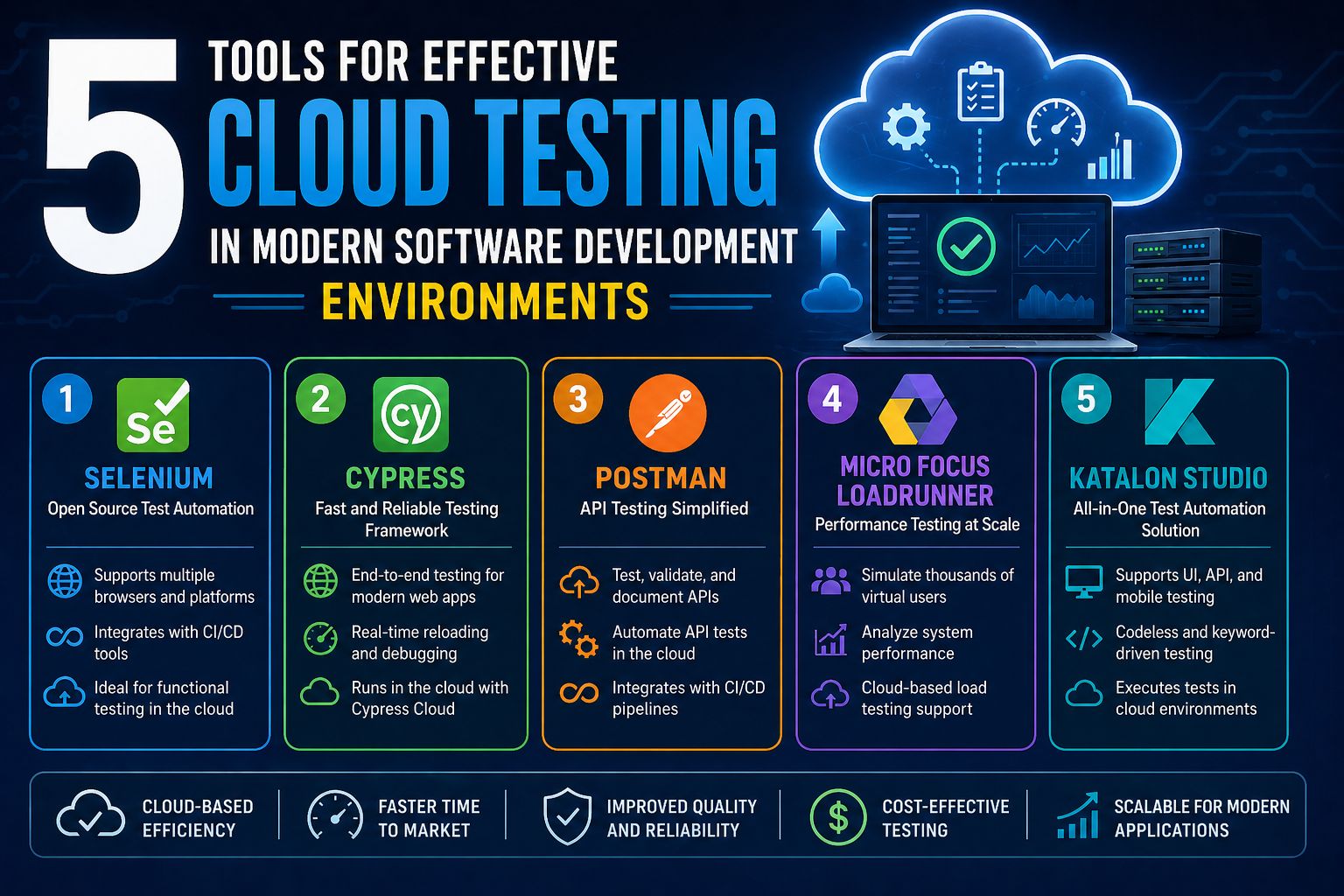
Selenium Grid is one of the most widely adopted solutions for executing automated browser tests in distributed environments. In modern cloud-based development workflows, applications are expected to function consistently across multiple browsers, operating systems, and device configurations. Selenium Grid addresses this challenge by allowing parallel test execution across different nodes, which reduces overall testing time significantly and improves efficiency in continuous integration pipelines.
One of its strongest advantages is scalability. As applications grow in complexity, the number of test cases also increases. Running these tests sequentially can slow down delivery cycles. Selenium Grid solves this by distributing test execution across multiple machines, either on-premise or in cloud environments. This distributed approach ensures that large test suites can be executed quickly without compromising accuracy.
Another important benefit is flexibility. Teams can configure different browser versions and environments according to project requirements. This helps in identifying browser-specific issues early in the development cycle, which is critical for maintaining a consistent user experience across platforms. In cloud environments, this flexibility becomes even more powerful as resources can be dynamically allocated based on demand.
Additionally, Selenium Grid integrates smoothly with CI/CD pipelines. This allows automated tests to run whenever new code is pushed, ensuring continuous validation of application stability. This early detection of issues reduces debugging time and enhances overall software quality.
Cloud-Based Cross Browser Testing Platforms
Cross browser testing platforms hosted in the cloud have transformed the way developers validate web applications. Instead of maintaining physical devices or virtual machines, teams can now access a wide range of browsers and operating systems through cloud infrastructure.
These platforms provide instant access to multiple browser versions, including legacy and latest releases. This is especially important because users may still rely on older browsers, and ensuring compatibility across all versions is essential for maintaining accessibility and usability.
A key advantage of these platforms is real-time testing capability. Developers can interact with their applications in different environments without delays or setup complexities. This immediate feedback loop helps identify rendering issues, JavaScript errors, and layout inconsistencies early in the development process.
Another significant benefit is collaboration. Cloud-based testing environments allow multiple team members to view, share, and debug test sessions simultaneously. This improves communication between developers, testers, and designers, leading to faster issue resolution.
These platforms also eliminate infrastructure maintenance overhead. Since everything is hosted in the cloud, organizations do not need to invest in hardware or worry about system updates. This makes testing more cost-effective and scalable for teams of all sizes.
Mobile Cloud Testing for Real Device Validation
With the increasing dominance of mobile applications, testing on real devices has become essential. Cloud-based mobile testing solutions provide access to a vast range of real smartphones and tablets without requiring physical ownership.
This approach allows developers to test applications across different screen sizes, resolutions, and hardware configurations. It ensures that mobile apps perform consistently regardless of the device being used by end users. This is particularly important in global markets where device diversity is high.
One of the major strengths of mobile cloud testing is its ability to simulate real-world conditions. Network variations such as 3G, 4G, 5G, and unstable connections can be tested to evaluate app performance under different scenarios. This helps developers optimize applications for better responsiveness and reliability.
Another advantage is automation support. Mobile cloud testing platforms often integrate with automation frameworks, enabling continuous testing of mobile applications. This ensures that every update is validated across multiple devices before deployment.
Security and data integrity are also enhanced, as testing environments are isolated and managed by the cloud provider. This reduces risks associated with device handling and data exposure while ensuring consistent testing conditions.
Apache JMeter for Performance and Load Analysis
Performance testing is a critical component of cloud-based software development, and Apache JMeter is one of the most widely used tools in this area. It helps simulate heavy user loads to evaluate how applications behave under stress.
JMeter allows testers to create virtual users that mimic real traffic patterns. These users can send requests to servers simultaneously, enabling teams to analyze system performance under peak conditions. This helps identify bottlenecks such as slow database queries, inefficient code, or server limitations.
One of its key strengths is flexibility in test design. Users can configure complex test scenarios that include multiple request types, authentication processes, and data-driven inputs. This makes it suitable for testing a wide variety of applications, including APIs, web services, and microservices architectures.
In cloud environments, JMeter can be distributed across multiple machines to simulate large-scale traffic. This distributed testing capability is essential for modern applications that must handle thousands or even millions of users simultaneously.
The tool also provides detailed reporting and analytics. These insights help developers understand response times, throughput, and error rates, allowing them to make informed optimization decisions.
K6 for Cloud Native Performance Testing
K6 is a modern performance testing tool designed specifically for cloud-native applications. It is lightweight, developer-friendly, and integrates seamlessly with modern CI/CD pipelines.
Unlike traditional performance testing tools, K6 uses JavaScript for scripting test scenarios. This makes it easier for developers to write and maintain tests without requiring specialized knowledge of complex frameworks. It supports both simple and advanced testing scenarios, making it versatile for different project needs.
One of its key strengths is cloud scalability. K6 can execute tests in distributed environments, allowing teams to simulate large-scale traffic from multiple geographic locations. This helps in understanding how applications perform under global user loads.
K6 is also optimized for automation. It can be integrated into deployment pipelines so that performance testing becomes a continuous process rather than a one-time activity. This ensures that performance issues are detected early in the development lifecycle.
Another important feature is real-time monitoring. K6 provides instant feedback during test execution, allowing teams to quickly identify and resolve performance issues. This reduces downtime and improves application reliability.
Cloud Monitoring and Observability Tools
Cloud testing is incomplete without proper monitoring and observability. These tools help teams track application behavior in real time and analyze system performance under different conditions.
Monitoring tools collect metrics such as CPU usage, memory consumption, response times, and error rates. This data helps developers understand how applications behave in production-like environments.
Observability goes beyond basic monitoring by providing deeper insights into system behavior. It includes logging, tracing, and analytics capabilities that help identify root causes of performance issues.
In cloud environments, these tools are essential for maintaining system health. They enable proactive issue detection, which means problems can be identified and resolved before they impact end users.
Another advantage is integration with other testing tools. Monitoring solutions often work alongside performance and automation tools, providing a complete view of application behavior throughout the testing lifecycle.
API Testing Tools in Cloud Environments
Modern applications rely heavily on APIs for communication between services. As a result, API testing has become a critical part of cloud testing strategies.
API testing tools allow developers to validate functionality, performance, and security of APIs under different conditions. This ensures that backend services work correctly and efficiently.
In cloud environments, API testing can be scaled easily to simulate high request volumes. This helps identify performance issues and ensures that APIs can handle production-level traffic.
Another important aspect is automation. API tests can be integrated into CI/CD pipelines, enabling continuous validation of backend services. This reduces manual effort and improves development speed.
Security testing is also a key component. API testing tools help identify vulnerabilities such as unauthorized access, data leaks, and injection attacks. This ensures that applications remain secure in cloud deployments.
Container-Based Testing Environments
Containerization has revolutionized cloud testing by providing lightweight and consistent environments for running applications. Tools like Docker enable testers to create isolated environments that replicate production conditions.
This approach ensures that applications behave consistently across different stages of development. It eliminates issues caused by environment mismatches, which are common in traditional testing setups.
Containers also improve scalability. Multiple test environments can be created quickly without the need for complex infrastructure setup. This is particularly useful for large-scale testing scenarios.
In addition, container-based testing integrates well with orchestration tools that manage deployment and scaling automatically. This enhances efficiency and reduces manual intervention.
Another benefit is portability. Containers can be moved across different cloud platforms without modification, making them ideal for multi-cloud testing strategies.
Continuous Testing in CI/CD Pipelines
Continuous testing is a fundamental practice in modern software development. It ensures that every change in the codebase is validated automatically before deployment.
In cloud environments, continuous testing is tightly integrated with CI/CD pipelines. This means that every build undergoes automated testing, including functional, performance, and security checks.
This approach significantly reduces the risk of introducing bugs into production. It also accelerates development cycles by providing immediate feedback to developers.
Continuous testing relies heavily on automation tools and cloud infrastructure to execute tests at scale. This ensures that applications remain stable even as they evolve rapidly.
Another advantage is improved collaboration between teams. Developers, testers, and operations teams can work together more effectively when testing is continuous and automated.
Test Data Management in Cloud Testing
Effective test data management is essential for accurate and reliable testing. In cloud environments, managing test data becomes even more important due to distributed systems and multiple testing scenarios.
Test data management tools help create, store, and maintain datasets used in testing processes. This ensures that tests are consistent and repeatable.
One of the key challenges in cloud testing is maintaining data privacy and security. Test data management solutions address this by masking sensitive information and ensuring compliance with data protection regulations.
Another important feature is data virtualization. This allows teams to generate synthetic data for testing purposes, reducing dependency on production data.
Proper test data management improves test accuracy and helps identify real issues without compromising security or performance.
Advanced Automation Frameworks for Cloud Testing
Advanced automation frameworks play a crucial role in modern cloud testing environments by enabling faster, more reliable, and repeatable test execution. These frameworks are designed to handle complex testing requirements across distributed systems, microservices architectures, and cloud-native applications.
One of the key strengths of automation frameworks is their ability to integrate with multiple testing layers, including UI testing, API testing, and backend validation. This unified approach ensures that every component of an application is validated consistently, reducing the chances of critical failures in production.
In cloud environments, automation frameworks benefit from elastic scalability. They can run thousands of test cases in parallel across virtual machines or containers, significantly reducing execution time. This is especially useful in continuous integration workflows where rapid feedback is essential.
Another important advantage is reusability. Test scripts can be reused across multiple environments and configurations, reducing duplication of effort. This improves productivity and allows teams to focus more on improving test coverage rather than rewriting scripts.
Modern frameworks also support integration with reporting and analytics tools. This helps teams visualize test results, track trends, and identify recurring issues. These insights contribute to better decision-making and continuous improvement of software quality.
Service Virtualization for Cloud Testing Efficiency
Service virtualization is a powerful technique used in cloud testing to simulate dependent services that may not be available or fully developed. This is particularly useful in microservices-based architectures where multiple services interact with each other.
By creating virtual versions of these services, testers can continue testing without waiting for all components to be completed. This reduces delays in development cycles and enables parallel work across teams.
One of the major benefits of service virtualization is cost efficiency. Instead of relying on full-scale production environments or third-party services, virtual services can be used to simulate realistic responses. This reduces infrastructure dependency and improves testing flexibility.
It also enhances test coverage. Edge cases and failure scenarios can be easily simulated using virtual services, which might be difficult or risky to reproduce in real environments. This helps improve application resilience and stability.
In cloud-based systems, service virtualization integrates seamlessly with CI/CD pipelines. This ensures that tests remain consistent even when external systems are unavailable or unstable.
AI and Machine Learning in Cloud Testing
Artificial intelligence and machine learning are increasingly being used to enhance cloud testing processes. These technologies help automate complex decision-making tasks, improve test coverage, and reduce manual effort.
One of the key applications of AI in testing is test case generation. Machine learning algorithms can analyze application behavior and automatically generate relevant test scenarios. This improves efficiency and ensures better coverage of edge cases.
AI-driven tools are also used for defect prediction. By analyzing historical test data, these systems can identify patterns that indicate potential failures. This allows teams to focus on high-risk areas and prevent issues before they occur.
Another important application is test optimization. AI can prioritize test cases based on risk and impact, ensuring that critical functionalities are tested first. This is especially valuable in large-scale cloud environments where running all tests simultaneously may not be practical.
Machine learning also enhances anomaly detection. By continuously analyzing system behavior, AI systems can detect unusual patterns in performance or functionality, helping teams identify issues early in the development cycle.
Cloud Security Testing Tools and Practices
Security testing is a critical component of cloud-based software development. As applications become more distributed, ensuring data protection and system security becomes increasingly important.
Cloud security testing tools help identify vulnerabilities such as misconfigurations, weak authentication mechanisms, and insecure APIs. These tools simulate real-world attack scenarios to evaluate system resilience.
One of the key advantages of security testing in the cloud is scalability. Large-scale penetration tests can be conducted without requiring physical infrastructure, allowing teams to assess system security under realistic conditions.
Another important aspect is continuous security validation. Instead of performing security testing only at the end of development, modern cloud environments integrate security checks throughout the development lifecycle. This approach, often referred to as DevSecOps, ensures that vulnerabilities are detected early.
Security testing tools also provide compliance reporting. This helps organizations meet industry standards and regulatory requirements by ensuring that applications adhere to security best practices.
Chaos Engineering for Cloud Resilience Testing
Chaos engineering is an advanced approach used to test the resilience of cloud-based systems by intentionally introducing failures. The goal is to understand how systems behave under unexpected conditions and improve their fault tolerance.
In cloud environments, systems are highly distributed, making them more susceptible to failures caused by network issues, server outages, or service disruptions. Chaos engineering helps identify weak points in these systems before they impact users.
One of the key practices in chaos engineering is controlled experimentation. Testers simulate failures such as server crashes, latency spikes, or resource exhaustion to observe system behavior.
This approach helps organizations build more resilient applications. By understanding how systems recover from failures, teams can implement better redundancy and failover mechanisms.
Chaos engineering also integrates with monitoring tools to provide real-time insights during experiments. This ensures that unexpected behavior is quickly detected and analyzed.
Cloud-Based Test Management Platforms
Test management platforms in cloud environments help organize, track, and manage testing activities across teams. These platforms provide a centralized view of all test cases, execution results, and defect tracking.
One of the main advantages of cloud-based test management is accessibility. Teams can access test data from anywhere, enabling better collaboration between distributed teams.
These platforms also improve traceability. Every test case can be linked to specific requirements, ensuring that all features are properly validated during the development process.
Another important feature is real-time reporting. Teams can monitor test progress, identify bottlenecks, and analyze results instantly. This improves decision-making and helps maintain project timelines.
Integration with other testing tools is also a key benefit. Cloud test management platforms often connect with automation frameworks, CI/CD pipelines, and defect tracking systems, creating a unified testing ecosystem.
Scalability and Performance Optimization in Cloud Testing
Scalability is one of the most important aspects of cloud testing. Applications must be able to handle increasing user loads without compromising performance.
Cloud testing tools allow teams to simulate different levels of traffic and evaluate system behavior under stress. This helps identify performance bottlenecks and optimize resource usage.
One of the key strategies for scalability testing is load balancing. By distributing traffic across multiple servers, systems can maintain stability even under heavy usage.
Performance optimization tools also analyze response times, throughput, and system resource utilization. This data helps developers fine-tune applications for better efficiency.
In cloud environments, scalability testing can be automated and integrated into continuous testing pipelines. This ensures that performance remains consistent even as applications evolve.
Future Trends in Cloud Testing
Cloud testing continues to evolve rapidly with advancements in technology. One of the emerging trends is the increased use of artificial intelligence to automate complex testing processes.
Another important trend is the shift toward fully autonomous testing systems. These systems can generate, execute, and analyze tests with minimal human intervention.
Serverless architectures are also influencing cloud testing practices. Testing tools are adapting to handle event-driven applications that scale dynamically.
Edge computing is another area shaping the future of cloud testing. As applications move closer to users, testing strategies must account for distributed environments and latency variations.
Overall, cloud testing is becoming more intelligent, automated, and integrated, enabling faster development cycles and more reliable software systems.
Integration of DevOps and Cloud Testing Practices
The integration of DevOps with cloud testing has significantly transformed modern software development environments. This approach emphasizes collaboration between development, testing, and operations teams to ensure faster and more reliable software delivery. Cloud testing fits naturally into this ecosystem because it supports automation, scalability, and continuous feedback.
One of the most important aspects of this integration is continuous integration and continuous delivery. Every code change is automatically tested in a cloud environment before being deployed. This reduces the risk of defects reaching production and ensures that software remains stable even with frequent updates.
Another key benefit is improved collaboration. In traditional workflows, testing often happens in isolation, which can lead to communication gaps. With DevOps-driven cloud testing, all stakeholders have access to shared dashboards, test reports, and real-time feedback. This improves transparency and accelerates decision-making.
Automation plays a central role in this integration. Test cases are automatically executed whenever new code is committed, ensuring that quality checks are consistently applied. This reduces manual effort and allows teams to focus on innovation rather than repetitive testing tasks.
Additionally, cloud infrastructure provides the flexibility needed to support DevOps practices. Resources can be scaled up or down based on testing demands, making it easier to handle complex workloads without delays.
Shift-Left Testing in Cloud Environments
Shift-left testing is a modern approach that emphasizes early testing in the software development lifecycle. In cloud environments, this approach becomes even more effective due to the availability of automated tools and scalable infrastructure.
The main idea behind shift-left testing is to identify defects as early as possible. Instead of waiting until the final stages of development, testing begins at the initial design and coding phases. This reduces the cost and effort required to fix issues later in the process.
Cloud testing tools support shift-left practices by integrating directly with development environments. Developers can run unit tests, integration tests, and API validations in real time as they write code. This immediate feedback helps improve code quality from the beginning.
Another advantage is improved risk management. Early testing helps identify potential issues before they escalate, reducing the likelihood of major failures in production environments.
Shift-left testing also improves development speed. Since issues are detected early, there is less rework required during later stages, allowing teams to deliver software faster and more efficiently.
Shift-Right Testing and Real User Monitoring
While shift-left focuses on early testing, shift-right testing extends validation into production environments. This approach is essential for understanding how applications perform under real user conditions in cloud-based systems.
One of the key components of shift-right testing is real user monitoring. This involves collecting data from actual users interacting with the application. This data provides insights into performance, usability, and reliability in real-world scenarios.
Cloud environments make shift-right testing highly effective because they support continuous monitoring and data collection at scale. Applications can be observed in real time, allowing teams to detect issues that may not appear in controlled test environments.
Another important aspect is A/B testing. Different versions of an application can be deployed to subsets of users to evaluate performance and user behavior. This helps organizations make data-driven decisions about features and improvements.
Shift-right testing also enhances system resilience. By monitoring live environments, teams can quickly respond to failures and minimize downtime, ensuring a better user experience.
Test Automation in Microservices Architecture
Microservices architecture has become a standard in modern cloud applications. However, it introduces complexity in testing due to the large number of independent services that must work together.
Test automation plays a crucial role in managing this complexity. Each microservice can be tested independently, ensuring that individual components function correctly before integration.
Cloud testing tools enable automated testing across distributed services. This ensures that communication between services remains reliable and that data flows correctly across the system.
One of the main challenges in microservices testing is dependency management. Services often rely on external APIs or other microservices. Automation frameworks help simulate these dependencies to ensure consistent testing environments.
Another important aspect is end-to-end testing. Even though microservices are tested individually, it is essential to validate the entire system as a whole. Automated end-to-end tests ensure that all services interact correctly in real-world scenarios.
Container Orchestration and Testing Scalability
Container orchestration platforms have become essential in managing cloud-based testing environments. These platforms automatically manage deployment, scaling, and operation of containerized applications.
One of the key benefits of orchestration is scalability. Testing environments can be quickly scaled up or down based on demand. This ensures efficient use of resources and reduces infrastructure costs.
Orchestration tools also improve consistency. All test environments are created using predefined configurations, ensuring that tests run under identical conditions every time.
Another advantage is automation of test execution. Containers can be automatically launched for specific test scenarios and terminated once testing is complete. This reduces manual intervention and improves efficiency.
In addition, orchestration platforms integrate with CI/CD pipelines, enabling continuous testing in dynamic cloud environments.
Data-Driven Testing in Cloud Systems
Data-driven testing is a technique where test cases are executed using multiple sets of input data. In cloud environments, this approach becomes highly scalable and efficient.
One of the main advantages is improved test coverage. By using different datasets, testers can evaluate how applications behave under various conditions and inputs.
Cloud infrastructure allows large datasets to be stored and processed efficiently. This makes it easier to run complex test scenarios without performance limitations.
Another important benefit is automation. Data-driven tests can be executed automatically across multiple environments, reducing manual effort and improving consistency.
This approach is particularly useful for applications that rely heavily on user input or data processing, as it helps identify edge cases and unexpected behaviors.
API Gateway Testing in Cloud Architectures
API gateways play a critical role in managing communication between services in cloud architectures. Testing these gateways is essential to ensure secure and efficient data flow.
API gateway testing focuses on validating routing, authentication, rate limiting, and load balancing. These components are essential for maintaining system stability.
Cloud testing tools allow simulation of high traffic scenarios to evaluate gateway performance under stress. This ensures that APIs remain responsive even during peak usage.
Another important aspect is security validation. API gateways must be tested for vulnerabilities such as unauthorized access and data leakage.
Automation is also widely used in API gateway testing. Continuous testing ensures that any changes in configuration or services do not introduce unexpected issues.
Monitoring, Logging, and Debugging in Cloud Testing
Monitoring and logging are essential components of cloud testing environments. They provide real-time visibility into system behavior and help identify issues quickly.
Monitoring tools track key performance metrics such as response time, CPU usage, and memory consumption. This helps teams understand system health and performance trends.
Logging provides detailed records of application events. These logs are crucial for debugging and identifying the root cause of issues.
In cloud environments, centralized logging systems are used to collect data from multiple services. This makes it easier to analyze system-wide behavior.
Debugging is enhanced through integration with monitoring tools. Developers can trace issues across distributed systems, improving resolution speed and accuracy.
Automation in Regression Testing for Cloud Applications
Regression testing ensures that new changes do not negatively impact existing functionality. In cloud environments, automation plays a key role in making regression testing efficient and scalable.
Automated regression tests can be executed frequently without manual effort. This ensures that applications remain stable after updates or modifications.
Cloud infrastructure allows regression tests to be run in parallel, significantly reducing execution time. This is especially important for large applications with extensive test suites.
Another advantage is consistency. Automated tests reduce the risk of human error and ensure that the same validation criteria are applied every time.
Integration with CI/CD pipelines ensures that regression testing becomes a continuous process, improving overall software quality.
Future Evolution of Cloud Testing Ecosystems
Cloud testing ecosystems continue to evolve rapidly with advancements in technology. One major direction is increased automation powered by artificial intelligence and machine learning.
Another trend is the rise of fully autonomous testing systems that can design, execute, and analyze tests without human intervention. This will significantly reduce testing cycles and improve efficiency.
Serverless computing is also influencing cloud testing practices by enabling event-driven test execution models.
Edge computing will further expand testing requirements by introducing distributed environments closer to end users.
Overall, cloud testing is moving toward more intelligent, adaptive, and fully integrated systems that support faster and more reliable software delivery.
Advanced Observability in Cloud Testing Environments
Observability has become a core requirement in modern cloud testing environments because applications are no longer monolithic and predictable. They are distributed, dynamic, and often span multiple services, regions, and infrastructures. Observability goes beyond simple monitoring by helping teams understand not only what is happening in a system, but why it is happening.
In cloud testing, observability is typically built around three pillars: metrics, logs, and traces. Metrics provide numerical insights such as response times, error rates, and system utilization. Logs capture detailed event records that help reconstruct system behavior. Traces follow requests as they move through different services, making it easier to identify bottlenecks in distributed systems.
One of the major advantages of observability in cloud testing is faster root cause analysis. When a test fails in a complex microservices environment, traditional debugging can be slow and difficult. Observability tools allow testers to quickly pinpoint where the failure occurred and which service was responsible.
Another benefit is proactive issue detection. Instead of waiting for users to report problems, observability systems can detect anomalies in real time. This allows teams to fix issues before they impact production systems, improving reliability and user experience.
Cloud-based observability tools also scale efficiently. They can handle massive amounts of telemetry data generated by large applications without affecting performance, making them essential for enterprise-level testing environments.
Hybrid Cloud Testing Strategies
Hybrid cloud testing refers to validating applications that operate across both private and public cloud infrastructures. Many modern organizations use hybrid environments to balance security, cost, and scalability requirements.
One of the key challenges in hybrid cloud testing is ensuring consistency across different environments. Applications must behave the same way regardless of whether they are deployed in a private data center or a public cloud platform.
Testing tools in hybrid environments must be capable of simulating network latency, data synchronization issues, and configuration differences. This helps ensure that applications perform reliably under real-world hybrid conditions.
Another important aspect is data management. Sensitive data is often stored in private clouds while processing may occur in public clouds. Testing must validate secure data transfer and compliance with regulatory requirements.
Hybrid cloud testing also improves resilience. By validating applications across multiple infrastructures, organizations can ensure that systems remain operational even if one environment fails.
Test Environment Management in Cloud Systems
Managing test environments efficiently is one of the most critical challenges in cloud testing. Traditional environments often suffer from configuration drift, resource limitations, and setup delays.
Cloud-based test environment management solves these issues by enabling on-demand provisioning of environments. This means teams can create, configure, and destroy test environments instantly based on project needs.
One of the key advantages is consistency. Environment templates ensure that every test environment is identical, reducing variability and improving test accuracy.
Another benefit is cost optimization. Resources are only used when needed, which reduces unnecessary infrastructure expenses.
Automation plays a major role in environment management. Scripts and orchestration tools can automatically configure environments for specific test scenarios, reducing manual effort and setup time.
This approach also supports parallel testing. Multiple environments can be created simultaneously to run different test cases, improving efficiency and speeding up development cycles.
Continuous Feedback Loops in Cloud Testing
Continuous feedback is an essential principle in modern cloud testing practices. It ensures that developers and testers receive immediate insights into application performance and quality throughout the development lifecycle.
In cloud environments, feedback loops are tightly integrated with CI/CD pipelines. Every code change triggers automated tests, and results are instantly shared with development teams.
One of the major benefits of continuous feedback is faster issue resolution. Developers do not need to wait for long testing cycles; instead, they receive real-time notifications about failures or performance issues.
Another advantage is improved collaboration. Since feedback is shared across teams, developers, testers, and operations staff can work together more effectively to resolve problems.
Continuous feedback also enhances software quality. Early detection of issues allows teams to fix defects before they become more complex or costly to resolve.
Scalable Load Simulation Techniques
Load simulation is a critical part of cloud testing that evaluates how applications perform under different levels of user demand. Scalable load simulation techniques ensure that systems can handle both normal and peak traffic conditions.
Cloud-based load testing tools can simulate thousands or even millions of virtual users interacting with an application simultaneously. This helps identify performance bottlenecks and scalability limitations.
One of the key advantages of cloud-based load simulation is flexibility. Testers can easily adjust load parameters to simulate different real-world scenarios, such as sudden traffic spikes or gradual user growth.
Another important aspect is geographic distribution. Load can be generated from multiple regions to test how applications perform globally. This is especially important for applications with international user bases.
These techniques also integrate with performance monitoring tools, allowing teams to analyze system behavior in real time during load tests.
Cloud Testing in Multi-Tenant Architectures
Multi-tenant architectures are widely used in cloud applications where a single instance of software serves multiple customers. Testing in such environments requires special attention to data isolation, performance, and security.
One of the key challenges is ensuring that one tenant does not impact the performance or security of another. Cloud testing tools help validate isolation mechanisms and resource allocation strategies.
Another important aspect is scalability. Multi-tenant systems must handle varying workloads from different users simultaneously without degradation in performance.
Testing also focuses on data security. Each tenant’s data must remain isolated and protected from unauthorized access. This is validated through security and penetration testing techniques.
Cloud environments make it easier to simulate multiple tenants and test system behavior under realistic usage conditions.
Role of Infrastructure as Code in Cloud Testing
Infrastructure as Code plays a significant role in modern cloud testing by enabling automated provisioning and management of infrastructure through code. This ensures consistency, repeatability, and scalability in test environments.
One of the key benefits is version control. Infrastructure configurations can be stored and tracked just like application code, making it easier to manage changes and roll back if necessary.
Another advantage is automation. Test environments can be created and destroyed automatically using predefined scripts, reducing manual effort and setup time.
Infrastructure as Code also improves collaboration between development and operations teams. Since infrastructure is defined in code, it becomes easier to understand and manage.
In cloud testing, this approach ensures that environments are always consistent, which improves the reliability and accuracy of test results.
Conclusion
Cloud testing has become an essential part of modern software development due to the increasing complexity, scalability requirements, and distributed nature of applications. It enables teams to validate performance, security, and functionality across diverse environments without the limitations of traditional infrastructure.
Through advanced tools such as automation frameworks, performance testing systems, observability platforms, and AI-driven testing solutions, organizations can achieve higher efficiency and reliability in their testing processes. Cloud testing also supports continuous integration and delivery, ensuring that software is consistently validated throughout its lifecycle.
The integration of practices such as shift-left testing, shift-right monitoring, chaos engineering, and infrastructure automation has further strengthened cloud testing strategies. These approaches allow teams to detect issues earlier, improve system resilience, and deliver better user experiences.
As technology continues to evolve, cloud testing will become even more intelligent, automated, and adaptive. With advancements in artificial intelligence, machine learning, and serverless architectures, future testing systems will require minimal human intervention while delivering maximum accuracy and speed.
Ultimately, cloud testing is not just a technical practice but a foundational element of modern software engineering. It ensures that applications remain reliable, scalable, and secure in an increasingly dynamic digital world.