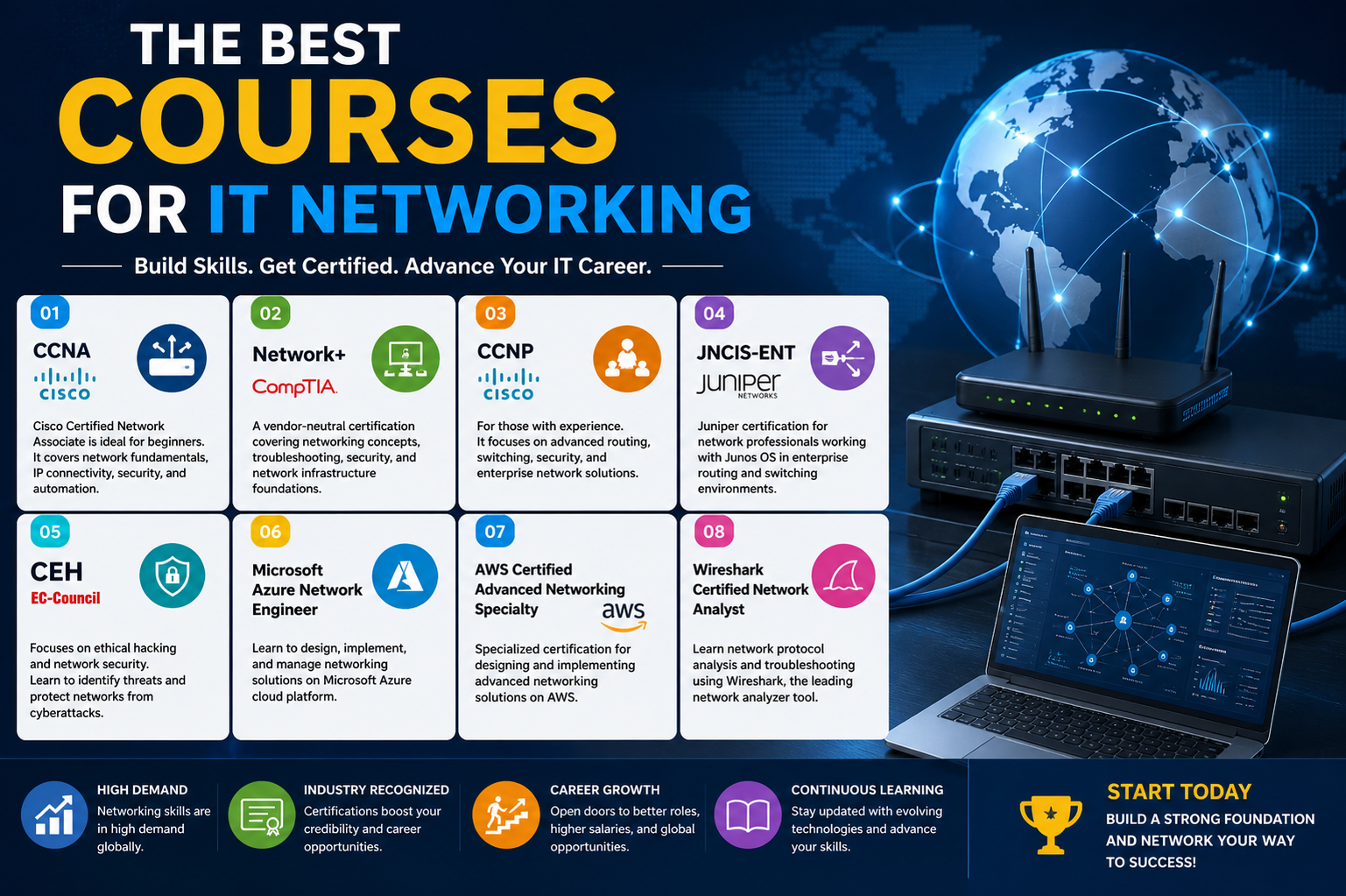
IT networking education begins with understanding how communication between devices actually happens. Every digital interaction, whether it is browsing a website or sending a file, depends on structured rules and systems that allow data to move efficiently and accurately. At the foundation of networking knowledge lies the understanding of how networks are built, how devices connect, and how information is transmitted across different environments. Learners are introduced to essential ideas such as network types, communication protocols, and the role of networking devices. These basics are critical because they shape how all advanced networking concepts are understood later.
Networking education also focuses on developing logical thinking rather than just memorization. Students are trained to visualize how data flows through multiple layers of a system and how each layer contributes to successful communication. This conceptual clarity helps in troubleshooting and designing networks in real-world environments.
Understanding Network Models
One of the most important areas in IT networking is learning about network models that define how communication is structured. These models break down complex communication processes into manageable layers, making it easier to understand how data travels from one device to another.
Each layer in a network model has a specific responsibility, such as handling physical connections, ensuring data accuracy, or managing application-level communication. Understanding these layers allows learners to diagnose problems more effectively because they can identify exactly where an issue is occurring in the communication process.
This knowledge is also important for working with different networking technologies because most systems are built based on these standardized models. Once learners fully understand these frameworks, they gain the ability to analyze and design networks more efficiently.
IP Addressing and Subnetting Mastery
IP addressing is one of the most critical skills in networking because it defines how devices identify and communicate with each other on a network. Every device connected to a network must have a unique address, and understanding how these addresses are structured is essential for managing network systems.
Subnetting is an advanced concept that allows networks to be divided into smaller, more manageable sections. This improves performance, enhances security, and makes network administration more efficient. Learning subnetting requires logical thinking and practice, as it involves breaking down IP ranges and calculating usable addresses for different network segments.
Mastering IP addressing and subnetting gives learners the ability to design scalable networks that can support both small and large organizations without performance issues.
Routing and Switching Fundamentals
Routing and switching form the backbone of all networking systems. Switching is responsible for connecting devices within the same network, while routing manages communication between different networks. Together, they ensure that data reaches its correct destination efficiently.
In networking courses, learners study how switches forward data within local networks and how routers determine the best path for data to travel across multiple networks. This includes understanding routing tables, protocols, and decision-making processes used by network devices.
Practical knowledge in this area is essential for anyone aiming to work in network administration or engineering because it directly relates to how real-world networks operate and communicate.
Network Security Essentials
Security is a major part of modern networking because networks are constantly exposed to threats and vulnerabilities. Networking courses emphasize the importance of protecting data, devices, and communication channels from unauthorized access.
Learners are introduced to concepts such as firewalls, encryption, authentication, and access control. These tools and techniques help ensure that only authorized users can access sensitive information and systems.
Understanding network security is not only important for protecting systems but also for ensuring compliance with organizational policies and industry standards. As cyber threats continue to evolve, strong security knowledge becomes an essential skill for any networking professional.
Wireless Networking Concepts
Wireless networking has become a fundamental part of modern communication systems. It allows devices to connect without physical cables, providing flexibility and mobility in both personal and professional environments.
Courses in wireless networking cover topics such as wireless standards, signal transmission, network coverage, and security in wireless environments. Learners also study how interference and distance affect network performance and how to optimize wireless connections for stability and speed.
As organizations increasingly rely on wireless infrastructure, understanding this area becomes crucial for designing and managing efficient networks.
Network Troubleshooting Skills
Troubleshooting is one of the most valuable skills in IT networking because problems can occur at any time in a network system. Effective troubleshooting requires a structured approach to identifying, analyzing, and resolving issues.
Networking courses teach learners how to diagnose problems using tools and techniques that help isolate faults in connectivity, configuration, or performance. This includes checking physical connections, verifying settings, and analyzing network behavior.
Strong troubleshooting skills reduce downtime and ensure that networks continue to operate smoothly, making this ability highly valued in professional environments.
Enterprise Network Design
Enterprise network design focuses on building large-scale networks that can support complex organizational needs. These networks must be reliable, scalable, and secure to handle high volumes of traffic and multiple users.
Learners study how to design network architectures that include multiple layers, redundancy systems, and optimized traffic flow. They also learn how to plan for future growth so that networks can expand without major redesigns.
This area of study requires both technical knowledge and strategic thinking because it involves balancing performance, cost, and security requirements.
Cloud Networking Concepts
Cloud networking has become an essential part of modern IT infrastructure as more organizations move their services to cloud-based environments. This area focuses on how networks operate within virtual environments and how resources are delivered over the internet.
Courses cover topics such as virtual networks, cloud connectivity, and distributed systems. Learners also explore how cloud platforms manage scalability, availability, and performance.
Understanding cloud networking is important because it represents the future of IT infrastructure, where physical hardware is increasingly replaced by flexible, on-demand services.
Hands-on Labs and Practical Learning
Practical experience is one of the most important aspects of learning IT networking. While theoretical knowledge provides understanding, hands-on practice builds real skills that are required in professional environments.
Networking courses often include simulated environments where learners can configure devices, build networks, and solve real-world problems. This practical exposure helps reinforce theoretical concepts and improves confidence in handling actual systems.
Regular practice also helps learners develop problem-solving abilities, which are essential for working in dynamic and complex network environments.
Certification Pathways in Networking
Certifications play a significant role in validating networking skills and improving career opportunities. They demonstrate that an individual has the required knowledge and practical ability to work in professional environments.
Different certification levels exist, starting from beginner certifications that focus on basic networking concepts to advanced certifications that cover complex systems and enterprise-level networking. Each certification builds upon previous knowledge and helps learners progress in their careers.
Pursuing certifications also helps structure learning in a clear and organized way, ensuring that no important topics are missed during the learning process.
Career Opportunities in IT Networking
A strong understanding of IT networking opens the door to many career opportunities across different industries. Organizations rely heavily on network infrastructure, making skilled professionals essential for maintaining and improving systems.
Career roles in this field include network support, system administration, network engineering, and cybersecurity roles. Each role requires a combination of technical knowledge and practical experience.
As technology continues to evolve, the demand for networking professionals continues to grow, making it a stable and rewarding career path for individuals with the right skills and dedication.
Advanced Routing Protocols and Network Intelligence
As networking knowledge progresses beyond the fundamentals, one of the most important areas of study becomes advanced routing protocols. These protocols determine how data travels across complex networks that span multiple locations, systems, and even countries. Unlike basic routing, which focuses on simple path selection, advanced routing involves dynamic decision-making where network devices continuously evaluate the best possible routes based on speed, reliability, and congestion levels.
Learners explore how different routing protocols communicate with each other, how they share information about network changes, and how they adapt automatically when a path becomes unavailable. This dynamic behavior ensures that large-scale networks remain stable even when multiple failures or disruptions occur. Understanding these mechanisms helps networking professionals design systems that are both resilient and efficient.
Advanced routing also introduces the concept of convergence, which refers to the time it takes for all network devices to agree on the best available routes after a change occurs. Faster convergence means better performance and reduced downtime, which is critical in enterprise environments where continuous connectivity is required.
Network Virtualization and Modern Infrastructure
Modern IT environments rely heavily on virtualization, which allows multiple virtual networks to operate on a single physical infrastructure. This concept has transformed traditional networking by separating physical hardware from logical network design.
In virtualized environments, networks can be created, modified, or removed without physically changing cables or devices. This flexibility allows organizations to scale quickly, test new configurations safely, and optimize resource usage. Networking learners are introduced to virtual switches, virtual routers, and software-defined networking concepts that enable centralized control over distributed systems.
Network virtualization also improves efficiency by allowing multiple workloads to share the same physical infrastructure while remaining isolated from each other. This improves security and reduces hardware costs, making it a core component of modern IT architecture.
Software-Defined Networking Concepts
Software-defined networking represents a major shift in how networks are managed and controlled. Instead of configuring each device individually, SDN allows centralized control through software-based controllers. This makes network management more efficient, flexible, and programmable.
In this model, the control layer is separated from the data forwarding layer, allowing administrators to define policies and rules from a single interface. This reduces complexity and improves consistency across large networks.
Learners studying SDN explore how network behavior can be automated, how traffic can be dynamically adjusted based on demand, and how security policies can be enforced uniformly. This approach is widely used in modern cloud environments and large enterprise systems where scalability and automation are essential.
Network Performance Optimization
Performance optimization is a critical aspect of IT networking because even small inefficiencies can lead to slow communication, delays, and system failures. Networking professionals must understand how to monitor, analyze, and improve network performance continuously.
This involves studying bandwidth usage, latency, packet loss, and congestion control. Each of these factors affects how smoothly data flows through the network. By analyzing traffic patterns, professionals can identify bottlenecks and implement solutions such as load balancing or traffic prioritization.
Optimization also includes configuring devices to handle high traffic efficiently and ensuring that critical applications receive sufficient resources. In enterprise environments, maintaining high performance is essential for business continuity and user satisfaction.
Network Monitoring and Management Tools
Effective network management relies on continuous monitoring of systems to detect issues before they become serious problems. Monitoring tools provide real-time insights into network activity, allowing administrators to track performance, identify anomalies, and respond quickly to failures.
These tools collect data from network devices and present it in a structured format that helps professionals understand system behavior. Alerts can be configured to notify administrators when specific thresholds are exceeded, such as high traffic usage or device failures.
Learning how to use these tools is essential for maintaining stable and secure networks. It also helps professionals develop proactive strategies rather than reactive responses to network issues.
Cybersecurity Integration in Networking
Modern networking is deeply connected with cybersecurity because every network is a potential target for attacks. As networks become more complex, security must be integrated at every level rather than added as an afterthought.
Networking courses emphasize the importance of secure configurations, encrypted communication, and authentication mechanisms. Learners also study how attackers exploit vulnerabilities and how defensive strategies can be implemented to prevent unauthorized access.
This integration ensures that networks are not only functional but also protected against evolving cyber threats. Professionals with both networking and security knowledge are highly valued in today’s technology landscape.
Cloud-Based Networking Architecture
Cloud computing has transformed how networks are designed and operated. Instead of relying solely on physical infrastructure, organizations now use cloud-based systems that provide flexible and scalable networking solutions.
In cloud environments, networking components such as virtual machines, storage systems, and applications are connected through virtual networks. These networks can be configured to operate across multiple geographic regions, providing global accessibility and redundancy.
Learners studying cloud networking gain an understanding of how data centers operate, how services are distributed, and how scalability is achieved without physical limitations. This knowledge is essential for working in modern IT environments where cloud adoption is rapidly increasing.
Disaster Recovery and Network Resilience
Network resilience refers to the ability of a system to continue operating even when parts of it fail. Disaster recovery planning is an essential part of network design that ensures minimal disruption during unexpected events such as hardware failures, cyberattacks, or natural disasters.
Professionals learn how to design backup systems, redundancy mechanisms, and failover strategies that keep networks operational under stress. This includes creating duplicate pathways, storing backup configurations, and implementing recovery procedures that can be activated quickly.
A well-designed disaster recovery plan ensures business continuity and protects critical data from being lost during emergencies.
Automation in Networking Systems
Automation has become a key trend in modern networking because it reduces manual effort and improves efficiency. Instead of configuring each device individually, automation allows tasks to be executed automatically based on predefined rules.
This includes automatic configuration, monitoring, updates, and even troubleshooting in some advanced systems. Automation reduces human error and allows network administrators to focus on higher-level tasks such as design and optimization.
Learning automation tools and scripting is becoming increasingly important for networking professionals, especially in large-scale environments where manual management is not practical.
Emerging Technologies in Networking
The field of IT networking continues to evolve with the introduction of new technologies that reshape how systems are built and managed. Emerging trends include artificial intelligence in networking, edge computing, and next-generation wireless technologies.
Artificial intelligence helps in predicting network failures, optimizing traffic, and automating decision-making processes. Edge computing brings data processing closer to the source, reducing latency and improving performance for real-time applications.
These innovations are shaping the future of networking and creating new opportunities for professionals who are willing to adapt and learn continuously.
Building a Long-Term Networking Career Path
A successful career in IT networking requires continuous learning and adaptation. The field is constantly changing, and professionals must stay updated with new technologies, tools, and best practices.
Starting from foundational knowledge, individuals can gradually progress to specialized roles in areas such as cloud networking, cybersecurity, or enterprise architecture. Each stage builds upon the previous one, creating a strong and structured career path.
With dedication and consistent practice, networking professionals can build long-term careers that offer stability, growth, and opportunities to work with advanced technologies across global industries.
Practical Skills That Define a Strong Networking Professional
In IT networking, theoretical knowledge alone is never enough to build a successful career. Practical skills are what transform understanding into real-world capability. A strong networking professional is someone who can confidently configure devices, troubleshoot complex issues, and maintain stable communication systems under pressure. These abilities are developed through consistent hands-on practice rather than passive learning.
Working with real or simulated network environments helps learners understand how configurations behave in dynamic conditions. Small changes in settings can lead to significant differences in performance, and practical exposure teaches how to predict and manage these outcomes. Over time, professionals develop an instinct for identifying problems quickly and applying effective solutions without unnecessary delay.
Practical skill development also includes familiarity with command-line tools, configuration interfaces, and diagnostic utilities. These tools are essential in real-world environments where graphical interfaces may not always be available. The more comfortable a learner becomes with these tools, the more efficient and confident they become in handling networking tasks.
Importance of Real-World Network Scenarios
Real-world scenarios are an essential part of advanced networking learning because they bridge the gap between theory and practice. In actual organizations, networks are rarely simple or predictable. They involve multiple systems, user demands, security requirements, and constant changes in traffic patterns.
By working through realistic scenarios, learners understand how to respond to unexpected challenges such as network outages, misconfigurations, or performance degradation. These situations require quick thinking and structured problem-solving approaches.
Exposure to such scenarios also teaches prioritization. Not every issue in a network has the same level of urgency, so professionals must learn how to identify critical problems and address them first. This skill is especially important in large organizations where multiple systems operate simultaneously.
Role of Network Design Thinking
Network design thinking is the ability to plan and structure a network before it is physically or virtually implemented. This involves analyzing requirements, predicting future growth, and ensuring that the design is both efficient and scalable.
A well-designed network reduces the chances of failure and improves overall performance. It considers factors such as traffic flow, redundancy, security zones, and device placement. Learners are trained to think beyond immediate needs and focus on long-term sustainability.
Design thinking also involves balancing cost and performance. Not every organization has unlimited resources, so professionals must create systems that deliver maximum efficiency within given constraints. This strategic mindset separates beginners from experienced networking professionals.
Scalability in Modern Networks
Scalability refers to a network’s ability to grow without losing performance or stability. In today’s digital world, businesses expand rapidly, and their network systems must adapt accordingly.
A scalable network can handle increasing numbers of users, devices, and data traffic without requiring complete redesigns. This is achieved through modular design, efficient routing strategies, and flexible infrastructure.
Learners study how scalable systems are built using layered architecture and distributed components. They also learn how to anticipate future growth and design networks that can expand smoothly. Scalability is a critical requirement in cloud-based environments where resources are constantly adjusted based on demand.
Understanding Network Latency and Efficiency
Latency is a key performance factor in networking that measures the delay in data transmission between devices. Even small delays can impact the performance of applications, especially in real-time systems such as video conferencing or online gaming.
Networking professionals must understand what causes latency, such as network congestion, inefficient routing paths, or hardware limitations. By identifying these causes, they can implement solutions that improve speed and responsiveness.
Efficiency in networking is not just about speed but also about optimizing resource usage. A well-optimized network delivers high performance while using minimal bandwidth and processing power. Achieving this balance requires careful planning and continuous monitoring.
Data Flow and Packet Transmission Concepts
Data transmission in networks is broken into small units called packets. These packets travel through various devices and paths before reaching their destination. Understanding how packets move is essential for diagnosing network issues and improving performance.
Each packet contains information about its source, destination, and sequence, allowing the network to reassemble data correctly even if packets arrive out of order. Networking learners study how packets are routed, how they are prioritized, and how errors are handled during transmission.
This concept is fundamental because almost all digital communication depends on packet-based systems. Without a clear understanding of packet flow, it becomes difficult to troubleshoot or optimize network behavior.
Network Address Translation and Connectivity
Network Address Translation is a technique used to allow multiple devices within a private network to access external networks using a single public address. This is essential for conserving IP addresses and improving security.
By translating internal addresses into external ones, NAT helps hide the internal structure of a network from outside users. This adds a layer of protection while enabling seamless communication with external systems.
Learners study how NAT operates in different scenarios, how it manages incoming and outgoing traffic, and how it supports large-scale internet connectivity. This concept is widely used in home networks, corporate environments, and service provider systems.
Load Balancing in Network Systems
Load balancing is a technique used to distribute network traffic across multiple servers or paths to ensure no single system becomes overloaded. This improves performance, increases reliability, and prevents system failures.
In networking education, learners explore different types of load balancing methods and how they are implemented in real environments. These methods ensure that user requests are handled efficiently even during peak traffic periods.
Load balancing is especially important for large-scale applications and cloud services where millions of users may access systems simultaneously. Proper implementation ensures smooth and uninterrupted service delivery.
Role of DNS in Network Communication
The Domain Name System plays a crucial role in translating human-readable domain names into machine-readable IP addresses. Without this system, users would need to remember complex numerical addresses to access websites and services.
Networking learners study how DNS servers operate, how queries are processed, and how caching improves response times. Understanding DNS is important because it affects how quickly and reliably users can access online resources.
Any disruption in DNS systems can lead to widespread connectivity issues, making it one of the most critical components of modern networking infrastructure.
Network Documentation and Record Keeping
Proper documentation is often overlooked but is a vital part of networking management. It involves recording network configurations, changes, and system designs in a structured manner.
Good documentation helps professionals understand existing systems quickly, troubleshoot issues efficiently, and make informed decisions during upgrades or modifications. It also ensures continuity when multiple administrators are working on the same network.
Learners are trained to maintain clear and organized records that can be easily referenced when needed. This practice reduces confusion and improves overall network management quality.
Soft Skills for Networking Professionals
In addition to technical expertise, networking professionals must also develop strong soft skills. Communication, teamwork, and problem-solving abilities are essential in professional environments where collaboration is required.
Networking tasks often involve working with different departments, explaining technical issues in simple terms, and coordinating solutions with multiple teams. Strong communication skills help bridge the gap between technical and non-technical stakeholders.
Problem-solving skills are equally important because networking issues often require creative and logical thinking. Professionals must be able to analyze situations, evaluate options, and implement effective solutions under time pressure.
Continuous Learning in the Networking Field
The IT networking field is constantly evolving, and professionals must commit to continuous learning to stay relevant. New technologies, protocols, and tools are regularly introduced, making it necessary to update skills frequently.
Continuous learning involves exploring advanced topics, practicing new configurations, and staying aware of industry trends. Professionals who invest in learning are better prepared for career advancement and emerging opportunities.
This mindset ensures long-term success and adaptability in a field that is deeply connected to technological innovation and global digital infrastructure.
Career Growth and Professional Progression in Networking
A career in IT networking typically follows a structured progression where professionals move from entry-level roles to more advanced and specialized positions over time. This growth is based on experience, technical knowledge, certifications, and the ability to handle increasingly complex systems. At the beginning stage, individuals usually work in support-based roles where they assist in maintaining basic network operations and resolving simple issues. These roles help build foundational experience and confidence in real environments.
As professionals gain experience, they gradually move into roles that require more responsibility, such as managing network configurations, monitoring system performance, and handling medium-level troubleshooting. At this stage, individuals are expected to work more independently and make decisions that directly affect network stability. Progression continues toward advanced positions where professionals design network systems, implement security policies, and manage large-scale infrastructure.
Long-term career growth in networking depends heavily on continuous skill development. The field rewards individuals who stay updated with evolving technologies and demonstrate the ability to adapt to new systems and challenges. This makes networking a dynamic and rewarding career path for those who are committed to learning.
Specialization Paths in IT Networking
As networking professionals advance in their careers, many choose to specialize in specific areas to enhance their expertise and career opportunities. Specialization allows individuals to focus deeply on one aspect of networking rather than maintaining a broad general skill set.
One common specialization is security-focused networking, where professionals concentrate on protecting systems, preventing unauthorized access, and designing secure network architectures. Another growing area is cloud networking, which involves managing virtual infrastructure and ensuring smooth communication between distributed systems.
Other specialization paths include wireless networking, data center management, and network automation. Each of these areas requires unique knowledge and skills, and professionals who specialize often become highly valued due to their deep technical expertise. Specialization not only improves job prospects but also leads to higher-level roles and better compensation opportunities.
Industry Demand for Networking Professionals
The demand for skilled networking professionals continues to grow as organizations increasingly rely on digital systems for their operations. Every business, regardless of size or industry, depends on stable and secure network infrastructure to function effectively.
With the expansion of cloud computing, remote work environments, and global connectivity, the need for reliable network systems has become more critical than ever. This has created a consistent demand for professionals who can design, manage, and secure these systems.
Industries such as finance, healthcare, education, telecommunications, and technology companies are particularly dependent on strong networking infrastructure. As a result, networking professionals have opportunities across a wide range of sectors, making it a stable and versatile career choice.
Role of Certifications in Career Advancement
Certifications play a significant role in validating a networking professional’s skills and knowledge. They serve as formal recognition of expertise and are often required by employers when hiring for technical positions.
Certifications typically cover different levels of expertise, starting from foundational knowledge and progressing toward advanced technical skills. They help structure learning in a clear and measurable way, ensuring that professionals gain a complete understanding of networking concepts.
In addition to improving job prospects, certifications also help professionals stand out in competitive job markets. They demonstrate commitment to the field and provide proof of practical and theoretical knowledge. Many organizations prefer certified candidates because they are more likely to have standardized and reliable skill sets.
Impact of Cloud Computing on Networking Careers
Cloud computing has significantly transformed the networking industry by changing how systems are designed, deployed, and managed. Instead of relying solely on physical infrastructure, organizations now use cloud-based solutions that offer flexibility, scalability, and cost efficiency.
This shift has created new career opportunities for networking professionals who understand cloud environments. These professionals are responsible for managing virtual networks, ensuring connectivity between cloud services, and optimizing performance across distributed systems.
Cloud networking also requires knowledge of automation, virtualization, and security within virtual environments. As more organizations move toward cloud-based systems, professionals with cloud networking expertise are becoming increasingly valuable in the job market.
Cybersecurity Integration in Career Roles
Cybersecurity is now deeply integrated into networking careers because every network must be protected against threats and vulnerabilities. Networking professionals are often responsible for implementing security measures that protect data and systems from unauthorized access.
This includes configuring firewalls, managing encryption systems, and monitoring network traffic for suspicious activity. Professionals must also stay updated on the latest security threats and defensive strategies to ensure systems remain protected.
The combination of networking and cybersecurity skills creates highly specialized career roles that are in strong demand. Organizations value professionals who can both manage networks and ensure their security at the same time.
Importance of Problem-Solving in Networking Careers
Problem-solving is one of the most critical skills in IT networking because issues can arise unexpectedly and affect entire systems. Networking professionals must be able to quickly identify problems, analyze their causes, and implement effective solutions.
This requires logical thinking, attention to detail, and the ability to work under pressure. Many networking issues are complex and may involve multiple components, making structured troubleshooting essential.
Strong problem-solving abilities also help professionals prevent future issues by identifying patterns and weaknesses in network systems. This proactive approach improves overall network reliability and performance.
Networking in the Age of Automation and AI
Automation and artificial intelligence are reshaping the networking industry by reducing manual tasks and improving system efficiency. Many routine operations such as configuration, monitoring, and troubleshooting are now being automated using advanced tools.
Artificial intelligence helps analyze network data, predict potential failures, and optimize performance in real time. This allows professionals to focus more on strategic planning and system design rather than repetitive tasks.
While automation is changing the nature of networking jobs, it is also creating new opportunities for professionals who understand how to manage and work alongside these technologies. Adaptability is becoming an essential skill in this evolving landscape.
Global Opportunities in IT Networking
IT networking offers global career opportunities because digital infrastructure is required in every country and industry. Professionals are not limited to working in a single location and can often explore international job roles.
With the rise of remote work and global connectivity, networking professionals can also manage systems across different regions without being physically present. This expands career possibilities and allows for greater flexibility in work environments.
Global demand ensures that skilled networking professionals have access to a wide range of opportunities, making it a highly portable and future-proof career path.
Future Trends in Networking Careers
The future of IT networking is expected to be shaped by continued advancements in technology such as cloud computing, automation, artificial intelligence, and edge computing. These innovations are changing how networks are built, managed, and secured.
Future networking professionals will need to combine traditional networking knowledge with modern digital skills. Understanding automation tools, cloud platforms, and security systems will become increasingly important.
As technology continues to evolve, networking will remain a foundational element of the digital world, ensuring that professionals in this field continue to play a critical role in global infrastructure and communication systems.
Conclusion
IT networking is a fundamental part of the modern digital world, forming the backbone of communication, data exchange, and online services across every industry. From basic concepts like IP addressing and network models to advanced areas such as cloud networking, automation, and cybersecurity, each stage of learning builds a stronger understanding of how complex systems operate and stay connected.
A well-structured learning path in networking not only develops technical knowledge but also builds practical skills that are essential for real-world problem-solving. As networks continue to grow in scale and complexity, professionals who can design, manage, and secure these systems remain in high demand globally.
With continuous advancements in technology, IT networking is no longer a static field. It is constantly evolving, offering new tools, challenges, and opportunities. Individuals who stay committed to learning and adapting will find long-term career growth, stability, and the ability to work across diverse industries worldwide.