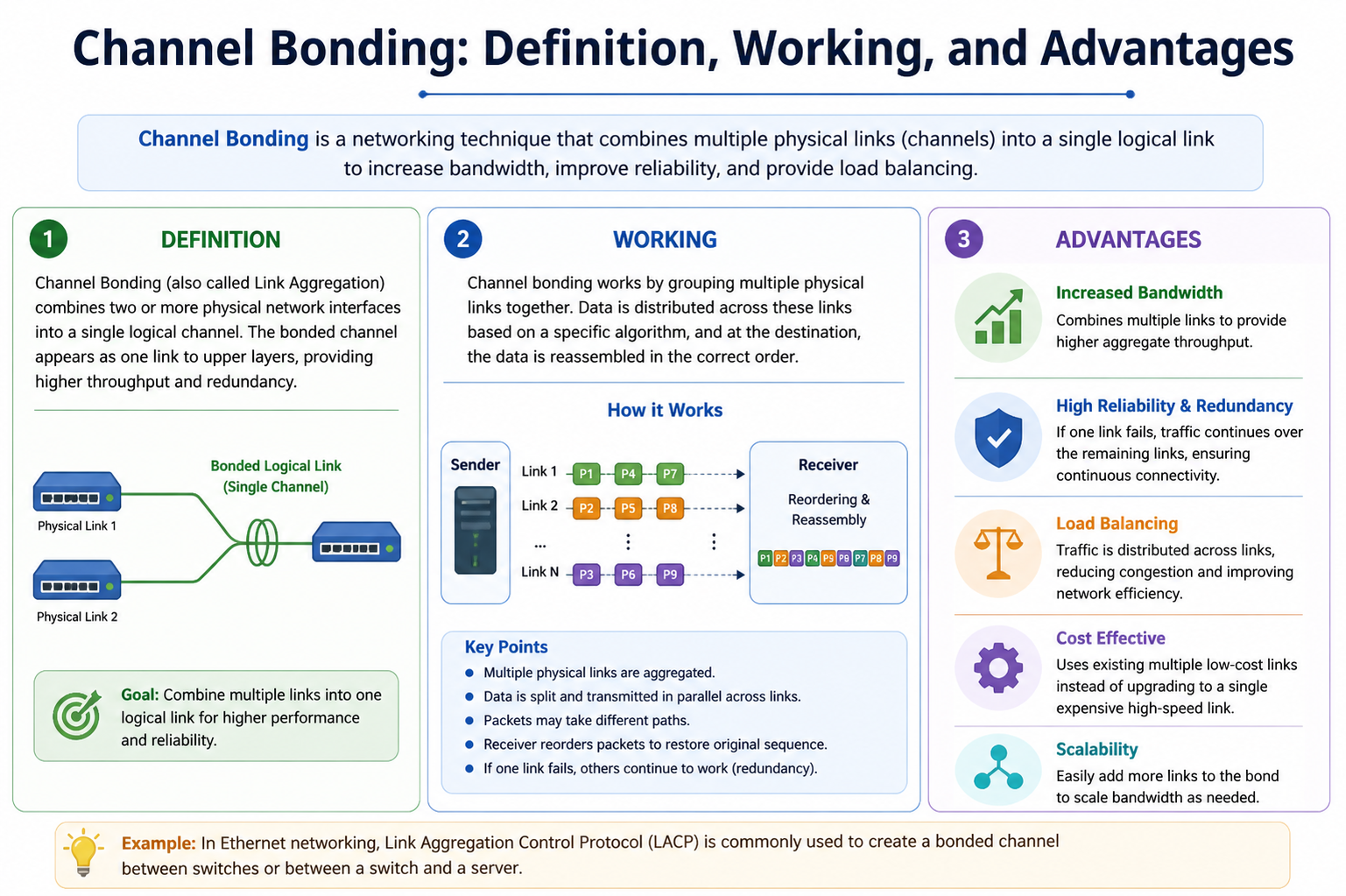
Channel bonding has become an essential technique in modern communication systems where high-speed and reliable data transfer is required. As digital demand continues to grow with streaming services, cloud computing, online gaming, and large-scale enterprise applications, single-channel communication often becomes insufficient. Channel bonding addresses this limitation by combining multiple channels into one unified pathway, significantly improving performance. This approach is widely used in both wired and wireless networks to enhance bandwidth efficiency and reduce congestion, ensuring smoother and faster connectivity for users and systems.
Core Concept Behind Channel Bonding
At its core, channel bonding is based on the idea of aggregation. Instead of relying on one communication lane, multiple lanes are used simultaneously to carry data. These lanes may consist of different physical cables, frequency bands, or wireless links depending on the system. The key objective is to treat multiple separate channels as a single logical channel. This abstraction allows systems to manage data more efficiently while increasing total throughput. The technology is especially useful in environments where network demand fluctuates or where high-speed transmission is critical.
Technical Working Mechanism of Channel Bonding
The working of channel bonding involves a structured process of splitting, transmitting, and reassembling data. When a device sends data, the system divides it into smaller packets. These packets are then distributed across multiple available channels at the same time. Each channel carries a portion of the data independently. On the receiving side, a bonding controller or network interface collects all incoming packets and reorders them correctly to reconstruct the original data stream.
This parallel transmission process allows multiple channels to work simultaneously rather than sequentially. As a result, the overall data transmission speed increases significantly. The system also continuously monitors the performance of each channel to balance the load efficiently. If one channel experiences latency or degradation, the system automatically adjusts the distribution of data across the remaining channels to maintain performance stability.
Types of Channel Bonding Techniques
Channel bonding can be implemented in different ways depending on the network environment and technology used. In wired networks, Ethernet bonding is commonly used where multiple Ethernet ports are combined to increase throughput. In wireless systems, Wi-Fi channel bonding is widely used, where adjacent frequency channels are merged to create wider bandwidth.
In mobile communication, technologies such as carrier aggregation also use the principle of channel bonding to combine multiple frequency bands for faster data speeds. Each type follows the same fundamental principle of combining resources, but the implementation varies based on hardware and communication protocols. This flexibility makes channel bonding a versatile solution across multiple industries.
Role of Bandwidth Aggregation in Performance Enhancement
One of the most important aspects of channel bonding is bandwidth aggregation. By combining multiple channels, the total available bandwidth increases, allowing more data to be transmitted simultaneously. This is particularly beneficial in high-traffic environments where large volumes of data need to be processed quickly.
Bandwidth aggregation also helps reduce bottlenecks in networks. When a single channel is overloaded, it can slow down the entire system. However, with multiple channels working together, the load is distributed more evenly, reducing the chances of congestion. This leads to a smoother and more stable network experience, especially during peak usage periods.
Load Balancing and Traffic Distribution
Channel bonding also plays a crucial role in load balancing. Instead of sending all data through one path, the system intelligently distributes traffic across all available channels. This ensures that no single channel is overwhelmed while others remain underutilized.
The load balancing process is dynamic, meaning it continuously adapts based on network conditions. If one channel becomes faster or slower, the system adjusts the distribution accordingly. This adaptability is essential for maintaining consistent performance in real-time applications such as video conferencing, online gaming, and live streaming, where delays can significantly affect user experience.
Reliability and Redundancy in Channel Bonding Systems
Another major advantage of channel bonding is improved reliability. Since multiple channels are used simultaneously, the system becomes less dependent on a single connection. If one channel fails or becomes unstable, the remaining channels continue to carry the data without interrupting the communication process.
This redundancy is especially important in mission-critical environments such as financial systems, healthcare networks, and industrial automation. In such systems, even a minor interruption can lead to significant disruptions. Channel bonding minimizes this risk by providing backup pathways for data transmission, ensuring continuous connectivity.
Impact on Latency and Data Transmission Speed
Channel bonding not only increases bandwidth but also helps in reducing latency under certain conditions. By distributing data across multiple channels, the time required to transmit large datasets is reduced. However, the actual impact on latency depends on how efficiently the system manages packet ordering and channel synchronization.
In well-optimized systems, channel bonding can significantly improve response times, especially for applications that require real-time communication. Faster data transmission also enhances overall system performance, making it suitable for both consumer and enterprise-level applications.
Hardware and Software Requirements for Channel Bonding
Implementing channel bonding requires both hardware and software support. On the hardware side, network interfaces must support multiple channel connections. In wired systems, this may include multiple Ethernet ports or compatible switches. In wireless systems, routers must support channel bonding configurations.
On the software side, operating systems or network drivers must include bonding protocols that manage data distribution and reassembly. These systems handle complex tasks such as packet sequencing, error correction, and load balancing. Without proper software support, the benefits of channel bonding cannot be fully realized.
Use Cases in Home and Enterprise Networks
Channel bonding is widely used in both home and enterprise environments. In home networks, it helps improve internet speed and stability, especially in households with multiple devices connected simultaneously. Streaming services, online gaming, and video calls benefit greatly from improved bandwidth.
In enterprise environments, channel bonding is used to support large-scale operations that require high-speed data transfer. Businesses that rely on cloud computing, data centers, and remote collaboration tools use channel bonding to ensure uninterrupted performance. It is also commonly used in internet service provider infrastructure to deliver faster and more reliable services to customers.
Advantages in High-Demand Applications
High-demand applications such as video streaming platforms, cloud storage services, and online gaming networks rely heavily on channel bonding. These applications require consistent high-speed data transfer to function effectively.
Channel bonding ensures that data is delivered smoothly without buffering or lag. It also supports high-resolution media streaming and real-time interactions, which are essential for modern digital experiences. By combining multiple channels, these systems can handle large volumes of simultaneous users without performance degradation.
Scalability and Future Network Growth
One of the key strengths of channel bonding is its scalability. As network demands grow, additional channels can be added to increase overall capacity. This makes it a future-ready solution that can adapt to evolving technological requirements.
With the rise of 5G networks, cloud computing, and Internet of Things ecosystems, the need for scalable networking solutions is increasing. Channel bonding provides a flexible framework that can support these advancements by efficiently managing growing data traffic.
Challenges and Limitations of Channel Bonding
Despite its advantages, channel bonding also has certain limitations. One of the main challenges is synchronization. Since data is split across multiple channels, it must be accurately reassembled at the receiving end. Any delay or inconsistency can affect performance.
Another challenge is compatibility. Not all devices and networks support channel bonding, which can limit its implementation. Additionally, improper configuration can lead to inefficiencies instead of performance improvements. Therefore, careful setup and management are required to achieve optimal results.
Importance in Modern Digital Infrastructure
Channel bonding plays a vital role in modern digital infrastructure by enabling faster, more reliable, and more efficient communication. It supports the growing demand for high-speed internet and ensures that networks can handle increasing data loads without compromising performance.
As digital ecosystems continue to expand, technologies like channel bonding will remain essential in maintaining smooth connectivity. Its ability to combine multiple resources into a single powerful system makes it a cornerstone of modern networking solutions.
Advanced Applications of Channel Bonding in Real-World Systems
Channel bonding is not limited to basic networking improvements; it is widely used in advanced systems where performance, stability, and scalability are critical. In modern cloud computing environments, large amounts of data are constantly transferred between servers, storage systems, and end users. Channel bonding helps optimize this process by distributing traffic across multiple network paths, reducing delays and improving overall system responsiveness. This ensures that cloud-based applications remain fast and reliable even during peak usage.
In content delivery networks, channel bonding plays a key role in delivering multimedia content efficiently. Video streaming platforms rely heavily on stable and high-speed connections to provide uninterrupted playback. By using multiple channels simultaneously, these systems can reduce buffering, improve video quality, and support a large number of users at the same time. This is especially important for high-definition and ultra-high-definition streaming services where bandwidth demand is significantly higher.
Channel Bonding in Wireless Communication Systems
Wireless communication systems benefit greatly from channel bonding techniques. In Wi-Fi networks, multiple frequency channels can be combined to create a wider communication path. This allows for faster data transfer rates and improved network performance in environments with many connected devices. Modern routers often use this technique to support high-speed internet in homes, offices, and public spaces.
In mobile networks, channel bonding is implemented through carrier aggregation. This technology allows mobile devices to connect to multiple frequency bands simultaneously, resulting in faster download and upload speeds. It also improves network coverage and reduces congestion in densely populated areas. As mobile data consumption continues to rise, channel bonding remains a crucial technology for maintaining efficient communication.
Efficiency Improvements in Data Centers
Data centers are one of the most important areas where channel bonding is extensively used. These facilities handle massive volumes of data and require extremely high levels of performance and reliability. Channel bonding allows multiple network interfaces to work together, ensuring that data is transmitted quickly between servers and storage systems.
This technique also helps balance network traffic within data centers. By distributing workloads across multiple channels, system administrators can prevent bottlenecks and ensure smooth operation. It also enhances fault tolerance, meaning that if one network path fails, others can continue handling the traffic without interruption. This is essential for maintaining uptime in critical services such as banking, e-commerce, and enterprise applications.
Security Considerations in Channel Bonding Systems
While channel bonding improves performance, it also requires careful attention to security. Since data is transmitted across multiple channels, it is important to ensure that all channels are properly secured to prevent unauthorized access. Encryption plays a key role in protecting data during transmission.
Additionally, proper configuration is necessary to avoid vulnerabilities in the system. If bonding is not implemented correctly, it may expose network traffic to potential risks. Therefore, organizations often use advanced security protocols along with channel bonding to ensure data integrity and confidentiality.
Performance Optimization Techniques
To achieve maximum efficiency, channel bonding systems often use advanced optimization techniques. These include dynamic load balancing, packet prioritization, and adaptive bandwidth management. Dynamic load balancing ensures that traffic is evenly distributed across all available channels based on real-time conditions.
Packet prioritization allows important data, such as voice or video communication, to be transmitted with higher priority compared to less critical data. This helps maintain quality in time-sensitive applications. Adaptive bandwidth management adjusts channel usage based on network demand, ensuring efficient utilization of available resources at all times.
Impact on User Experience and Digital Services
Channel bonding has a direct impact on user experience in digital services. Faster internet speeds and more stable connections lead to smoother browsing, quicker downloads, and improved streaming quality. Users experience fewer interruptions, lower latency, and better overall performance when multiple channels are working together.
In online gaming, for example, channel bonding helps reduce lag and improve responsiveness. This is essential for competitive gaming environments where even small delays can affect gameplay. Similarly, in video conferencing, stable connections ensure clear audio and video communication without disruptions.
Future Developments in Channel Bonding Technology
The future of channel bonding is closely linked to advancements in networking technologies such as 5G, 6G, and next-generation wireless systems. As data consumption continues to increase, the need for faster and more reliable connections will grow. Channel bonding is expected to evolve further to support these demands.
Future systems may use artificial intelligence to optimize channel bonding automatically. AI-based algorithms could analyze network conditions in real time and adjust channel usage for maximum efficiency. This would further improve performance and reduce the need for manual configuration.
Integration with Emerging Technologies
Channel bonding is also being integrated with emerging technologies such as Internet of Things devices and smart systems. In IoT networks, thousands of devices communicate simultaneously, generating large amounts of data. Channel bonding helps manage this traffic efficiently by distributing it across multiple channels.
In smart cities, where traffic systems, surveillance networks, and communication systems are interconnected, channel bonding ensures smooth data flow between different components. This improves coordination and enhances the overall efficiency of urban infrastructure.
Energy Efficiency Considerations
Another important aspect of modern networking is energy efficiency. Channel bonding can contribute to better energy utilization by optimizing data transmission paths. When traffic is efficiently distributed, network devices can operate more effectively without unnecessary overload.
However, using multiple channels simultaneously can also increase power consumption. Therefore, modern systems focus on balancing performance and energy efficiency by intelligently managing channel usage. This helps reduce operational costs while maintaining high performance levels.
Deep Dive into Channel Bonding Architecture
Channel bonding architecture is built around the coordination of multiple physical or logical communication paths. These paths are combined at a higher network layer to function as a single transmission system. At the core of this architecture is a bonding controller, which manages how data is split, transmitted, and reassembled. This controller ensures that all channels operate in synchronization and that no data packets are lost or misordered during transmission.
Each channel within the bonded system retains its own characteristics such as bandwidth, latency, and stability. The bonding system continuously evaluates these characteristics and adjusts traffic distribution accordingly. This dynamic control mechanism ensures that the overall system performance remains stable even when individual channels vary in quality.
Synchronization Challenges in Channel Bonding Systems
One of the most critical aspects of channel bonding is synchronization. Since data is divided into multiple packets and transmitted through different channels, it is essential that all packets arrive in the correct order and within an acceptable time window. Even a small delay in one channel can create imbalance, leading to potential reordering delays at the receiving end.
To handle this, advanced buffering techniques are used. These buffers temporarily store incoming packets until all related data pieces arrive. Once complete, the system reconstructs the original data stream. While this ensures accuracy, it can sometimes introduce slight latency, especially in networks with inconsistent channel performance.
Comparison Between Channel Bonding and Single-Channel Transmission
Channel bonding offers significant advantages over traditional single-channel transmission systems. In single-channel communication, all data flows through one path, which limits speed and creates potential bottlenecks. If that single channel becomes congested or fails, the entire communication process is affected.
In contrast, channel bonding distributes data across multiple channels, increasing total bandwidth and improving reliability. Even if one channel experiences issues, others continue to function, ensuring uninterrupted communication. This fundamental difference makes channel bonding far more efficient for modern high-demand applications.
However, single-channel systems are simpler to implement and require less configuration. They are often used in low-demand environments where high speed and redundancy are not critical. Channel bonding, while more powerful, requires more advanced hardware and software support.
Performance Trade-offs and Limitations in Real Environments
Although channel bonding significantly improves performance, it is not without trade-offs. One of the primary limitations is complexity. Managing multiple channels simultaneously requires advanced algorithms and processing power. This can increase system overhead and require more resources.
Another limitation is uneven channel performance. If one channel is significantly slower than others, it can reduce the overall efficiency of the bonded system. This is because data must often wait for slower channels to complete transmission before reassembly can occur.
Additionally, in some cases, the theoretical increase in speed does not scale perfectly in real-world environments. Protocol overhead, interference, and hardware constraints can reduce the expected performance gains. Despite these limitations, channel bonding still provides a substantial improvement over single-channel communication.
Troubleshooting Common Channel Bonding Issues
Channel bonding systems may occasionally face issues that affect performance. One common problem is packet loss, which occurs when data packets fail to reach their destination. This can disrupt the reassembly process and cause delays or corrupted data.
Another issue is channel imbalance, where one channel carries significantly more traffic than others. This can lead to inefficiencies and reduced overall performance. Proper load balancing configuration is essential to avoid this problem.
Latency variation between channels can also create synchronization challenges. When one channel is much slower than others, buffering delays increase, impacting real-time applications. Monitoring tools and adaptive algorithms are often used to detect and resolve these issues automatically.
Configuration and Deployment Considerations
Proper configuration is essential for effective channel bonding deployment. Network administrators must ensure that all participating channels are compatible and properly synchronized. This includes configuring hardware interfaces, enabling bonding protocols, and setting load balancing rules.
In enterprise environments, careful planning is required before implementing channel bonding. Factors such as network topology, traffic patterns, and application requirements must be analyzed. Incorrect configuration can lead to inefficiencies or even network instability.
Testing is also an important part of deployment. Before full-scale implementation, systems are often tested under different load conditions to ensure stability and performance consistency.
Role of Protocols in Channel Bonding Efficiency
Protocols play a vital role in channel bonding systems. They define how data is split, transmitted, and reassembled across multiple channels. These protocols ensure that all channels operate in coordination and maintain data integrity throughout the process.
Some protocols focus on reliability, ensuring that no data is lost during transmission. Others prioritize speed, optimizing data flow for maximum throughput. Modern systems often use hybrid approaches that balance both reliability and performance.
Protocol efficiency directly affects the overall performance of channel bonding. Poorly optimized protocols can reduce speed gains and introduce unnecessary overhead.
Scalability in Large Network Environments
Channel bonding is highly scalable, making it suitable for large and complex network environments. As demand increases, additional channels can be integrated into the system to expand bandwidth capacity. This scalability is one of its most important advantages in modern networking.
In large enterprises, scaling is often done incrementally. New channels are added as needed, allowing the system to grow alongside organizational requirements. This flexible approach ensures that infrastructure investments remain efficient and future-ready.
However, scalability also introduces complexity. Managing a large number of bonded channels requires advanced monitoring tools and coordination mechanisms to maintain performance stability.
Impact on Emerging Technologies and Smart Systems
Channel bonding plays an important role in supporting emerging technologies such as smart devices, automation systems, and connected environments. In these systems, large volumes of data are generated continuously and must be processed in real time.
By combining multiple channels, these systems can handle increased data loads without performance degradation. This is particularly important in applications such as autonomous systems, real-time analytics, and remote monitoring.
As technology continues to evolve, channel bonding will likely become even more integrated into intelligent systems that rely on fast and reliable communication.
Optimization Strategies for Maximum Efficiency
To achieve maximum efficiency, several optimization strategies are used in channel bonding systems. Adaptive routing is one such strategy, where data paths are dynamically adjusted based on current network conditions.
Another strategy is traffic classification, where different types of data are assigned different priority levels. For example, real-time communication data may be prioritized over background downloads.
Compression techniques are also sometimes used to reduce the amount of data being transmitted, further improving efficiency. These combined strategies help ensure that channel bonding systems operate at their highest potential.
Future Evolution of Channel Bonding Technology
The future of channel bonding is expected to be shaped by advancements in artificial intelligence, machine learning, and next-generation networking technologies. Intelligent systems will likely be able to manage channel bonding automatically, optimizing performance without manual intervention.
With the development of ultra-fast networks, channel bonding may evolve into even more advanced forms of aggregation, supporting extremely high data rates and ultra-low latency communication.
Integration with edge computing and distributed systems will also enhance its role in future digital infrastructure, making it a key component of global connectivity.
Final Overview of Channel Bonding Importance
Channel bonding remains one of the most effective techniques for improving network performance in modern communication systems. Its ability to combine multiple channels into a single high-capacity connection makes it essential for both current and future technologies.
From improving internet speed to supporting complex enterprise systems, its applications are vast and continually expanding. Despite certain limitations and challenges, its benefits far outweigh its drawbacks, making it a foundational technology in the world of networking.
Channel Bonding in High-Performance Computing Environments
In high-performance computing environments, channel bonding plays a critical role in ensuring that massive computational tasks are supported by equally powerful data transfer capabilities. These systems often involve parallel processing, where multiple processors work simultaneously on different parts of a problem. To keep up with this level of computation, data must be delivered quickly and consistently across interconnected nodes.
Channel bonding helps achieve this by combining multiple network paths into a single high-throughput pipeline. This reduces communication delays between computing nodes and ensures that large datasets can be shared efficiently. In scientific simulations, weather modeling, and artificial intelligence training systems, this capability is especially important because even minor delays can significantly slow down processing time.
Behavior of Channel Bonding Under Network Congestion
Network congestion is one of the most challenging conditions for any communication system. In traditional single-channel setups, congestion can lead to severe slowdowns, packet delays, and even data loss. Channel bonding, however, handles congestion more effectively by distributing traffic across multiple paths.
When congestion occurs on one channel, the bonding system automatically shifts more data to less congested channels. This adaptive behavior ensures that performance remains stable even under heavy network load. However, if all channels experience congestion simultaneously, the benefits of channel bonding become limited, although it still performs better than single-channel systems due to parallel distribution.
Error Handling and Data Integrity Mechanisms
Maintaining data integrity is a crucial part of channel bonding systems. Since data is divided into multiple packets and transmitted across different channels, there is always a risk of packet loss or corruption. To address this, error detection and correction mechanisms are implemented.
These mechanisms include checksums and verification codes that allow the system to detect missing or corrupted packets. When an error is identified, retransmission requests are sent to recover the missing data. This ensures that the final reconstructed data is accurate and complete.
In more advanced systems, forward error correction techniques are used to reduce the need for retransmission. This improves efficiency by allowing some errors to be corrected automatically without additional communication overhead.
Role of Hardware Acceleration in Channel Bonding
Hardware acceleration is increasingly being used to improve the performance of channel bonding systems. Instead of relying solely on software processing, dedicated hardware components handle tasks such as packet distribution, synchronization, and reassembly.
This reduces the load on the main processor and significantly improves processing speed. Network interface cards with built-in bonding capabilities are commonly used in enterprise environments to achieve higher efficiency. Hardware acceleration is especially important in high-speed networks where software-based processing alone may not be fast enough to handle large data volumes.
Impact of Channel Bonding on Cloud-Based Applications
Cloud-based applications depend heavily on stable and high-speed network connections. Channel bonding enhances these systems by improving data transfer between cloud servers and end users. This results in faster access to cloud resources, improved application responsiveness, and better user experience.
In cloud storage systems, channel bonding allows large files to be uploaded and downloaded more quickly by splitting data across multiple channels. In cloud computing platforms, it ensures that virtual machines and services can communicate efficiently without bottlenecks.
As cloud adoption continues to grow globally, channel bonding will remain a key technology in maintaining performance and reliability.
Adaptive Intelligence in Modern Channel Bonding Systems
Modern channel bonding systems are becoming increasingly intelligent. Adaptive algorithms analyze network conditions in real time and adjust channel usage dynamically. This includes selecting the best available channels, adjusting data distribution ratios, and predicting potential performance issues.
Machine learning techniques are also being introduced to further enhance this adaptability. These systems can learn from past network behavior and optimize future performance automatically. This reduces the need for manual configuration and allows networks to self-optimize based on demand.
Environmental and Infrastructure Considerations
Channel bonding also has implications for physical infrastructure and energy consumption. While it improves performance, it may require additional hardware resources, which can increase energy usage. Data centers and large-scale networks must therefore balance performance improvements with energy efficiency goals.
Proper infrastructure planning is essential to ensure that the benefits of channel bonding are fully realized without unnecessary resource waste. Efficient cooling systems, optimized hardware placement, and intelligent traffic management all contribute to maintaining a balanced system.
Evolution from Traditional Networking to Bonded Systems
Traditional networking systems relied on single communication paths, which limited scalability and performance. Over time, the increasing demand for faster and more reliable communication led to the development of channel bonding techniques.
This evolution represents a major shift in networking design philosophy. Instead of improving a single channel, modern systems focus on combining multiple resources to achieve better results. This approach has proven to be far more effective in meeting the needs of modern digital environments.
Real-Time Communication Enhancements
Real-time communication applications such as voice calls, video conferencing, and live broadcasting benefit greatly from channel bonding. These applications require low latency and consistent data flow to function properly.
By distributing data across multiple channels, channel bonding reduces the likelihood of delays and improves overall communication quality. It ensures that audio and video streams remain synchronized, providing a smoother user experience even under varying network conditions.
Future Role in Global Connectivity Infrastructure
As global connectivity continues to expand, channel bonding is expected to play an even more important role in shaping future communication infrastructure. With increasing reliance on digital services, remote work, and interconnected systems, the demand for high-speed and reliable networks will continue to grow.
Channel bonding will likely evolve alongside next-generation technologies such as advanced wireless systems, satellite internet networks, and ultra-low latency communication frameworks. Its ability to scale and adapt makes it a strong candidate for supporting future global data demands.
Channel Bonding Development
Channel bonding represents a major advancement in networking technology, offering significant improvements in speed, reliability, and scalability. Its continued development reflects the growing need for efficient data communication in an increasingly digital world.
From simple home networks to complex global infrastructures, its impact is widespread and continuously expanding. As technology progresses, channel bonding will remain a foundational element in ensuring that communication systems keep pace with rising data demands and evolving digital ecosystems.
Role of Channel Bonding in Future Internet Infrastructure
As internet usage continues to expand globally, future infrastructure will depend heavily on technologies that can deliver higher speed and stability at scale. Channel bonding is expected to remain a core component of this evolution. With increasing adoption of smart devices, cloud services, and real-time applications, the demand for uninterrupted high-bandwidth connectivity is growing rapidly. Channel bonding helps meet this demand by efficiently combining multiple communication paths, ensuring that networks can handle heavy traffic loads without degradation in performance.
In next-generation internet systems, channel bonding will likely be integrated with advanced routing technologies and intelligent traffic management systems. This combination will allow networks to self-adjust based on real-time conditions, further improving speed, reliability, and efficiency.
Channel Bonding in Edge Computing and Distributed Networks
Edge computing is becoming increasingly important as organizations aim to reduce latency and process data closer to the source. In such environments, channel bonding plays a key role in ensuring fast and reliable communication between edge devices and central systems.
By combining multiple network links, edge devices can transmit data more efficiently, reducing delays in processing and decision-making. This is especially useful in applications like autonomous systems, industrial automation, and smart surveillance, where real-time responsiveness is critical.
Distributed networks also benefit from channel bonding because they rely on multiple interconnected nodes. Efficient data exchange between these nodes ensures smooth system operation and consistent performance across the entire network.
Optimization of Bandwidth Utilization Through Channel Bonding
One of the most important benefits of channel bonding is the optimization of available bandwidth. Instead of relying on a single limited connection, multiple channels are used simultaneously to maximize data throughput.
This ensures that no available network resource is left underutilized. Even in situations where individual channels have different capacities, the bonding system balances the load to achieve the best possible performance. This optimized use of bandwidth is particularly valuable in environments where network resources are expensive or limited.
Impact on Digital Transformation and Modern Industries
Channel bonding plays a significant role in supporting digital transformation across industries. Businesses are increasingly dependent on digital tools, cloud platforms, and online communication systems. These technologies require stable and high-speed connectivity to function effectively.
Industries such as healthcare, finance, education, and entertainment rely on channel bonding to maintain seamless operations. In healthcare, for example, it supports telemedicine and real-time patient monitoring. In finance, it ensures secure and fast transaction processing. In education, it enables smooth virtual classrooms and online learning platforms.
Limitations in Extreme Network Conditions
Although channel bonding provides many advantages, it is not completely immune to extreme network conditions. In cases where all available channels experience high interference or instability, the performance gains may be reduced. Environmental factors, hardware limitations, and external signal disruptions can all affect performance.
Additionally, in highly dynamic networks where channel quality changes rapidly, maintaining perfect synchronization can be challenging. These limitations highlight the importance of proper network design and continuous monitoring to ensure optimal operation.
Integration with Artificial Intelligence and Automation Systems
Artificial intelligence is increasingly being used to enhance channel bonding systems. AI algorithms can analyze network traffic patterns, predict congestion, and automatically adjust channel distribution for optimal performance.
Automation systems also reduce the need for manual configuration by continuously managing network conditions in real time. This leads to more efficient and self-sustaining communication systems that can adapt to changing demands without human intervention.
The integration of AI with channel bonding represents a major step toward fully intelligent networking systems that can optimize themselves dynamically.
Security Enhancements in Modern Channel Bonding Architectures
Security is a critical aspect of any modern networking system, and channel bonding is no exception. As data is transmitted across multiple channels, ensuring its protection becomes essential.
Advanced encryption methods are used to secure data across all bonded channels. Additionally, authentication mechanisms ensure that only authorized devices can participate in the bonding process. Network segmentation and secure tunneling techniques are also used to further enhance protection.
These security layers ensure that even though data is distributed across multiple paths, it remains safe and protected throughout transmission.
Economic Benefits of Channel Bonding
Channel bonding also offers economic advantages, especially for organizations that rely heavily on data communication. By improving bandwidth efficiency, it reduces the need for expensive infrastructure upgrades.
Instead of investing in a single high-capacity connection, organizations can combine multiple lower-capacity links to achieve similar or better performance. This cost-effective approach allows businesses to scale their networks gradually based on demand.
It also helps reduce downtime-related losses by improving network reliability and minimizing service interruptions.
Final Conclusion
Channel bonding is a powerful networking technique that significantly enhances data transmission speed, reliability, and efficiency by combining multiple communication channels into a single unified system. It addresses many limitations of traditional single-channel networks by distributing data intelligently across multiple paths, reducing congestion, and improving overall performance.
Throughout its applications in home networks, enterprise systems, cloud computing, wireless communication, and emerging technologies, channel bonding has proven to be a highly effective solution for modern connectivity challenges. Its ability to improve bandwidth utilization, provide redundancy, and support scalability makes it an essential component of today’s digital infrastructure.
Despite certain limitations such as synchronization complexity and dependency on channel quality, continuous advancements in hardware, software, and artificial intelligence are steadily overcoming these challenges. The integration of intelligent systems and automation further strengthens its capabilities, making it more adaptive and efficient.
Looking ahead, channel bonding will continue to play a vital role in shaping the future of global communication networks. As data demands grow and new technologies emerge, its importance will only increase, ensuring faster, more reliable, and more intelligent connectivity for users and systems worldwide.